



Contents: Installing the engine on the…🠛 Removal components from the top of…🠛 Checking the technical condition and…🠛 Removal components from the bottom…🠛 Checking the technical condition and…🠛 Preparing engine parts for assembly 🠛 Installing lower engine components 🠛 Installing Upper Engine Components 🠛 Completion of engine repair 🠛 Engine components that can be reused…🠛
Installing the engine on the assembly stand
Attention:
It is strictly forbidden to apply any pressure to the engine oil pan. Damage to the pan can also cause various damages to the engine itself due to:
- blocking the oil intake;
- increasing the engine oil level above the maximum mark, which may cause the engine to run away.
1. Remove the power unit assembly (engine with gearbox) from the car.
2. Disconnect the gearbox from the engine (see chapter "Transmission").
3. Remove the accessory drive belt.
4. Install the flywheel locking device (Mot 582-01) (1) per cylinder block.
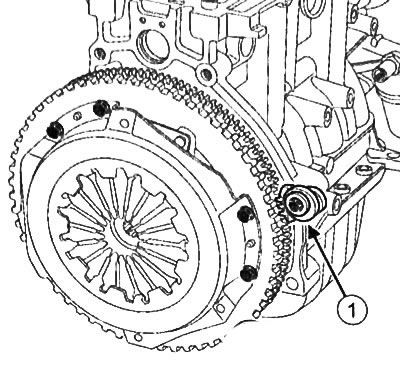
5. Remove the accessory drive pulley from the crankshaft.
6. Remove the clutch discs (see chapter "Clutch").
7. Remove the flywheel (see chapter "Clutch").
8. Remove the flywheel locking device (Mot. 582-01).
Caution: To safely work with the engine, it is necessary to use a special engine assembly stand.
9. Place the engine on the assembly stand:
- Insert the assembly stand support pins into the engine cylinder block.
- Install the retaining brackets (4) onto the support pins.
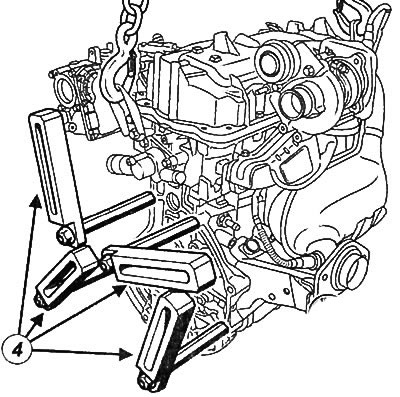
- Raise the engine with a garage winch, placing it opposite the engine assembly stand.
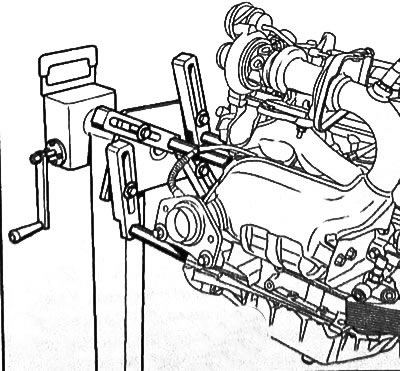
- Secure the support pins to the engine assembly stand.
- Tighten the mounting bolt (5) to 120 Nm to prevent the engine from turning over.
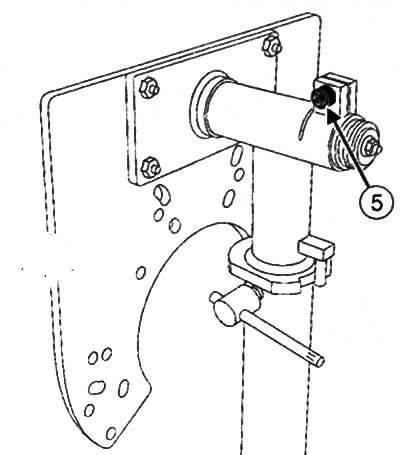
- Install stops to ensure that the assembly stand remains stationary.
- Unhook the garage winch from the engine.
10. Drain the engine oil from the engine.
Removal components from the top of the engine
1. Remove the timing belt.
2. Remove the ignition coils.
3. Remove the intake manifold.
4. Remove the rocker arm cover.
5. Remove the cylinder head.
6. Remove the exhaust manifold.
7. Remove the throttle valve.
8. Remove the cooling system chamber.
9. Remove the spark plugs.
10. Remove the camshaft from the cylinder head.
11. Remove the valves from the cylinder head.
Checking the technical condition and repairing the upper engine components
1. Clean the cylinder head.
2. Check the technical condition of the cylinder head, camshaft, valves and valve springs.
Note: Replace with new parts those parameters of which do not comply with the standard.
Removal components from the bottom of the engine
1. Remove the generator.
2. Remove the air conditioning compressor.
3. Remove the power steering pump.
4. Remove the multifunctional support.
5. Remove the water pump inlet pipe.
6. Remove the knock sensor (3).
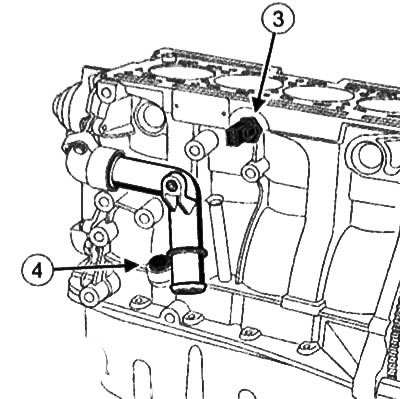
7. Remove the engine oil level sensor or plug (4) (depending on the version).
8. Remove the engine oil pan.
9. Remove the crankshaft oil seal from the gearbox side.
10. Remove the crankshaft oil seal from the timing drive side.
11. Remove the engine oil filter.
12. Remove the oil pump.
13. Remove the water pump.
14. Remove the pistons with connecting rods from all engine cylinders.
15. Remove the crankshaft from the engine cylinder block.
Checking the technical condition and repairing the lower engine components
1. Clean the engine cylinder block.
2. Check the condition of the cylinder block, pistons, connecting rods and crankshaft.
Note: Replace with new parts those parameters of which do not comply with the standard.
Preparing engine parts for assembly
Parts that must be replaced with new ones:
- all seals,
- damaged cooling system hoses,
- drive belts,
- drive belt tensioners and rollers,
- crankshaft pulley bolt,
- camshaft sprocket bolt,
- exhaust manifold nuts,
- exhaust manifold studs (if extracted),
- oil filter,
- flywheel bolts,
- connecting rod bolts,
- crankshaft main bearing cap bolts,
- a set of "pistons and piston pins" for each cylinder.
Attention:
- The gasket surfaces must be clean, dry and free of grease (keep fingerprints away).
- Excess sealant applied may be squeezed out when tightening threaded connections. Sealant getting into the coolant may cause damage to some components (engine, radiator, etc.).
Installing lower engine components
1. Install the cylinder block.
Note: When replacing the cylinder block, crankshaft or main bearing shells, it is necessary to determine the thickness class for each bearing shell for each crankshaft journal to ensure that the bearing clearance is within tolerance. Any deviations in bearing clearance values from the norm may cause engine damage.
2. Install the crankshaft.
3. Install the pistons with connecting rods as an assembly into each cylinder.
4. Install the water pump.
5. Install the oil pump.
6. Install the oil filter.
7. Install the crankshaft oil seals.
8. Install the engine oil pan.
9. Install the engine oil level sensor.
10. Install the knock sensor.
11. Install the water pump inlet pipe.
12. Install the multifunctional support.
13. Install the power steering pump.
14. Install the air conditioning compressor.
15. Install the generator.
Installing Upper Engine Components
1. Check the technical condition of the valves and install the valves on the cylinder head.
Note: When replacing valves, be sure to select new valves with the same spare parts catalog numbers as those previously installed. Otherwise, damage to the valves or their seats may occur.
2. Install the FIA/I distributor on the cylinder head
3. Check the technical parameters of the distributor
4. Check the technical parameters of the cylinder head
5. Install the cylinder head.
6. Install spark plugs.
7. Install the cooling system chamber.
8. Install the throttle valve.
9. Install the exhaust manifold.
10. Install the rocker arm cover.
11. Install the intake manifold.
12. Install the ignition coils.
13. Install the timing belt, and the gas distribution mechanism.
Completion of engine repair
1. Remove the engine from the assembly stand.
2. Install the flywheel (see chapter "Clutch").
3. Install the clutch discs (see chapter "Clutch").
4. Install the flywheel locking device (Mot 582-01) on the cylinder block.
5. Install the accessory drive pulley onto the crankshaft.
6. Remove the flywheel locking device (Mot. 582-01).
7. Install the accessory drive belt.
8. Fill the engine with motor oil?
9. Install the gearbox on the engine (see chapter "Transmission").
10. Install the power unit assembly (engine with gearbox) on the car.
Engine components that can be reused when replacing an engine
Preparing the old engine for return to the factory for further refurbishment
1. Clean the engine.
2. Drain the engine oil and coolant.
3. Fix the old engine on the stand.
4. Install plastic plugs and caps.
5. Place the entire engine in cardboard
Parts that should remain on the old engine or be included in the return kit
Leave the old engine or include the following in the return kit:
- oil dipstick
- oil fillet r.
- oil pump housing,
- oil level sensor,
- rocker cover,
- water pump,
- fuel rail,
- fuel injectors,
- spark plugs,
- timing belt drive,
- crankshaft sprocket,
- tension roller,
- camshaft sprocket,
- timing mechanism cover,
- crankshaft pulley,
- rigging eyes,
- cylinder head mounting support.
Parts that are removed from the old engine and installed on the new one
Parts that are removed from the old engine and installed on the new one:
- all cooling system hoses,
- oil pressure sensor,
- knock sensor,
- coolant temperature sensor,
- intake manifold,
- exhaust manifold,
- coolant inlet hose,
- cooling system chamber,
- generator,
- multifunctional support,
- clutch discs and flywheel.
Remove the air conditioning compressor from the old engine and install it on the new one.
Remove the power steering pump from the old engine and reinstall it on the new one.
Parts that must be replaced
Be sure to replace with new ones:
- cooling system chamber gasket on the cylinder head,
- intake manifold gasket,
- exhaust manifold gasket,
- accessory drive belt,
- tension roller of the accessory drive belt,
- bolt of the tension roller of the accessory drive belt,
- cooling system hoses if they are damaged.