Share with friends:

Diesel engines 1.5 liter (K9K) Renault Logan 2

General information about the diesel engine
Engine identification data Engine identified by engraving (A), made on the cylinder block. Marking Description The marking indicates: (1): engine model, (2): engine certification letter, (3): engine index, (4): engine...
Engine identification data Engine identified by engraving (A), made on the cylinder block. Marking Description The marking indicates: (1): engine model, (2): engine certification letter, (3): engine index, (4): engine...

Preparation for engine repair
Note: All work on the engine must only be carried out by qualified personnel. When carrying out repairs on a vehicle, the basic safety rules must be observed. The quality of the repair depends primarily on the care with...
Note: All work on the engine must only be carried out by qualified personnel. When carrying out repairs on a vehicle, the basic safety rules must be observed. The quality of the repair depends primarily on the care with...

Compression test
1. Remove the engine glow plugs. 2. Disconnect connector (3) fuel supply drive. 3. Using an open end wrench, moderately tighten the hose end and compression gauge adapter. 4. Connect an autonomous starter. 5. Connect...
1. Remove the engine glow plugs. 2. Disconnect connector (3) fuel supply drive. 3. Using an open end wrench, moderately tighten the hose end and compression gauge adapter. 4. Connect an autonomous starter. 5. Connect...

Attachment Drive Belt Replacement
Attention: Use protective gloves. Do not start the engine without the attachment drive belt installed - there is a risk of damage to the crankshaft pulley. Removing the Attachment Drive Belt 1. Place the vehicle on a...
Attention: Use protective gloves. Do not start the engine without the attachment drive belt installed - there is a risk of damage to the crankshaft pulley. Removing the Attachment Drive Belt 1. Place the vehicle on a...

Removal and installation of the compressor of the conditioner
Caution: Take precautions when handling refrigerant (see chapter " Air conditioning system "). Note: To remove the air conditioning compressor, a special station is needed to empty and recharge the air conditioning...
Caution: Take precautions when handling refrigerant (see chapter " Air conditioning system "). Note: To remove the air conditioning compressor, a special station is needed to empty and recharge the air conditioning...

Removal and installation of the vacuum pump
Removing the vacuum pump 1. Remove the engine cover. 2. Disconnect the hose (1) from the vacuum brake booster. 3. Loosen the mounting bolts (2) and remove the vacuum pump. Vacuum pump installation Installation is made...
Removing the vacuum pump 1. Remove the engine cover. 2. Disconnect the hose (1) from the vacuum brake booster. 3. Loosen the mounting bolts (2) and remove the vacuum pump. Vacuum pump installation Installation is made...

Removal and installation of the power unit assembly
1. Cylinder head mounting support. 2. Engine with gearbox assembly. 3. Front spar. 4. Front subframe of the car. 5. Rear engine mount. 6. Jet thrust of the engine. 7. Gear tube support. 8. Front spar. Attention: Use...
1. Cylinder head mounting support. 2. Engine with gearbox assembly. 3. Front spar. 4. Front subframe of the car. 5. Rear engine mount. 6. Jet thrust of the engine. 7. Gear tube support. 8. Front spar. Attention: Use...
Installing the power unit
Attention: Be sure to replace the new gasket between the catalytic converter and the downpipe. To prevent leakage, make sure that the gasket and contact surfaces of the nozzles are in good condition. Contact surfaces...
Attention: Be sure to replace the new gasket between the catalytic converter and the downpipe. To prevent leakage, make sure that the gasket and contact surfaces of the nozzles are in good condition. Contact surfaces...

Repair of the engine removed from the car
Installing the engine on the assembly stand Attention: It is strictly forbidden to apply any pressure to the engine oil pan. Damage to the sump can also cause various damage to the engine itself due to: blocking the oil...
Installing the engine on the assembly stand Attention: It is strictly forbidden to apply any pressure to the engine oil pan. Damage to the sump can also cause various damage to the engine itself due to: blocking the oil...
Preparing engine parts for assembly
Parts that must be replaced with new ones: all seals, damaged cooling system hoses, drive belts, drive belt tensioners and rollers, crankshaft pulley bolt, camshaft sprocket bolt, exhaust manifold nuts exhaust manifold...
Parts that must be replaced with new ones: all seals, damaged cooling system hoses, drive belts, drive belt tensioners and rollers, crankshaft pulley bolt, camshaft sprocket bolt, exhaust manifold nuts exhaust manifold...
Engine components that can be reused when replacing an engine
Preparing the old engine for return to the factory for further restoration 1. Clean engines. 2. Drain engine oil and coolant. 3. Fix the old engine on the stand. 4. Install plastic plugs and caps. 5. Place the entire...
Preparing the old engine for return to the factory for further restoration 1. Clean engines. 2. Drain engine oil and coolant. 3. Fix the old engine on the stand. 4. Install plastic plugs and caps. 5. Place the entire...

Removal of the timing belt drive of the gas distribution mechanism
Attention: Use protective gloves during work. Do not turn the engine crankshaft against the direction of normal engine rotation. Do not start the engine without the attachment drive belt installed to avoid damage to the...
Attention: Use protective gloves during work. Do not turn the engine crankshaft against the direction of normal engine rotation. Do not start the engine without the attachment drive belt installed to avoid damage to the...

Installation of the timing belt drive of the gas distribution mechanism
Note: Be sure to replace the timing belt, toothed belt tensioner with bolt and crankshaft pulley bolt with new ones. 1. Install a new timing belt tensioner pulley. 2. Insert the foot (14) timing belt tensioner pulley...
Note: Be sure to replace the timing belt, toothed belt tensioner with bolt and crankshaft pulley bolt with new ones. 1. Install a new timing belt tensioner pulley. 2. Insert the foot (14) timing belt tensioner pulley...

Valve clearance adjustment
Adjustment values Adjusting clearance on a cold engine, mm: For intake valves: 0.20 +0,05 -0,075 ; For exhaust valves: 0.40 +0,05 -0,075 . Note: The camshaft must be removed to replace the tappets. Adjustment The method...
Adjustment values Adjusting clearance on a cold engine, mm: For intake valves: 0.20 +0,05 -0,075 ; For exhaust valves: 0.40 +0,05 -0,075 . Note: The camshaft must be removed to replace the tappets. Adjustment The method...

Rocker cover
Caution: Wear protective gloves when performing work. Removing the rocker cover 1. Place the vehicle on a two post lift. 2. Disconnect the negative battery terminal. 3. Disconnect connector (1) oil vapor recirculation...
Caution: Wear protective gloves when performing work. Removing the rocker cover 1. Place the vehicle on a two post lift. 2. Disconnect the negative battery terminal. 3. Disconnect connector (1) oil vapor recirculation...

Removing the cylinder head
Attention: Before carrying out any work on the injection circuit, check the following using the diagnostic equipment: Make sure the fuel rail is not under pressure. Make sure the fuel temperature is not too high....
Attention: Before carrying out any work on the injection circuit, check the following using the diagnostic equipment: Make sure the fuel rail is not under pressure. Make sure the fuel temperature is not too high....

Dismantling of a head of the block of cylinders
1. Remove the cylinder head from the engine. 2. Install the cylinder head on the stand for disassembly (Mot. 1573). 3. Loosen the nuts (1) fuel rail protectors 4. Remove the fuel rail protection. 5. Clean the high...
1. Remove the cylinder head from the engine. 2. Install the cylinder head on the stand for disassembly (Mot. 1573). 3. Loosen the nuts (1) fuel rail protectors 4. Remove the fuel rail protection. 5. Clean the high...

Cleaning the cylinder head
Attention: Do not scratch the aluminum contact surfaces, any damage to the contact surfaces may cause leakage. Use safety goggles with side protection and sealed gloves (nitrile type). Do not allow cleaning agent to...
Attention: Do not scratch the aluminum contact surfaces, any damage to the contact surfaces may cause leakage. Use safety goggles with side protection and sealed gloves (nitrile type). Do not allow cleaning agent to...

Checking valves
1. Remove the cylinder head from the engine. 2. Remove the valves from the cylinder head. 3. Before checking, clean all parts to be checked with cleaning agent and dry with compressed air. 4. Check that the parts are...
1. Remove the cylinder head from the engine. 2. Remove the valves from the cylinder head. 3. Before checking, clean all parts to be checked with cleaning agent and dry with compressed air. 4. Check that the parts are...
Checking valve springs
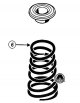
Note: The springs for the intake and exhaust valves are identical. Valve springs must be installed with the tapered end (6) up. 1. Remove valve springs (see above) and position according to the position on the cylinder...
Note: The springs for the intake and exhaust valves are identical. Valve springs must be installed with the tapered end (6) up. 1. Remove valve springs (see above) and position according to the position on the cylinder...

Cylinder head assembly
1. Clean the cylinder head, valves, valve springs, valve plates, crackers and valve guides. 2. If a new cylinder head is used, install the lifting eye on the flywheel side of the cylinder head and tighten the fixing...
1. Clean the cylinder head, valves, valve springs, valve plates, crackers and valve guides. 2. If a new cylinder head is used, install the lifting eye on the flywheel side of the cylinder head and tighten the fixing...

Installing the cylinder head
Note: Be sure to replace the gasket and cylinder head bolts with new ones. Attention: Be sure to use protective equipment (gloves, goggles and respirators). Thoroughly clean the cylinder head to prevent foreign bodies...
Note: Be sure to replace the gasket and cylinder head bolts with new ones. Attention: Be sure to use protective equipment (gloves, goggles and respirators). Thoroughly clean the cylinder head to prevent foreign bodies...

Replacing the front camshaft oil seal
Removing 1. Place the vehicle on a two post lift. 2. Disconnect the battery. 3. Disconnect: right front wheel right pendulum suspension support, accessory drive belt, timing belt. 4. Disconnect: camshaft sprocket nut...
Removing 1. Place the vehicle on a two post lift. 2. Disconnect the battery. 3. Disconnect: right front wheel right pendulum suspension support, accessory drive belt, timing belt. 4. Disconnect: camshaft sprocket nut...

Removal and installation of a camshaft
Removing 1. Place the vehicle on a two post lift. 2. Disconnect the battery. 3. Disconnect: air filter housing, right front wheel accessory drive belt, right pendulum suspension support, timing belt, Vacuum pump,...
Removing 1. Place the vehicle on a two post lift. 2. Disconnect the battery. 3. Disconnect: air filter housing, right front wheel accessory drive belt, right pendulum suspension support, timing belt, Vacuum pump,...

Replacing the front crankshaft oil seal
Removing 1. Place the vehicle on a two post lift. 2. Disconnect the negative battery terminal. 3. Remove the front right wheel from the vehicle. 4. Remove the timing belt. 5. Remove sprocket (toothed pulley) from the...
Removing 1. Place the vehicle on a two post lift. 2. Disconnect the negative battery terminal. 3. Remove the front right wheel from the vehicle. 4. Remove the timing belt. 5. Remove sprocket (toothed pulley) from the...

Replacement of a back epiploon of a cranked shaft
Removal of a back epiploon of a cranked shaft 1. Place the vehicle on a two post lift. 2. Disconnect the battery. 3. Remove the gearbox and clutch discs. 4. Remove the flywheel. 5. Install the oil seal extractor (Mot....
Removal of a back epiploon of a cranked shaft 1. Place the vehicle on a two post lift. 2. Disconnect the battery. 3. Remove the gearbox and clutch discs. 4. Remove the flywheel. 5. Install the oil seal extractor (Mot....

Replacing connecting rod bearing shells
Note: Necessary equipment: 1. Safety (e) belt (neither); 2. Hydraulic jack; 3. Indelible pencil; 4. Torque wrench; 5. Diagnostic tool. Attention: When performing the operation, wear tight waterproof protective gloves...
Note: Necessary equipment: 1. Safety (e) belt (neither); 2. Hydraulic jack; 3. Indelible pencil; 4. Torque wrench; 5. Diagnostic tool. Attention: When performing the operation, wear tight waterproof protective gloves...

Cylinder block
Dismantling of the block of cylinders 1. Remove the power unit assembly (engine with gearbox) from the car. 2. Disconnect the gearbox from the engine (see chapter " Transmission "). 3. Remove the attachment drive belt....
Dismantling of the block of cylinders 1. Remove the power unit assembly (engine with gearbox) from the car. 2. Disconnect the gearbox from the engine (see chapter " Transmission "). 3. Remove the attachment drive belt....
Special tools and fixtures
Name of tool and fixtures Catalog number Hose clamp pliers Mot. 1448 Base stand for removal / installation of the engine / gearbox assembly Mot. 1390 Traverse for hanging the engine with multiple adjustments and rigging...
Name of tool and fixtures Catalog number Hose clamp pliers Mot. 1448 Base stand for removal / installation of the engine / gearbox assembly Mot. 1390 Traverse for hanging the engine with multiple adjustments and rigging...
This section is available on: russian, bulgarian, belarusian, ukrainian, serbian, croatian, romanian, polish, slovak, hungarian
Other sections on other Renault models
➽ Power unit: Diesel engine (K9K) Renault Duster 1 (2009-2017)
➽ Power unit: Diesel engines 1.9 l Renault Megane 1 (1995-2002)
➽ Power unit: Fuel system (diesel) Renault Scenic 1 (1996-2003)
Link to this section in different formats
TEXTHTMLBB Code
- General information
- Faults en route
- Daily checks
- Governing bodies
- Maintenance
- Power unit
- Petrol engines 1.2 l
- Petrol engines 1.6 l
- Diesel engines 1.5 l
- Cooling system
- Lubrication system
- Power and control system
- Intake and exhaust system
- Engine electrical equipment
- Transmission
- Clutch
- Car gearbox
- Drive shafts
- Chassis, running gear
- Suspension and wheels
- Brake system
- Steering
- Body and interior
- Exterior (external elements)
- Interior (internal elements)
- Safety system
- Heating and air conditioning
- Electrical equipment
- Equipment and devices
- Wiring diagrams (sedan)
- Wiring diagrams (wagon)
- General information
- Vehicle device
- User manual
- Faults en route
- Daily maintenance
- First maintenance
- Second maintenance
- Driver tips
- Power unit
- Engine repair
- Lubrication system
- Cooling system
- Power and exhaust system
- Transmission
- Clutch
- Car gearbox
- Drive shafts
- Chassis, running gear
- Front suspension
- Rear suspension
- Steering
- Brake system
- Wheels and tires
- Body and interior
- Exterior (external elements)
- Interior (internal elements)
- Doors, locks and windows
- Body Care
- Electrical equipment
- Equipment and devices
- Headlights and lighting
- Power devices
- Electrical circuits
RenaultBook.ru © 2018–2024 | Mobile version | News and articles | Sitemap: EN BG BY UA RS HR RO PL SK HU | Administration | Site search | Bookmark
Duster 1 (2009-2017) | Fluence 1 (2009-2020, petrol) | Kangoo 1 (1997-2007) | Laguna 2 (2001-2007) | Logan 1 (2004-2012, petrol) | Logan 2 (2012-2020) | Megane 1 (1995-2002) | Megan 2 (2002-2009, petrol) | Scenic 1 (1996-2003) | Symbol 1 (1999-2008, petrol) | Symbol 2 (2008-2013, petrol) | Renault 19 (1988-1996) | Espace I and II (1984-1996) | Espace III (1996-2002) |