Share with friends:
At the moment, the main classmates and competitors are the following cars from other companies - Chery Bonus, Citroen C4, Chevrolet Cruze, Ford Focus, Honda Civic, Hyundai Elantra, Kia ceed, Kia Cerato, Mazda 3, Lada Samara, Lada Vesta, Lifan Breez, Mitsubishi Lancer, Nissan Almera, Opel Astra, Peugeot 308, SEAT Leon, Scoda Octavia, Subaru Impreza, Toyota Corolla, Toyota Allion and Volksvagen Golf.
First generation (1995-2002)
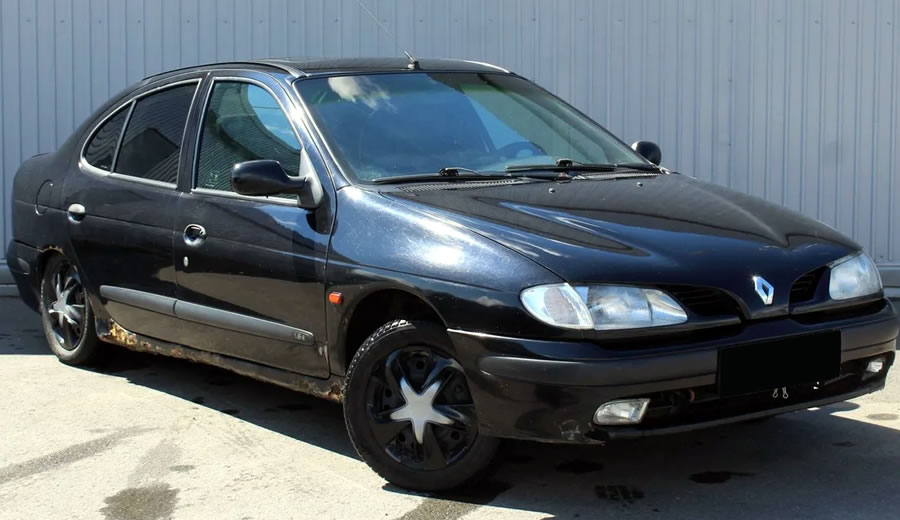
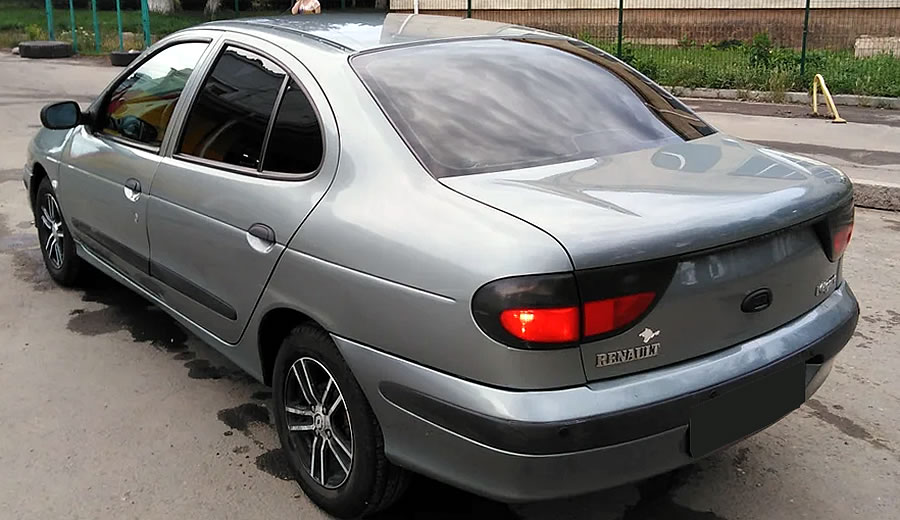
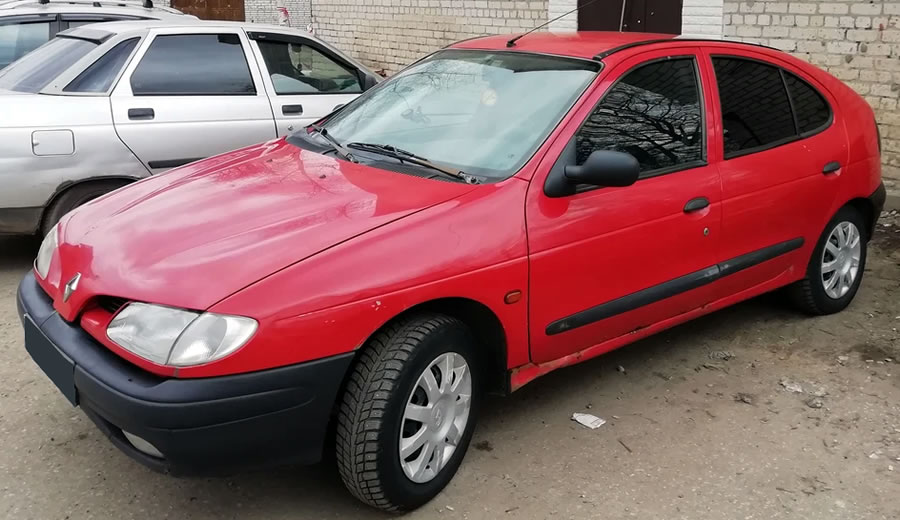
Development of the Magana began in 1990 and soon four small-scale models were built, then full-scale models. One version was chosen, which was designed by Michel Jardin. The first prototypes were built at the end of 1992. In September 1995, the car was presented at the Frankfurt Motor Show. Externally, it was similar to its predecessor "Renault 19", the mechanical part was also from its predecessor, but heavily modernized. The body was a four-door sedan (length 4436-4400 mm), five-door hatchback (length 4129-4164 mm) and station wagon (4437 mm), as well as two-door coupes (length 3931-3967 mm) and a convertible (length 4081 mm). The width of the car was 1699 mm, the height was 1365-1420 mm, the wheelbase was 2580 mm and the unladen weight was 1010-1090 kg. The assembly facilities were located in Argentina (release before 2009), Belgium, Spain, Indonesia, Colombia, Turkey and France. In total, about 5 million first-generation vehicles were produced.
The petrol engines were all four-cylinder in-line with the following parameters:
- 1.4 liters (1390 cm³, E7J, 8 valves, 70 and 75 hp)
- 1.4 liters (1390 cm³, K4J, 16 valves, 98 hp)
- 1.6 liters (1598 cm³, K7M, 8 valves, 90 hp)
- 1.6 liters (1598 cm³, K4M, 16 valves, 110 hp)
- 1.8 liters (1783 cm³, F4P, 16 valves, 120 hp)
- 2.0 liters (1998 cm³, F3R, 8 valves, 115 hp)
- 2.0 liters (1998 cm³, F4R/F7R, 16 valves, 139/150 hp)
- 2.0 liters (1998 cm³, F5R, GDI, 16 valves, 140 hp)
Diesel engines had a capacity of 1.9 liters (1870 cm³, F8Q/F9Q) with a capacity of 65, 80, 95, 100 and 106 hp. Four-speed automatic or five-speed manual transmission.
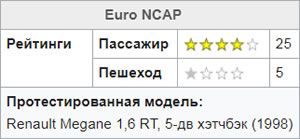
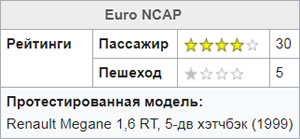
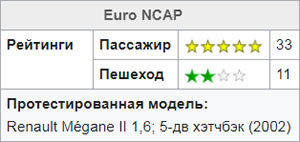
This was the company's first car where safety was the top priority. All seat belts were three-point, including the middle rear seat, the front belts had pretensioners and load limiters, driver and front passenger airbags and a special safety structure that was ahead of competitors at that time. The European Committee "Euro NCAP" conducted crash tests in 1998 and assigned a four-star safety rating, which was the best in its class at that time. In 1999, more crash tests were conducted on the hatchback, see the results in the tables.
![]() | ![]() |
In the spring of 1999, the model was updated, with a changed grille, more advanced safety features, upgraded equipment and leaving petrol engines with only 16 valves.
Second generation (2002-2009)
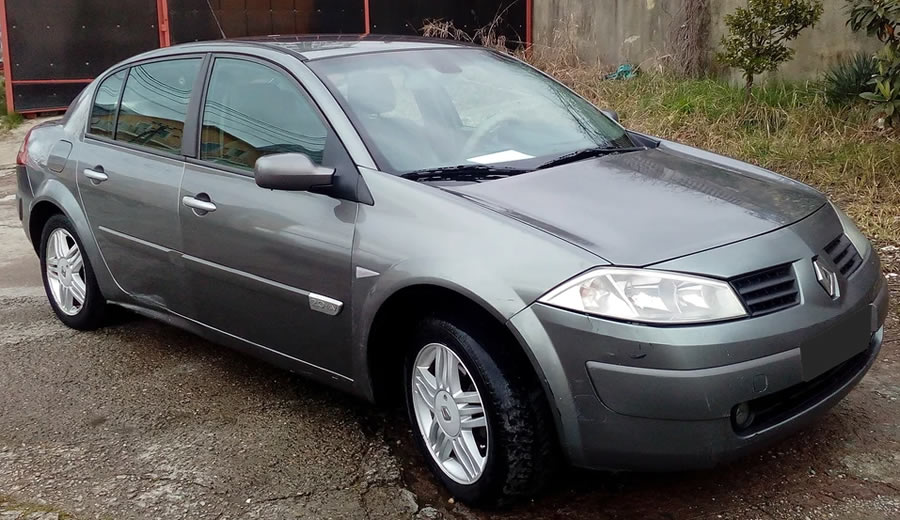
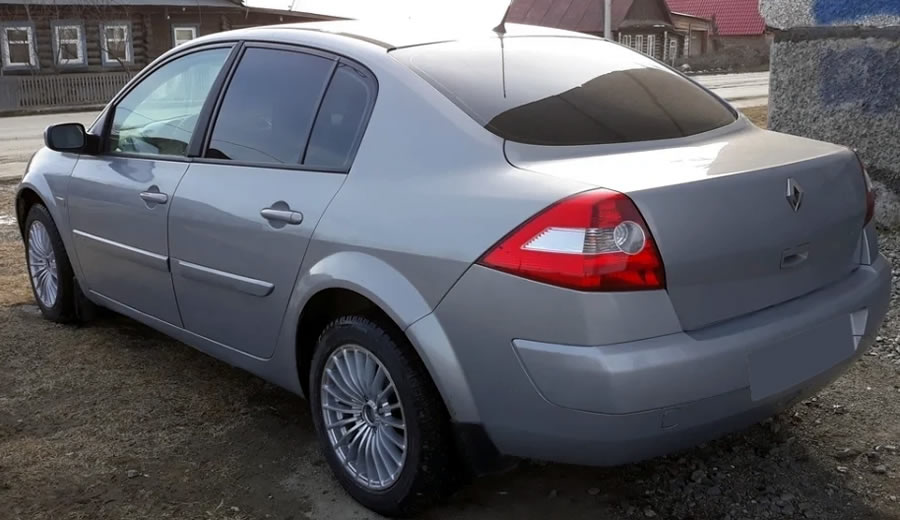
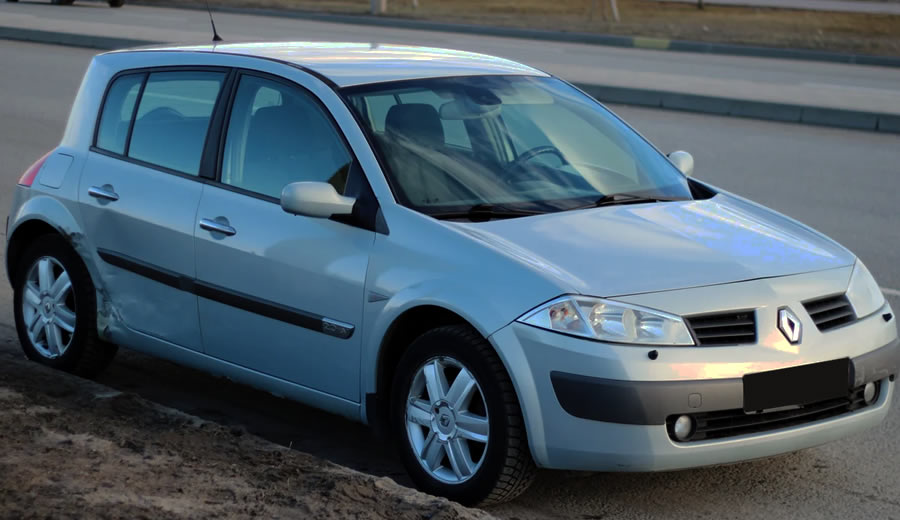
The second generation was launched in September 2002 with a completely new design and won the European Car of the Year 2003 award. It is based on the Renault C platform, which is also used for "Scenic", Koleos and some Nissan vehicles. The Megane became a showcase for the company's innovative technologies, for example, it was the first to feature a keyless ignition system (the key was in the form of a plastic card) and has since become widespread. For the first time in this class, a panoramic glass sunroof was used.
The following body types were produced: four-door sedan (length 4498 mm, width 1777 mm, height 1465 mm, wheelbase 2686 mm), three-door or five-door hatchback (length 4209 mm, width 1777 mm, height 1458 mm, wheelbase 2625 mm), five-door station wagon (length 4498 mm, width 1777 mm, height 1505 mm, wheelbase 2686 mm), as well as a two-door convertible (length 4355 mm, width 1777 mm, height 1420 mm, wheelbase 2522 mm). The unladen weight of the car was 1175-1190 kg. Production facilities were located in Brazil, Iran, Spain, Indonesia, Turkey and France. In total, about 3.1 million "Megane" of the second generation were produced.
The range of petrol engines consists of four-cylinder in-line engines with 16 valves with the following characteristics: 1.4 liters (1390 cm³, K4J, 80/97 hp), 1.6 liters (1598 cm³, K4M, 116 hp), 2.0 liters (1998 cm³, F4R, 134 hp) and 2.0 liters (1998 cm³, F4RT, 163 hp). The diesel engine lineup is as follows: 1.5 liters (1461 cm³, K9K, 79/85/99/105 hp), 1.9 liters (1870 cm³, F9Q, 118/128 hp) and 2.0 liters (1995 cm³, M9R, 148 hp). The gearbox was either a four-speed automatic or a five- or six-speed manual.

In January 2006, a restyling was carried out. The front of the car, interior trim were changed, a new front suspension system was used, which improved driving performance.
Third generation (2008-2016)
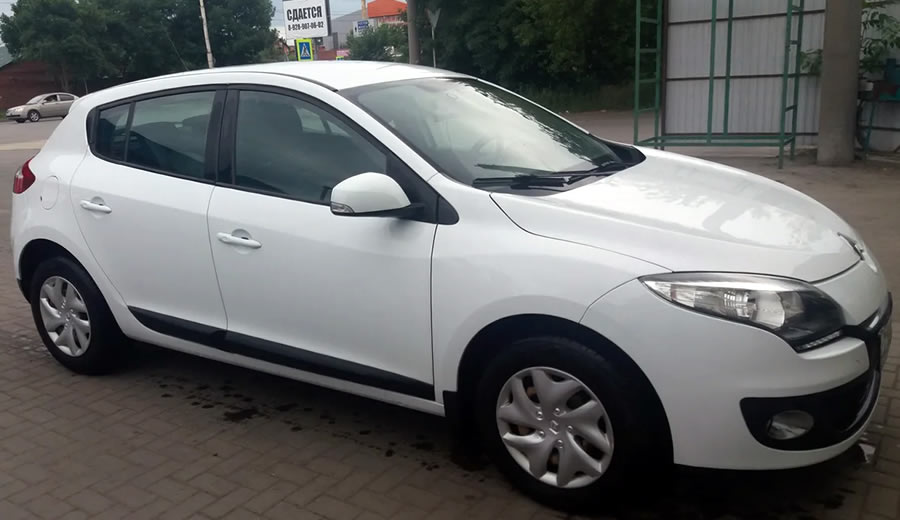
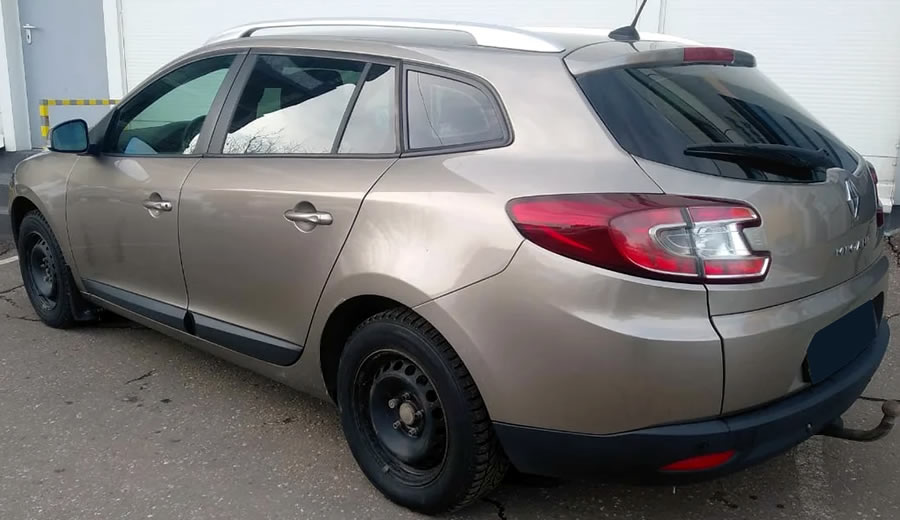
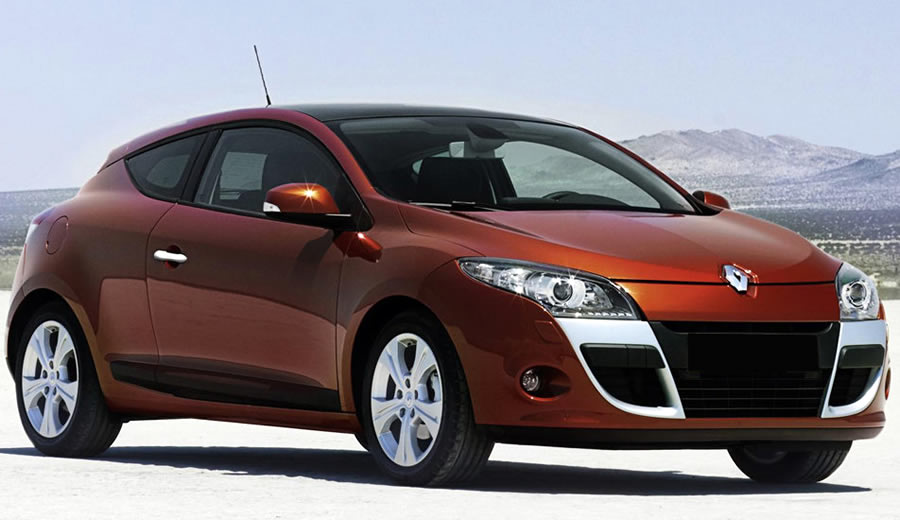
The concept car was shown at the Geneva Motor Show in March 2008, and production cars of the third generation went on sale in October 2008. They are assembled on the "Renault C" platform, which is also based on "Fluence", "Kangoo", "Koleos", "Scenic" and some models of the company "Nissan". The body types in chronological order were as follows - five-door hatchback (length 4295 mm, width 1808 mm, height 1471 mm, wheelbase 2641 mm), two-door coupe (length 4299 mm, width 1804 mm, height 1423 mm, wheelbase 2640 mm), five-door station wagon (length 4559 mm, width 1804 mm, height 1507 mm, wheelbase 2703 mm) and a two-door coupe-cabriolet (length 4485 mm, width 1810 mm, height 1434 mm, wheelbase 2609 mm). The car was assembled in Spain, Turkey and France. About 1.6 million units were produced over eight years.
The petrol engines were all four-cylinder in-line engines with the following parameters:
- 1.2 liters (1198 cm³, H5Ft, turbo, Stop&Start, 113/128 hp)
- 1.4 liters (1397 cm³, H4J, TCe, 128 hp)
- 1.6 liters (1598 cm³, K4M, VVT, 99/110 hp)
- 1.6 liters (1598 cm³, HR16DE, CVT, 112 hp)
- 2.0 liters (1997 cm³, M4R, CVT, 141 hp)
- 2.0 liters (1998 cm³, F4RT, TCe, turbo, 178/217 hp)
- 2.0 liters (1998 cm³, F4RT, RS, turbo, 247/261/271 hp)
Diesel engines were also four-cylinder with a capacity of 1.5 liters (1461 cm³, K9K, DCi, 84/89/104/108 hp), 1.6 liters (1598 cm³, R9M, DCi, 128 hp), 1.9 liters (1870 cm³, F9Q, DCi, 128 hp) and 2.0 liters (1995 cm³, M9R, DCi, 148/158 hp). The gearbox was six- or five-speed manual, six-speed automatic "JATCO JF613E", as well as a continuously variable transmission (CVT).
In 2009, the European committee "EuroNCAP" gave Megane five stars after conducting crash tests. In 2012, the first update of the model was carried out - the appearance was slightly changed and three new engines were added. In 2014, another update followed - the hatchback, station wagon and coupe were brought into line with the new design of other cars in the Renault model range, and the engines were also updated.
Fourth generation (2016-present)
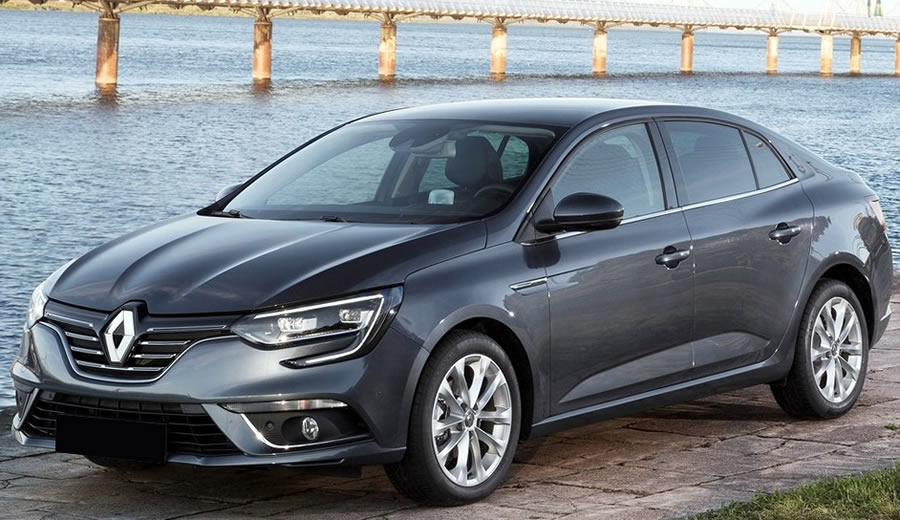
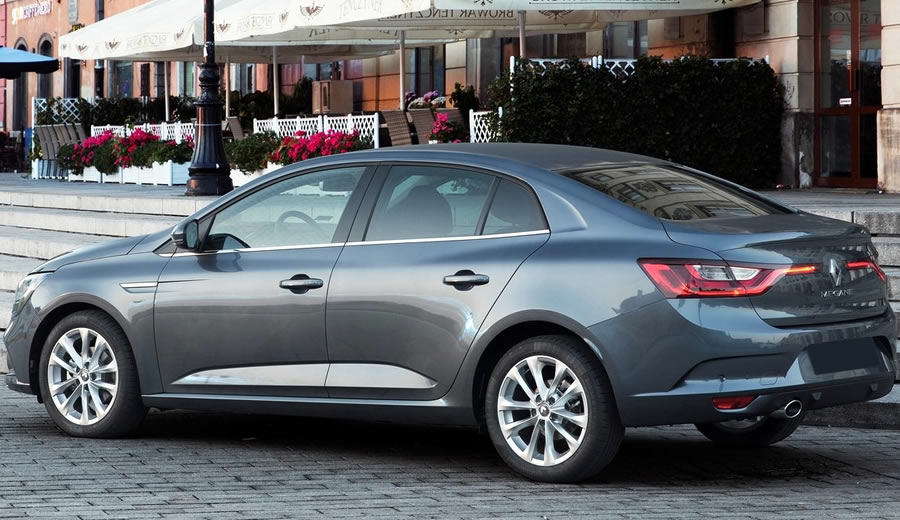
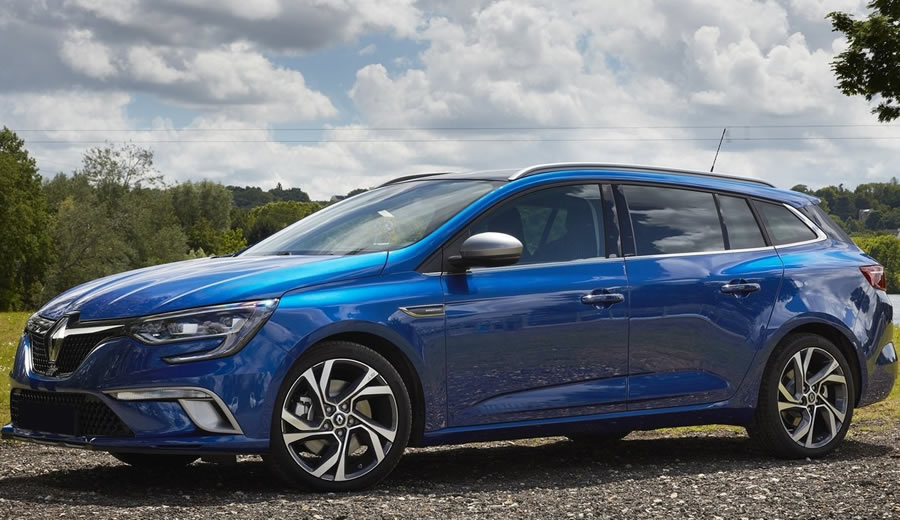
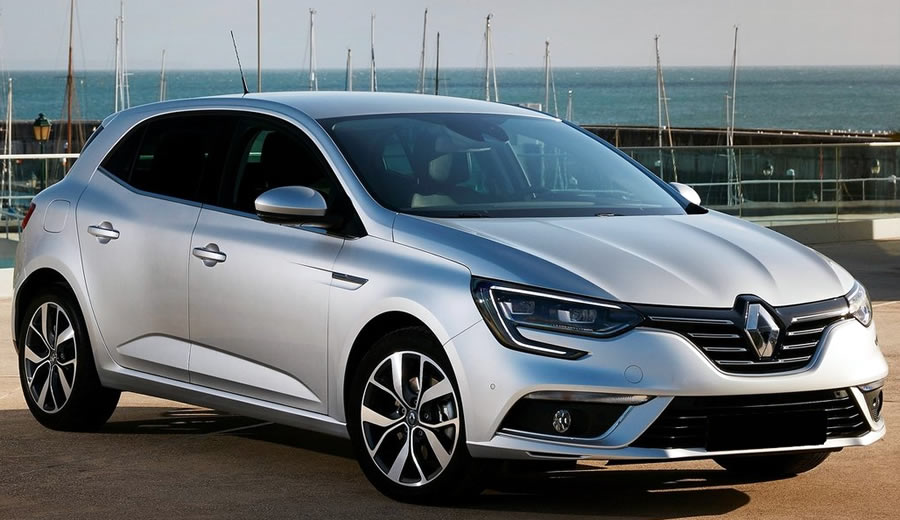
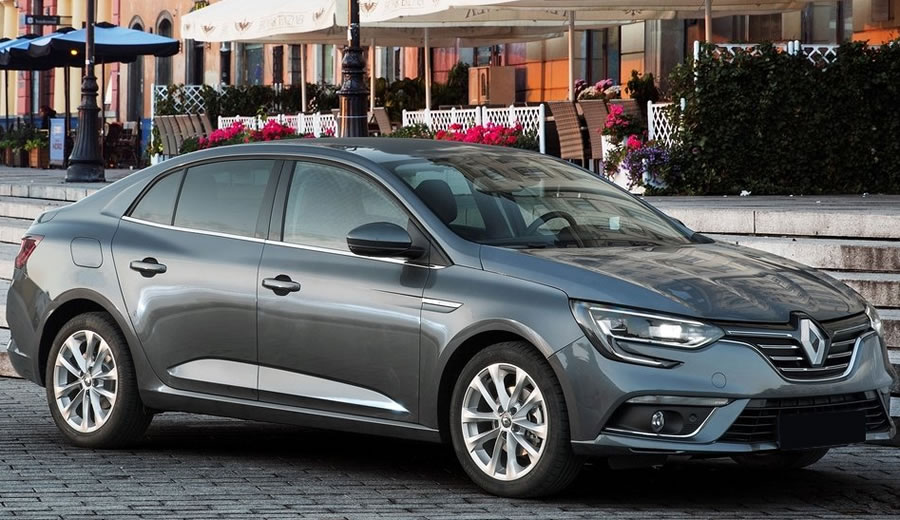
The fourth generation was presented at the Frankfurt Motor Show in September 2015, and sales began in July 2016. Station wagon (Sport Tourer) was shown at the 2016 Geneva Motor Show. The car is based on the CMF-CD platform developed by Renault and Nissan and is also used for "Espace", "Kadjar", "Koleos", "Scenic" and some models of the company "Nissan". The body types were four-door sedan (length 4632 mm, width 1814 mm, height 1443 mm, wheelbase 2711 mm) or five-door hatchback (length 4359 mm, width 1814 mm, height 1447 mm, wheelbase 2669 mm) and station wagon (length 4626 mm, width 1814 mm, height 1449 mm, wheelbase 2712). The vehicle's curb weight was 1205-1315 kg. Assembly shops were located in Spain and Turkey.
The range of petrol engines includes the following models: 1.2 litre (1197 cm³, H5Ft, TCe, turbo, 100/130 hp), 1.6 liters (1598 cm³, H4M, SCe, 115 hp), 1.6 liters (1618 cm³, M5Mt, TCe, turbo, 165/205 hp), 1.8 liters (1798 cm³, M5Pt, TCe, turbo, 280 hp) and 2.0 liters (1997 cm³, M4R, SCe, 140 hp). There were two models of 1.5-liter diesel engines (1461 cm³, K9K, DCi, turbo, 90/110 hp) and 1.6 liters (1598 cm³, R9M, DCi, turbo, 130/165 hp). The gearbox is a six-speed manual, six- or seven-speed automatic, or a continuously variable transmission (CVT).
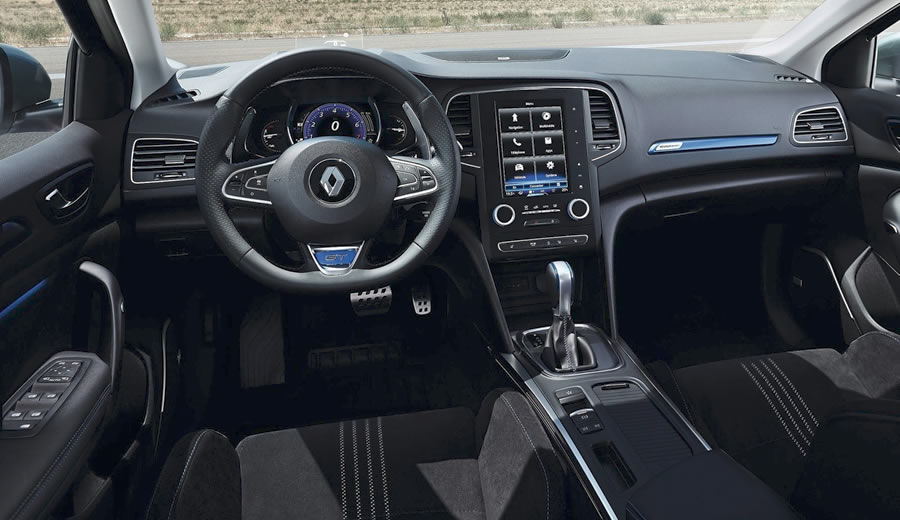
The fourth generation of the Mégane is larger and lower than its predecessor. The suspension is made of MacPherson struts at the front and a torsion beam at the rear. There are disc brakes on all wheels. The driver can choose one of five driving modes that change the car's settings. Adaptive cruise control, automatic emergency braking, lane departure warning, speed limit warning, blind spot monitoring, automatic headlights, a rear-view camera, parking sensors and a hands-free automatic parking system are available as options.