Share with friends:
At the time of graduation, the main classmates and competitors were Audi A4, Chevrolet Malibu, Citroen C5, Ford Mondeo, Hyundai Sonata, Honda Accord, Kia Optima, Mazda 6, Mitsubishi Galant, Nissan Maxima, Nissan Teana, Opel Vectra, Peugeot 408, Skoda Superb, SEAT Altea, Suzuki Kizashi, Subaru Legacy, Toyota Camry and Volkswagen Passat.
First generation (1994-2001)
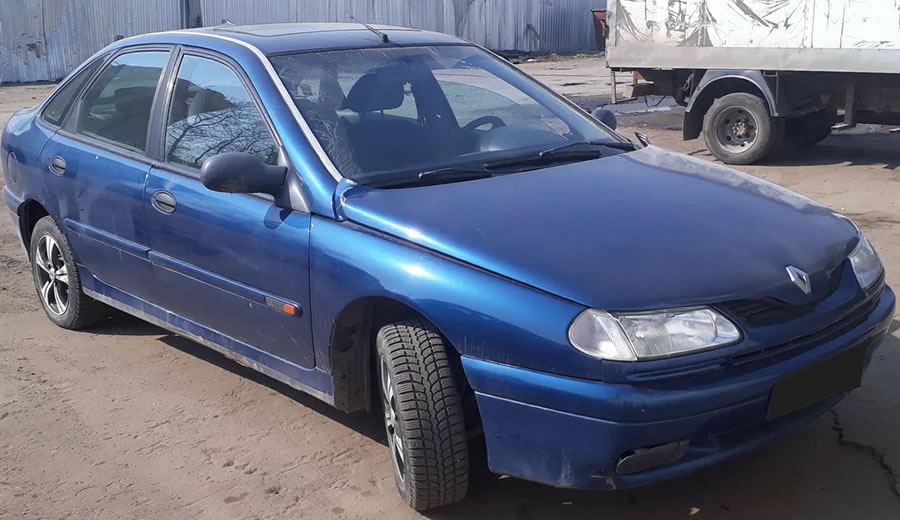
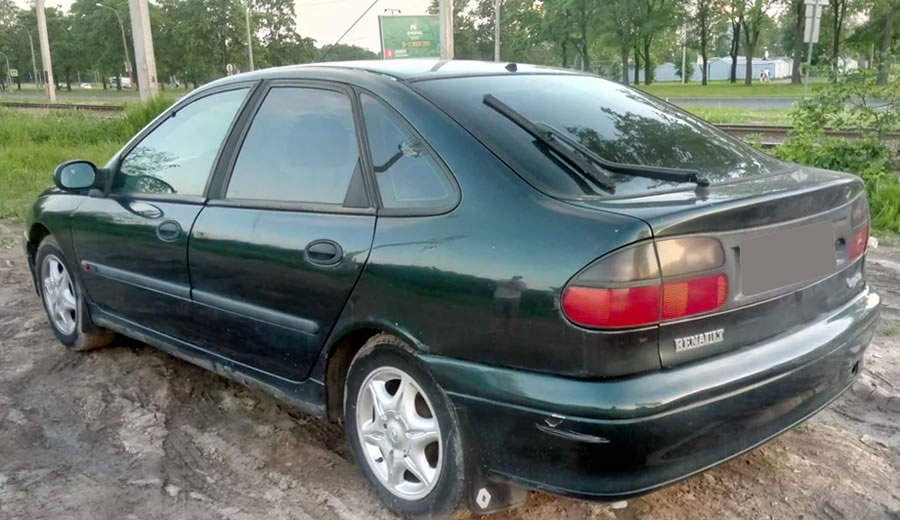
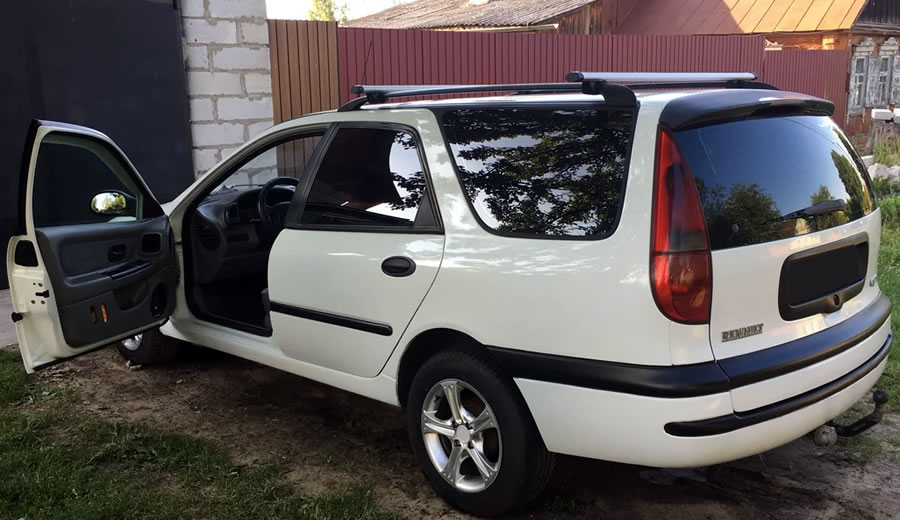
The development of the Laguna began in 1987 and was completed in 1990. Prototype testing was conducted between 1991 and 1993. In November 1993, the new car was officially presented to the public, and in January 1994, production and sales began. The body was initially only a five-door liftback 4508 mm long, 1752 mm wide, 1442 mm high, with a wheelbase of 2670 mm and a curb weight of 1345 kg. In September 1995, a five-door station wagon was shown at the Frankfurt Motor Show, 4620 mm long, 1748 mm wide, 1448 mm high and with a curb weight of 1345 kg. In total, more than 2.3 million cars were produced.
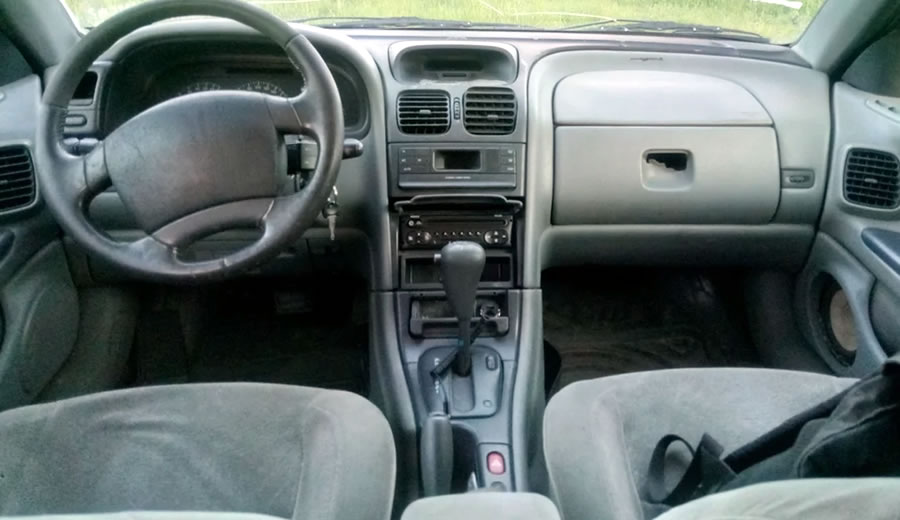
According to experts, the Laguna interior turned out to be very ergonomic, with an original dashboard with controls at hand and integrated ventilation grilles in the doors. This interior was a real advantage compared to competitors' interiors "Citroen Xantia" and "Peugeot 406". All models were fitted as standard with power steering, front electric windows and remote central locking. Most of the range had a driver's airbag. In a 1995 survey by the French company SOFRES, the Laguna was ranked second in quality and reliability, just behind "Toyota Carina". There were problems with corrosion in the rear wheel arches and underbody, which was corrected in late 1995. There were four trim levels: "RN", "RT", "RXE" and "V6".
The petrol engines were four-cylinder with the following volumes and characteristics:
- 1.6 liters (1598 cm³, K4M-720, DOHC 16v, 108 hp)
- 1.8 liters (1794 cm³, F3P-670, SOHC 8v, 89/94 hp)
- 1.8 liters (1783 cm³, F4P-760, DOHC 16v, 118 hp)
- 2.0 liters (1998 cm³, F3R-729, SOHC 8v, 112 hp)
- 2.0 liters (1998 cm³, F4R-780, DOHC 16v, 137 hp)
- 2.0 liters (1948 cm³, N7Q-704, DOHC 16v, 138 hp)
There were two six-cylinder V-shaped petrol engines with a volume of 3.0 liters (2946 cm³, L7X, DOHC 24v) with a capacity of 187 hp and 3.0 liters (2963 cm³, Z7X, SOHC 12v) with a capacity of 165 hp. The latter is also equipped with a twin turbine, with the power increasing to 263 hp. Diesel engines were only four-cylinder SOHC with a capacity of 1.9 liters "dTi" (1870 cm³, F9Q-716, 8v, 97 hp), 1.9 liter "DCi" (1870 cm³, F9Q, 8v, 106 hp), 2.2 liters (2188 cm³, G8T-792, 12v, 82 hp) and 2.2 liters (2188 cm³, G8T, 12v, 111 hp). The gearbox was equipped with a four-speed automatic, as well as a four- or five-speed manual.
In October 1995, a minor update was carried out. A new logo appeared on the rear door, a third brake light, improved passive safety and updated equipment.
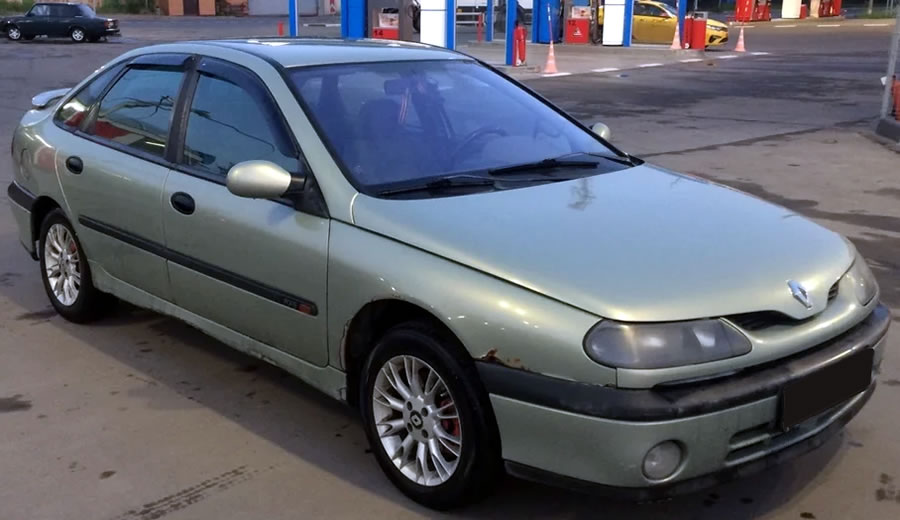
In April 1998, a significant restyling was carried out. The trim levels were called "RNE", "RTE", "RXE" and "RXT". New headlights with large fog lights were installed at the front, the rear and taillights were redesigned, the engines were updated, and the anti-corrosion treatment of the body was significantly improved. Standard equipment included dual airbags, anti-lock braking system, air conditioning and a CD player.
Second generation (2001-2007)
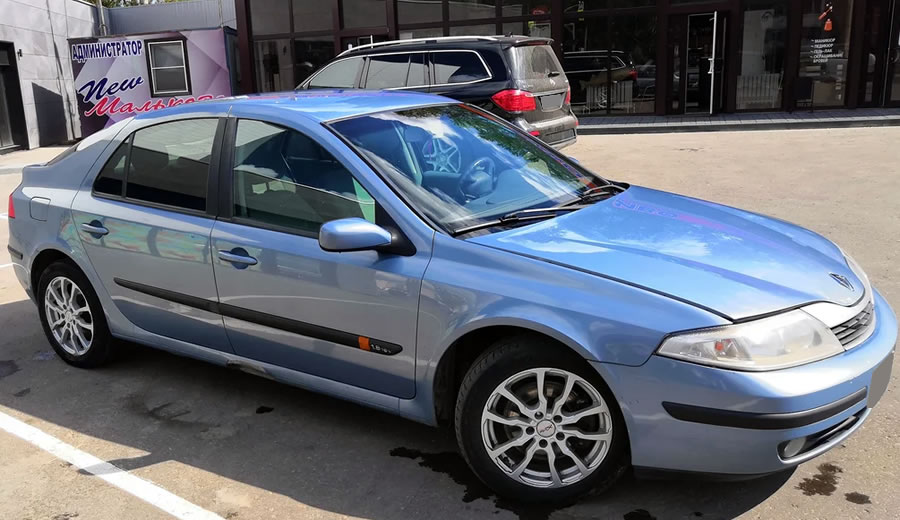
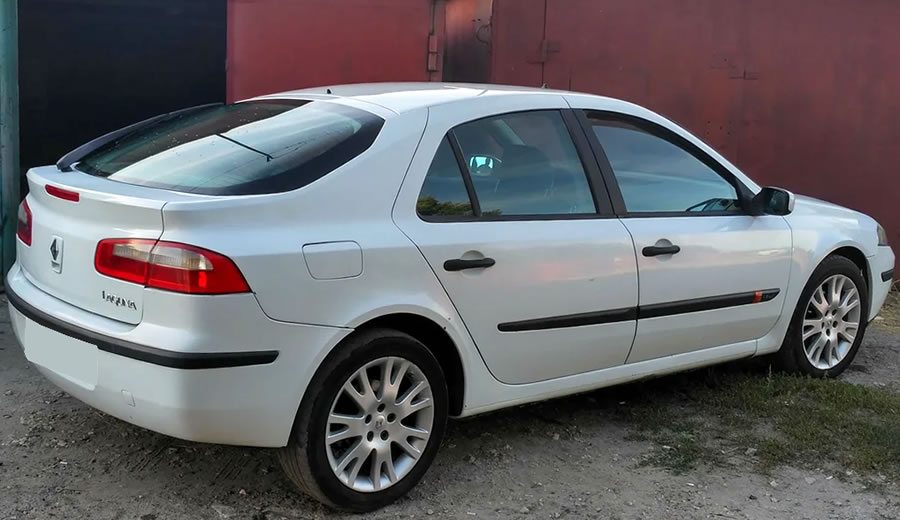
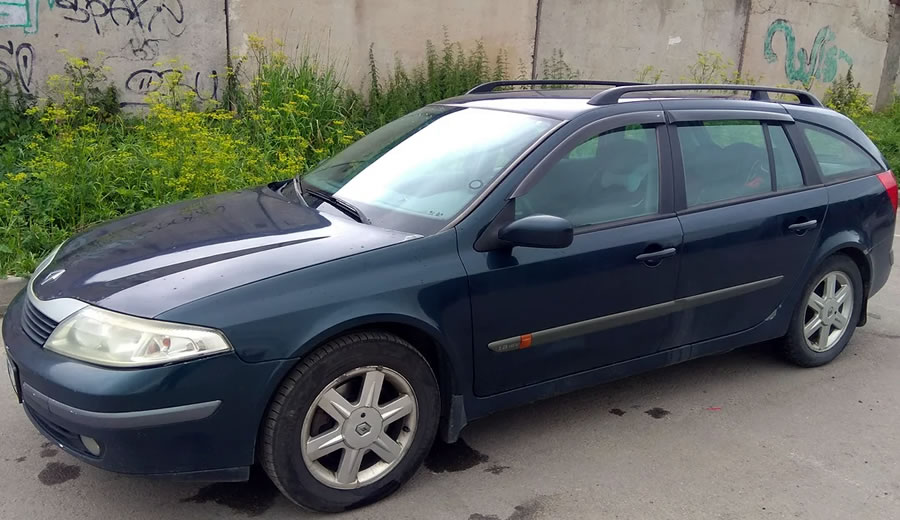
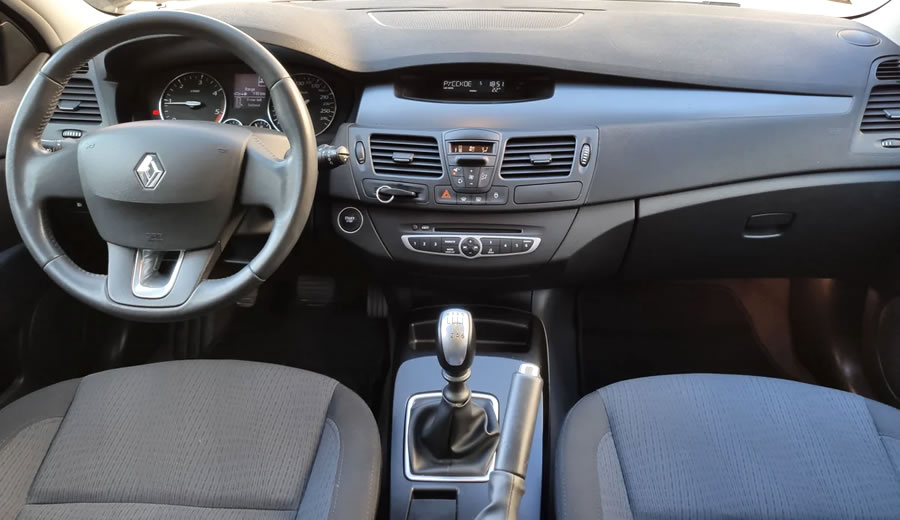
In December 2000, the second generation of the "Laguna" appeared. Based on the same platform as "Nissan Primera" third generation. This is the second car in Europe with keyless entry and ignition using a credit card-type device. Instead of an ignition switch, a button is used "Start/Stop". The body is also designed as a five-door liftback (length 4576 mm, width 1772 mm, height 1429 mm) and a station wagon (length 4695 mm, width 1772 mm, height 1443 mm). The curb weight was 1,570 kg. The first generation was famous for its reliability, and the second was remembered for its numerous electronic problems. It was also the first car in Europe to receive a five-star safety rating from EuroNCAP. Production was carried out only in France. In total, more than 1.1 million cars were produced.
The petrol engines were all multi-point fuel injection, with DOHC valve timing system of the following characteristics: 1.6 liters (1598 cm³, K4M, I4, 109/115 hp), 1.8 liters (1783 cm³, F4P, I4, 118 hp), 2.0 liters (1998 cm³, F5R, I4, 138 hp), 2.0 liters (1998 cm³, F4R, I4, 133 hp), 2.0 liters (1998 cm³, F4Rt, I4, turbo, 170/208 hp) and 3.0 liters (2946 cm³, L7X, V6, 204 hp). Diesel engines are all four-cylinder with direct fuel injection, 1.9 liters in volume (1870 cm³, F9Q, 92/99/103/118/129 hp), 2.0 liters (1995 cm³, M9R, 148/174 hp) and 2.2 liters (2188 cm³, G9T, 148 hp). The gearbox was either a five- or six-speed manual, or a four- or five-speed automatic.
The basic configuration included ABS, emergency braking system, six airbags, air conditioning, electric front windows, CD player. Options included automatic headlights and wipers, automatic air conditioning, electric rear windows, electrically folding mirrors, rear side blinds, electrochromic rearview mirror, etc.
In March 2005, the car was updated. According to the Renault press release, safety, driving performance and comfort were improved. An electronic handbrake was installed. The front design was slightly changed. A two-liter diesel engine with a capacity of 174 hp was added, which until 2007 was considered the most powerful two-liter diesel in the world.
Third generation (2007-2015)
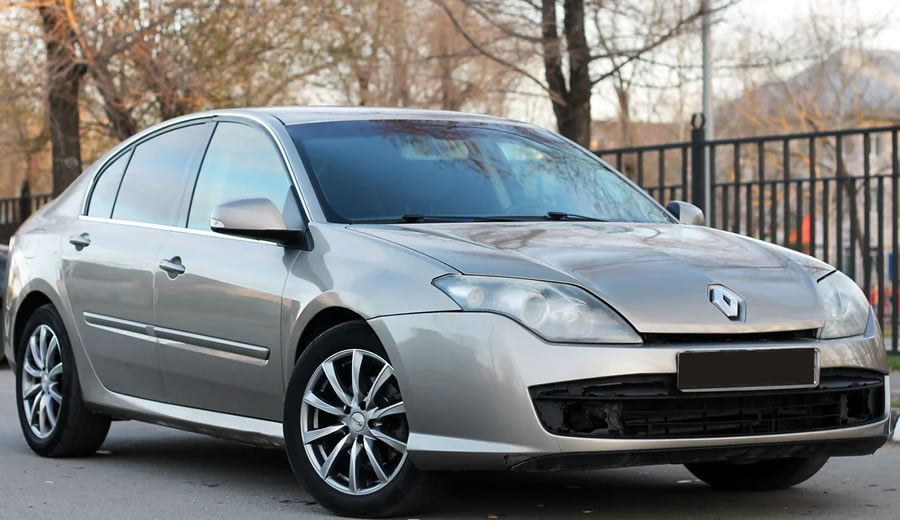
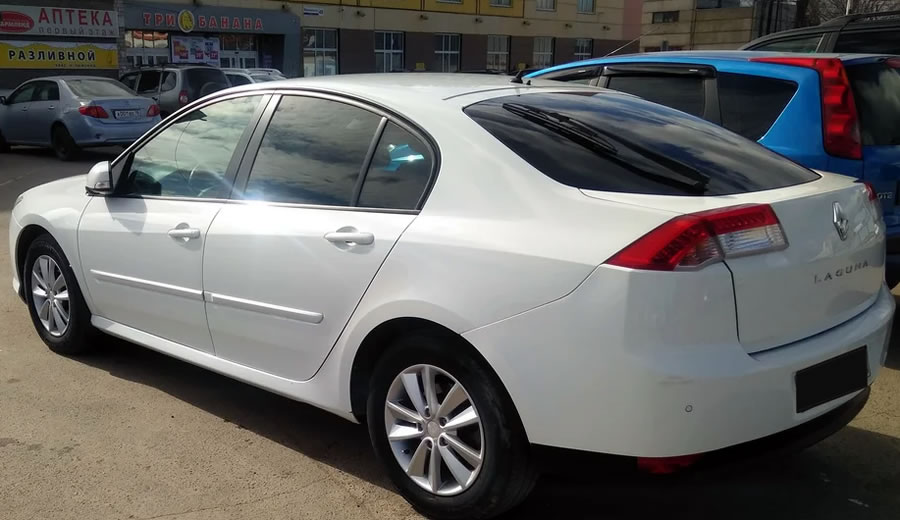
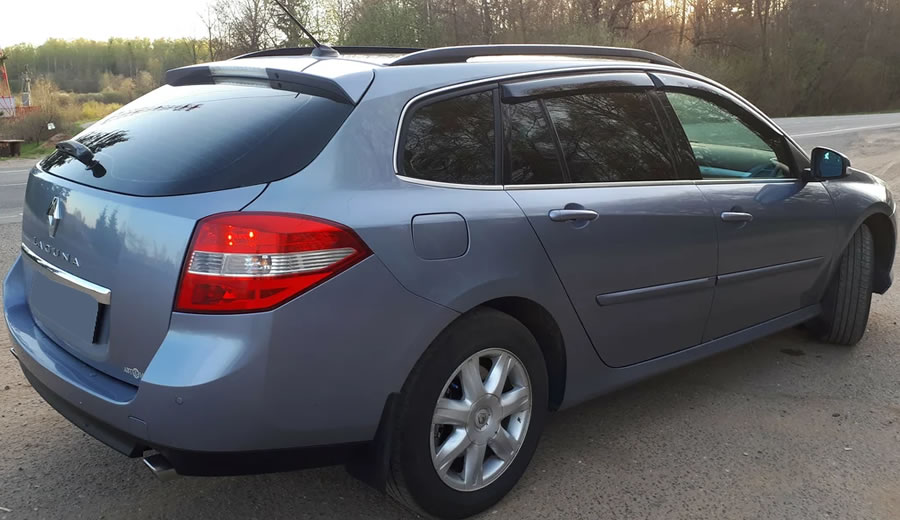
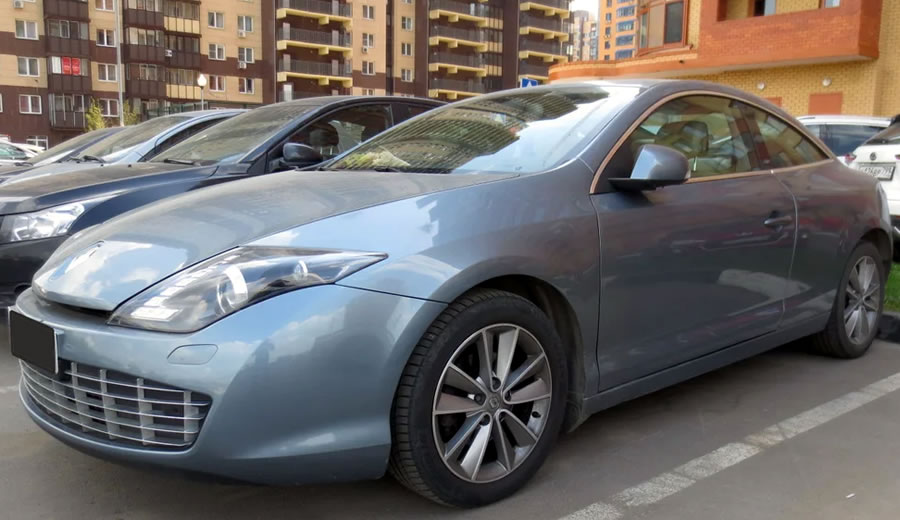
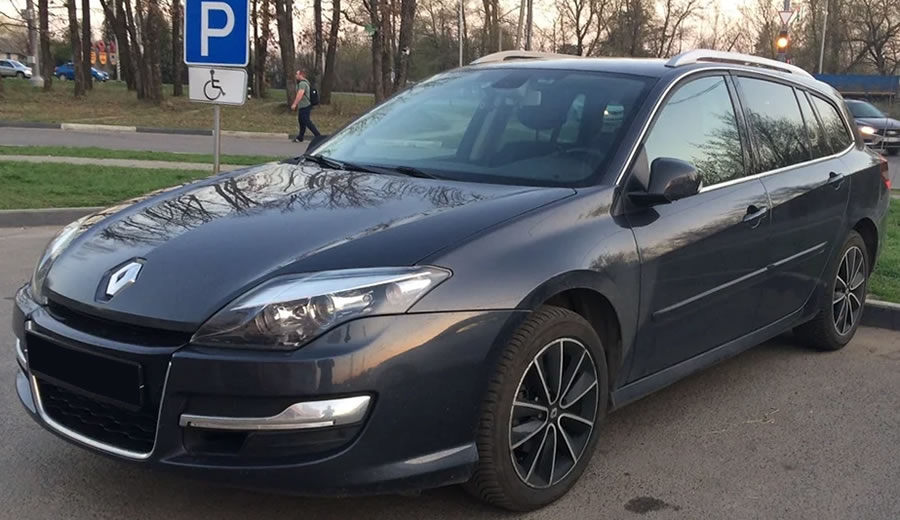
The third generation of Laguna was presented to the public at the Frankfurt Motor Show in September 2007, and went on sale in October. The car is based on the "Nissan D" platform, which is also used for "Nissan Altima", "Nissan Teana" and "Nissan Murano". The body was a five-door liftback and station wagon, and a two-door coupe was also added. The length of the car was 4695 mm, width 1811 mm, height 1445 mm, wheelbase 2756 mm and curb weight of 1560 kg. The company worked well on the aerodynamics of the body and the coefficient of aerodynamic drag of the liftback was only 0.293. The European committee "EuroNCAP" assigned Laguna five stars out of five for safety. The car was assembled in France, Malaysia, Pakistan and South Africa. In total, more than 350 thousand copies were produced.
The range of petrol engines had the following volumes: 1.6 liters (1598 cm³, K4M, I4, 110 hp), 2.0 liters (1998 cm³, M4R, I4, 140 hp), 2.0 liters (1998 cm³, F4R, I4, turbo, 170/205 hp) and 3.5 liters (3498 cm³, V4Y, V6, 240 hp). The following diesel engines were installed: 1.5 liters (1461 cm³, I4, 110 hp), 2.0 liters (1995 cm³, M9R, I4, 130/150/180 hp) and 3.0 liters (2993 cm³, V9X, V6, 235 hp). The gearbox was six-speed manual or automatic.
In 2010, the car was restyled and presented at the Paris Motor Show in October. There were now six trim levels: "Expression", "Black Edition", "Eco Business", "Bose", "GT 4Control" and "Initiale". The front end was redesigned, becoming more "aggressive". A 1.5-liter diesel engine was added.
Production of the Laguna ceased in the fall of 2015. It was replaced by "Renault Talisman", based on a new modular platform "Renault–Nissan CMF-C/D".