


Share with friends:
Vehicle operation and driving Renault Megane 2
Starting the engine of a second-generation Renault Megane 2 begins with checking the selector and parking brake position. Next, we examine the engine shutoff, manual and automatic transmission controls, power steering, and the ESP, ASR, and ABS systems. The speed limiter and tire pressure monitoring system require proper adjustment after starting. If you notice an unusual signal or a change in vehicle performance, first check the lights and tire pressure. This helps the owner follow the procedure, and the mechanic distinguish between driving error and component malfunction.
Starting the engine
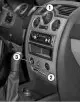
Renault Remote Control Card Fig. 1.80. Starting the engine: 1 – trip computer display; 2 – reading device; 3 – Engine start button The message "Insert card" appears on display 1 of the on-board computer (Fig. 1.80)....
Renault Remote Control Card Fig. 1.80. Starting the engine: 1 – trip computer display; 2 – reading device; 3 – Engine start button The message "Insert card" appears on display 1 of the on-board computer (Fig. 1.80)....
Engine stop
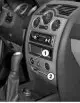
Fig. 1.82. Stopping the engine: 1 – stop button; 2 – reading device Engine Shutdown Conditions When the engine stops: on vehicles with automatic transmission, the gear selector is in position N or P; press button 3....
Fig. 1.82. Stopping the engine: 1 – stop button; 2 – reading device Engine Shutdown Conditions When the engine stops: on vehicles with automatic transmission, the gear selector is in position N or P; press button 3....
Manual transmission control
When changing gears (up and down) fully depress the clutch pedal, then move the gearshift lever to the desired position. After engaging the gear, smoothly release the clutch pedal. Start off in first gear. Then, as the...
When changing gears (up and down) fully depress the clutch pedal, then move the gearshift lever to the desired position. After engaging the gear, smoothly release the clutch pedal. Start off in first gear. Then, as the...

Parking brake
Disengaging the parking brake Fig. 1.85. Parking brake: 1 – parking brake lever; 2 – Parking brake lock/release button Pull lever 1 slightly upwards, press button 2 and lower the lever to floor level (Fig. 1.85). When...
Disengaging the parking brake Fig. 1.85. Parking brake: 1 – parking brake lever; 2 – Parking brake lock/release button Pull lever 1 slightly upwards, press button 2 and lower the lever to floor level (Fig. 1.85). When...

Automatic transmission
Selector The display on the instrument panel informs about the selected mode and the gear engaged: R - parking; R - reverse; N - neutral position; D - movement in automatic mode; 4 - indication of the gear engaged...
Selector The display on the instrument panel informs about the selected mode and the gear engaged: R - parking; R - reverse; N - neutral position; D - movement in automatic mode; 4 - indication of the gear engaged...

Power steering system
Adaptive Power Steering Adaptive power steering has an electronic control system that changes the amount of force that must be applied to the steering wheel depending on the speed of the vehicle. The system reduces the...
Adaptive Power Steering Adaptive power steering has an electronic control system that changes the amount of force that must be applied to the steering wheel depending on the speed of the vehicle. The system reduces the...
Electronic Stability Program (ESP) with Cornering Control
This system ensures vehicle controllability in extreme conditions (avoiding a collision with an obstacle, skidding on a turn, etc.). The system allows better control of the car during extreme driving and adapts it to an...
This system ensures vehicle controllability in extreme conditions (avoiding a collision with an obstacle, skidding on a turn, etc.). The system allows better control of the car during extreme driving and adapts it to an...

Anti-Slip Regulation (ASR)
The anti-slip system reduces the slippage of the drive wheels and improves vehicle control when starting off and during sharp acceleration. The system allows better control of the car during extreme driving and adapts...
The anti-slip system reduces the slippage of the drive wheels and improves vehicle control when starting off and during sharp acceleration. The system allows better control of the car during extreme driving and adapts...
Anti-lock braking system (ABS)
During emergency braking of a vehicle, it is necessary to reduce the braking distance and maintain control over the vehicle. The probability of loss of control and locking of the vehicle wheels due to loss of traction...
During emergency braking of a vehicle, it is necessary to reduce the braking distance and maintain control over the vehicle. The probability of loss of control and locking of the vehicle wheels due to loss of traction...

Speed control/limiting system
System management A speed limiter is a device that allows you to set a certain maximum speed. It can be useful, for example, when driving in the city or in places where a speed limit is imposed (men at work) etc. The...
System management A speed limiter is a device that allows you to set a certain maximum speed. It can be useful, for example, when driving in the city or in places where a speed limit is imposed (men at work) etc. The...
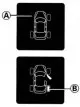
Tire pressure monitoring system
This system provides constant monitoring of tire pressure. Check and adjust the system to the standard only when the tires are cold. If it is possible to measure pressure only in warm tires, increase the recommended...
This system provides constant monitoring of tire pressure. Check and adjust the system to the standard only when the tires are cold. If it is possible to measure pressure only in warm tires, increase the recommended...
This section is available on: russian, bulgarian, belarusian, ukrainian, serbian, croatian, romanian, polish, slovak, hungarian
Other sections on other Renault models
➽ General information: Car driving Renault Fluence 1 (2009-2020, petrol)
➽ User manual: Car driving Renault Duster 1 (2009-2017)
Link to this section in different formats
TEXTHTMLBB Code
- User manual
- Introduction to manual
- Controls and instruments
- Salon equipment
- Operation and driving
- Maintenance and care
- Power unit
- Engine repair
- Fuel system
- Injection system
- Intake and exhaust system
- Starting and charging system
- Cooling system
- Decreased toxicity
- Transmission
- Clutch
- Mechanical gearbox
- Automatic gearbox
- Wheel drive mechanism
- Chassis, running gear
- Suspension and wheels
- Steering
- Brake system
- Body and interior
- Exterior (external elements)
- Interior (internal elements)
- Doors, locks and windows
- Heating and air conditioning
- Electrical equipment
- Equipment and devices
- Headlights and lighting
- Electrical circuits
- General information
- User manual
- Maintenance
- Power unit
- Petrol engines 1.4/1.6 l
- Petrol engines 2.0 l
- Diesel engines 1.9 l
- Overhaul of engines
- Cooling system
- Fuel system (petrol)
- Fuel system (diesel)
- Decreased toxicity
- Charge and launch systems
- Ignition system (petrol)
- Preheat system (diesel)
- Transmission
- Clutch
- Mechanical gearbox
- Automatic gearbox
- Drive shafts
- Chassis, running gear
- Brake system
- Car suspension
- Steering
- Body and interior
- Exterior (external elements)
- Interior (internal elements)
- Doors, locks and windows
- Electrical equipment
- Equipment and devices
- Electrical circuits