English Русский
Български
Беларускі
Український
Српски
Hrvatski
Română
Polski
Slovenský
Magyar
Bookmark Contacts Articles Sitemap
Company vehicles Peugeot Company vehicles Opel Company vehicles Skoda Company vehicles Land Rover Company vehicles Mitsubishi Company vehicles Volkswagen Company vehicles Honda
RenaultBook.ru


Duster   Fluence   Kangoo   Laguna   Logan   Megane   Sandero   Scenic   Symbol   Clio   Other
Megane 1 (1995-2002) Megan 2 (2002-2009, petrol)

Anti-Slip Regulation (ASR) (Renault Megane 2)

  • Main
  • Megane
  • Megan 2 (2002-2009, petrol)
  • User manual
  • Operation and driving
  • Anti-Slip Regulation (ASR)
0
Contents: Operating principle 🠛 System shutdown 🠛
The anti-slip system reduces the slippage of the drive wheels and improves vehicle control when starting off and during sharp acceleration.

The system allows better control of the car during extreme driving and adapts it to an individual driving style.

However, this system does not replace the driver. It does not expand the capabilities of the car and should not encourage the driver to drive at higher speeds.

Even with this system, the driver must exercise caution and be attentive while driving (the driver must be constantly prepared for any unexpected events that may arise while driving).

Operating principle


Using sensors installed on the vehicle's wheels, the system constantly measures and compares the rotation speed of the drive wheels and monitors any sudden increases.

If a wheel starts to slip, the system applies the brakes, reducing torque to a level that maintains the wheel's grip on the road.

The system also controls the engine speed, maintaining it at a level that ensures traction, regardless of the position of the accelerator pedal.
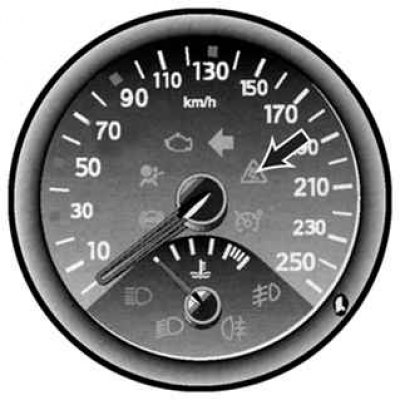
Fig. 1.88. Stability control system indicator lamp

Fig. 1.88. Stability control system indicator lamp


When the system is turned on, the indicator lamp starts flashing (see fig. 1.88).

System shutdown


In some cases (driving on very soft ground, snow, mud, and if anti-skid chains are installed) to reduce slippage, the system can reduce engine power. If you do not need to use the system, turn it off by pressing the switch.
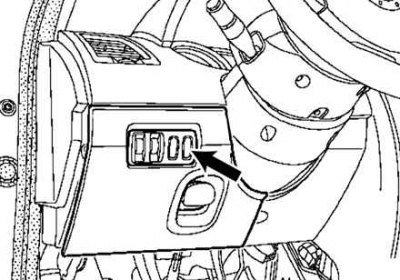
Fig. 1.89. ASR system deactivation button

Fig. 1.89. ASR system deactivation button


The message "Traction control system disabled" flashes and the indicator lights come on (Fig. 1.89).

Disabling this function also disables the ESP function.

As soon as possible, turn the system on by pressing the switch again.

The function will be automatically activated when the ignition is turned on or when the speed increases above 50 km/h (approximately).

At speeds above 50 km/h, this function cannot be disabled.
This article is available on: russian, bulgarian, belarusian, ukrainian, serbian, croatian, romanian, polish, slovak, hungarian
Article has been reviewed by editor: Kupriyanov Sergey
Share with friends:
Previous
Megan 2: Operation and driving
Next

Electronic Stability Program (ESP) with Cornering Control
Power steering system
Automatic transmission
Parking brake
Manual transmission control
Anti-lock braking system (ABS)
Speed control/limiting system
Tire pressure monitoring system
Other articles on other Renault models

➽ Stability control system ESP with understeer control and… Renault Fluence 1 (2009-2020, petrol)
➽ Front suspension anti-roll bar Renault Duster 1 (2009-2017)
➽ Electronic anti-theft engine immobilizer system Renault Kangoo 1 (1997-2007)
➽ Regulation of the composition of the working mixture (K4M and… Renault Laguna 2 (2001-2007)
➽ Replacement of anti-roll bar components Renault Logan 1 (2004-2012, petrol)
Link to this article in different formats
Reviews and comments of visitors
No comments yet


Add two numbers 26 + 45


Megan 2 (2002-2009, petrol) 
  • User manual
  • Introduction to manual
  • Controls and instruments
  • Salon equipment
  • Operation and driving
  • Maintenance and care
  • Power unit
  • Engine repair
  • Fuel system
  • Injection system
  • Intake and exhaust system
  • Starting and charging system
  • Cooling system
  • Decreased toxicity
  • Transmission
  • Clutch
  • Mechanical gearbox
  • Automatic gearbox
  • Wheel drive mechanism
  • Chassis, running gear
  • Suspension and wheels
  • Steering
  • Brake system
  • Body and interior
  • Exterior (external elements)
  • Interior (internal elements)
  • Doors, locks and windows
  • Heating and air conditioning
  • Electrical equipment
  • Equipment and devices
  • Headlights and lighting
  • Electrical circuits
Megane 1 (1995-2002) 
  • General information
  • User manual
  • Maintenance
  • Power unit
  • Petrol engines 1.4/1.6 l
  • Petrol engines 2.0 l
  • Diesel engines 1.9 l
  • Overhaul of engines
  • Cooling system
  • Fuel system (petrol)
  • Fuel system (diesel)
  • Decreased toxicity
  • Charge and launch systems
  • Ignition system (petrol)
  • Preheat system (diesel)
  • Transmission
  • Clutch
  • Mechanical gearbox
  • Automatic gearbox
  • Drive shafts
  • Chassis, running gear
  • Brake system
  • Car suspension
  • Steering
  • Body and interior
  • Exterior (external elements)
  • Interior (internal elements)
  • Doors, locks and windows
  • Electrical equipment
  • Equipment and devices
  • Electrical circuits
RenaultBook.ru © 2018–2026 | Mobile version | News and articles | Sitemap: EN BG BY UA RS HR RO PL SK HU | Administration | Site search | Bookmark
Duster 1 (2009-2017) | Fluence 1 (2009-2020, petrol) | Kangoo 1 (1997-2007) | Laguna 2 (2001-2007) | Logan 1 (2004-2012, petrol) | Logan 2 (2012-2020) | Megane 1 (1995-2002) | Megan 2 (2002-2009, petrol) | Sandero 1 (2007-2012, petrol) | Scenic 1 (1996-2003) | Symbol 1 (1999-2008, petrol) | Symbol 2 (2008-2013, petrol) | Renault 19 (1988-1996) | Espace I and II (1984-1996) | Espace III (1996-2002) | Clio 1 (1990-1998) |
We want your visit to be comfortable 😌 and use cookies 🍪 to do so.