Share with friends:

Car suspension and wheels Renault Megane 2

General information about car suspension
The front suspension is independent, with McPherson struts, lower wishbones and an anti-roll bar. Racks with twisted springs and built-in telescopic shock absorbers are attached with the upper part to the reinforced...
The front suspension is independent, with McPherson struts, lower wishbones and an anti-roll bar. Racks with twisted springs and built-in telescopic shock absorbers are attached with the upper part to the reinforced...

Control and adjustment values of the angles of installation of the front wheels
Attention! After wheel alignment is complete, program the torque sensor and steering angle using the scan tool. Angle of longitudinal inclination of the axis of rotation The angle of the longitudinal inclination of the...
Attention! After wheel alignment is complete, program the torque sensor and steering angle using the scan tool. Angle of longitudinal inclination of the axis of rotation The angle of the longitudinal inclination of the...

Height of control points of the lower part of the body
Pic. 4.5. Ride Height Measurement Points Measuring the vehicle's ride height is necessary to maintain the accuracy of the wheel alignment, as these angles vary slightly with the height of the vehicle. The ground...
Pic. 4.5. Ride Height Measurement Points Measuring the vehicle's ride height is necessary to maintain the accuracy of the wheel alignment, as these angles vary slightly with the height of the vehicle. The ground...

Diagnostics of vibrations related to vehicle speed
General information Vibrations are caused by a sequence of pulses. In the case of vibrations related to the speed of movement, these impulses are generated by an imbalance of some element rotating with the wheel, which...
General information Vibrations are caused by a sequence of pulses. In the case of vibrations related to the speed of movement, these impulses are generated by an imbalance of some element rotating with the wheel, which...

Tire pressure monitoring system (diagnostics)
The sensors begin to emit signals about a minute after the speed exceeds 20 km/h. While driving, the sensors emit signals every minute. The sensors remain active for 15 minutes after the car stops, then they go into...
The sensors begin to emit signals about a minute after the speed exceeds 20 km/h. While driving, the sensors emit signals every minute. The sensors remain active for 15 minutes after the car stops, then they go into...

Tire pressure
Cold air pressure, bar, with full load and/or motorway driving. Attention! When measuring pressure on warm tires, take into account its increase from heating in the range of 0.2–0.3 bar, in no case lower the pressure....
Cold air pressure, bar, with full load and/or motorway driving. Attention! When measuring pressure on warm tires, take into account its increase from heating in the range of 0.2–0.3 bar, in no case lower the pressure....

Wheel balancing
Pic. 4.9. Bushing for balancing: 1 - sleeve To accurately reproduce the conditions of wheel installation on a car, be sure to install a bushing with a diameter of 60 mm on the balancing stand (pic. 4.9). There are 3...
Pic. 4.9. Bushing for balancing: 1 - sleeve To accurately reproduce the conditions of wheel installation on a car, be sure to install a bushing with a diameter of 60 mm on the balancing stand (pic. 4.9). There are 3...

Removing and balancing wheels
Place the vehicle on a two-post lift immediately after the road test. Loosen the wheel bolts. Raise the vehicle. Release the parking brake. Make sure the wheel is free from impact damage (if there are deformations,...
Place the vehicle on a two-post lift immediately after the road test. Loosen the wheel bolts. Raise the vehicle. Release the parking brake. Make sure the wheel is free from impact damage (if there are deformations,...

Installing a wheel on a car
Reinstall the wheel on the vehicle so that the tire valve is in the up position. Pic. 4.13. Installing and fixing the wheel on the car: 1 - lower wheel bolts; 2 - upper wheel bolts Pre-tighten wheel bolts to torque (30...
Reinstall the wheel on the vehicle so that the tire valve is in the up position. Pic. 4.13. Installing and fixing the wheel on the car: 1 - lower wheel bolts; 2 - upper wheel bolts Pre-tighten wheel bolts to torque (30...

Removal and installation of a rotary fist of a forward suspension bracket
Removing Place the car on a two post lift. Unlock the steering wheel. Remove the wheel from the corresponding side. Disconnect the wheel speed sensor wire holder (if it is installed). Remove the wheel speed sensor. Pic....
Removing Place the car on a two post lift. Unlock the steering wheel. Remove the wheel from the corresponding side. Disconnect the wheel speed sensor wire holder (if it is installed). Remove the wheel speed sensor. Pic....

Removal and installation of the bearing of a nave of a forward wheel
Attention! The bearing has a built-in signal disk for the wheel speed sensor, take care not to damage the disk (if he is) when installing the bearing. Removing Remove the steering knuckle. Pic. 4.18. Pressing the hub...
Attention! The bearing has a built-in signal disk for the wheel speed sensor, take care not to damage the disk (if he is) when installing the bearing. Removing Remove the steering knuckle. Pic. 4.18. Pressing the hub...

Spring and shock absorber front suspension
Removing Place the car on a two post lift. Attention! Make sure that the color coding of the springs and shock absorbers of the car is identical to the marking of the spare parts. Unlock the steering wheel. Disconnect...
Removing Place the car on a two post lift. Attention! Make sure that the color coding of the springs and shock absorbers of the car is identical to the marking of the spare parts. Unlock the steering wheel. Disconnect...
Shock absorber noise (diagnostics)
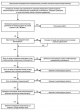
Each shock absorber replacement must be justified by the results of the diagnosis below. Noises heard when driving off the sidewalk («cannon shot»), are related to the characteristics of the shock absorber and do not...
Each shock absorber replacement must be justified by the results of the diagnosis below. Noises heard when driving off the sidewalk («cannon shot»), are related to the characteristics of the shock absorber and do not...

Removal and installation of the front suspension arm
Attention! Regardless of the lifting equipment used, do not use the suspension arm as a support. Removing Place the car on a two post lift. Unlock the steering wheel. Remove the front wheel and side fender liner. Pic....
Attention! Regardless of the lifting equipment used, do not use the suspension arm as a support. Removing Place the car on a two post lift. Unlock the steering wheel. Remove the front wheel and side fender liner. Pic....

Removal and installation of the bearing of a nave
Note. Before starting the removal procedure, fix the indicator on the brake drum and check on it, the axial clearance (allowable limits 0–0.03 mm). Removing Remove the brake drum. Pic. 4.37. Removing the retaining ring...
Note. Before starting the removal procedure, fix the indicator on the brake drum and check on it, the axial clearance (allowable limits 0–0.03 mm). Removing Remove the brake drum. Pic. 4.37. Removing the retaining ring...

Removal and installation of a spring of a back suspension bracket
Note. When removing, remember the colors of the markings of shock absorbers and springs so as not to confuse them during installation. Removing Place the car on a two post lift. Remove rear wheels. Install the hydraulic...
Note. When removing, remember the colors of the markings of shock absorbers and springs so as not to confuse them during installation. Removing Place the car on a two post lift. Remove rear wheels. Install the hydraulic...

Removal and installation of the rear shock absorber
Attention! Regardless of the lifting equipment used, never use the rear suspension beam as a support. When replacing one of the shock absorbers, the shock absorber on the opposite side must also be replaced. Removing...
Attention! Regardless of the lifting equipment used, never use the rear suspension beam as a support. When replacing one of the shock absorbers, the shock absorber on the opposite side must also be replaced. Removing...

Removal and installation of the rear axle assembly
Removing Release the parking brake. Place the car on a two post lift. Attention! When carrying out this operation, it is necessary to secure the vehicle on a lift using a safety belt to prevent the vehicle from being...
Removing Release the parking brake. Place the car on a two post lift. Attention! When carrying out this operation, it is necessary to secure the vehicle on a lift using a safety belt to prevent the vehicle from being...
This section is available on: russian, bulgarian, belarusian, ukrainian, serbian, croatian, romanian, polish, slovak, hungarian
Other sections on other Renault models
➽ Chassis, running gear: Car suspension Renault Kangoo 1 (1997-2007)
➽ Chassis, running gear: Car suspension Renault Laguna 2 (2001-2007)
➽ Chassis, running gear: Suspension and wheels Renault Logan 2 (2012-2020)
➽ Chassis, running gear: Car suspension Renault Scenic 1 (1996-2003)
➽ Chassis, running gear: Car suspension Renault Symbol 1 (1999-2008, petrol)
➽ Chassis, running gear: Car suspension Renault 19 (1988-1996)
Link to this section in different formats
TEXTHTMLBB Code
- User manual
- Introduction to manual
- Controls and instruments
- Salon equipment
- Operation and driving
- Maintenance and care
- Power unit
- Engine repair
- Fuel system
- Injection system
- Intake and exhaust system
- Starting and charging system
- Cooling system
- Decreased toxicity
- Transmission
- Clutch
- Mechanical gearbox
- Automatic gearbox
- Wheel drive mechanism
- Chassis, running gear
- Suspension and wheels
- Steering
- Brake system
- Body and interior
- Exterior (external elements)
- Interior (internal elements)
- Doors, locks and windows
- Heating and air conditioning
- Electrical equipment
- Equipment and devices
- Headlights and lighting
- Electrical circuits
- General information
- User manual
- Maintenance
- Power unit
- Petrol engines 1.4/1.6 l
- Petrol engines 2.0 l
- Diesel engines 1.9 l
- Overhaul of engines
- Cooling system
- Fuel system (petrol)
- Fuel system (diesel)
- Decreased toxicity
- Charge and launch systems
- Ignition system (petrol)
- Preheat system (diesel)
- Transmission
- Clutch
- Mechanical gearbox
- Automatic gearbox
- Drive shafts
- Chassis, running gear
- Brake system
- Car suspension
- Steering
- Body and interior
- Exterior (external elements)
- Interior (internal elements)
- Doors, locks and windows
- Electrical equipment
- Equipment and devices
- Electrical circuits
RenaultBook.ru © 2018–2024 | Mobile version | News and articles | Sitemap: EN BG BY UA RS HR RO PL SK HU | Administration | Site search | Bookmark
Duster 1 (2009-2017) | Fluence 1 (2009-2020, petrol) | Kangoo 1 (1997-2007) | Laguna 2 (2001-2007) | Logan 1 (2004-2012, petrol) | Logan 2 (2012-2020) | Megane 1 (1995-2002) | Megan 2 (2002-2009, petrol) | Scenic 1 (1996-2003) | Symbol 1 (1999-2008, petrol) | Symbol 2 (2008-2013, petrol) | Renault 19 (1988-1996) | Espace I and II (1984-1996) | Espace III (1996-2002) |