



Contents: General information 🠛 Determining the source of vibrations 🠛 Special cases of vibration occurrence 🠛 Troubleshooting Algorithms 🠛
General information
Vibrations are caused by a sequence of pulses. In the case of vibrations related to the speed of movement, these pulses are generated by the imbalance of some element rotating together with the wheel, which is transmitted to the corresponding wheel suspension. The frequency of these pulses changes with the speed of movement. They are usually damped by a specially selected design of the suspension elements and supports, except for vibrations of a strictly defined frequency of "natural oscillations of the suspension", which depend on its longitudinal rigidity. The moments of occurrence of natural oscillations of the front and rear suspensions are usually very different and can be expressed through the speed of movement, since the "rolling radius" of the wheels does not change.
The number of pulses per wheel revolution is the ratio between the moment of occurrence of natural vibrations of the corresponding suspension, expressed through the speed of movement, and the speed of movement at the moment of occurrence of vibrations (see the table of occurrence of natural vibrations of the front and rear suspensions of the vehicles covered by this Technical Note).
There are two types of imbalance.
- Imbalance: Mass imbalance = one impulse per wheel revolution.
- Radial runout: geometric deformation = one or more pulses per wheel revolution.
Vibrations occur in the following units and parts:
- rotating elements (tires, wheel disks, decorative wheel caps, brake mechanisms, wheel drive shafts, hollow axle gear of open type differential of manual transmission);
- damping elements (shock absorbers, mounts and/or damping elements of the suspension, subframe, rack and pinion steering mechanism, steering column, seats, etc.).
Determining the source of vibrations
Determining the source of vibrations is also an element of diagnostics, but it is not systematized. Vibrations are transmitted through the suspension and then through the steering knuckle (center of rotation). Then their "path" (or "transfer function") depends on the energy of vibrations, the nature of the connections between the parts (tightening of fasteners, condition of vibration-damping elements, etc.), their rigidity or from various possible components of the impulses causing vibrations.
It can be assumed that in most cases of vibration transmission to the steering wheel, they come from the front suspension and are transmitted through the steering. But this is not an absolutely universal rule. The cause of vibrations of the steering wheel can be some very specific defects of the rear tires.
Vibrations are caused by a sequence of impulses (impacts) coming from elements rotating together with the wheel. Vibrations are caused by two types of reasons:
- mass imbalance;
- one pulse per wheel revolution.
The front and rear suspensions have characteristics that are used to make diagnostics.
They dampen vibrations except those that have a "natural" frequency.
The moment of occurrence of natural oscillations of the suspension depends on its longitudinal rigidity. The frequency of oscillations is determined by the speed of the vehicle. The moments of occurrence of natural oscillations of the front and rear suspensions differ from each other.
Vibration diagnostics allow you to determine which suspension is causing the vibration (front or back) they come from, and in particular, determine the number of pulses per wheel revolution. This initial diagnostic data serves as a guide for choosing the necessary technical intervention. It is therefore important to obtain this data from the owner or to perform a road test.
(Article reprinted from the website RENAULTBOOK)
The amount of imbalance required to create noticeable vibrations is approximately:
- 20g for wheels (tires on 15-inch rims);
- 100 g for brake disc or drum;
- 500 g for the wheel hub;
- 1.16 kg for the wheel drive shaft.
Warning! Some types of vibration caused by engine operation can be mistaken for vibrations related to the driving speed. In this case, the occurrence of vibration is most likely related to the engine speed or load. This can only be verified by reproducing the fault during the appropriate check.
Special cases of vibration occurrence
A possible cause of vibrations is a defect in the tire design. Such a defect is not visible from the outside. To detect it, it is necessary to perform an appropriate check.
Note: If there is a defect in the tire design, heavy weights are usually installed on the wheel (50 g or more on one side of the wheel rim).
"Hardening" of suspension shock absorbers
There are cases of "vibrations" occurring only on roads with particularly smooth surfaces (on motorways or new expressways). Friction in the shock absorbers combined with a stiff suspension can cause a bounce similar to a vibration. This phenomenon stops under normal driving conditions (during a normal overtaking maneuver, on a rougher road surface, etc.).
Check the tightening torques of the threaded connections and the condition of the suspensions. After installing new parts or on a new car, this phenomenon gradually disappears as the parts "grind in".
Excessive tire pressure
When tires are overinflated, a rebound phenomenon occurs, which can be mistaken for vibrations.
Troubleshooting Algorithms
Test 1: Road test to determine the nature of vibrations and their sources.
Mark the position of the tire on the wheel rim (for less visibility, the mark is applied to the metal on the inside of the wheel)
Play vibrations, make sure they are related to the speed of movement (reproduce vibrations in several gears of the gearbox).
Record the range of speeds in which vibrations occur.
Check the effect of braking on vibrations:
- in the area of vibration speeds, slow down the car slightly (until the brake pads touch the disc) and determine the presence or absence of vibration changes while maintaining the speed of movement.
Check the effect of changing engine torque (movement "under tension" when engaging lower gears):
- in the area of vibration occurrence speeds, change the engine load (to create conditions for driving "under tension", then when switching to lower gears) and determine the effect of this change on vibrations.
Determine which of the suspensions is causing the vibration and the number of pulses per wheel revolution using the table of natural vibration rates of suspensions.
Test 2: Road test to determine the speed of occurrence of natural vibrations of the suspensions.
This test consists of determining the speed of occurrence of natural oscillations of suspensions by artificially creating an imbalance (obtaining one pulse per wheel revolution) on one of the front wheels, then on one of the rear wheels.
The best solution is to use another vehicle for this check (the same model, but not necessarily the same engine).
Place an additional 50g balance weight on one of the front wheels and mark its position (the position of the weight on the wheel rim circumference does not matter). Leave the old weights or weight in place.
Perform a road test and record the speed range in which vibrations occur. The result corresponds to the speed of occurrence of natural vibrations of the front suspension of the vehicle being tested.
Remove the extra weight from the front wheel and place it on one of the rear wheels.
Perform the road test again and record the speed range in which the vibrations occur. The result corresponds to the speed of occurrence of natural vibrations of the rear suspension of the vehicle being tested.
Compare the result of test 1 with test 2 and determine which suspension is the source of vibrations and the number of pulses per wheel revolution.
Test 3: Road test to determine if there are any defects in the tyre structure.
A possible cause of vibrations is a defect in the internal structure of the tires. Such a defect is not visible from the outside. To detect it, you should swap the front and rear wheels (put the left wheels on the left, the right wheels on the right), having previously recorded the vibration velocity range during test 1, and repeat test 1. If during this new test the vibration velocity range has changed and now corresponds to the natural vibration velocity of the other suspension (see Table 4.2 "Natural vibration velocity of suspensions"), then the defect is related to the tires or wheel balancing.
Note: If there is a defect in the tire design, heavy weights are usually installed on the wheel (50 g or more on one side of the wheel rim).
Note: The reliability of the results of test 3 is based on the difference between the natural oscillation rates of the front and rear suspensions.
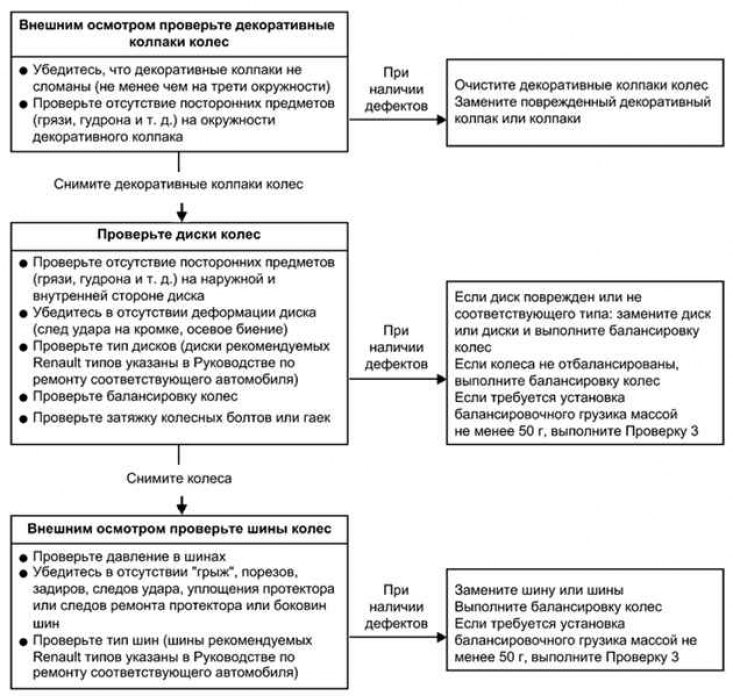
Fig. 4.8. Vibrations of the front or rear suspension at one pulse per wheel revolution
Table 4.1. Possible causes of imbalance

Table 4.2. Speed of occurrence of natural vibrations of suspensions

* Megane II 5- and 3-door hatchback, sedan, station wagon and convertible.