
English Русский
Български
Беларускі
Український
Српски
Hrvatski
Română
Polski
Slovenský
Magyar
Bookmark Contacts Articles Sitemap
Company vehicles Peugeot Company vehicles Opel Company vehicles Skoda Company vehicles Land Rover Company vehicles Mitsubishi Company vehicles Volkswagen Company vehicles Honda
RenaultBook.ru


Duster   Fluence   Kangoo   Laguna   Logan   Megane   Sandero   Scenic   Symbol   Clio   Other
Megane 1 (1995-2002) Megan 2 (2002-2009, petrol)

Starting the engine (Renault Megane 2)

  • Main
  • Megane
  • Megan 2 (2002-2009, petrol)
  • User manual
  • Operation and driving
  • Starting the engine
0
Contents: Renault Remote Control Card 🠛 Reno Card with "hands-free" function 🠛 Launch conditions 🠛 Features of a car with an automatic…🠛 "Additional equipment" function 🠛 Starting with the tailgate open (in…🠛

Renault Remote Control Card
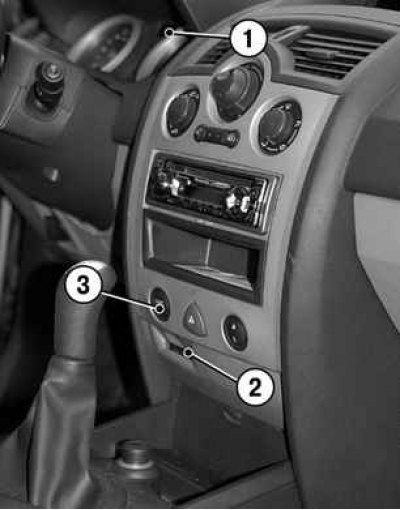


Fig. 1.80. Starting the engine: 1 – trip computer display; 2 – reading device; 3 – Engine start…

Fig. 1.80. Starting the engine: 1 – trip computer display; 2 – reading device; 3 – Engine start button


The message "Insert card" appears on display 1 of the on-board computer (Fig. 1.80).

Insert the Renault card into the reader 2 until it stops.

Reno Card with "hands-free" function


(You can find the original at this link: «renaultbook.ru»)
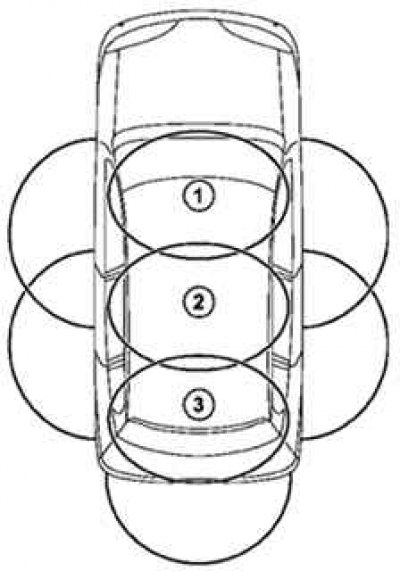
Figure 1.81. Areas of operation of the Renault card with the «hands-free» function

Figure 1.81. Areas of operation of the Renault card with the "hands-free" function


Cars with a hands-free system have three engine start antennas for communication with the map (Fig. 1.81):
  • front antenna 1, located behind the front panel of the instrument panel;
  • antenna 2 in the rear of the center console;
  • antenna 3 at the rear of the floor.

Note: The antennas used to unlock the body opening elements are not connected to the electronic immobilizer system.


Note: The antennas are the same, interchangeable and do not require programming.


Launch conditions


To start the engine, follow the instructions on the instrument panel below:
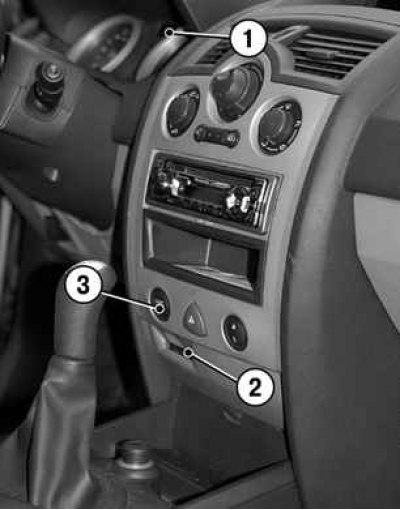
Fig. 1.80. Starting the engine: 1 – trip computer display; 2 – reading device; 3 – Engine start…

Fig. 1.80. Starting the engine: 1 – trip computer display; 2 – reading device; 3 – Engine start button


Press the brake or clutch pedal (the pedal must be kept pressed during the entire start-up period) and press button 3 (see fig. 1.80). If the gear is engaged, starting is only possible by pressing the clutch pedal.

Features of a car with an automatic transmission


With the gear selector in position N or P, press the brake pedal.

Note: If one of the engine starting conditions is not met, the message "Disengage clutch + Start button" or "Press brake + Start button" appears on the instrument panel.


Note: In some cases, it is necessary to turn the steering wheel while pressing the start button 3 to unlock the steering column.


"Additional equipment" function


To use some functions when the engine is stopped (car radio, navigation system, etc.), press the button Z.

Starting with the tailgate open (in hands-free mode)


If you need to start the engine with the tailgate open, remove the cover and insert the card into reader 2.
This article is available on: russian, bulgarian, belarusian, ukrainian, serbian, croatian, romanian, polish, slovak, hungarian
Article has been reviewed by editor: Kupriyanov Sergey
Share with friends:
 
Megan 2: Operation and driving
Next

 
Engine stop
Manual transmission control
Parking brake
Automatic transmission
Power steering system
Other articles on other Renault models

➽ Starting and stopping the engine Renault Duster 1 (2009-2017)
➽ Starting the engine with an additional battery Renault Fluence 1 (2009-2020, petrol)
➽ Starting the engine from an auxiliary battery Renault Kangoo 1 (1997-2007)
➽ Engine Starting Circuit Diagram F4P 775; F4R 713 DG/BVA4 Renault Laguna 2 (2001-2007)
➽ General techniques for starting an engine Renault Logan 1 (2004-2012, petrol)
Link to this article in different formats
Reviews and comments of visitors
No comments yet


Add two numbers 35 + 16


Megan 2 (2002-2009, petrol) 
  • User manual
  • Introduction to manual
  • Controls and instruments
  • Salon equipment
  • Operation and driving
  • Maintenance and care
  • Power unit
  • Engine repair
  • Fuel system
  • Injection system
  • Intake and exhaust system
  • Starting and charging system
  • Cooling system
  • Decreased toxicity
  • Transmission
  • Clutch
  • Mechanical gearbox
  • Automatic gearbox
  • Wheel drive mechanism
  • Chassis, running gear
  • Suspension and wheels
  • Steering
  • Brake system
  • Body and interior
  • Exterior (external elements)
  • Interior (internal elements)
  • Doors, locks and windows
  • Heating and air conditioning
  • Electrical equipment
  • Equipment and devices
  • Headlights and lighting
  • Electrical circuits
Megane 1 (1995-2002) 
  • General information
  • User manual
  • Maintenance
  • Power unit
  • Petrol engines 1.4/1.6 l
  • Petrol engines 2.0 l
  • Diesel engines 1.9 l
  • Overhaul of engines
  • Cooling system
  • Fuel system (petrol)
  • Fuel system (diesel)
  • Decreased toxicity
  • Charge and launch systems
  • Ignition system (petrol)
  • Preheat system (diesel)
  • Transmission
  • Clutch
  • Mechanical gearbox
  • Automatic gearbox
  • Drive shafts
  • Chassis, running gear
  • Brake system
  • Car suspension
  • Steering
  • Body and interior
  • Exterior (external elements)
  • Interior (internal elements)
  • Doors, locks and windows
  • Electrical equipment
  • Equipment and devices
  • Electrical circuits
RenaultBook.ru © 2018–2026 | Mobile version | News and articles | Sitemap: EN BG BY UA RS HR RO PL SK HU | Administration | Site search | Bookmark
Duster 1 (2009-2017) | Fluence 1 (2009-2020, petrol) | Kangoo 1 (1997-2007) | Laguna 2 (2001-2007) | Logan 1 (2004-2012, petrol) | Logan 2 (2012-2020) | Megane 1 (1995-2002) | Megan 2 (2002-2009, petrol) | Sandero 1 (2007-2012, petrol) | Scenic 1 (1996-2003) | Symbol 1 (1999-2008, petrol) | Symbol 2 (2008-2013, petrol) | Renault 19 (1988-1996) | Espace I and II (1984-1996) | Espace III (1996-2002) | Clio 1 (1990-1998) |
We want your visit to be comfortable 😌 and use cookies 🍪 to do so.