



Share with friends:
Petrol engines 1.6 liter (K7M/K4M) Renault Logan 2

General information about the 1.6L petrol engine
Engine Identification Data The engine identification data is located on the cylinder block between the exhaust manifold and the flywheel. The data may be either on a separate plate attached with rivets or applied...
Engine Identification Data The engine identification data is located on the cylinder block between the exhaust manifold and the flywheel. The data may be either on a separate plate attached with rivets or applied...

Preparing for repairs
Note: All work on the engine must only be performed by suitably qualified personnel. When performing repair work on a vehicle, it is necessary to follow basic safety rules. The quality of repair depends primarily on the...
Note: All work on the engine must only be performed by suitably qualified personnel. When performing repair work on a vehicle, it is necessary to follow basic safety rules. The quality of repair depends primarily on the...

Compression check
1. Remove the spark plugs. 2. Connect the compression gauge (1). Engine K7M (8 valves) Engine K4M(16 valves) 3. Connect the diagnostic scanner to the car and run the following commands: RZ003: Motor adaptation (ENGINE...
1. Remove the spark plugs. 2. Connect the compression gauge (1). Engine K7M (8 valves) Engine K4M(16 valves) 3. Connect the diagnostic scanner to the car and run the following commands: RZ003: Motor adaptation (ENGINE...

Engine attachments
Attachment drive belt Replacing the accessory drive belt Attention: Use protective gloves when performing work. To avoid damage to the crankshaft pulley, do not start the engine with the accessory drive belts removed....
Attachment drive belt Replacing the accessory drive belt Attention: Use protective gloves when performing work. To avoid damage to the crankshaft pulley, do not start the engine with the accessory drive belts removed....

Removal and installation the air conditioning compressor
Caution: Observe precautions when handling refrigerant (see chapter " Air conditioning system "). Note: To remove the air conditioning compressor, a special station for draining and filling the air conditioning system...
Caution: Observe precautions when handling refrigerant (see chapter " Air conditioning system "). Note: To remove the air conditioning compressor, a special station for draining and filling the air conditioning system...

Removal and installation the power steering pump
1. Place the vehicle on a two-post lift. 2. Disconnect the negative battery terminal. 3. Place the hose clamp (Ms. 583) on the low pressure line on the pump. 4. Remove the accessory drive belt. 5. Disconnect the high...
1. Place the vehicle on a two-post lift. 2. Disconnect the negative battery terminal. 3. Place the hose clamp (Ms. 583) on the low pressure line on the pump. 4. Remove the accessory drive belt. 5. Disconnect the high...

Removal and installation the multifunctional support
Removal 1. Place the vehicle on a two-post lift. 2. Disconnect the negative battery terminal. 3. Loosen the mounting bolts and remove the engine protective pan. 4. Remove the accessory drive belt. 5. Remove the...
Removal 1. Place the vehicle on a two-post lift. 2. Disconnect the negative battery terminal. 3. Loosen the mounting bolts and remove the engine protective pan. 4. Remove the accessory drive belt. 5. Remove the...

Removal and installation of the power unit assembly
Engine K7M: 1. Cylinder head mounting support. 2. Front side member. 3. Engine with gearbox assembly. 4. Engine thrust rod. 5. Engine thrust rod support. 6. Gearbox support. 7. Gearbox elastic support on the body. 8....
Engine K7M: 1. Cylinder head mounting support. 2. Front side member. 3. Engine with gearbox assembly. 4. Engine thrust rod. 5. Engine thrust rod support. 6. Gearbox support. 7. Gearbox elastic support on the body. 8....

Repair of an engine removed from a car
Installing the engine on the assembly stand Attention: For safe work with the engine removed from the vehicle, it is recommended to use a special assembly stand. Attention: It is strictly forbidden to apply any pressure...
Installing the engine on the assembly stand Attention: For safe work with the engine removed from the vehicle, it is recommended to use a special assembly stand. Attention: It is strictly forbidden to apply any pressure...
Removal components from the top of the engine
1. Remove the timing belt. 2. Remove the ignition coils. 3. Remove the intake manifold. 4. Remove the rocker arm cover. 5. Remove the cylinder head. 6, Remove the exhaust manifold. 7. Remove the throttle valve. 8....
1. Remove the timing belt. 2. Remove the ignition coils. 3. Remove the intake manifold. 4. Remove the rocker arm cover. 5. Remove the cylinder head. 6, Remove the exhaust manifold. 7. Remove the throttle valve. 8....
Checking the technical condition and repairing the upper engine components
1. Clean the cylinder head. 2. Check the technical condition of the cylinder head, camshaft, valves and valve springs. Note: Replace with new parts those parameters of which do not comply with the standard.
1. Clean the cylinder head. 2. Check the technical condition of the cylinder head, camshaft, valves and valve springs. Note: Replace with new parts those parameters of which do not comply with the standard.

Removal components from the bottom of the engine
1. Remove the generator. 2. Remove the air conditioning compressor. 3. Remove the power steering pump. 4. Remove the multifunctional support. 5. Remove the water pump inlet pipe. 6. Remove the knock sensor (3). 7....
1. Remove the generator. 2. Remove the air conditioning compressor. 3. Remove the power steering pump. 4. Remove the multifunctional support. 5. Remove the water pump inlet pipe. 6. Remove the knock sensor (3). 7....
Checking the technical condition and repairing the lower engine components
1. Clean the engine cylinder block. 2. Check the condition of the cylinder block, pistons, connecting rods and crankshaft. Note: Replace with new parts those parameters of which do not comply with the standard.
1. Clean the engine cylinder block. 2. Check the condition of the cylinder block, pistons, connecting rods and crankshaft. Note: Replace with new parts those parameters of which do not comply with the standard.
Preparing engine parts for assembly
Parts that must be replaced with new ones: all seals, damaged cooling system hoses, drive belts, drive belt tensioners and rollers, crankshaft pulley bolt, camshaft sprocket bolt, exhaust manifold nuts, exhaust manifold...
Parts that must be replaced with new ones: all seals, damaged cooling system hoses, drive belts, drive belt tensioners and rollers, crankshaft pulley bolt, camshaft sprocket bolt, exhaust manifold nuts, exhaust manifold...
Installing lower engine components
1. Install the cylinder block. Note: When replacing the cylinder block, crankshaft or main bearing shells, it is necessary to determine the thickness class for each bearing shell for each crankshaft journal to ensure...
1. Install the cylinder block. Note: When replacing the cylinder block, crankshaft or main bearing shells, it is necessary to determine the thickness class for each bearing shell for each crankshaft journal to ensure...
Installing Upper Engine Components
1. Check the technical condition of the valves and install the valves on the cylinder head. Note: When replacing valves, be sure to select new valves with the same spare parts catalog numbers as those previously...
1. Check the technical condition of the valves and install the valves on the cylinder head. Note: When replacing valves, be sure to select new valves with the same spare parts catalog numbers as those previously...
Completion of engine repair
1. Remove the engine from the assembly stand. 2. Install the flywheel (see chapter " Clutch "). 3. Install the clutch discs (see chapter " Clutch "). 4. Install the flywheel locking device (Mot. 582-01) on the cylinder...
1. Remove the engine from the assembly stand. 2. Install the flywheel (see chapter " Clutch "). 3. Install the clutch discs (see chapter " Clutch "). 4. Install the flywheel locking device (Mot. 582-01) on the cylinder...
Engine components that can be reused when replacing an engine
Preparing the old engine for return to the factory for further refurbishment 1. Clean the engine. 2. Drain the engine oil and coolant. 3. Fix the old engine on the stand. 4. Install plastic plugs and caps. 5. Place the...
Preparing the old engine for return to the factory for further refurbishment 1. Clean the engine. 2. Drain the engine oil and coolant. 3. Fix the old engine on the stand. 4. Install plastic plugs and caps. 5. Place the...

Gas distribution mechanism drive
Removal and installation the timing belt, K7M engine (8 valves) Removal the timing belt of the gas distribution mechanism drive 1. Place the vehicle on a two-post lift. 2. Disconnect the negative battery terminal. 3....
Removal and installation the timing belt, K7M engine (8 valves) Removal the timing belt of the gas distribution mechanism drive 1. Place the vehicle on a two-post lift. 2. Disconnect the negative battery terminal. 3....

Removal and installation the timing belt, K4M engine (16 valves)
Removal the timing belt 1. Place the vehicle on a two-post lift. 2. Disconnect the negative battery terminal. 3. Remove the air intake and air resonator. 4. Remove the right front wheel. 5. Remove the accessory drive...
Removal the timing belt 1. Place the vehicle on a two-post lift. 2. Disconnect the negative battery terminal. 3. Remove the air intake and air resonator. 4. Remove the right front wheel. 5. Remove the accessory drive...

Cylinder head
Adjusting valve clearance Engine K7M (8 valves) Adjustment values Adjustment clearance on a cold engine, mm: Inlet valves: 0.10- 0.15 mm; Exhaust valves: 0.25 - 0.30 mm (without replacing valves); Exhaust valves: 0.20 -...
Adjusting valve clearance Engine K7M (8 valves) Adjustment values Adjustment clearance on a cold engine, mm: Inlet valves: 0.10- 0.15 mm; Exhaust valves: 0.25 - 0.30 mm (without replacing valves); Exhaust valves: 0.20 -...

Rocker cover
Removal and installation, K7M engine (8 valves) Removal 1. Disconnect the battery. 2. Disconnect: air filter housing, ignition coil unit 3. Disconnect the gasoline vapor recovery system tube from the holder at point...
Removal and installation, K7M engine (8 valves) Removal 1. Disconnect the battery. 2. Disconnect: air filter housing, ignition coil unit 3. Disconnect the gasoline vapor recovery system tube from the holder at point...

Removal and installation of the cylinder head, K7M engine (8 valves)
Removal 1. Place the vehicle on a two-post lift. 2. Drain the coolant through the lower hose using hose clamp pliers (Mot. 1448). 3. Remove the battery. 4. Loosen the mounting bolts and remove the engine protective pan....
Removal 1. Place the vehicle on a two-post lift. 2. Drain the coolant through the lower hose using hose clamp pliers (Mot. 1448). 3. Remove the battery. 4. Loosen the mounting bolts and remove the engine protective pan....

Removal and installation of the cylinder head, K4M engine (16 valves)
Removal 1. Place the vehicle on a two-post lift. 2. Disconnect the battery. 3. Remove: right front wheel, accessory drive belt, oil pan protection. 4. Drain the fluid from the engine cooling system. 5. Remove: nuts (1)...
Removal 1. Place the vehicle on a two-post lift. 2. Disconnect the battery. 3. Remove: right front wheel, accessory drive belt, oil pan protection. 4. Drain the fluid from the engine cooling system. 5. Remove: nuts (1)...

Disassembly and assembly of the cylinder head, K7M engine (8 valves)
Caution: It is strictly forbidden to apply any pressure to the engine oil pan. Damage to the pan can also cause various damages to the engine itself due to: blocking the oil intake; increasing the engine oil level above...
Caution: It is strictly forbidden to apply any pressure to the engine oil pan. Damage to the pan can also cause various damages to the engine itself due to: blocking the oil intake; increasing the engine oil level above...

Disassembly and assembly of the cylinder head, K4M engine (16 valves)
Disassembly 1. Drain the coolant from the engine cooling system. 2. Remove the air filter unit. 3. Remove the accessory drive belt. 4. Remove the crankshaft pulley. 5. Remove the timing belt of the gas distribution...
Disassembly 1. Drain the coolant from the engine cooling system. 2. Remove the air filter unit. 3. Remove the accessory drive belt. 4. Remove the crankshaft pulley. 5. Remove the timing belt of the gas distribution...

Cleaning the cylinder head
Attention: Do not scratch the aluminum contact surfaces, any damage to the contact surfaces may cause leaks. Use safety glasses with side protection and sealed gloves (nitrile type). Avoid contact of cleaning agent with...
Attention: Do not scratch the aluminum contact surfaces, any damage to the contact surfaces may cause leaks. Use safety glasses with side protection and sealed gloves (nitrile type). Avoid contact of cleaning agent with...

Camshafts
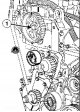
Removal and installation of the camshaft, K7M engine (8 valves) Note: To remove and install the camshaft, it is necessary to remove the cylinder head. Removal 1. Remove the cylinder head from the engine. 2. Place the...
Removal and installation of the camshaft, K7M engine (8 valves) Note: To remove and install the camshaft, it is necessary to remove the cylinder head. Removal 1. Remove the cylinder head from the engine. 2. Place the...
Front camshaft oil seals
Engine K7M (8 valves) Removal 1. Place the vehicle on a two-post lift. 2. Disconnect the battery. 3. Disconnect: right front wheel, right support of the pendulum suspension, accessory drive belt, timing belt. 4. Remove...
Engine K7M (8 valves) Removal 1. Place the vehicle on a two-post lift. 2. Disconnect the battery. 3. Disconnect: right front wheel, right support of the pendulum suspension, accessory drive belt, timing belt. 4. Remove...

Pistons and connecting rods
Removal and installation of pistons with connecting rods 1. Place the vehicle on a two-post lift. 2. Disconnect the negative battery terminal. 3. Remove the engine protective pan. 4. Drain the coolant from the engine...
Removal and installation of pistons with connecting rods 1. Place the vehicle on a two-post lift. 2. Disconnect the negative battery terminal. 3. Remove the engine protective pan. 4. Drain the coolant from the engine...

Removal and installation the crankshaft
Attention: It is strictly forbidden to apply any pressure to the engine oil pan. Damage to the pan can also cause various damages to the engine itself due to: blocking the oil intake; increasing the engine oil level...
Attention: It is strictly forbidden to apply any pressure to the engine oil pan. Damage to the pan can also cause various damages to the engine itself due to: blocking the oil intake; increasing the engine oil level...

Checking the crankshaft and selecting main bearing shells
A. Crankshaft identification stamp Decoding the crankshaft identification stamp: 1. Dimensional groups of crankshaft main journals. 2. Dimensional groups of crankshaft connecting rod journals. 3. Dimensional group of...
A. Crankshaft identification stamp Decoding the crankshaft identification stamp: 1. Dimensional groups of crankshaft main journals. 2. Dimensional groups of crankshaft connecting rod journals. 3. Dimensional group of...

Cylinder block
Disassembling the cylinder block 1. Remove the power unit assembly (engine with gearbox) from the car. 2. Disconnect the gearbox from the engine (see chapter " Transmission "). 3. Remove the accessory drive belt. 4....
Disassembling the cylinder block 1. Remove the power unit assembly (engine with gearbox) from the car. 2. Disconnect the gearbox from the engine (see chapter " Transmission "). 3. Remove the accessory drive belt. 4....

Front crankshaft oil seal
Removal 1. Place the vehicle on a two-post lift. 2. Disconnect the battery. 3. Remove: right front wheel. timing belt, crankshaft toothed pulley. 4. Press out the front crankshaft oil seal using the tool (Mot. 1577)....
Removal 1. Place the vehicle on a two-post lift. 2. Disconnect the battery. 3. Remove: right front wheel. timing belt, crankshaft toothed pulley. 4. Press out the front crankshaft oil seal using the tool (Mot. 1577)....

Rear crankshaft oil seal
Removal 1. Place the vehicle on a two-post lift. 2. Disconnect the battery. 3. Disconnect: gearbox, clutch, engine flywheel. Pressing out the oil seal 4. Press out the rear crankshaft oil seal using the tool (Mot.1579)...
Removal 1. Place the vehicle on a two-post lift. 2. Disconnect the battery. 3. Disconnect: gearbox, clutch, engine flywheel. Pressing out the oil seal 4. Press out the rear crankshaft oil seal using the tool (Mot.1579)...
Special tools and devices
Name of tools and devices Catalogue number TDC alignment pin Mot. 1489 Drive Belt Tension Tester (frequency indicator) Mot. 1715 TDC alignment pin Mot. 1983 Hose Clamp Pliers Mot. 1448 Hose clamps Ms. 583 Hose Clamp...
Name of tools and devices Catalogue number TDC alignment pin Mot. 1489 Drive Belt Tension Tester (frequency indicator) Mot. 1715 TDC alignment pin Mot. 1983 Hose Clamp Pliers Mot. 1448 Hose clamps Ms. 583 Hose Clamp...
This section is available on: russian, bulgarian, belarusian, ukrainian, serbian, croatian, romanian, polish, slovak, hungarian
Other sections on other Renault models
➽ Power unit: Petrol engines 1.8 l (F) Renault Clio 1 (1990-1998)
➽ Power unit: Petrol engines 1.4/1.6 l Renault Megane 1 (1995-2002)
➽ Power unit: Petrol engine (K4M) Renault Duster 1 (2009-2017)
Link to this section in different formats
TEXTHTMLBB Code
- General information
- Faults en route
- Daily checks
- Governing bodies
- Maintenance
- Power unit
- Petrol engines 1.2 l
- Petrol engines 1.6 l
- Diesel engines 1.5 l
- Cooling system
- Lubrication system
- Power and control system
- Intake and exhaust system
- Engine electrical equipment
- Transmission
- Clutch
- Car gearbox
- Drive shafts
- Chassis, running gear
- Suspension and wheels
- Brake system
- Steering
- Body and interior
- Exterior (external elements)
- Interior (internal elements)
- Safety system
- Heating and air conditioning
- Electrical equipment
- Equipment and devices
- Wiring diagrams (sedan)
- Wiring diagrams (wagon)
- General information
- Vehicle device
- User manual
- Faults en route
- Daily maintenance
- First maintenance
- Second maintenance
- Driver tips
- Power unit
- Engine repair
- Lubrication system
- Cooling system
- Power and exhaust system
- Transmission
- Clutch
- Car gearbox
- Drive shafts
- Chassis, running gear
- Front suspension
- Rear suspension
- Steering
- Brake system
- Wheels and tires
- Body and interior
- Exterior (external elements)
- Interior (internal elements)
- Doors, locks and windows
- Body Care
- Electrical equipment
- Equipment and devices
- Headlights and lighting
- Power devices
- Electrical circuits