



Contents: Disassembly 🠛 Checking and assembly 🠛
High mileage is not a sufficient indicator of the need for major repairs, on the other hand, low mileage does not exclude the need for major repairs. The most important indicator, apparently, is the timeliness of routine engine maintenance. With timely oil and filter changes, as well as with all other necessary maintenance work, the engine serves reliably for many thousands of kilometers. Conversely, insufficient or untimely maintenance can cause a sharp reduction in engine life.
Increased oil consumption indicates wear of piston rings, valve guides and valve stem seals. It is necessary to make sure that leaks are not the cause of increased oil consumption, and only then draw a conclusion about the unsuitability of piston rings and valve guides. To determine the probable cause of the malfunction, measure the compression in the engine cylinders. Also conduct tests using a vacuum gauge and determine the nature of the readings of this device.
Check the oil pressure with a pressure gauge screwed in place of the oil pressure sensor, and compare the test result with the standard value. If the oil pressure is low, the cause may be wear of the main and connecting rod bearings or oil pump parts.
Loss of power, engine failures, detonation or metallic knocks, increased noise from the valve timing mechanism, increased fuel consumption indicate the need for a major overhaul, especially if all these signs of abnormal operation appear simultaneously. If performing all adjustments does not lead to improvement, then the only way to eliminate abnormal engine operation is a major overhaul. A major overhaul consists of restoring engine parts to the condition specified in the technical data for a new engine.
During a major engine overhaul, repairs are also performed on units such as the starter, generator, and ignition distributor. As a result, the repaired engine should have the qualities of a new unit and withstand significant mileage without failures.
Before starting a major engine overhaul, read the description of the relevant procedures to get an idea of the upcoming scope of work and the requirements for it. If all the rules and regulations are followed, and all the necessary tools and devices are available, a major overhaul is not difficult to perform, but it will require a significant investment of time.
Disassembly
- This operation is carried out after removing the power unit from the vehicle and disconnecting the gearbox from the engine.
Attention: When disassembling the engine, make sure that all parts can be installed in their original places later.
- Before disassembling, remove all engine attachments such as the generator, manifolds, hoses, clutch and make sure the engine oil is drained from the engine.
- When disassembling, it is very important to maintain cleanliness to prevent contamination of the disassembled components.
- Before disassembling, clean the outside of the engine with kerosene or, if the engine is very dirty, with solvent.
- Once the parts are removed from the engine, wash them in kerosene.
- Never immerse parts with internal lubrication channels in kerosene. Such parts should be thoroughly wiped with a cloth soaked in kerosene. Lubrication channels should be cleaned with a wire rope.
- If possible, mount the engine on a stand, otherwise, mount the engine so that it will not be damaged when loosening tight nuts and bolts.
- Disconnect the tube from the water pump and remove the oil dipstick guide tube.
- Remove the cylinder head.
- Using a special tool, the dimensions of which are shown in Figure 1.63, remove the timing belt drive pulley from the crankshaft.
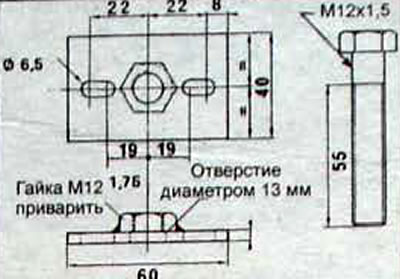
Fig. 1.63. Dimensions of the device for removing the toothed belt drive pulley from the crankshaft
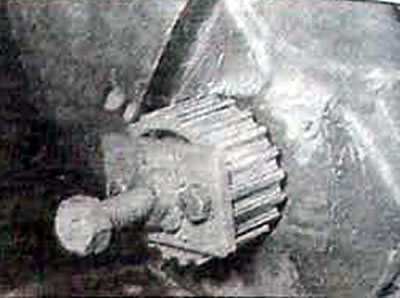
Fig. 1.64. Removing the toothed belt drive pulley from the crankshaft
- Remove the lower inner timing belt cover.
- Remove the bolts and remove the front cylinder block cover with the crankshaft oil seal.
- Remove the clutch housing with the pressure plate and the driven clutch disc.
- Remove the flywheel.
- Remove the bolts and remove the oil pan and oil pump.
- Remove the bolt and pulley from the intermediate or driven shaft, using an old toothed belt or the Mot 855 tool to hold the pulley from turning
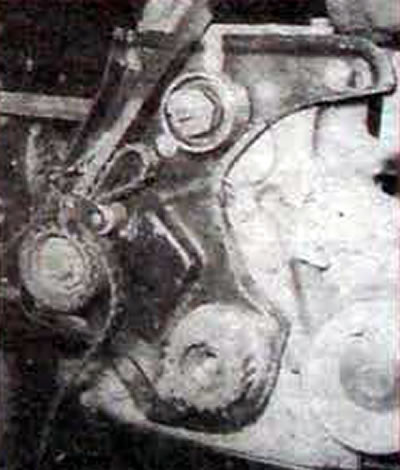
Fig. 1.65. Using the Mot. 855 tool to prevent the timing belt pulley from turning
Engine F3R 728
- Unscrew the bolts and remove the intermediate shaft cover with the seal.
- Remove the bolts and the intermediate shaft retaining plate
- Unscrew the bolts securing the plug that closes access to the oil pump drive gear, remove the plug and take out the gear (Fig. 1.67).
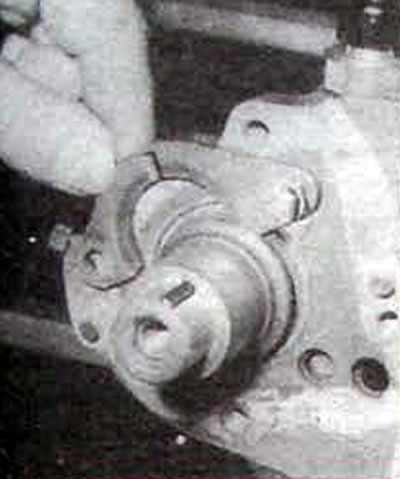
Fig. 1.66. Removing the locking plate securing the intermediate shaft cover on the F3R 728 engine
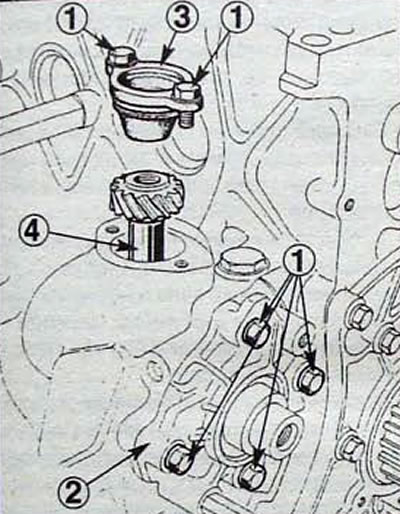
Fig. 1.67. Removing the oil pump drive gear on the F3R 728 engine: 1 - bolt; 2 - cover with seal; 3 - cork; 4 - oil pump drive gear
All engines
- Remove the timing belt tensioner roller.
- Check for identification marks on the connecting rod lower cap and connecting rod for proper reassembly.
- If necessary, mark the position of the lower connecting rod cap and connecting rod
- Unscrew the bolts securing the lower connecting rod caps and remove the caps together with the liners.
- Remove the connecting rod bearing shells and arrange them so that they can be installed in their original locations when reassembling the engine.
- Unscrew the main bearing cap mounting bolts and remove the caps together with the liners.
- Remove the main bearing shells and thrust half rings and arrange them so that they can be installed in their original places when assembling the engine.
- Remove the crankshaft.
- Remove the pistons and connecting rods from the cylinder block.
- From the cylinder block side, remove the main bearing shells.
- After the engine has been disassembled and all its parts have been cleaned of dirt and oil, they should be checked for signs of wear. In cases where there are no established wear limits for a part, it is necessary to decide whether the part should be replaced with a new one or whether it is suitable for further use. When making a decision, factors such as the expected service life of the engine, the required degree of reliability of the part, and the amount of disassembly and assembly work that will be required in the future when replacing it are taken into account.
Checking and assembly
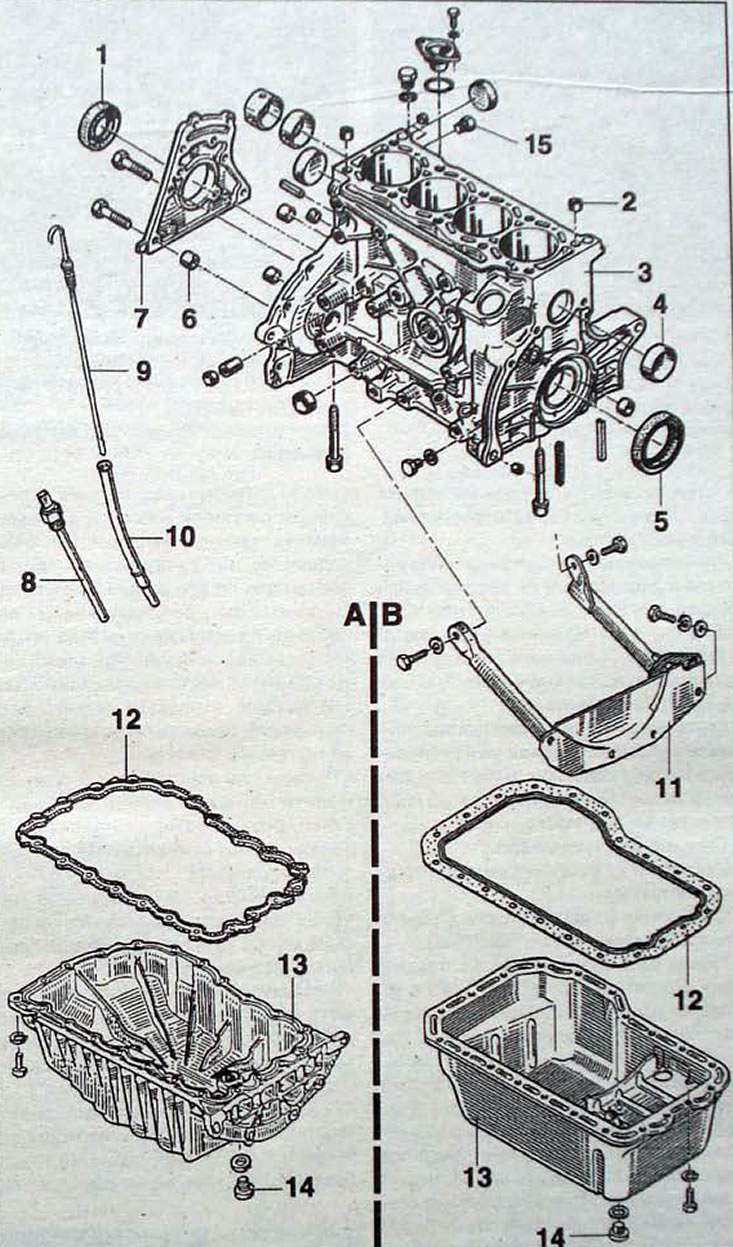
Fig. 1.68. Cylinder block: A - F3R 768 engine oil pan; B - oil pan of the F3R 728 engine; 1 - oil seal;2 - centering sleeve; 3 - cylinder block; 4 - plug; 5 - oil seal; 6 - centering sleeve of the front cover; 7 - front cylinder block cover with oil seal; 8 - Engine oil level/temperature sensor; 9 - oil level dipstick; 10 - guide tube for oil level dipstick; 11 - bracket; 12 - Oil pan gasket; 13 - oil pan; 14 - engine oil drain plug; 15 - coolant drain plug
Attention! The pistons are supplied together with the cylinder block, as they are matched in pairs with the cylinder diameters. The cylinder diameters are divided into three classes, and the cylinder class is marked with a 5 mm diameter hole on the front side of the cylinder block on the exhaust manifold side (Fig. 1.69).
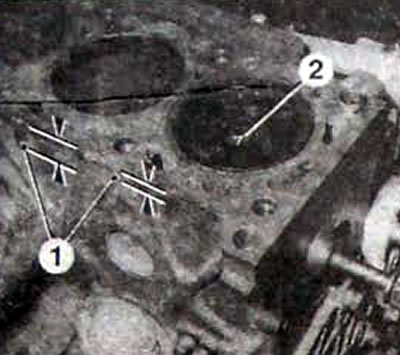
Fig. 1.69. Cylinder diameter marking on the cylinder block: 1 - drillings located in two different places; 2 - number on the piston bottom
- To achieve maximum engine life after a major overhaul with a minimum of problems, not only must all parts be assembled correctly, but all parts and components must be spotlessly clean, all lubrication passages must be clean, lock washers and spring washers must be installed in place. Bearings and other parts with sliding surfaces must be thoroughly lubricated during assembly.
- Before proceeding with assembly, replace with new bolts, studs and nuts, the threads of which are damaged. Also, replace with new spring washers.
- During installation, make sure that the parts are installed in their original places. Also check the direction of installation of the parts.
- Install the engine oil dipstick guide tube and water pump tube, after applying Loctite "Scelbloc" to the sealing surfaces.
- Wipe the outer parts of the main bearing shells and their installation locations in the cylinder block. Insert the upper main bearing shells into the cylinder block without lubrication. Note that the upper shells have grooves (Fig. 1.70).
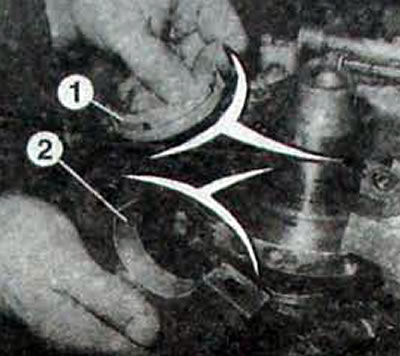
Fig. 1.70. Installing main bearing shells: 1 - the liner on the cylinder block side has a groove; 2 - the insert on the cover side does not have a groove
- Install the thrust half rings for adjusting the axial play of the crankshaft, with the grooves located on the crankshaft side (Fig. 1.71).
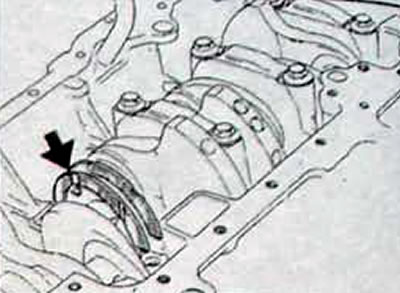
Fig. 1.71. Installing thrust rings for adjusting the axial play of the crankshaft
- Lubricate the working surfaces of the main bearings with clean engine oil and install the crankshaft into the cylinder block.
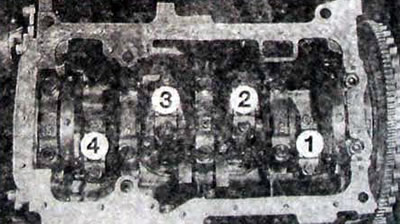
Fig. 1.72. The markings on the main bearing caps should be read from the side of the intermediate shaft or the idler roller of the toothed belt. The numbers indicate the cylinder numbers
- Install the caps with the main bearing shells No.3, 4 and 5 on the intermediate shaft side and secure with bolts, tightening them to the required torque
- Make sure the crankshaft rotates easily and freely.
- Mount a dial indicator on a magnetic stand and check the crankshaft axial clearance, which should be 0.070-0.230 mm (Fig. 1.73). If the clearance differs from the required value, install thrust half rings of a different thickness.
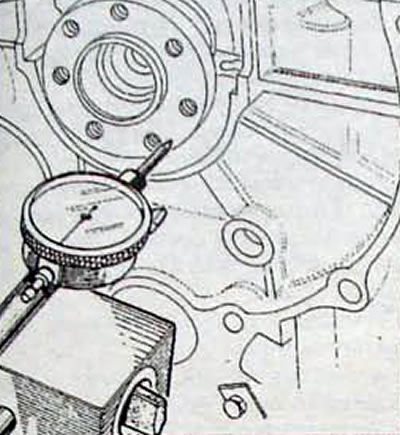
Fig. 1.73. Using a dial indicator to measure crankshaft axial play
- Install the main bearing cap No.2 and secure with bolts, tightening them to the required torque
- Install the main bearing cap No.1. Sealing is done on the sides of the cap.
- Clean the mating surfaces of main bearing cap No.1 and the cylinder block.
- Install main bearing cap No.1 without gasket.
- Use the drill shank to measure the distance (C, Fig. 1.74): If the distance is equal to or less than 5mm, select a 5.1mm thick spacer; if the distance is more than 5 mm, select a 5.4 mm thick spacer.
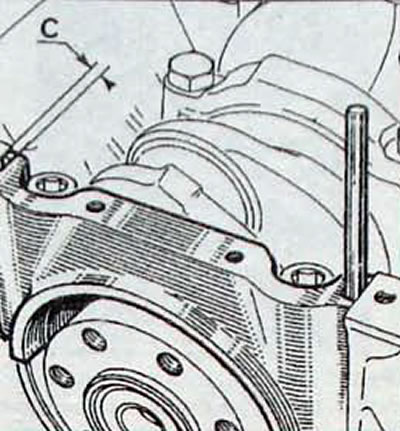
Fig. 1.74. Location (C) for measuring the groove for selecting the thickness of the sealing gasket of the main bearing cap No.1
- Remove the main bearing cap No.1 and insert two gaskets of a certain thickness into the grooves of the cap, orienting them towards the outside, while the protrusion of the gaskets should not exceed 0.2 mm.
- Using two M10x1.5 studs, center and install the main bearing cap No.1 with gaskets (Fig. 1.75). Before installing the cap, lubricate the two gaskets and apply a thin layer of CAF 4/60 Thixo sealant to the lower mating surface (B) of the cap.
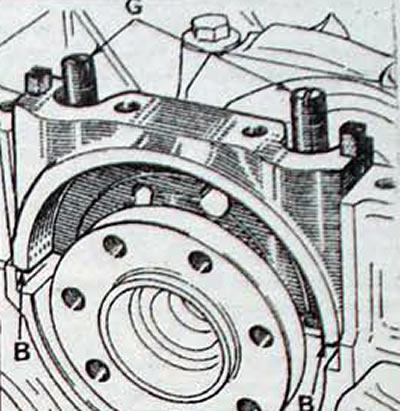
Fig. 1.75. Centering the main bearing cap No.1 using two studs (G) and the place (B) for applying CAF 4/60 Thixo sealant
- Remove the studs and screw in the bolts securing the main bearing cap No.1 and wipe off any excess sealant from the sides of the caps with a clean, lint-free cloth.
- Trim the protruding edges of the two spacers
- Lubricate the working edge of the rear crankshaft sealing ring with clean engine oil and install it into the cylinder block using a special tool
- Install the flywheel. Apply Loctite to the threads of the flywheel mounting bolts "Frenetanch". preventing the bolts from loosening, and tighten the flywheel mounting bolts.
- Using tool Mot. 582, lock the flywheel from turning and tighten the flywheel mounting bolts to the specified torque
- When assembling the piston with the connecting rod, it is necessary that the pins on the lower head of the connecting rod are located on the side opposite to the arrow engraved on the bottom of the piston (Fig. 1.76).
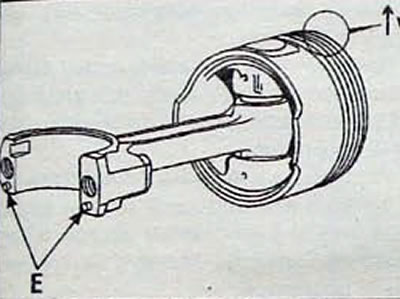
Fig. 1.76. Connecting rod and piston assembly. The arrow (V) engraved on the piston bottom should be located on the side opposite the pins (E) on the lower head of the connecting rod
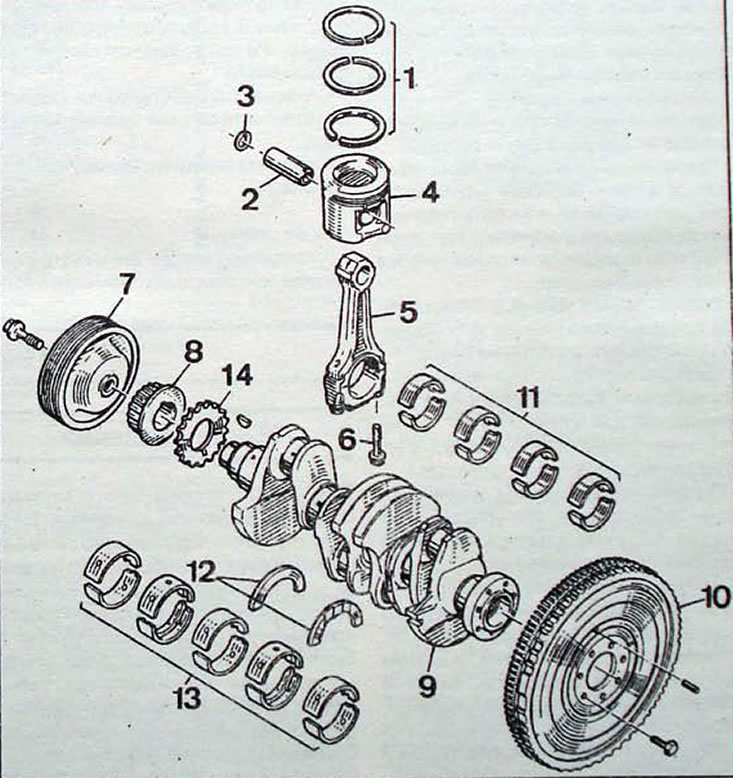
Fig. 1.77. Crankshaft, piston and connecting rod: 1 - piston rings; 2 - piston pin; 3 - retaining ring; 4 - piston; 5 - connecting rod; 6 - connecting rod lower cover mounting bolt; 7 - crankshaft pulley for accessory belt drive; 8 - crankshaft pulley of the timing belt drive; 9 - crankshaft; 10 - flywheel; 11 - connecting rod bearing shells; 12 - thrust half rings limiting the axial movement of the crankshaft; 13 - main bearing shells; 14 - oil pump drive sprocket (f3R 768 engine)
- Lubricate the piston pins with clean engine oil and install them into the piston and connecting rod. Secure the piston pins with retaining rings.
- Using special pliers, install the piston rings on the piston in the following sequence:
- oil scraper ring;
- lower compression ring;
- upper compression ring.
- When installed correctly, the piston rings should move freely in their grooves and the piston ring joints should be at a 120° angle and not in line with the piston pin axis.
- If rings that were there before are installed on the piston, they must be installed in their original places.
- Lubricate the piston and piston rings with engine oil. Install the universal piston ring compressor and prepare to install the piston into the cylinder liner.
- Install the piston from the top of the cylinder by carefully but firmly tapping the piston with the hammer handle to install the piston into the cylinder sleeve. When installing the pistons, make sure that the arrow on the piston bottom points toward the flywheel (Fig. 1.78).
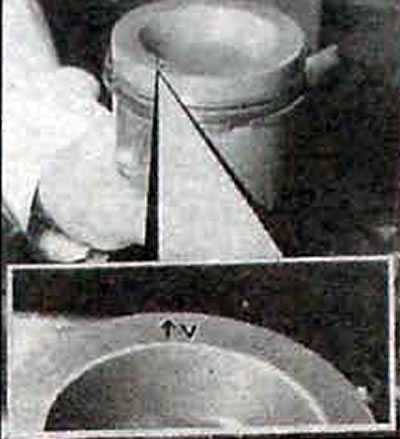
Fig. 1.78. Installing the piston into the cylinder, with the arrow (V) on the piston bottom facing the flywheel side
- Lubricate the working surfaces of the lower connecting rod bearings, install the connecting rod caps on the connecting rods and secure with bolts.
- Make sure the crankshaft rotates freely.
- Check the condition of the oil pump and the presence of the centering socket on the pump shaft of the F3R 728 engine.
- Install the oil pump and oil pan with a new gasket.
Engine F3R 728
- Lubricate and install the intermediate shaft.
- Install the oil pump drive gear into the cylinder block socket. Install the plug and secure it with two bolts.
- Insert the intermediate shaft retaining plate into the intermediate shaft groove and secure with bolts. Check that the shaft rotates freely and without binding.
- Using a mandrel of the appropriate diameter, install the intermediate shaft seal.
- Install the front cover with a new seal.
All engines
- Install the pulley onto the intermediate shaft or idler pulley and secure with the bolt, tightening it to the required torque
- Using a mandrel of the appropriate diameter, install the rear crankshaft oil seal
- Check the presence of bushings in the cylinder block that center the front cover of the cylinder block.
- Apply a thin layer of CAF 4/60 Thixo sealant to the mating surface of the front cylinder block cover, install it on the cylinder block and secure with bolts.
- Install the lower inner timing belt cover.
- Install the tension roller and timing belt drive pulley onto the crankshaft
- Install the cylinder head and timing belt.
- Install the water pump with a new gasket.
- Install the accessory drive pulley onto the crankshaft and secure with a bolt.
- Install the previously removed attachments onto the engine, using new gaskets when installing the manifolds.
- Install a new oil filter.
- Install the driven disc and clutch housing with the pressure plate and secure with bolts, tightening them to the required torque.
- Install the engine in the vehicle and fill it with operating fluids.