



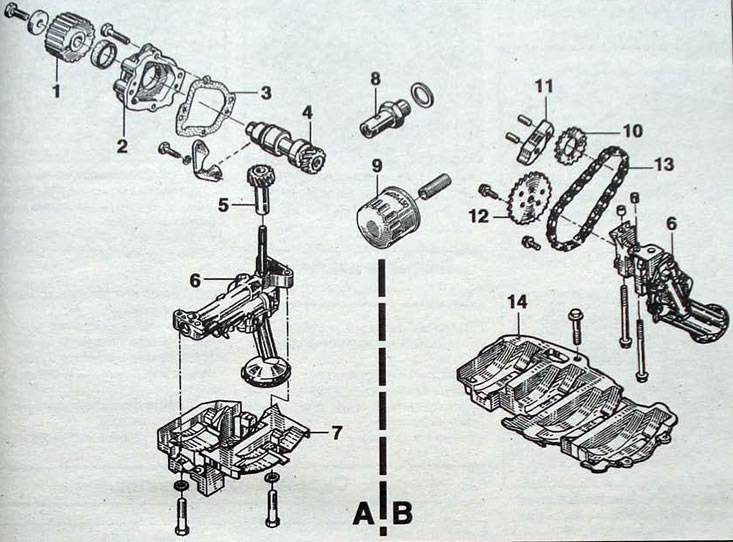
Fig. 1.79. Elements of the lubrication system: A-engine F3R 728; B - F3R 768 engine; 1 - intermediate shaft pulley; 2 - lid;3 - gasket; 4 - intermediate shaft; 5 - driven gear; 6 - oil pump; 7 - oil pump bracket; 8 - oil pressure sensor; 9 - oil filter; 10 - oil pump drive sprocket; 11 - chain tensioner; 12 - oil pump sprocket; 13 - oil deflector
The car uses a pressure lubrication system for the engine. Oil from the oil pan is fed under pressure through a mesh filter and a fine filter by the oil pump. A bypass valve in the oil pump maintains the required pressure in the engine lubrication system. If the pressure in the engine lubrication system exceeds a certain level, the bypass valve opens and some of the oil flows back into the oil pan. Passing through the oil filter, the cleaned oil enters the main oil line. It has an emergency oil pressure drop sensor, which, turning on the control lamp in the instrument cluster, signals low oil pressure. The oil filter has a bypass valve, through which, in the event of severe contamination of the filter, uncleaned oil flows directly into the oil line.
From the main line, oil is supplied under pressure through channels to lubricate the main bearings of the crankshaft and then through channels in the crankshaft to the connecting rod bearings. To cool the pistons, oil is sprayed through nozzles onto the lower part of the pistons.
Oil is supplied through the channels to the cylinder head to lubricate the camshaft bearings.