Share with friends:

Car engine repair Renault Espace 1 and 2

Engine Specifications
Engines installed - J112, J115, J116, J635, J636, J637, J638 Number of cylinders - 4 or 6 Cylinder arrangement - Inline or V6 Valve timing 4-cylinder engines - Overhead valves, overhead camshaft, toothed belt drive V6...
Engines installed - J112, J115, J116, J635, J636, J637, J638 Number of cylinders - 4 or 6 Cylinder arrangement - Inline or V6 Valve timing 4-cylinder engines - Overhead valves, overhead camshaft, toothed belt drive V6...

Removal and installation of the engine — a general description
1.8 Specified bolts (1) power steering pump attached to engine 1.12 Four nuts (1) fastening the exhaust pipe flange to the manifold 1.15 A special bracket is used to lift the engine 1.16 Nuts (1) hold the engine mount...
1.8 Specified bolts (1) power steering pump attached to engine 1.12 Four nuts (1) fastening the exhaust pipe flange to the manifold 1.15 A special bracket is used to lift the engine 1.16 Nuts (1) hold the engine mount...

Engine — disassembly
Disassembly - general description Thoroughly clean the external surfaces of the engine before starting work. Close all engine openings with clean rags in advance to prevent foreign bodies from entering inside the...
Disassembly - general description Thoroughly clean the external surfaces of the engine before starting work. Close all engine openings with clean rags in advance to prevent foreign bodies from entering inside the...

Engine — Assembly
1. The assembly sequence is strictly opposite to disassembly. However, pay attention to the following guidelines for each assembly: A) Before assembling, check that all parts are clean and free from foreign bodies. b)...
1. The assembly sequence is strictly opposite to disassembly. However, pay attention to the following guidelines for each assembly: A) Before assembling, check that all parts are clean and free from foreign bodies. b)...
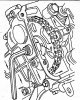
Cylinder head and valves — removal and installation (engine in a car)
1. The process of removing the cylinder head has already been described when disassembling the engine removed from the car. The following text briefly describes the situation when only the cylinder head needs to be...
1. The process of removing the cylinder head has already been described when disassembling the engine removed from the car. The following text briefly describes the situation when only the cylinder head needs to be...

Cylinder head — disassembly
Petrol 4-cylinder engines 1. Install the mounting bracket into the exhaust manifold screw hole on the cylinder head. 2. Remove the spark plugs, distributor, ignition, top water hose, and everything else mounted on the...
Petrol 4-cylinder engines 1. Install the mounting bracket into the exhaust manifold screw hole on the cylinder head. 2. Remove the spark plugs, distributor, ignition, top water hose, and everything else mounted on the...

Cylinder Head — Assembly
Rocker mechanism - all engines 1. Check the rocker shaft for scratches or excessive wear and replace if necessary. Lubricate all parts liberally and install on the rocker shaft in the assembly sequence, in case) the...
Rocker mechanism - all engines 1. Check the rocker shaft for scratches or excessive wear and replace if necessary. Lubricate all parts liberally and install on the rocker shaft in the assembly sequence, in case) the...

Valve clearances — adjustment
1. Adjustment on 4-cylinder engines is done in the same way as on V6 engines. Remove the cylinder head cover. Adjust the valve clearance in each cylinder in turn. The engine must be cold. The valve clearance is...
1. Adjustment on 4-cylinder engines is done in the same way as on V6 engines. Remove the cylinder head cover. Adjust the valve clearance in each cylinder in turn. The engine must be cold. The valve clearance is...
Prechambers (diesel engine) — general description
The prechambers are designed specifically for diesel engines and must protrude a certain amount from the top of the cylinder head. The prechambers are pressed into the cylinder head. After installation, check the...
The prechambers are designed specifically for diesel engines and must protrude a certain amount from the top of the cylinder head. The prechambers are pressed into the cylinder head. After installation, check the...

Pistons and connecting rods — general description
Pistons and cylinder liners can be changed with the engine installed on the vehicle. But since if the piston is damaged, other parts can also be damaged, it is better to remove the engine. If the same parts, sleeves,...
Pistons and cylinder liners can be changed with the engine installed on the vehicle. But since if the piston is damaged, other parts can also be damaged, it is better to remove the engine. If the same parts, sleeves,...

Pistons and connecting rods — removal
1. Removing the pistons with the engine installed on the vehicle is carried out as follows: 2. Disconnect the battery and drain the coolant from the cooling system. 3. Drain the engine oil. 4. Remove the block of...
1. Removing the pistons with the engine installed on the vehicle is carried out as follows: 2. Disconnect the battery and drain the coolant from the cooling system. 3. Drain the engine oil. 4. Remove the block of...

Pistons and connecting rods — separation
1. The separation of the piston and connecting rod is not particularly difficult. If the piston pin is held by the circlip (diesel engine and V6 engine), it can be removed by preheating the piston and connecting rod. To...
1. The separation of the piston and connecting rod is not particularly difficult. If the piston pin is held by the circlip (diesel engine and V6 engine), it can be removed by preheating the piston and connecting rod. To...

Pistons and connecting rods — check
1. Carefully inspect all parts. If there are scratches or other signs of wear, replace. 2. Push the piston rings into the grooves (see illustration). Using a feeler gauge, set the clearance between the ring surface and...
1. Carefully inspect all parts. If there are scratches or other signs of wear, replace. 2. Push the piston rings into the grooves (see illustration). Using a feeler gauge, set the clearance between the ring surface and...

Pistons and connecting rods — assembly
1. Carefully inspect all parts described in the previous chapter. The assembly process is described separately for each engine group. Turbocharged diesel engine 2. Lubricate the hole for the piston pin, assemble the...
1. Carefully inspect all parts described in the previous chapter. The assembly process is described separately for each engine group. Turbocharged diesel engine 2. Lubricate the hole for the piston pin, assemble the...
Pistons and connecting rods — installation
All engines 1. Lubricate the piston with engine oil and insert it into the sleeve. Using the special tool, install the rings into the piston grooves. Insert the pistons so that the upper edge of the surface of the...
All engines 1. Lubricate the piston with engine oil and insert it into the sleeve. Using the special tool, install the rings into the piston grooves. Insert the pistons so that the upper edge of the surface of the...
Cylinder block and liners — general description
Every time the engine is overhauled, the cylinder block must be thoroughly cleaned, paying special attention to the lubrication holes. The removal of liners, pistons and connecting rods has been described in previous...
Every time the engine is overhauled, the cylinder block must be thoroughly cleaned, paying special attention to the lubrication holes. The removal of liners, pistons and connecting rods has been described in previous...
Crankshaft and bearings — inspection
1. Thoroughly clean the crankshaft. Use a wire to clean the oil holes. 2. If necessary, remove the primary bearing from the end of the crankshaft. To do this, screw in self-tapping screws of a suitable diameter and pull...
1. Thoroughly clean the crankshaft. Use a wire to clean the oil holes. 2. If necessary, remove the primary bearing from the end of the crankshaft. To do this, screw in self-tapping screws of a suitable diameter and pull...

Flywheel (drive pulley) — removal and installation
1. The flywheel is bolted to the crankshaft with seven bolts with lock washers or, in most cases, no lock washers. If the flywheel bolts are installed without washers, they must be changed every time. When installing...
1. The flywheel is bolted to the crankshaft with seven bolts with lock washers or, in most cases, no lock washers. If the flywheel bolts are installed without washers, they must be changed every time. When installing...
Crankshaft seals — replacement
4 cylinder engines 1. The oil seal on the flywheel side can be changed as described in chapter 3. The oil seal can be changed after removing the gearbox with the engine installed. Remove the clutch, flywheel and old oil...
4 cylinder engines 1. The oil seal on the flywheel side can be changed as described in chapter 3. The oil seal can be changed after removing the gearbox with the engine installed. Remove the clutch, flywheel and old oil...

Camshaft — removal from the installed engine
4 cylinder engine 1. Camshaft, drive belt, as well as drive belt tensioners, etc. can be changed with the engine installed on the vehicle. Do the following: 2. Disconnect the battery and drain the coolant. 3. Disconnect...
4 cylinder engine 1. Camshaft, drive belt, as well as drive belt tensioners, etc. can be changed with the engine installed on the vehicle. Do the following: 2. Disconnect the battery and drain the coolant. 3. Disconnect...

Toothed drive belt — replacement
4-cylinder petrol engines 1. The toothed drive belt must be changed every 100,000 km, even if it is still in good condition. Follow the instructions exactly when replacing the belt. If the installation of the camshaft...
4-cylinder petrol engines 1. The toothed drive belt must be changed every 100,000 km, even if it is still in good condition. Follow the instructions exactly when replacing the belt. If the installation of the camshaft...

Camshaft seals — replacement
4 cylinder engines 1. The camshaft seal can be changed with the engine installed on the vehicle. 2. Remove the power steering pump and water pump drive belts. 3. Jack up the front wheel and shift into gear. 4. Have an...
4 cylinder engines 1. The camshaft seal can be changed with the engine installed on the vehicle. 2. Remove the power steering pump and water pump drive belts. 3. Jack up the front wheel and shift into gear. 4. Have an...

Oil pump (and pallet) — removal and installation
4 cylinder engines 1. This section describes how to remove the oil pump from a vehicle-mounted engine. The instructions apply to petrol and diesel engines. Certain differences exist if the crankcase is equipped with a...
4 cylinder engines 1. This section describes how to remove the oil pump from a vehicle-mounted engine. The instructions apply to petrol and diesel engines. Certain differences exist if the crankcase is equipped with a...

Oil pump — bulkhead
1. On a 4-cylinder engine, remove the pump cover and remove the rotors from the housing. 2. Remove the split pin from the bypass valve body, cover, spring and piston (see illustration). 23.2 Oil pump. On the left - for...
1. On a 4-cylinder engine, remove the pump cover and remove the rotors from the housing. 2. Remove the split pin from the bypass valve body, cover, spring and piston (see illustration). 23.2 Oil pump. On the left - for...
Oil filter
1. The oil filter is most easily removed from the underside of the vehicle, with the front of the vehicle firmly secured to the axle stands. Use a belt wrench to remove the filter. Otherwise, you can use the skin. Press...
1. The oil filter is most easily removed from the underside of the vehicle, with the front of the vehicle firmly secured to the axle stands. Use a belt wrench to remove the filter. Otherwise, you can use the skin. Press...
Engine Oil Pressure Check
1. If you have at your disposal, a specially designed connector (Mot. 836), which can be installed together with a pressure gauge, the engine oil pressure can be measured with the engine running. 2. On a 4-cylinder...
1. If you have at your disposal, a specially designed connector (Mot. 836), which can be installed together with a pressure gauge, the engine oil pressure can be measured with the engine running. 2. On a 4-cylinder...

Crankcase Thrust Plate (4 cylinder engine)
1. Remove the oil pan and oil pump to get to the thrust plate on the bottom surface of the crankcase. Follow the relevant instructions in chapter 22 . 2. After removing the pump cover, the bottom surface looks like...
1. Remove the oil pan and oil pump to get to the thrust plate on the bottom surface of the crankcase. Follow the relevant instructions in chapter 22 . 2. After removing the pump cover, the bottom surface looks like...
Oil pan
1. Removal and installation of the oil pan were described in chapter 22 . Different gaskets are installed on diesel engines depending on the year of manufacture. 2. Use only a dry gasket on the engine.
1. Removal and installation of the oil pan were described in chapter 22 . Different gaskets are installed on diesel engines depending on the year of manufacture. 2. Use only a dry gasket on the engine.
Starting the engine after overhaul
1. After installing the engine on the vehicle, check the coolant and oil levels again. Finally make sure that all components are connected and no tools or rags are left in the engine compartment. Petrol models 2. Remove...
1. After installing the engine on the vehicle, check the coolant and oil levels again. Finally make sure that all components are connected and no tools or rags are left in the engine compartment. Petrol models 2. Remove...
This section is available on: russian, bulgarian, belarusian, ukrainian, serbian, croatian, romanian, polish, slovak, hungarian
Other sections on other Renault models
➽ Power unit: Engine repair Renault Fluence 1 (2009-2020, petrol)
➽ Power unit: Engine repair Renault Laguna 2 (2001-2007)
➽ Power unit: Engine repair Renault Logan 1 (2004-2012, petrol)
➽ Power unit: Engine repair Renault Megan 2 (2002-2009, petrol)
➽ Power unit: Engine repair Renault Scenic 1 (1996-2003)
➽ Power unit: Engine repair Renault Symbol 1 (1999-2008, petrol)
Link to this section in different formats
TEXTHTMLBB Code
- General information
- Maintenance
- Power unit
- Engine repair
- Exhaust system
- Cooling system
- Supply system
- Single-point injection
- Multi-point injection
- Diesel injection system
- Transmission
- Clutch
- Car gearbox
- Chassis, running gear
- Car suspension
- Steering
- Brake system
- Wheels and tires
- Body and interior
- Exterior (external elements)
- Interior (internal elements)
- Heating and ventilation
- Electrical equipment
- Equipment and devices
- Headlights and lighting
- Ignition system
- Power devices
- Electrical circuits
- General information
- Introduction to the guide
- Troubleshooting
- Power unit
- Engine repair
- Cooling system
- Carburetor fuel system
- Injection fuel system
- Diesel fuel system
- Ignition system
- Transmission
- Clutch
- Car gearbox
- Drive shafts
- Chassis, running gear
- Brake system
- Steering
- Front suspension
- Rear suspension
- Body and interior
- Exterior (external elements)
- Interior (internal elements)
- Doors, locks and windows
- Electrical equipment
- Equipment and devices
- Electrical circuits
- General information
- Introduction to the manual
- User manual
- Power unit
- Petrol engines F3R
- Petrol engines Z7X
- Diesel engines G8T
- Diesel engines G9T
- Transmission
- Clutch
- Mechanical gearbox
- Automatic gearbox
- Drive shafts
- Chassis, running gear
- Steering
- Front suspension
- Rear suspension
- Brake system
- Body and interior
- Exterior (external elements)
- Interior (internal elements)
- Doors, locks and windows
- Heating and ventilation
- Electrical equipment
- Equipment and instruments
- Power devices
- Electrical circuits
RenaultBook.ru © 2018–2024 | Mobile version | News and articles | Sitemap: EN BG BY UA RS HR RO PL SK HU | Administration | Site search | Bookmark
Duster 1 (2009-2017) | Fluence 1 (2009-2020, petrol) | Kangoo 1 (1997-2007) | Laguna 2 (2001-2007) | Logan 1 (2004-2012, petrol) | Logan 2 (2012-2020) | Megane 1 (1995-2002) | Megan 2 (2002-2009, petrol) | Scenic 1 (1996-2003) | Symbol 1 (1999-2008, petrol) | Symbol 2 (2008-2013, petrol) | Renault 19 (1988-1996) | Espace I and II (1984-1996) | Espace III (1996-2002) |