



Contents: 4-cylinder engines 🠛 V6 Engine 🠛
4-cylinder engines
1. The camshaft seal can be changed with the engine installed on the vehicle.
2. Remove the power steering pump and water pump drive belts.
3. Jack up the front wheel and engage gear.
4. Have an assistant rotate the wheel until the mark on the flywheel aligns with the "0" mark on the clutch housing, and the mark on the crankshaft sprocket aligns with the mark in the camshaft drive cover.
5. Remove the drive cover.
6. If necessary, partially drain the coolant to close the intake manifold hose.
(This note was copied from the resource: renaultbook)
7. Make sure again that the timing marks are aligned and remove the timing belt as described above.
8. Lock the camshaft sprocket and unscrew the mounting bolt. Remove the sprocket and pull out the key with nippers.
9. If you are using a special puller, place it on the seal, grab the seal and use the puller to unscrew the fastening bolt. Without using a puller, you can screw a self-tapping screw into the seal and pull it out with pliers, a screwdriver or other suitable tool.
10. Check whether the sealing lip fits tightly to the working surface of the camshaft. If not, push the oil seal 1.5 mm deeper so that the sealing lip is installed on the new working surface.
11. Lubricate the outside of the new seal with engine oil and push it on using a puller. It can remain on the outside of the seal while the bolt is screwed into the camshaft (see illustration).
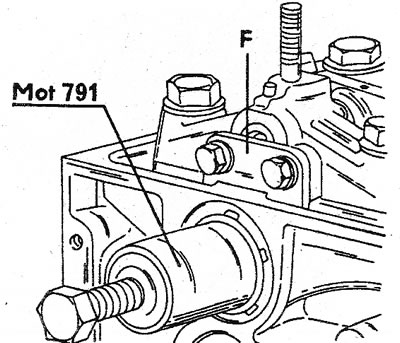
21.11 Installing the camshaft oil seal with a special tool (4-cylinder engine)
12. Make sure the crankshaft, camshaft and intermediate shaft are correctly installed and fit the timing belt as described in the previous chapter.
V6 Engine
13. Use a special puller to remove the oil seal from the camshaft. Removal and installation are performed as described for 4-cylinder engines. Remove the power steering pump drive mechanism.