Share with friends:

Heating and ventilation of car interior Renault Espace 3

Heating, ventilation and air conditioning — operating parameters
Engine rotation speed at idle speed at a coolant temperature of more than 80°C on vehicles with a manual transmission, min -1 : F3R engine air conditioner on 950±50 air conditioner off 730±50 G8T engine air conditioner...
Engine rotation speed at idle speed at a coolant temperature of more than 80°C on vehicles with a manual transmission, min -1 : F3R engine air conditioner on 950±50 air conditioner off 730±50 G8T engine air conditioner...

Ventilation and heating system
Pic. 14.1. Heating and air distribution unit: 1 - left heater; 2 - right heater; 3- electric fan; 4 - body; 5 - left heater radiator; 6 - right heater radiator; 7 - cabin air filter; 8 - air pipe; 9 - side ventilation...
Pic. 14.1. Heating and air distribution unit: 1 - left heater; 2 - right heater; 3- electric fan; 4 - body; 5 - left heater radiator; 6 - right heater radiator; 7 - cabin air filter; 8 - air pipe; 9 - side ventilation...

Replacing the ventilation system filter
The filter elements of both filters must be replaced at the same time. Disconnect the wires from the battery terminals and the windshield wiper motor connector. Working directly on the drive rods, set the wiper arms to...
The filter elements of both filters must be replaced at the same time. Disconnect the wires from the battery terminals and the windshield wiper motor connector. Working directly on the drive rods, set the wiper arms to...

Heater radiators
Pic. 14.4. The place where the heater hose is pinched in the engine compartment Removal When removing and installing heater radiators, all operations are performed on both sides of the vehicle. Remove the instrument...
Pic. 14.4. The place where the heater hose is pinched in the engine compartment Removal When removing and installing heater radiators, all operations are performed on both sides of the vehicle. Remove the instrument...

Heater block
Removal Remove the instrument panel beam. Remove the ventilation ducts. Remove the heater block mounting bolts. Disconnect the connectors from the mixing and air distribution motors (pic. 14.5). Remove the mixing and...
Removal Remove the instrument panel beam. Remove the ventilation ducts. Remove the heater block mounting bolts. Disconnect the connectors from the mixing and air distribution motors (pic. 14.5). Remove the mixing and...

Heater fan
Removal Disconnect the cable from the negative terminal of the battery. Starting at a corner, lift the upper trim of the instrument cluster vertically until the three upper latches are released Remove the rear mounting...
Removal Disconnect the cable from the negative terminal of the battery. Starting at a corner, lift the upper trim of the instrument cluster vertically until the three upper latches are released Remove the rear mounting...

Heater fan resistor block
Removal Disconnect the cable from the negative terminal of the battery. Starting at a corner, lift the upper trim of the instrument cluster vertically. this will release the three upper latches Remove the rear mounting...
Removal Disconnect the cable from the negative terminal of the battery. Starting at a corner, lift the upper trim of the instrument cluster vertically. this will release the three upper latches Remove the rear mounting...
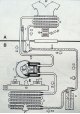
Air conditioning system
Attention. The air conditioning system should only be serviced by trained technicians trained in safe operating procedures using the proper equipment and proper depressurization procedures. familiar with the collection...
Attention. The air conditioning system should only be serviced by trained technicians trained in safe operating procedures using the proper equipment and proper depressurization procedures. familiar with the collection...

Air supply device
Removal The air supply device is installed on a bracket. Disconnect the cable from the negative terminal of the battery. Use the charging station to discharge the refrigerant from the air conditioning circuit Starting...
Removal The air supply device is installed on a bracket. Disconnect the cable from the negative terminal of the battery. Use the charging station to discharge the refrigerant from the air conditioning circuit Starting...

Condenser — removal, installation
To remove or install a condenser or receiver-drier, you must remove a set of engine cooling system elements. Attention. The cooling fins of heat exchangers are very fragile. When working on heat exchangers, take...
To remove or install a condenser or receiver-drier, you must remove a set of engine cooling system elements. Attention. The cooling fins of heat exchangers are very fragile. When working on heat exchangers, take...
Air conditioning compressor
Removal Disconnect the cable from the negative terminal of the battery Use the charging station to discharge the refrigerant from the air conditioning circuit. Remove the right front wheel, right wheel arch mudguard and...
Removal Disconnect the cable from the negative terminal of the battery Use the charging station to discharge the refrigerant from the air conditioning circuit. Remove the right front wheel, right wheel arch mudguard and...

Outside temperature sensor
Removal Disconnect the cable from the negative terminal of the battery. Pic. 14.14. Screw location (A) outside temperature sensor mounting Remove the outside rear view mirror glass. Remove the screw (A, fig. 14.14) and...
Removal Disconnect the cable from the negative terminal of the battery. Pic. 14.14. Screw location (A) outside temperature sensor mounting Remove the outside rear view mirror glass. Remove the screw (A, fig. 14.14) and...

Internal temperature sensor
Pic. 14.15. Internal Temperature Sensor Location (IN) Removal Disconnect the cable from the negative terminal of the battery. The interior temperature sensor is located in the center console. Remove the screws securing...
Pic. 14.15. Internal Temperature Sensor Location (IN) Removal Disconnect the cable from the negative terminal of the battery. The interior temperature sensor is located in the center console. Remove the screws securing...

Solar radiation sensor
Removal Disconnect the cable from the negative terminal of the battery. Solar radiation sensor (D, fig. 14.16) located at the top of the instrument panel. Remove the instrument cluster. Push the sensor out (pic. 14.17)....
Removal Disconnect the cable from the negative terminal of the battery. Solar radiation sensor (D, fig. 14.16) located at the top of the instrument panel. Remove the instrument cluster. Push the sensor out (pic. 14.17)....

Central control unit
Removal Disconnect the cable from the negative terminal of the battery. Remove both steering column switch covers. Remove the left lower console, the console under the steering column and the driver's side cover. The...
Removal Disconnect the cable from the negative terminal of the battery. Remove both steering column switch covers. Remove the left lower console, the console under the steering column and the driver's side cover. The...
This section is available on: russian, bulgarian, belarusian, ukrainian, serbian, croatian, romanian, polish, slovak, hungarian
Other sections on other Renault models
➽ Body and interior: Interior heating Renault Duster 1 (2009-2017)
➽ Body and interior: Heating and air conditioning Renault Logan 2 (2012-2020)
➽ Body and interior: Heating and air conditioning Renault Megan 2 (2002-2009, petrol)
➽ Electrical equipment: Heating and ventilation Renault Symbol 1 (1999-2008, petrol)
Link to this section in different formats
TEXTHTMLBB Code
- General information
- Maintenance
- Power unit
- Engine repair
- Exhaust system
- Cooling system
- Supply system
- Single-point injection
- Multi-point injection
- Diesel injection system
- Transmission
- Clutch
- Car gearbox
- Chassis, running gear
- Car suspension
- Steering
- Brake system
- Wheels and tires
- Body and interior
- Exterior (external elements)
- Interior (internal elements)
- Heating and ventilation
- Electrical equipment
- Equipment and devices
- Headlights and lighting
- Ignition system
- Power devices
- Electrical circuits
- General information
- Introduction to the guide
- Troubleshooting
- Power unit
- Engine repair
- Cooling system
- Carburetor fuel system
- Injection fuel system
- Diesel fuel system
- Ignition system
- Transmission
- Clutch
- Car gearbox
- Drive shafts
- Chassis, running gear
- Brake system
- Steering
- Front suspension
- Rear suspension
- Body and interior
- Exterior (external elements)
- Interior (internal elements)
- Doors, locks and windows
- Electrical equipment
- Equipment and devices
- Electrical circuits
- General information
- Introduction to the manual
- User manual
- Power unit
- Petrol engines F3R
- Petrol engines Z7X
- Diesel engines G8T
- Diesel engines G9T
- Transmission
- Clutch
- Mechanical gearbox
- Automatic gearbox
- Drive shafts
- Chassis, running gear
- Steering
- Front suspension
- Rear suspension
- Brake system
- Body and interior
- Exterior (external elements)
- Interior (internal elements)
- Doors, locks and windows
- Heating and ventilation
- Electrical equipment
- Equipment and instruments
- Power devices
- Electrical circuits
RenaultBook.ru © 2018–2024 | Mobile version | News and articles | Sitemap: EN BG BY UA RS HR RO PL SK HU | Administration | Site search | Bookmark
Duster 1 (2009-2017) | Fluence 1 (2009-2020, petrol) | Kangoo 1 (1997-2007) | Laguna 2 (2001-2007) | Logan 1 (2004-2012, petrol) | Logan 2 (2012-2020) | Megane 1 (1995-2002) | Megan 2 (2002-2009, petrol) | Scenic 1 (1996-2003) | Symbol 1 (1999-2008, petrol) | Symbol 2 (2008-2013, petrol) | Renault 19 (1988-1996) | Espace I and II (1984-1996) | Espace III (1996-2002) |