



Contents: Disassembly 🠛 Checking and assembly 🠛 Valve guide bushings 🠛 Valve seats 🠛 Valve stem seals 🠛 Assembly 🠛
Disassembly
Caution: When disassembling the cylinder head, make sure that all parts can be installed in their original places later.
- Remove the cylinder head.
- Remove the throttle assembly.
- Remove the intake and exhaust manifolds.
- Remove the fuel line together with the injectors.
- Gradually loosen the cylinder head cover mounting nuts.
- Remove the cylinder head cover and gasket.
- Remove the spark plugs.
- Unscrew the thermostat housing mounting bolts and remove it.
- Secure the camshaft pulley from turning and remove its mounting bolt.
- Remove the camshaft pulley and key.
- Gradually loosen and unscrew the camshaft bearing cap mounting bolts and remove them.
- Remove the camshaft and two camshaft oil seals.
- Remove the tappets together with the adjusting washers.
- Using a valve spring compressor, compress the first valve spring and remove the keepers.
- Gently loosen the spring compressor and remove it.
- Remove the spring plate, spring and spring seat.
- Remove the springs from the remaining valves in the same manner.
- Remove the oil seals and remove the valves from the cylinder head.
Checking and assembly
Note: When assembling the cylinder head, install the moving parts after lubricating them with engine oil.
- Clean all cylinder head parts, being very careful not to scratch the mating surfaces of the parts.
- Remove carbon deposits from the combustion chambers and valve heads using a scraper or rotating wire brush.
- Check the valve heads and valve seats for chipping and burning. Light chipping on the valve and seat can be removed by lapping, first with coarse and then with fine grinding paste.
- If there are deep traces of chipping, the valves must be ground on a valve grinding machine, and the seats - on a valve seat milling machine. For the last two types of work, you must contact specialists.
- Check the valve guides for wear. Insert the valve into the guide. The valve should move easily in the guide, without any lateral play. Special tools are required to replace worn guides with new ones.
- Check the camshaft for wear and tear on the bearing journals and cam contour. Any wear on the camshaft bearing journals indicates that the cylinder head needs to be replaced, as the bearings in the cylinder head are made directly in the head material.
- Measure the outside diameter of the tappets and ensure that there are no wear marks or nicks on the tappets or tappet seats.
- Check the length of the valve springs in a free state and under load.
Valve guide bushings
Please note: Valve guides can be replaced no more than twice.
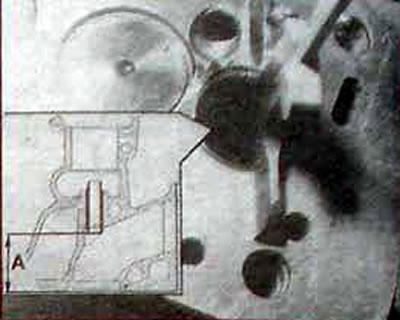
Fig. 1.50. Location (A) for measuring the installation size of the guide bushing: A = 43±0.2 mm
- Using a drift of the appropriate diameter, remove the guide bushing from the mating surface of the cylinder head
- Measure the diameter of the guide bushing installation hole in the cylinder head and ream it out if necessary.
- Using a drift of the appropriate diameter, install a new guide bushing on the camshaft side so that the distance between the mating surface of the cylinder head and the bottom of the bushing corresponds to the value given in the "Technical Data".
- Using a special tool, machine the inner diameter of the guide bushing, while maintaining perpendicularity to the mating surface of the cylinder head.
Valve seats
- Check the valve seats for chipping and burning. Traces of slight chipping on the seat can be removed by lapping first with coarse and then fine grinding paste
Valve stem seals
- The sealing of the intake and exhaust valve stems is carried out by oil-deflecting caps. It is recommended to replace the oil-deflecting caps after each removal
- To install the oil deflector caps, it is necessary to use a piece of pipe with an outer diameter of 12 mm.
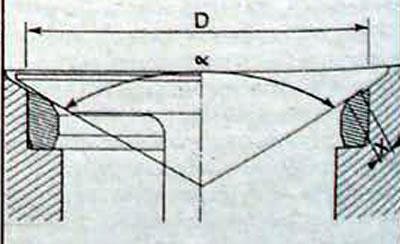
Fig. 1.51. Processing of valve seats: X - width of the working chamfer; D - outer diameter
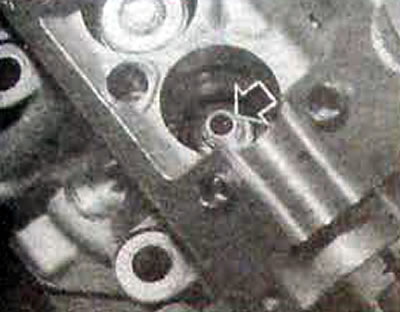
Fig. 1.52. Location of the oil deflector cap
Assembly
- Clean the cylinder head and blow out the oil passages.
- Clean all parts and lubricate all friction surfaces with engine oil.
- Lubricate the first valve stem with engine oil and insert it into the guide. Install the valve stem seal.
- Install the spring and spring plate.
- Compress the valve spring with a spring compressor and insert the crackers into the top of the valve stem.
- Slowly remove the spring compressor and check that the crackers are in place.
- Install the remaining valves into the cylinder head in the same manner.
- Once all the valves are in place, lightly tap the top of the valve springs with a plastic hammer to ensure the keepers are seated.
- Install the tappets with adjusting washers so that the marking on the washer faces the tappet.
- Install the camshaft, camshaft bearing caps and gradually and sequentially screw in and tighten the cap mounting bolts to the required tightening torque.
- Using a mandrel of the appropriate diameter, install two seals on the ends of the camshaft.
- Install the key into the camshaft groove and camshaft pulley.
- Block the camshaft pulley from turning and secure it with a bolt.
- Check and adjust valve clearances if necessary.
- Install the thermostat housing with new seals and secure it with bolts.
- Install the injectors and fuel line.
- Screw in the spark plugs.
- Install the cylinder head cover with a new gasket and secure with nuts, screwing them on gradually and sequentially.
- Install the intake and exhaust manifolds with new gaskets.
- Install the throttle assembly.
- Install the cylinder head.