
English Русский
Български
Беларускі
Український
Српски
Hrvatski
Română
Polski
Slovenský
Magyar
Bookmark Contacts Articles Sitemap
Company vehicles Peugeot Company vehicles Opel Company vehicles Skoda Company vehicles Land Rover Company vehicles Mitsubishi Company vehicles Volkswagen Company vehicles Honda
RenaultBook.ru


Duster   Fluence   Kangoo   Laguna   Logan   Megane   Sandero   Scenic   Symbol   Clio   Other
Renault 19 (1988-1996) Espace I and II (1984-1996) Espace III (1996-2002)

Cylinder head (Renault Espace III)

  • Main
  • Renault
  • Espace III (1996-2002)
  • Power unit
  • Petrol engines F3R
  • Cylinder head
0
Contents: Removal 🠛 Cleaning and checking 🠛 Installation 🠛
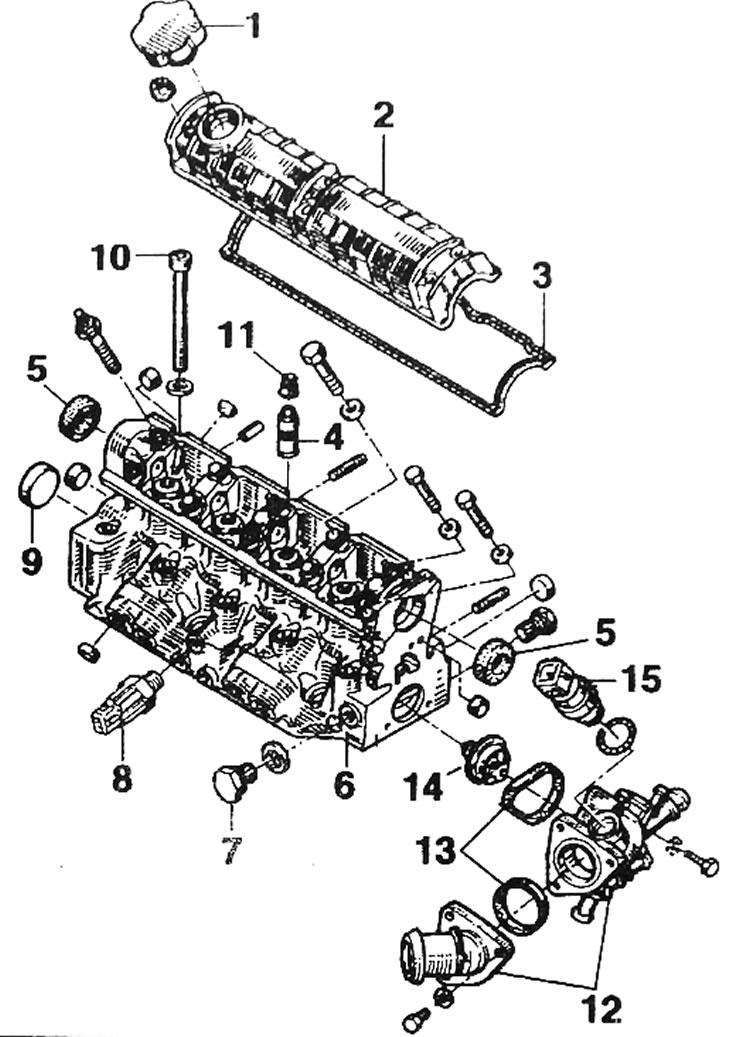
Fig. 1.41. Cylinder head: 1 - oil filler cap; 2 - cylinder head cover; 3-cylinder head cover seal;4…

Fig. 1.41. Cylinder head: 1 - oil filler cap; 2 - cylinder head cover; 3-cylinder head cover seal;4 - valve guide bushing; 5 - ring; 6 - cylinder head; 7 - cork; 8 - knock sensor; 9 - plug; 10 - cylinder head mounting bolt: 11 - oil deflector cap; 12 - thermostat fastening elements; 13 - seals; 14 - thermostat; 15 - coolant temperature sensor


Removal


  • To remove the cylinder head of the F3R engine, it is necessary to remove the power unit.
  • Remove the power unit.
  • Unscrew the two bolts (1, Fig. 1.42) and loosen the ignition coil bracket mounting bolt (2) and push the bracket down.
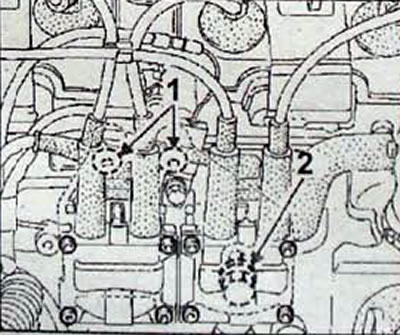
Fig. 1.42. Location of bolts (1 and 2) for fastening the ignition coil bracket

Fig. 1.42. Location of bolts (1 and 2) for fastening the ignition coil bracket


  • Remove the timing belt.
  • Remove the spark plug covers (Fig. 1.43).
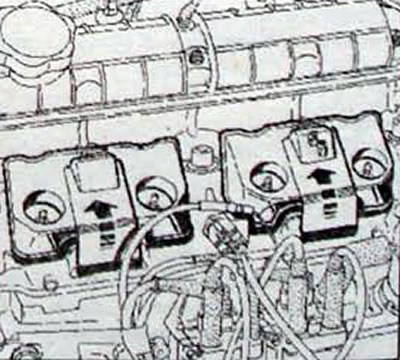
Fig. 1.43. Direction of removing spark plug caps

Fig. 1.43. Direction of removing spark plug caps

  • Disconnect the connector from the knock sensor.
  • Remove the cylinder detection sensor.
  • Remove the absolute pressure sensor and its tube.
  • Remove the idle air control valve.
  • Remove the air and coolant temperature sensors.
  • Remove the throttle position potentiometer.
  • Remove the fuel injectors.
  • Disconnect the tube from the absorber solenoid valve.
  • Disconnect the oil vapor drain pipe and brake booster vacuum pipe.
  • Disconnect the accelerator cable.
  • On the fuel line side, disconnect the fuel supply and return pipes.
  • Disconnect the connector from the coolant temperature sensor.
  • Remove the air cleaner housing and disconnect all hoses from the cylinder head.
  • Disconnect the ground bus.
  • Remove two bolts (3, Fig. 1.44) fastenings of the upper inner casing of the timing belt.

View the original on the specified resource (RenaultBook.ru)
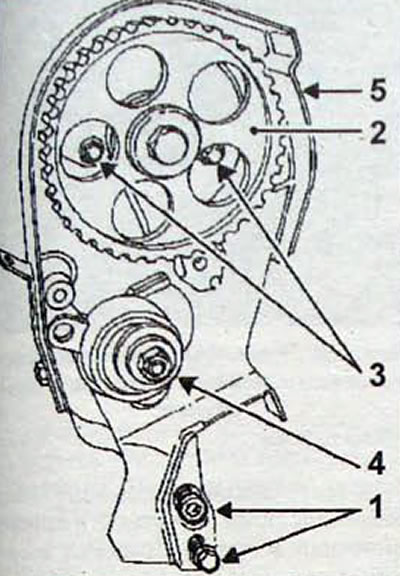
Fig. 1.44. Location of bolts (3) for fastening the upper inner casing (5), bolts (1) for fastening…

Fig. 1.44. Location of bolts (3) for fastening the upper inner casing (5), bolts (1) for fastening the inner casing, camshaft pulley (2) and timing tensioner (4)


  • Remove the camshaft pulley.
  • Remove the two bolts securing the inner timing belt cover.
  • Remove the timing belt tensioner
  • Remove the upper inner casing (5) of the timing mechanism
  • Remove the intake pipe of the exhaust system.
  • Remove the exhaust manifold support bracket.
  • Remove bolt 1 (Fig. 1.45) securing the coolant pipe. Remove the throttle assembly and fuel distribution line. When removing the fuel distribution line, be careful not to let the gaskets fall.
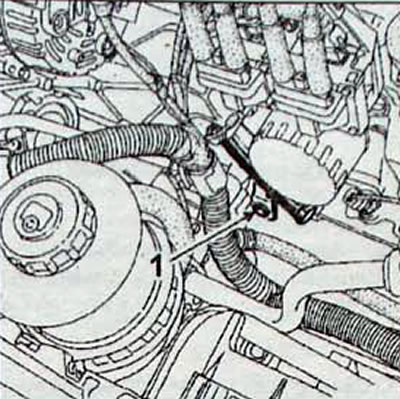
Fig. 1.45. Location of the bolt (1) securing the coolant pipe

Fig. 1.45. Location of the bolt (1) securing the coolant pipe

  • Remove the cylinder head mounting bolts and remove it from the engine.
  • Remove the cylinder head gasket.

Cleaning and checking


  • It is important not to scratch the mating surfaces of the aluminum parts. Use Decapjoint to dissolve the adhering gasket residue. Apply the product to the surface to be cleaned, wait about ten minutes, then remove the gasket residue with a wooden spatula. This operation must be carried out very carefully so that foreign particles do not get into the channels for supplying oil under pressure to the camshaft, which pass through the cylinder block and in the cylinder head. Failure to do so may lead to clogging of the oil channels and failure of the camshaft.
  • Use a ruler and a set of feeler gauges to check for deformation of the mating surface of the cylinder head (Fig. 1.46). Regrinding of the cylinder head is not permitted. Maximum deformation: 0.05 mm.
  • Measure the height of the cylinder head.
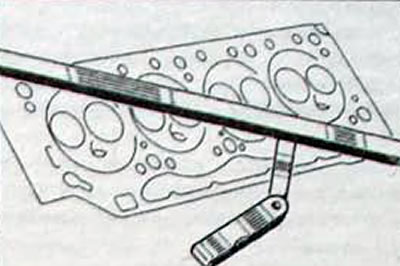
Fig. 1.46. Using a feeler gauge ruler to check the deformation of a mating surface
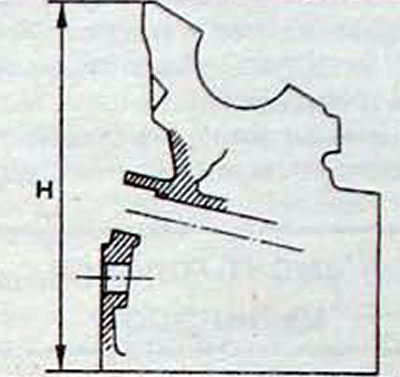
Fig. 1.46. Using a feeler gauge ruler to check the deformation of a mating surface


Fig. 1.47. Location (H) for measuring the cylinder head height: H=169.5±0.2 mm

Fig. 1.47. Location (H) for measuring the cylinder head height: H=169.5±0.2 mm


Installation


  • Before installing the cylinder head in place, check that the mating surfaces are completely clean. Also check that the holes for the cylinder head mounting bolts in the cylinder block are clean and free of oil
  • Check for the presence of bushings that center the head on the cylinder block (Fig. 1.48).
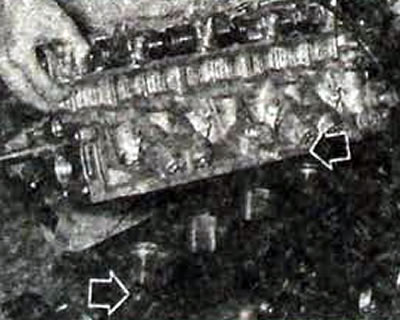
Fig. 1.48. Location of the bushings that center the cylinder head during its installation

Fig. 1.48. Location of the bushings that center the cylinder head during its installation

  • To prevent the pistons from contacting the valves, turn the crankshaft to a position where the pistons are at the middle of their stroke.
  • Install a new cylinder head gasket.
  • Install the cylinder head onto the cylinder block, centering it on the guide bushings.

Note: To secure the cylinder head, new bolts, threads and head bases must be used and lubricated with engine oil.


  • Screw in the cylinder head mounting bolts and tighten them in several stages in the sequence shown in Figure 1.49.
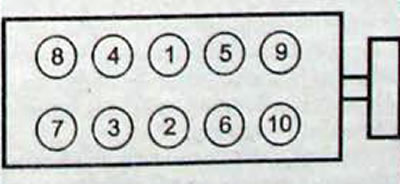
Fig. 1.49. Sequence of tightening the cylinder head bolts of the F3R engine

Fig. 1.49. Sequence of tightening the cylinder head bolts of the F3R engine

  • 1st stage - torque 30 Nm
  • 2nd stage - turn to an angle of 50±4° Wait at least 3 minutes
  • step 3 - Loosen bolts 1 and 2 by 180°, then first tighten the bolts to a torque of 25 Nm and then tighten them further by an angle of 123±7°. Repeat step 3 for bolts 3-4, 5-6, 7-3, 9-10. No further tightening of the bolts is required.

Further installation is carried out in the reverse order of removal.
This article is available on: russian, bulgarian, belarusian, ukrainian, serbian, croatian, romanian, polish, slovak, hungarian
Article has been reviewed by editor: Trofimova Anastasia
Share with friends:
Previous
Espace III: Petrol engines F3R
Next

Checking the fuel pump relief valve
Checking fuel pressure and fuel pump performance
Fuel tank
Fuel filter
Fuel pump
Cylinder head repair
Removal and installation of F3R engine with JC5 gearbox
Pendulum engine mount
Engine repair — disassembly, inspection and assembly
Lubrication system — general information
Other articles on other Renault models

➽ Cylinder head cover Renault Duster 1 (2009-2017)
➽ Cylinder head gasket for K4M engine Renault Fluence 1 (2009-2020, petrol)
➽ Tightening the cylinder head bolts Renault Kangoo 1 (1997-2007)
➽ Removal the cylinder head gasket (K4M engines) Renault Laguna 2 (2001-2007)
➽ Replacing the cylinder head cover gasket Renault Logan 1 (2004-2012, petrol)
Link to this article in different formats
Reviews and comments of visitors
No comments yet


Add two numbers 39 + 36


Renault 19 (1988-1996) 
  • General information
  • Maintenance
  • Power unit
  • Engine repair
  • Exhaust system
  • Cooling system
  • Supply system
  • Single-point injection
  • Multi-point injection
  • Diesel injection system
  • Transmission
  • Clutch
  • Car gearbox
  • Chassis, running gear
  • Car suspension
  • Steering
  • Brake system
  • Wheels and tires
  • Body and interior
  • Exterior (external elements)
  • Interior (internal elements)
  • Heating and ventilation
  • Electrical equipment
  • Equipment and devices
  • Headlights and lighting
  • Ignition system
  • Power devices
  • Electrical circuits
Espace I and II (1984-1996) 
  • General information
  • Introduction to the guide
  • Troubleshooting
  • Power unit
  • Engine repair
  • Cooling system
  • Carburetor fuel system
  • Injection fuel system
  • Diesel fuel system
  • Ignition system
  • Transmission
  • Clutch
  • Car gearbox
  • Drive shafts
  • Chassis, running gear
  • Brake system
  • Steering
  • Front suspension
  • Rear suspension
  • Body and interior
  • Exterior (external elements)
  • Interior (internal elements)
  • Doors, locks and windows
  • Electrical equipment
  • Equipment and devices
  • Electrical circuits
Espace III (1996-2002) 
  • General information
  • Introduction to the manual
  • User manual
  • Power unit
  • Petrol engines F3R
  • Petrol engines Z7X
  • Diesel engines G8T
  • Diesel engines G9T
  • Transmission
  • Clutch
  • Mechanical gearbox
  • Automatic gearbox
  • Drive shafts
  • Chassis, running gear
  • Steering
  • Front suspension
  • Rear suspension
  • Brake system
  • Body and interior
  • Exterior (external elements)
  • Interior (internal elements)
  • Doors, locks and windows
  • Heating and ventilation
  • Electrical equipment
  • Equipment and instruments
  • Power devices
  • Electrical circuits
RenaultBook.ru © 2018–2026 | Mobile version | News and articles | Sitemap: EN BG BY UA RS HR RO PL SK HU | Administration | Site search | Bookmark
Duster 1 (2009-2017) | Fluence 1 (2009-2020, petrol) | Kangoo 1 (1997-2007) | Laguna 2 (2001-2007) | Logan 1 (2004-2012, petrol) | Logan 2 (2012-2020) | Megane 1 (1995-2002) | Megan 2 (2002-2009, petrol) | Sandero 1 (2007-2012, petrol) | Scenic 1 (1996-2003) | Symbol 1 (1999-2008, petrol) | Symbol 2 (2008-2013, petrol) | Renault 19 (1988-1996) | Espace I and II (1984-1996) | Espace III (1996-2002) | Clio 1 (1990-1998) |
We want your visit to be comfortable 😌 and use cookies 🍪 to do so.