



Pistons and connecting rods
Removal pistons with connecting rods
Attention:
It is strictly forbidden to apply any pressure to the engine oil pan. Damage to the pan can also cause various damages to the engine itself due to:
- blocking the oil intake;
- increasing the engine oil level above the maximum mark, which may cause the engine to run away.
1. Remove the power unit assembly from the vehicle.
2. Disconnect the manual transmission from the engine.
Text provided by an online resource [www.RENAULTBOOK.ru]
3. Remove the accessory drive belts.
4. Install the flywheel locking device (Mot. 582-01) on the cylinder block.
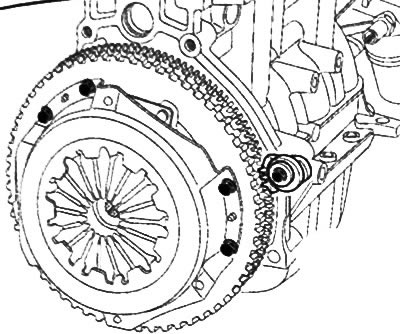
5. Remove the crankshaft pulley.
6. Remove the clutch discs.
7. Remove the flywheel with the retainer (Mot. 582-01) from the engine.
8. Place the engine on the assembly stand.
9. Drain the engine oil and coolant from the engine.
10. Remove the timing belt of the gas distribution mechanism drive (see the relevant section of this chapter).
11. Remove the generator.
12. Remove the air conditioning compressor (see the relevant section of this chapter).
13. Remove the power steering pump (see the relevant section of this chapter).
14. Remove the multifunctional support from the engine.
15. Remove the ignition coils.
16. Remove the intake manifold.
17. Remove the cylinder head.
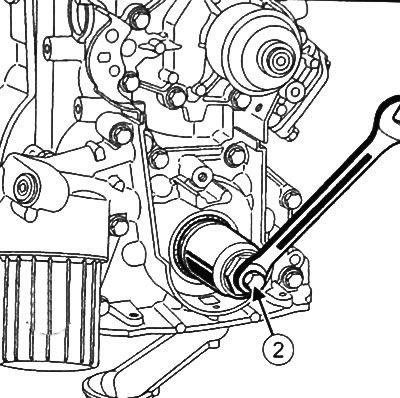
18. Remove the crankshaft oil seal from the timing drive side:
Caution: Be prepared for fluid to leak from the engine. Protect surrounding components.
Install the oil pump seal puller (Mot. 1374) to remove the crankshaft seal from the timing drive side.
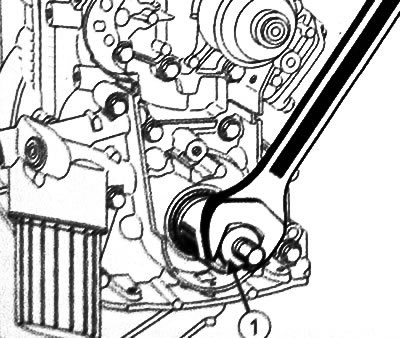
Tighten the nut (1) of the puller (Mot. 1374).
Tightening the bolt (2) of the puller (Mot. 1374), remove the crankshaft oil seal from the timing drive side.
19. Remove the crankshaft oil seal from the gearbox side:
- Place a seal puller with a rod diameter of 60-70 mm (Mot. 1578) on the engine from the flywheel side.
- Tighten the nut (1).
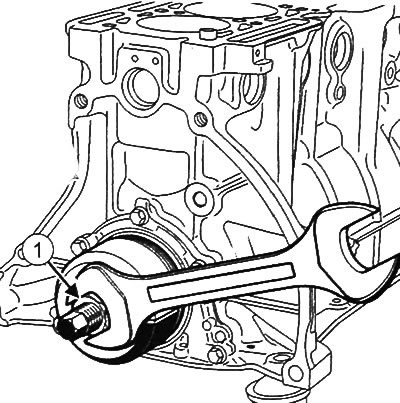
- Tightening the bolt (2) of the puller (Mot. 1578), remove the crankshaft oil seal from the gearbox side.
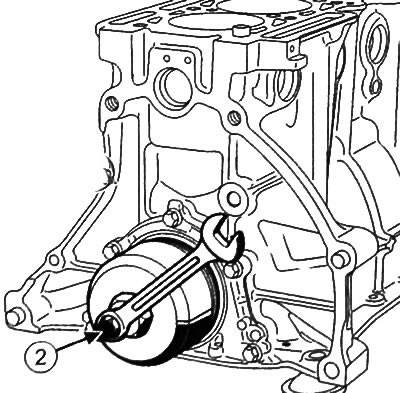
20. Remove the engine oil pan (see chapter "Lubrication system").
21. Remove the oil pump from the engine (see chapter "Lubrication system").
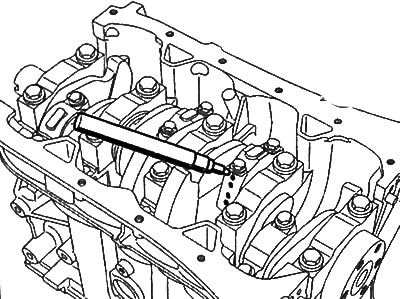
22. Use a marker to mark the location of the connecting rods and connecting rod caps in accordance with the cylinder numbers (cylinder 1 flywheel side)
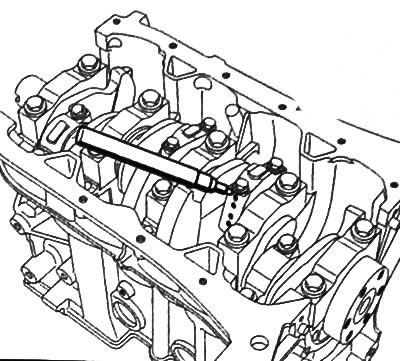
Caution: Do not mark connecting rods and connecting rod caps with punching or engraving as this may cause cracks. Use a marker only.
23. Loosen the connecting rod bolts.
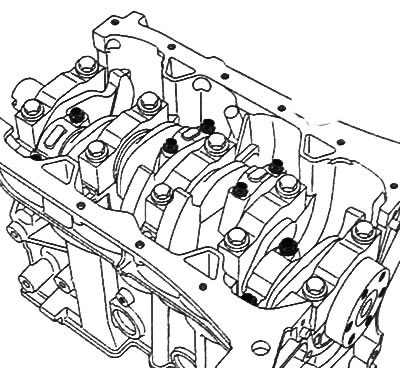
Note: Use work gloves when performing work.
24. Remove the connecting rod caps and take out the connecting rod bearings, marking their position relative to the caps.
25. Remove the pistons with connecting rods as an assembly from the cylinder head side.
26. Remove the upper connecting rod bearings, marking them with a marker relative to the connecting rods.
Disassembling pistons with connecting rods
Note:
- Removal of piston rings should only be done when it is necessary to replace parts or to check connecting rods or pistons.
- Be careful not to damage the piston when removing the piston rings. Do not expand the piston rings too much as they may crack.
- If reusing, mark piston rings relative to pistons.
1. Using a special tool, remove the piston rings from the piston.
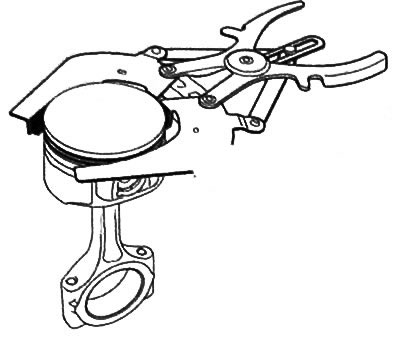
2. Place the piston on the base (1) of the piston pin replacement kit (Mot. 574-22).
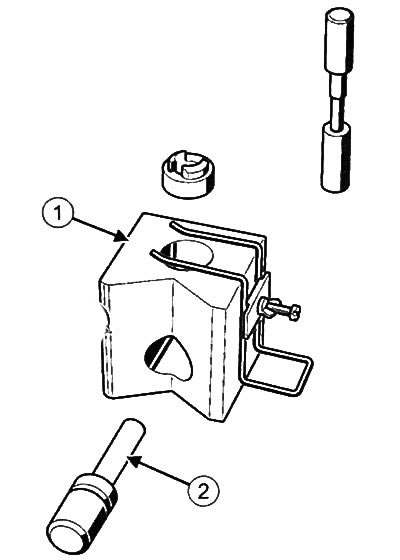
3. Using a press and punch (2), remove the piston pin from the piston, aligning the piston pin with the base hole.
4. Disassemble all other pistons and connecting rods in the same manner.
Assembly and installation of pistons with connecting rods
Caution: Always replace connecting rod bolts with new ones.
Note: Do not strike or distort the contact surfaces of the connecting rod cap and connecting rod to prevent damage.
Caution: When performing work, use glasses with side protection.
1. Clean the pistons and connecting rods with a cleaning agent.
2. Dry the pistons and connecting rods with compressed air.
Note:
- The connecting rod bearings do not have any mounting protrusions or grooves.
- To install the connecting rod bearings, use a special tool (Mot. 1492) and a set of adapters (Mot. 1492-04).
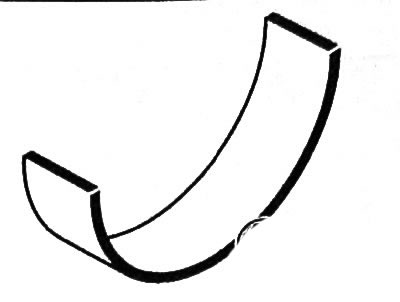
3. Using a vice, remove the pin (3) from the bearing shell installation tool (Mot. 1492).
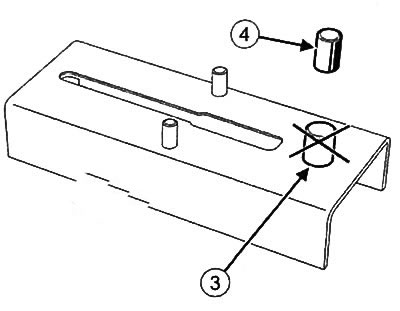
4. Replace pin (3) with pin (4) from the adapter kit for installing bearing shells (Mot. 1492-04).
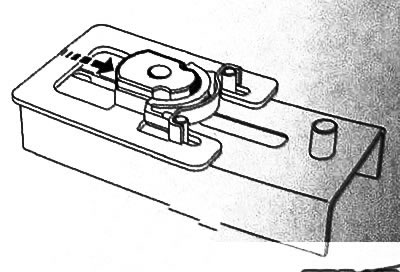
5. Slide the bearing shell support (5) from the bearing shell adapter kit (Mot. 1492-04) in the groove (6) of the bearing shell fitting device (Mot. 1492).
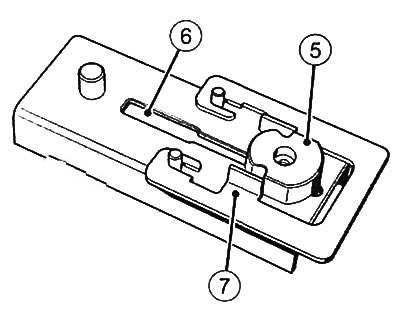
6. Place the frame (7) from the adapter kit for installing bearing shells (Mot. 1492-04) on the basis.
7. Place the connecting rod on the base of the device.
8. Make sure that the lower part (8) of the upper connecting rod head rests against the centering pin.
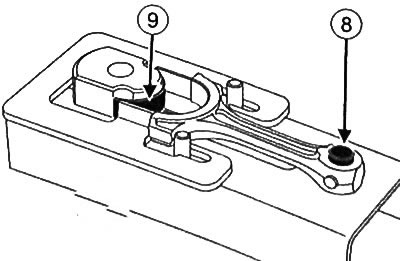
9. Place the bearing shell (9) on the support.
10. Push in the bearing shell support (in the direction of the arrow), to fully insert the bearing into the connecting rod.
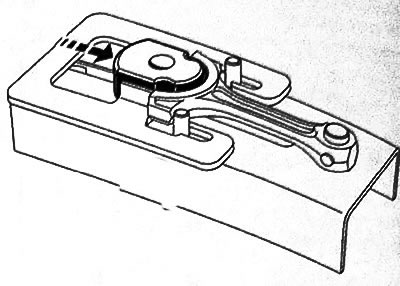
11. Remove the bearing shell support and repeat the operation for the remaining connecting rods.
12. Install the jumper (10) and connecting rod cover on the device.
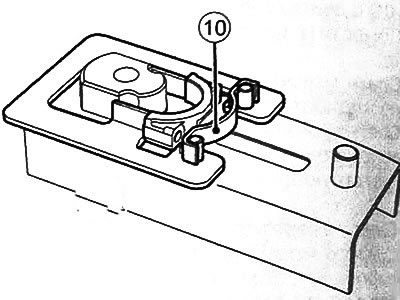
13. Push the frame (in the direction of the arrow), so that the connecting rod cover rests against the bridge.
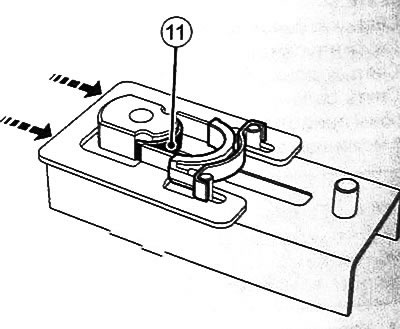
14. Place the bearing shell (11) on the fixture support.
15. Push in the bearing shell support (in the direction of the arrow), to fully insert the bearing shell into the connecting rod cap.
Note:
- If the pistons are replaced with new ones, it is necessary to check their compliance with the size group of the engine cylinder bores (see below).
- If pistons are reused, install them according to the marks made during removal.
16. Visually check the condition of the connecting rods (bending and torsion).
17. Clean the contact surfaces between the connecting rod and connecting rod cap.
Note: The piston pin has an interference fit in the connecting rod and a loose fit in the piston.
18. Place the connecting rod upper heads on the hotplate, making sure that the connecting rod upper head bushings are fully in contact with the hotplate surface.
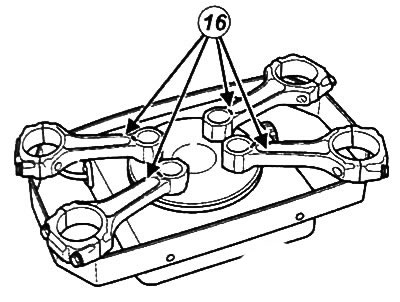
Note: To avoid overheating, place a piece of solder (16) on each upper connecting rod head, the melting point of which is approximately 250°.
19. Heat the upper heads of the connecting rods until the pieces of solder melt.
20.Make sure that the piston pins fit freely into the holes of the new pistons.
Note: Use the A19 (17) dowel pin and C19 (18) centering tool from the piston pin replacement kit (Mot. 574-22).
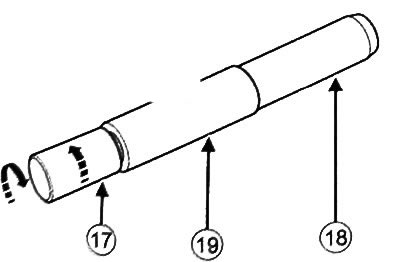
21. Insert the piston pin (19) onto the dowel pin (17).
22. Screw in the centering device (18) until it stops.
23, Loosen the mounting pin (17) one turn.
24. Place the piston with the arrow on the bottom (20) down, and the connecting rod so that the protrusion (21) is directed towards the oil dipstick on the cylinder block (or using the following figure as a guide).
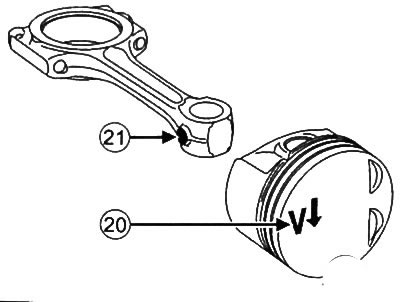
25. Place ring B19 on the base of the installation device.
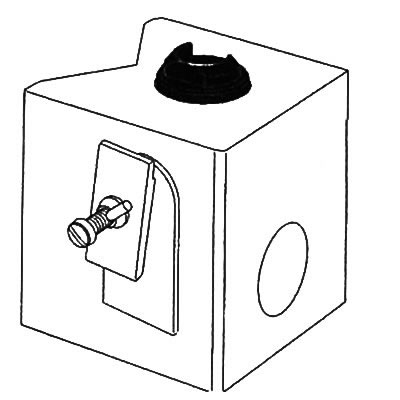
26. Fix the piston with the lock (22).
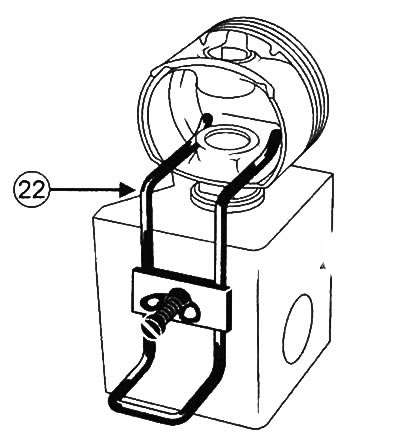
27. Make sure that the hole for the piston pin matches the B19 ring (the arrow on the bottom of the piston should point downwards).
28. Lubricate the centering device and piston pin with engine oil.
29. Insert the piston pin into the assembly to ensure that it fits freely. If not, reposition the piston.
List: The following operation must be performed as quickly as possible to avoid premature cooling of the connecting rod.
Caution: To avoid burns, wear gloves when working.
30. After the connecting rods have been sufficiently heated (the pieces of solder on them should melt), remove the solder from the connecting rod and insert the guide into the connecting rod, then insert the connecting rod into the piston using a special device.
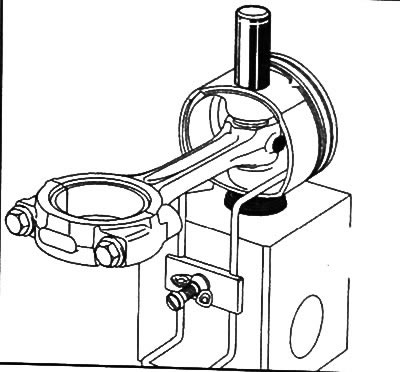
31. Quickly press in the piston pin until the guide from the connecting rod reaches the edge of the base of the fixture.
32. Make sure that the piston pin does not protrude beyond the edges of the piston skirt.
33. Clean the grooves in the piston.
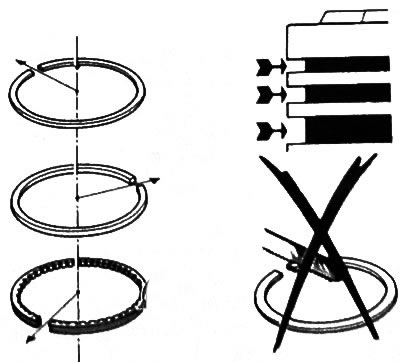
34. Install the piston rings in their places, making sure that the "TOP" mark on the surface of the piston rings is facing upwards.
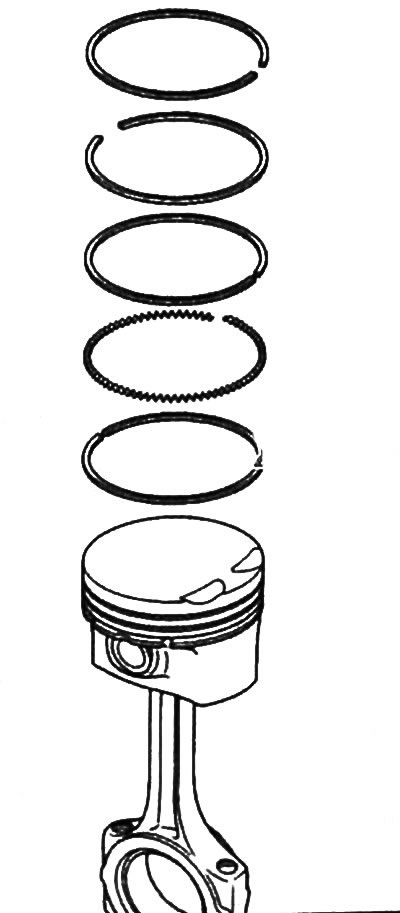
35. Position the piston ring locks at different angles to each other, as shown in the figure.
36. Lubricate the piston with engine oil and compress the piston rings using a tool for installing pistons in engine cylinders.
37. Lubricate the engine cylinders and crankshaft connecting rod journals with engine oil.
38. Install the piston with connecting rod assembly and make sure that the piston number corresponds to the engine cylinder number (cylinder No.1 is on the flywheel side), and that all the alignment marks on the piston bottom are positioned correctly (the arrow on the bottom should point towards the flywheel).
39. Install the remaining pistons into the cylinders in the same manner.
40. Install the lower heads of the connecting rods onto the crankshaft journals.
41. Install the connecting rod caps in accordance with the connecting rods using the previously applied marks.
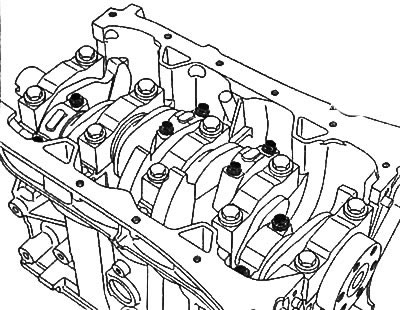
42. Tighten the connecting rod bolts to a torque of 14 Nm, and then tighten further by 39°±6°.
43. Install the oil pump and engine sump (see chapter "Lubrication system").
Note: Be sure to replace the crankshaft oil seals with new ones after each removal.
Caution: To ensure proper sealing, crankshaft seals must be clean, dry and free of grease (avoid any fingerprints).
44. Install the crankshaft oil seal on the gearbox side:
- Using a cleaning agent, degrease the contact surfaces on the crankshaft and the oil seal seat in the cylinder block.
Note: This type of seal is very fragile, so a special tool (Mot. 1625) must be used to install it.
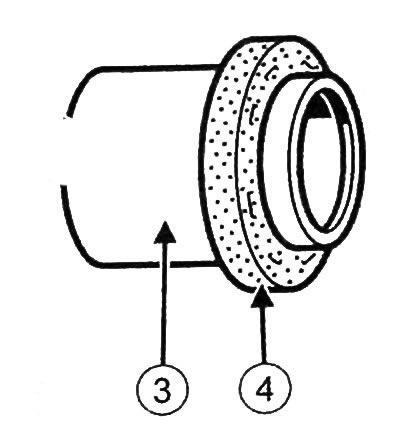
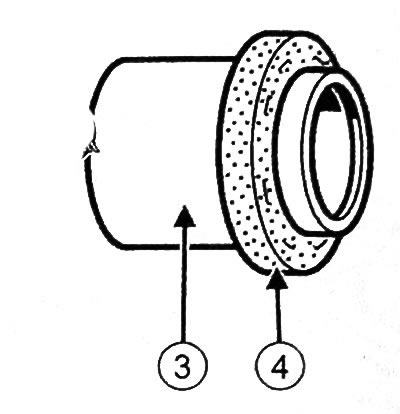
Caution: To prevent leaks after installation, only the protective element (3) may be touched when installing the seal. Touching the seal itself (4) is strictly prohibited.
- Install the seal installation tool (Mot. 1625) on the crankshaft, securing it with bolts (5).
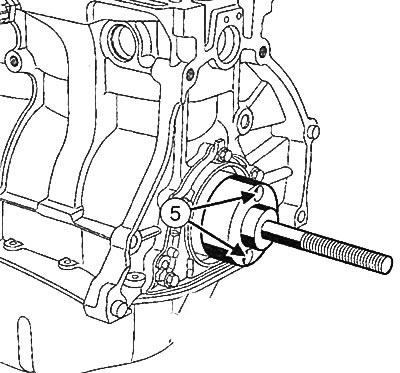
- Place the protective element with the seal in place on the tool (Mot. 1625), taking care not to touch the seal.
- Install the cover (6) and nut (7) as shown in the figure.
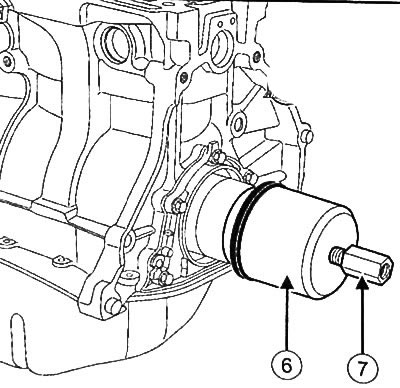
- Screw the nut in until the cover rests against the cylinder block.
- Unscrew the nut and remove the cover, protective element and base of the device.
45. Install the crankshaft oil seal on the timing drive side:
- Using a cleaning agent, degrease the contact surfaces on the crankshaft and the oil seal seat in the cylinder block.
Note: This type of seal is very fragile, so a special tool (Mot. 1626) must be used to install it.
Caution: To prevent leaks after installation, only the protective element (3) may be touched when installing the seal. Touching the seal itself (4) is strictly prohibited.
- Insert the threaded rod (5) of the oil seal press tool (Mot. 1626) into the crankshaft.
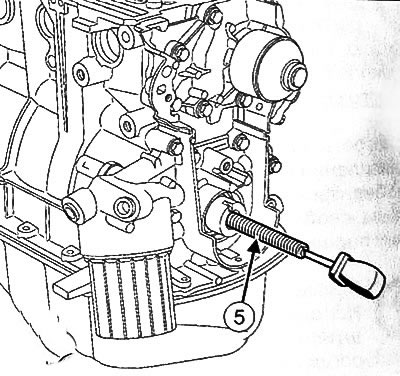
- Install the protective element with the seal on the threaded rod of the device, making sure not to touch the seal.
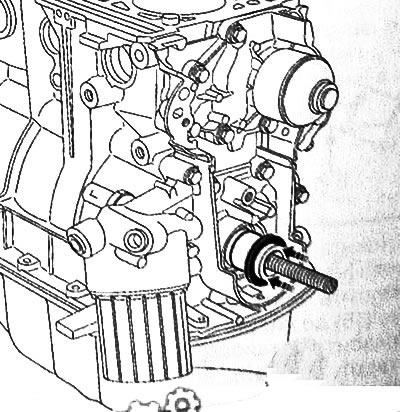
- Install the cover (6) with the nut (7) of the crankshaft oil seal installation tool on the timing drive side (Mot. 1626).
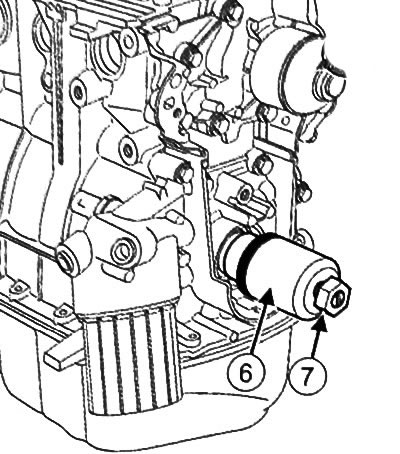
- Screw the nut in until the cover of the device (Mot. 1626) rests against the spacer.
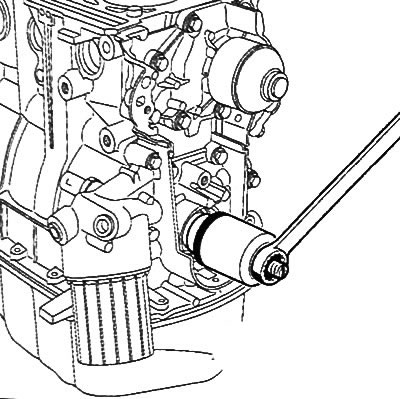
- Tighten the tool nut (Mot. 1626) until the tool cover rests against the cylinder block panel.
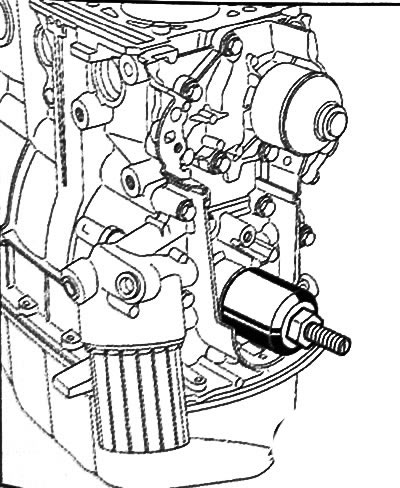
- Loosen the nut and remove the cover, protective element and threaded rod of the crankshaft oil seal installation tool on the timing drive side (Mot. 1626).
46. Install the cylinder head.
47. Install the intake manifold.
48. Install the ignition coils.
49. Install the multifunctional support.
50. Install the power steering pump.
51. Install the air conditioning compressor.
52. Install the generator.
53. Install the timing belt of the gas distribution mechanism drive.
54. Fill the engine with motor oil.
55. Remove the engine from the assembly stand.
56. Install the flywheel.
57. Install the flywheel locking device (Mot. 582-01).
58. Install the clutch discs.
59. Install the crankshaft pulley.
60. Remove the flywheel locking device from the cylinder block.
61. Install the accessory drive belts.
62. Install the gearbox on the engine.
63. Install the power unit assembly on the vehicle.