



Contents: Technical data 🠛 Table 2.2. Selection of pistons to…🠛 Table 2.3 🠛 Table 2.4. Nominal and repair…🠛 Disassembly 🠛 Disassembling and assembling the…🠛 Assembly 🠛
Technical data
1. Pistons
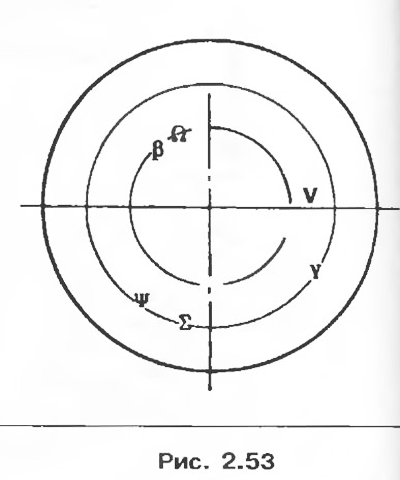
Piston skirt shape (*)
- β model (*)
- Ψ week of production (*)
- Σ modification index *)
- Y marking of size groups (table 2.1.)
- V Direction of piston installation towards the flywheel
(*) not used in after-sales service.
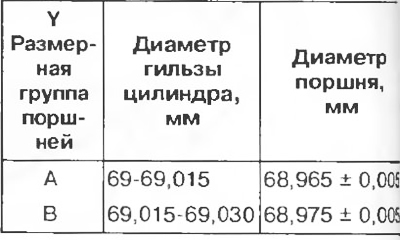
Table 2.2. Selection of pistons to cylinder liners
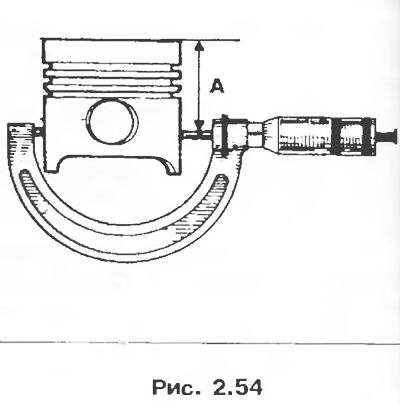
The piston diameter should be measured at a distance A = 40 mm.
2. Cylinder liners
Attention! It is necessary to observe the selection of piston and cylinder liner diameters. The selection is determined by the position of the holes T in relation to the mating surface of the cylinder head. The position of these holes makes it possible to select the tolerances of the cylinder liners in their nominal size group and, consequently, the piston diameters corresponding to these tolerances (table 2.1)
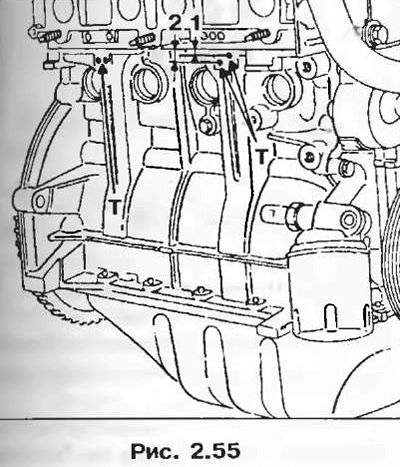
Note: The marking contains: 1 and 2 designation of the piston size group A or B; T The position of the holes indicates the size group for each cylinder.
Repair dimensions: the diameter of the cylinder liner and piston increases by 0.25 mm.
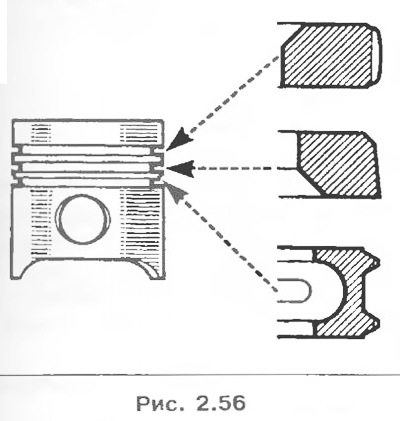
3. Piston rings
Thickness, mm:
- upper compression ring 1.47-1.49;
- lower compression ring 1.47-1.49;
- oil scraper ring 2.47-2.49.
4. Connecting rods
Axial clearance of the lower connecting rod head, mm: 0.21-0.453.
Table 2.3
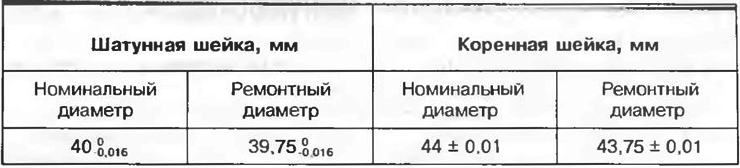
5. Crankshaft
- Number of main bearings 5;
- Axial clearance, mm: 0.06-0.235.
6. Crankshaft main bearing caps
Installation direction:
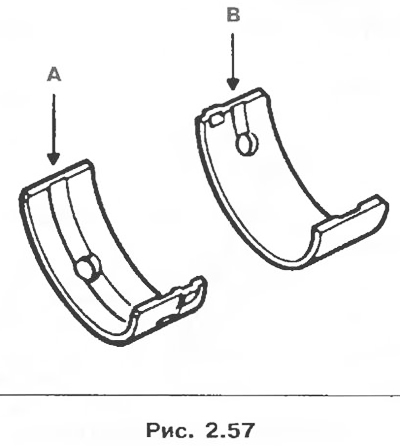
- install bearing shells 1-2-3-5 so that shells A with a groove are located on the cylinder block, and shells B without a groove are on the bearing caps.
For bearing 3, a liner is installed (U-shaped), manufactured as a single piece with thrust half rings; the insert with groove C is installed on the cylinder block, and the insert without groove D is installed on the bearing cover.
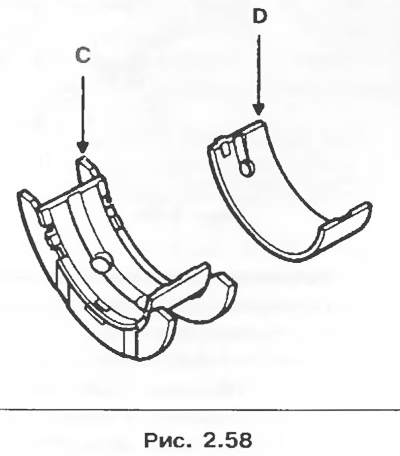
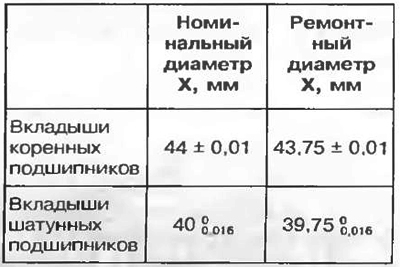
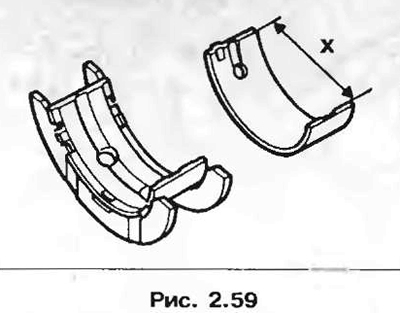
Table 2.4. Nominal and repair dimensions of main and connecting rod bearing shells
Parts that must be replaced when removed
All sealing cuffs and gaskets.
Metal tube of the cooling system.
Flywheel mounting bolts.
Connecting rod cap mounting bolts.
Crankshaft support mounting bolts.
Disassembly
1. Remove the power unit.
2. Remove the cylinder head (see the "Cylinder head gasket" section),
3. Remove:
- clutch mechanism and driven disc;
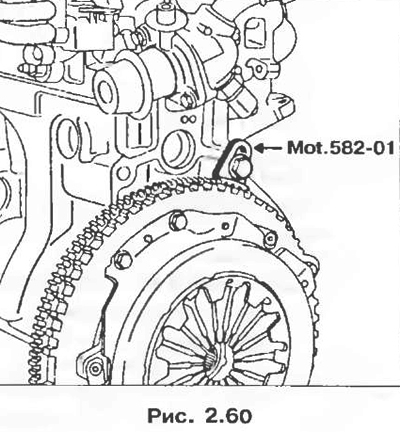
- engine flywheel, locking it using tool Mot. 582-01.
4. Remove the oil pan with the gasket (silicone sealant for gaskets or metal-plastic gaskets are available for after-sales service).
5. Remove the timing gear pulley.
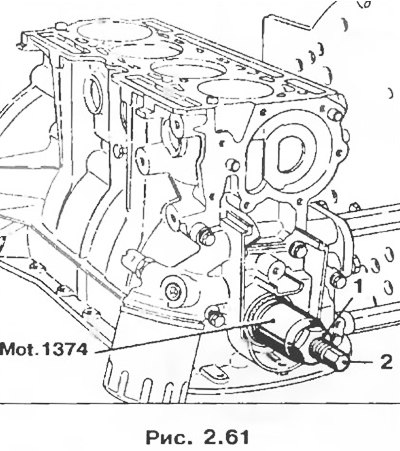
6. Remove the crankshaft oil seal using tool Mot. 1374. Using nut 1, insert the tool body into the oil seal and, turning screw 2, press it out.
7. Remove:
- oil receiver with gasket;
- oil pump.
Attention! The oil pump cannot be repaired.
Remove:
- timing drive tension roller and coolant pump.
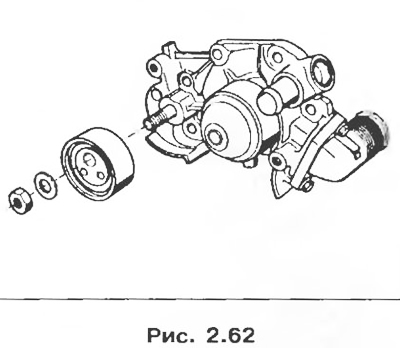
8. Remove:
- connecting rod lower head caps and liners;
- pistons with connecting rods;
- crankshaft main bearing caps and their liners;
- crankshaft;
- main bearing shells located in the cylinder block.
Disassembling and assembling the connecting "rod-piston" group
1. Pressing out the piston pins
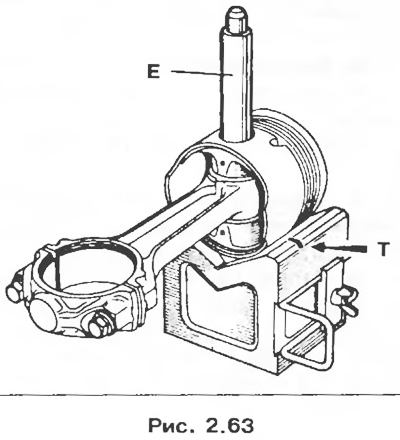
Place the piston in the V-shaped recess so that the piston pin is aligned with the hole in the support (two T marks on the support indicate the center of the hole, making alignment easier). Press out the pin using mandrel E.
2. Preparation of "piston-finger" groups
The parts of the supplied piston-pin groups are matched. Mark each group of parts in the package from A to D to maintain the match. Remove the anti-corrosion coating from the parts, but do not scrape the parts under any circumstances.
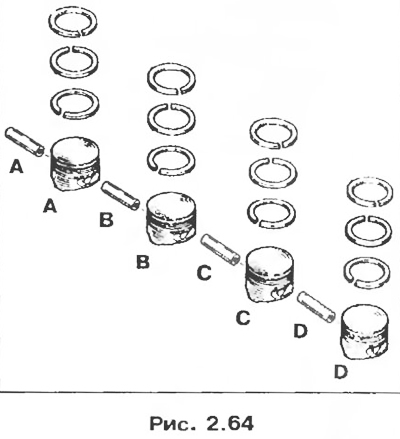
3. Installing piston pins
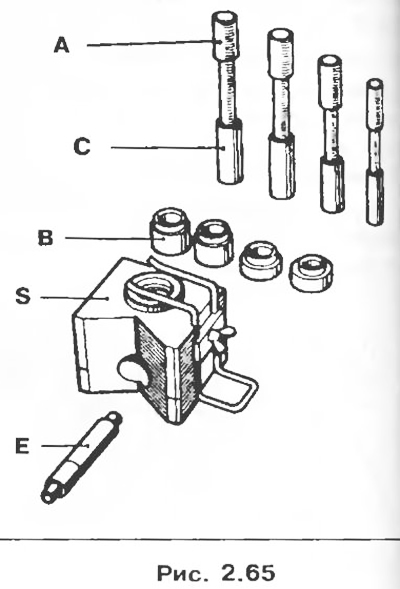
The piston pins are pressed into the upper heads of the connecting rods and rotate freely in the piston bosses. The piston pins are installed using the Mot. 574-21 device (supplied as an accessory to the Mot. 574-22 tool).
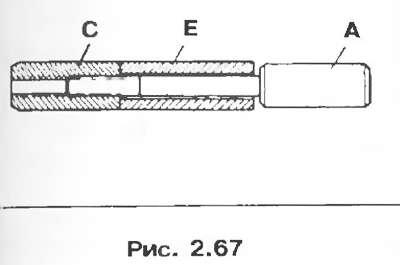
A: Mounting mandrels complete with centering bushings C.
B: Thrust bushings under the piston.
E. Mandrel for pressing out pins.
S: Piston support.
4. Preparing the connecting rods
Check visually:
- condition of connecting rods (twisting and non-parallelism of head axes);
- the fit of the connecting rod caps and connecting rods (if necessary, remove burrs with a sanding block).
To heat the connecting rods, use a 1500 watt hot plate. Place the upper ends of the connecting rods on the hot plate.
Make sure that the connecting rod heads fit snugly against the plate surface.
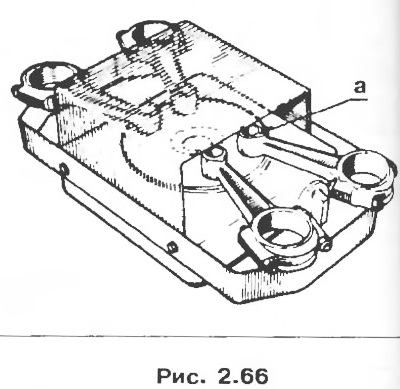
To control the temperature, place a piece of tin solder with a melting point of about 250°C on each upper connecting rod head at point a. Heat the upper connecting rod heads until the solder melts.
5. Preparing the piston pins
Make sure the piston pins slide freely in the bosses of the new pistons.
To install the piston pins, use the C17 centering sleeve and the A17 mounting mandrel.
Place the piston pin E on the mounting mandrel A, then screw the centering sleeve C onto the mounting mandrel until it stops, and then back it off a quarter of a turn.
6. Assembling the connecting "rod-piston" group
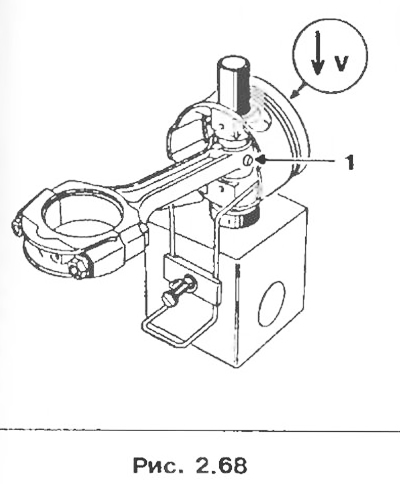
Note: An arrow is stamped on the piston head, which should point towards the flywheel after assembly. The direction of connecting rod installation is indicated by protrusion 1, which should be on the side of the oil dipstick.
Install the B17 bushing on the support, put the piston on it together with the pin, securing the piston with the support spring stopper (the arrow should point upwards). Lubricate the centering sleeve and piston pin with engine oil. Insert the piston pin into the piston holes to check and make sure it moves freely, if necessary, center the piston.
Once the solder reaches its melting temperature (turning into a drop), perform the following operations:
- remove the solder drop from the connecting rod head;
- insert the centering sleeve of the mandrel into the piston;
- insert the connecting rod into the piston;
- quickly push the piston pin until the centering sleeve stops in one hole of the piston support.
8. Make sure that the pin remains recessed relative to the outer surface of the piston in any position of the connecting rod in the piston.
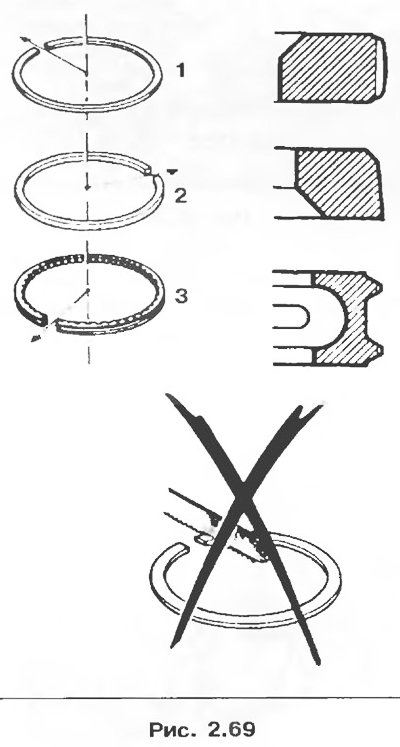
7. Installing piston rings
The piston rings must move freely in the piston grooves. Be sure to follow the sequence of installing the piston rings. Lubricate the rings with engine oil and spread their locks (figure 2.69).
Assembly
1. Install the bearing shells. All the connecting rod lower head shells are identical. The crankshaft main bearing shells have lubrication holes both on the cylinder head side and on the bearing cap side. The middle bearing shell is a thrust shell and determines the axial clearance of the crankshaft.
2. Install the crankshaft.
3. Lubricate the main and connecting rod journals of the crankshaft with engine oil.
(Text provided by an online resource: «Renaultbook.ru»)
4. Reinstall the bearing caps (pre-lubricate the threads and surfaces under the bolt heads) and tighten the bolts to a torque of 20 Nm, then turn them further by an angle of 80°.
Make sure that: the crankshaft rotates freely, the crankshaft axial clearance should be between 0.06 and 0.235 mm.
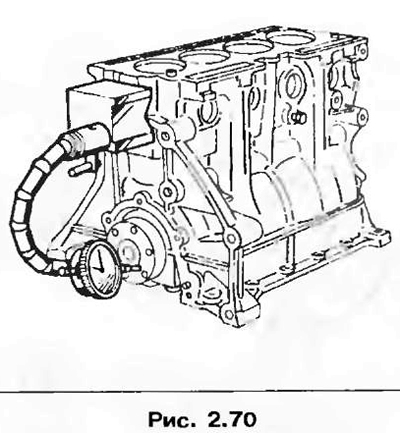
5. Clean the cylinder block.
6. Install the pistons together with the connecting rods into the cylinders of the block using a clamp.
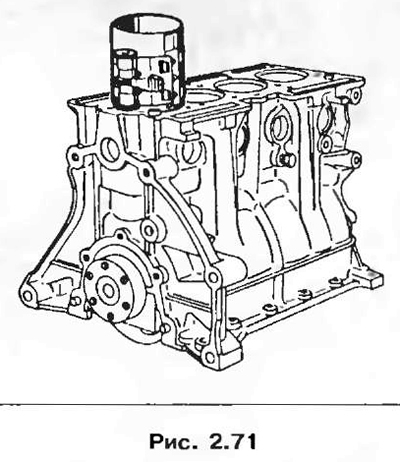
7. Install the connecting rod bearing caps so that arrow 1 faces the flywheel.
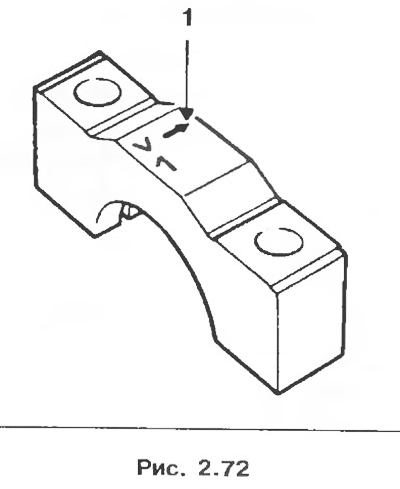
8. Tighten the connecting rod cap bolts to 14 Nm, then turn them further to an angle of 39°.
Apply 1 bead of Rhodorseal 5661 to the coolant pump mating surface and install the pump in place.
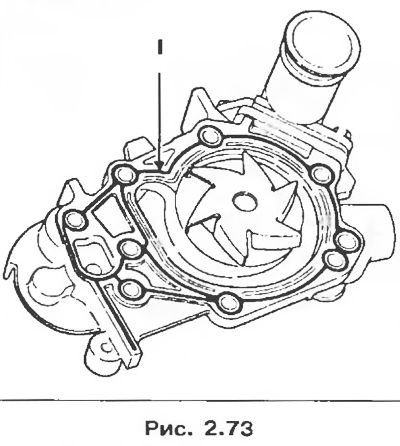
9. A new discharge pipe sealing ring must be installed at each assembly.
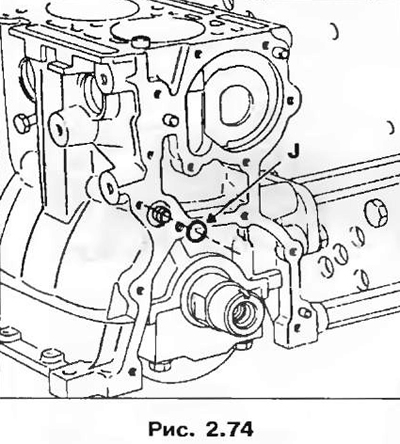
Attention! The oil pump is driven by two cams located on the crankshaft.
10. Apply a 5 bead of Rhodorseal 5661 sealant around the entire perimeter of the oil pump mating surface.
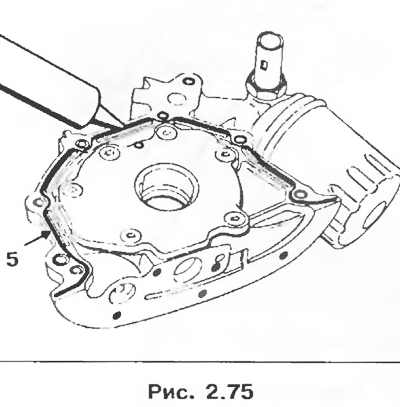
11. Install the oil pump on the cylinder block and tighten the mounting bolts to 9 Nm.
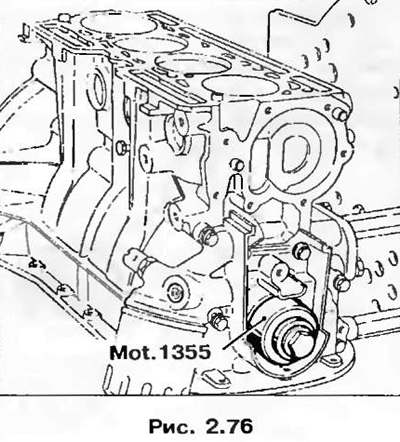
12. Fit the new seal to the crankshaft, being careful not to damage it when passing through the journal on which the timing gear is mounted. Press the seal in using tool Mot. 1355.
13. Apply a bead of Rhodorseal 5661 sealant around the entire perimeter of the mating surface on the flywheel side.
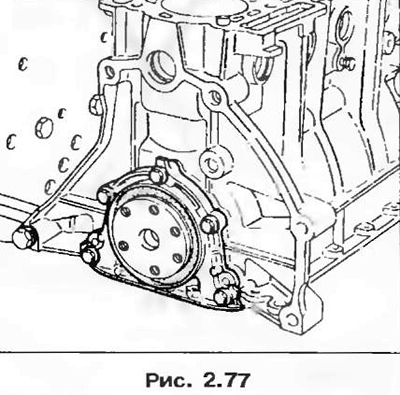
14. Tighten the cover mounting bolts to 9 Nm.
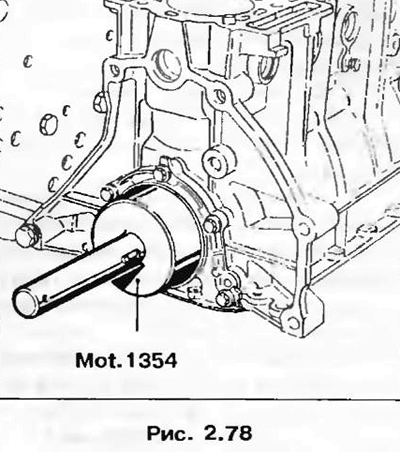
15. Install the crankshaft oil seal using tool Mot. 1354.
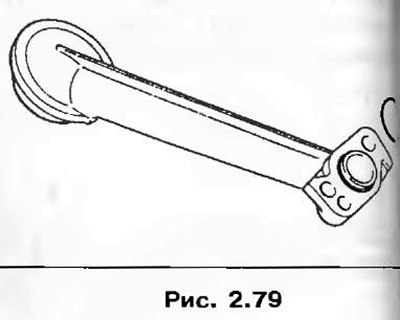
16. Install the oil receiver, having first replaced its sealing ring.
17. Clean the mating surfaces of the cylinder block and oil pan.
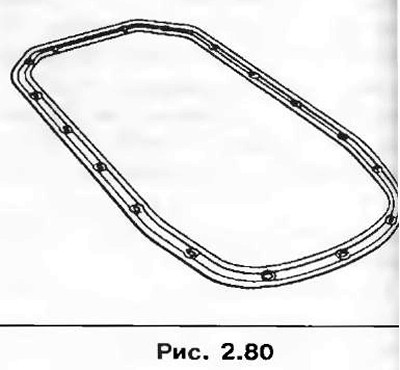
18. Install the oil pan and tighten the mounting bolts to 10 Nm.
Note: The tightness of the oil pan is ensured only by installing a special gasket (the gasket must face the cylinder block).
19. Installation is carried out in reverse order.