
English Русский
Български
Беларускі
Український
Српски
Hrvatski
Română
Polski
Slovenský
Magyar
Bookmark Contacts Articles Sitemap
Company vehicles Peugeot Company vehicles Opel Company vehicles Skoda Company vehicles Land Rover Company vehicles Mitsubishi Company vehicles Volkswagen Company vehicles Honda
RenaultBook.ru


Duster   Fluence   Kangoo   Laguna   Logan   Megane   Sandero   Scenic   Symbol   Clio   Other
Logan 1 (2004-2012, petrol) Logan 2 (2012-2020)

Gas distribution mechanism drive (Renault Logan 2)

  • Main
  • Logan
  • Logan 2 (2012-2020)
  • Power unit
  • Petrol engines 1.2 l
  • Gas distribution mechanism drive
0
Contents: Removal the timing belt of the gas…🠛 Adjusting the valve timing 🠛 Installing the timing belt 🠛 Tightening torques for threaded…🠛

Removal the timing belt of the gas distribution mechanism drive


Caution: Do not turn the engine crankshaft against the normal direction of rotation.


1. Place the vehicle on a two-post lift.

2. Disconnect the negative battery terminal.

3. Remove the front right wheel from the vehicle.

4. Remove the front right fender liner.

5. Remove the engine protective pan.

6. Remove the engine thrust rod.
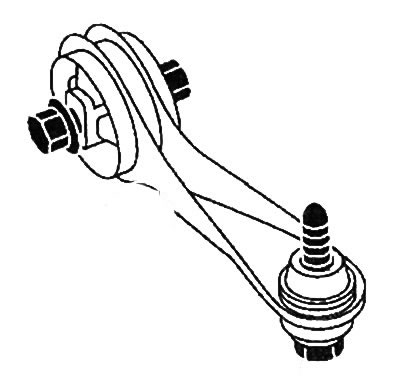
6. Remove the engine thrust rod.


7. Install the engine support (Mot. 1367-02).
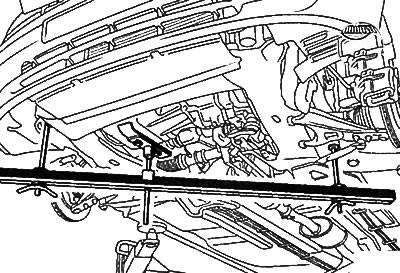
7. Install the engine support (Mot. 1367-02).


8. Remove the right engine mounting support.

9. Remove the accessory drive belts.

10. Remove the crankshaft pulley, securing the flywheel from turning with a screwdriver.


11. Remove the timing gear covers (1) and (2).
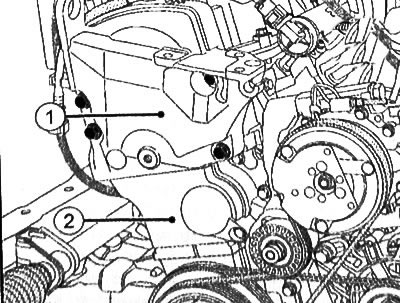
11. Remove the timing gear covers (1) and (2).


12. Set the engine to the TDC position using the special installation pin (Mot. 1054), aligning the mark (3) on the crankshaft sprocket with the mark (4).
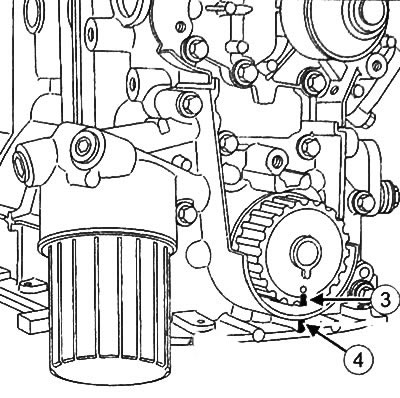
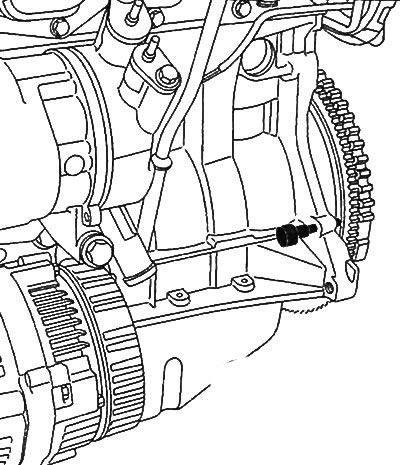
12. Set the engine to the TDC position using the special installation pin (Mot. 1054), aligning the…


12. Set the engine to the TDC position using the special installation pin (Mot. 1054), aligning the…


13. Loosen the tension roller nut.

14. Remove the timing belt of the gas distribution mechanism drive.


Adjusting the valve timing


1. Install the new tension roller, making sure that the rib (5) is correctly positioned between the two shoulders of the tension roller (6) and the pin (7) of the tension roller is inserted correctly.
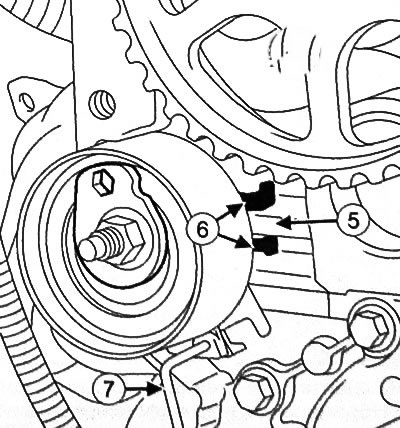
1. Install the new tension roller, making sure that the rib (5) is correctly positioned between the…


Caution: Do not remove the tension roller retaining pin (7) until the timing belt has been installed.


2. Tighten the tension roller fastening nut by hand until it contacts the tension roller.

3. Make sure that the TDC alignment pin (Mot. 1054) is in place.
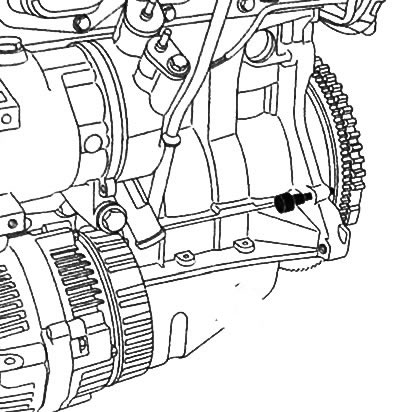
3. Make sure that the TDC alignment pin (Mot. 1054) is in place.


4. Make sure that the timing mark on the sprocket (8) is opposite the mark (9) on the oil pump housing.
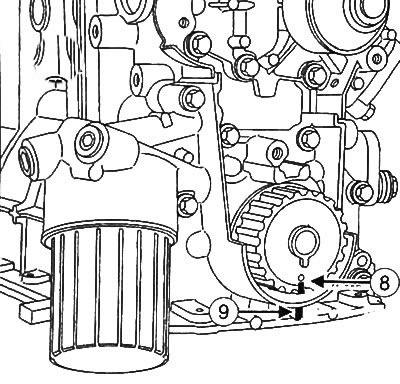
4. Make sure that the timing mark on the sprocket (8) is opposite the mark (9) on the oil pump…


5. Make sure that the mark on the camshaft pulley (10) is opposite the mark (11) on the rocker arm cover.
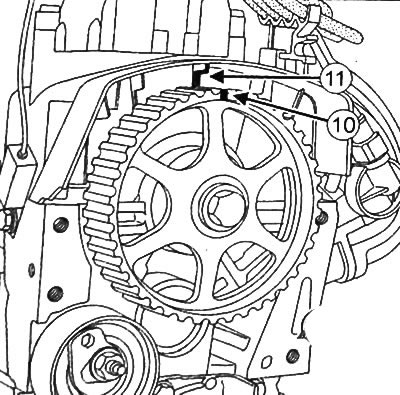


5. Make sure that the mark on the camshaft pulley (10) is opposite the mark (11) on the rocker arm…


6. Install the crankshaft pulley bolt and washer to secure the sprocket in place.

Installing the timing belt


Caution: The timing belt must be replaced with a new one after each removal. In addition, the tension roller and crankshaft pulley bolt must also be replaced with new ones.


1. Install the timing belt, aligning the marks on the belt with the marks on the camshaft and crankshaft sprockets.
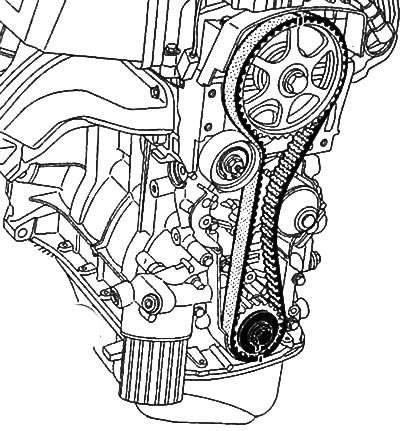
1. Install the timing belt, aligning the marks on the belt with the marks on the camshaft and…


2. Remove the TDC alignment pin and tension roller pin.

3. Using Allen key (hexagon) 6 mm turn the eccentric tension roller counterclockwise until the tension roller pointer is set to the position shown in the figure (12).
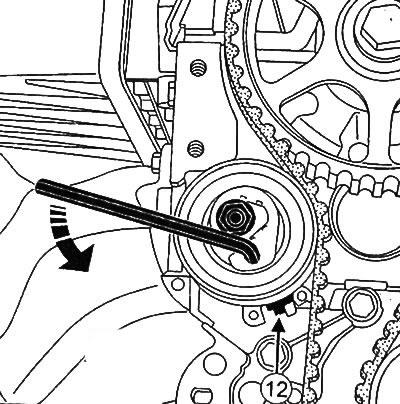
3. Using Allen key (hexagon) 6 mm turn the eccentric tension roller counterclockwise until the…


4. Tighten the tension roller nut to 24 Nm.


5. Turn the crankshaft six turns clockwise (from the timing drive side).

6. Re-insert the TDC pin (Mot. 1054) into the flywheel bore and ensure that the timing marks on the camshaft and crankshaft align with the fixed marks on the engine.

7. Remove the TDC alignment pin.

Note: It is important to tighten the tension roller nut to the specified torque to avoid damaging the roller, and at the same time to prevent it from becoming loose, which may cause serious damage to the engine


8. Loosen the tension roller nut no more than one turn, holding the roller itself in place with an Allen key (hexagon) 6 mm, then turn the tension roller pointer clockwise (13) to center it in the installation window (14).
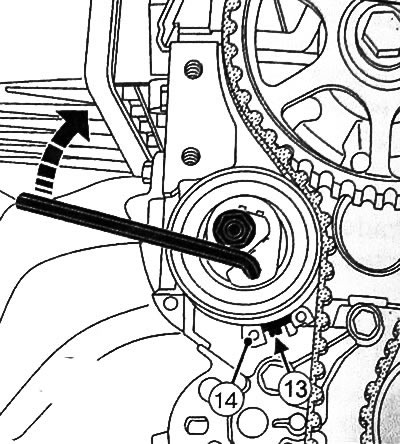
8. Loosen the tension roller nut no more than one turn, holding the roller itself in place with an…


9. Tighten the tension roller nut to 24 Nm.

10. Make sure that the tension roller does not touch the cylinder head at point (15).
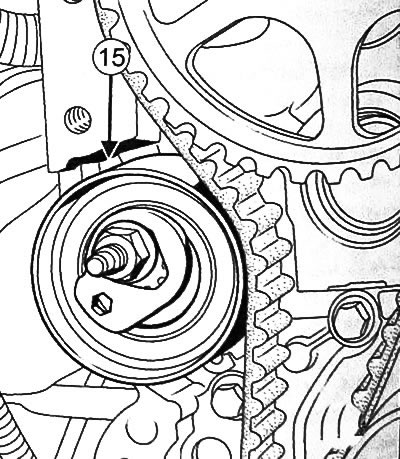
10. Make sure that the tension roller does not touch the cylinder head at point (15).


Attention:

If the tension roller touches the cylinder head:
  • set the engine to TDC,
  • remove the tension roller and timing belt,
  • reinsert the tension roller pin,
  • repeat the timing belt check procedure from the beginning.


11. Remove the crankshaft pulley bolt
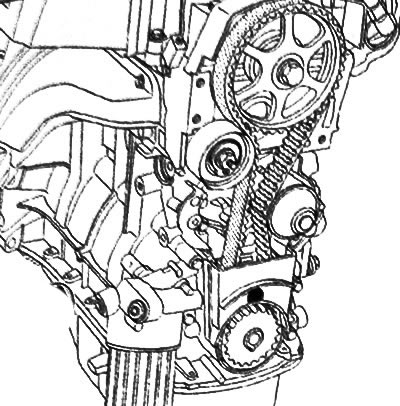


11. Remove the crankshaft pulley bolt


12. Install the lower timing drive cover.

13. Tighten the intermediate timing cover mounting bolts to a torque of 10 Nm.

14. Tighten the upper timing cover mounting bolts in the sequence shown in the figure to a torque of 33 Nm.
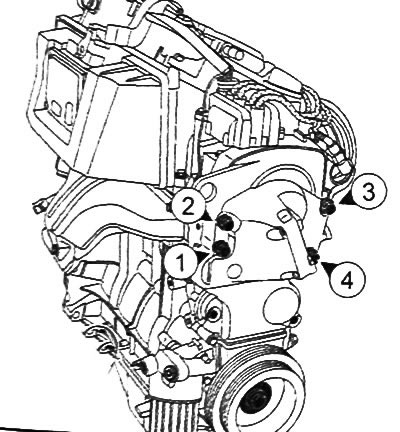
14. Tighten the upper timing cover mounting bolts in the sequence shown in the figure to a torque…


15. Having secured the flywheel with a screwdriver, tighten the crankshaft pulley bolt to a torque of 40 Nm, then tighten it another 150±6', using for this purpose the magnetized lever of the cylinder head tightening indicator (Mot. 591-02) and a key for angular tightening of the cylinder head (Mot. 591-04).

16. Install the right engine mounting support and tighten the mounting bolts to 62 N·m.
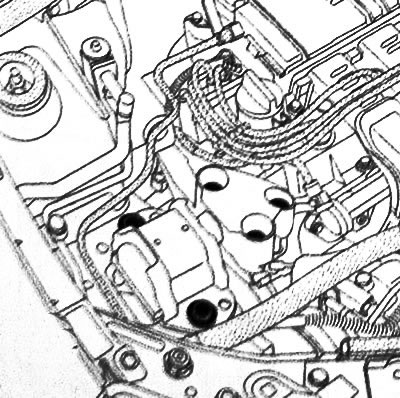
16. Install the right engine mounting support and tighten the mounting bolts to 62 N·m.


17. Tighten the engine torque rod bolt to 105 Nm.


18. Tighten the torque rod support mounting bolt on the subframe to a torque of 62 N·m.

19. Further installation is carried out in the reverse order of removal.

20. Connect the negative battery terminal.

[Material taken from an online portal: www.RENAULTBOOK.ru]

Tightening torques for threaded connections


Threaded connections Tightening torque
Tension roller nut 24 Nm
Bolts for fastening the intermediate cover of the timing mechanism drive 10 Nm
Upper timing cover mounting bolts 33 Nm
Right engine mounting support mounting bolts 62 Nm
Engine thrust mounting bolt 105 Nm
Bolt for fastening the jet thrust support to the subframe 62 Nm
Wheel bolts 105 Nm
This article is available on: russian, bulgarian, belarusian, ukrainian, serbian, croatian, romanian, polish, slovak, hungarian
Article has been reviewed by editor: Petrovsky Roman
Share with friends:
Previous
Logan 2: Petrol engines 1.2 l
Next

Repair of an engine removed from a car
Removal and installation of the power unit assembly
Removal and installation the multifunctional engine mount
Removal and installation the power steering pump
Removal and installation the air conditioning compressor
Adjusting valve clearance
Rocker Arm Cover — Removal and Installation
Removal the cylinder head
Disassembling the cylinder head
Cleaning the cylinder head
Other articles on other Renault models

➽ Gas distribution mechanism drive belt Renault Kangoo 1 (1997-2007)
➽ Timing belt for gas distribution mechanism drive Renault Espace III (1996-2002)
➽ Air flow distribution flap drive cable Renault Duster 1 (2009-2017)
➽ Checking clearances in the valve drive mechanism of H4J and M4R… Renault Fluence 1 (2009-2020, petrol)
➽ Table of signs of drive mechanism malfunctions Renault Laguna 2 (2001-2007)
Link to this article in different formats
Reviews and comments of visitors
No comments yet


Add two numbers 10 + 23


Logan 2 (2012-2020) 
  • General information
  • Faults en route
  • Daily checks
  • Governing bodies
  • Maintenance
  • Power unit
  • Petrol engines 1.2 l
  • Petrol engines 1.6 l
  • Diesel engines 1.5 l
  • Cooling system
  • Lubrication system
  • Power and control system
  • Intake and exhaust system
  • Engine electrical equipment
  • Transmission
  • Clutch
  • Car gearbox
  • Drive shafts
  • Chassis, running gear
  • Suspension and wheels
  • Brake system
  • Steering
  • Body and interior
  • Exterior (external elements)
  • Interior (internal elements)
  • Safety system
  • Heating and air conditioning
  • Electrical equipment
  • Equipment and devices
  • Wiring diagrams (sedan)
  • Wiring diagrams (wagon)
Logan 1 (2004-2012, petrol) 
  • General information
  • Vehicle device
  • User manual
  • Faults en route
  • Daily maintenance
  • First maintenance
  • Second maintenance
  • Driver tips
  • Power unit
  • Engine repair
  • Lubrication system
  • Cooling system
  • Power and exhaust system
  • Transmission
  • Clutch
  • Car gearbox
  • Drive shafts
  • Chassis, running gear
  • Front suspension
  • Rear suspension
  • Steering
  • Brake system
  • Wheels and tires
  • Body and interior
  • Exterior (external elements)
  • Interior (internal elements)
  • Doors, locks and windows
  • Body Care
  • Electrical equipment
  • Equipment and devices
  • Headlights and lighting
  • Power devices
  • Electrical circuits
RenaultBook.ru © 2018–2026 | Mobile version | News and articles | Sitemap: EN BG BY UA RS HR RO PL SK HU | Administration | Site search | Bookmark
Duster 1 (2009-2017) | Fluence 1 (2009-2020, petrol) | Kangoo 1 (1997-2007) | Laguna 2 (2001-2007) | Logan 1 (2004-2012, petrol) | Logan 2 (2012-2020) | Megane 1 (1995-2002) | Megan 2 (2002-2009, petrol) | Sandero 1 (2007-2012, petrol) | Scenic 1 (1996-2003) | Symbol 1 (1999-2008, petrol) | Symbol 2 (2008-2013, petrol) | Renault 19 (1988-1996) | Espace I and II (1984-1996) | Espace III (1996-2002) | Clio 1 (1990-1998) |
We want your visit to be comfortable 😌 and use cookies 🍪 to do so.