



- elevated (compared to the usual) noise;
- difficult gear shifting;
- spontaneous disengagement or unclear engagement of gears;
- oil leakage through seals and gaskets.
In addition, the gearbox is removed to replace the clutch, flywheel and rear crankshaft oil seal of the engine.
Note: The work of removing and installing the gearbox is very labor-intensive, so first make sure that its malfunctions are not caused by other reasons (insufficient oil level, clutch drive defects, loose gearbox mounts, etc.). The gearbox is quite heavy and has an awkward shape to hold, so we recommend removing it with an assistant.
You will need: keys "13", "18", a screwdriver with a flat blade.
1. Place the vehicle on a lift or inspection pit.
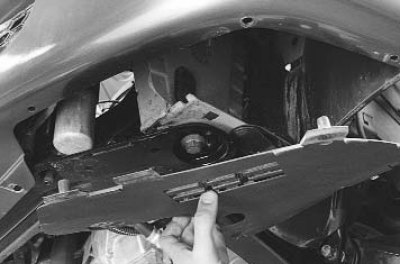
2. Remove the crankcase guard and the lower part of the left engine splash guard (see "Removal and installation of mudguards and engine crankcase protection").
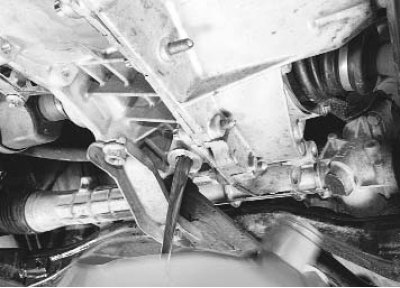
3. Drain the oil from the gearbox (see "Checking the level and topping up the gearbox").
4. Remove the battery (see "Removing and installing the battery").
5. Remove the plastic gasket from the battery shelf.
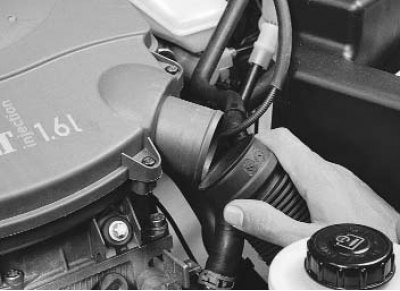
6. Remove the air filter supply hose.
7. Remove the engine control unit (see "Removal and installation of the electronic engine control unit").
8. Remove the right and left mounting blocks.
Note: It is not necessary to remove the electronic engine control unit and mounting blocks. Their absence facilitates access to the left support mount of the powertrain suspension.
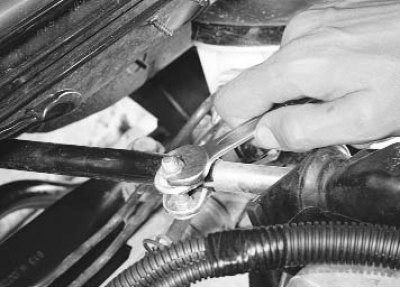
9. Loosen the tightening clamp securing the gearbox control rod to its lever...
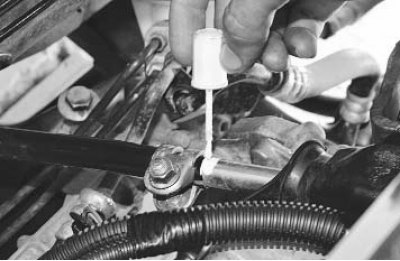
10. ...mark in any way available (for example, with paint) the relative position of the rod and lever so as not to disturb the drive adjustment during reassembly...
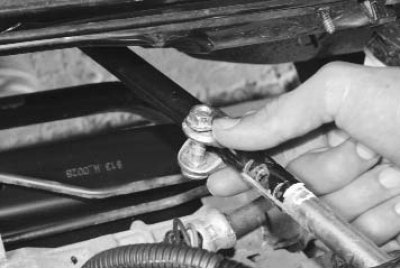
11. ...slide the clamp along the rod...
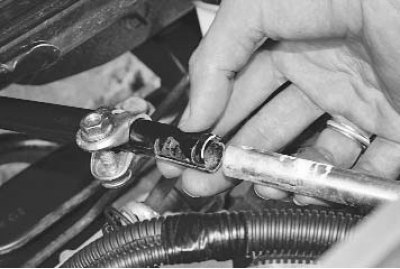
12. ...and disconnect the rod and lever.
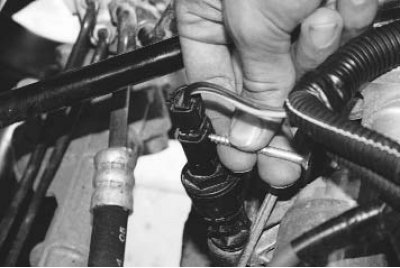
13. Press the locking clip of the speed sensor wiring harness connector with a pointed object...
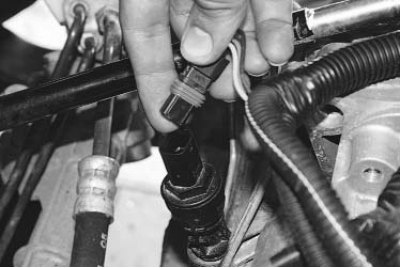
14. ...and disconnect the connector.
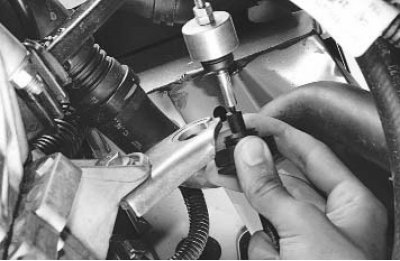
15. Disconnect the clutch release cable from the clutch release fork and the bracket on the gearbox (see "Replacing and adjusting the clutch release cable").
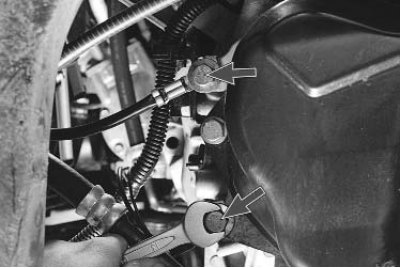
16. Unscrew the two bolts securing the ground wires to the gearbox and disconnect the wires.
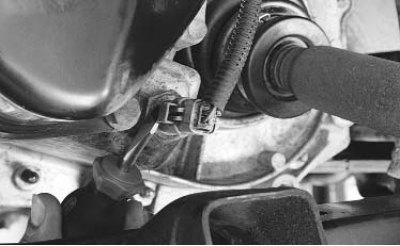
17. Using a screwdriver, pry up the retainer on the reverse light switch wiring harness connector...
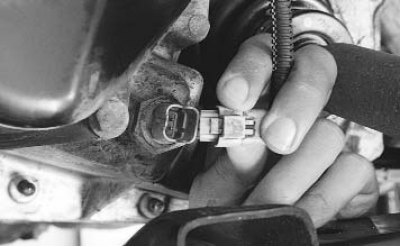
18. ...disconnect the block from the switch.
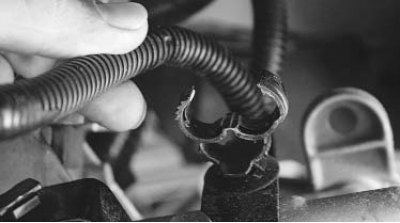
19. Remove the engine harness from the holder on the gearbox and move it to the side.
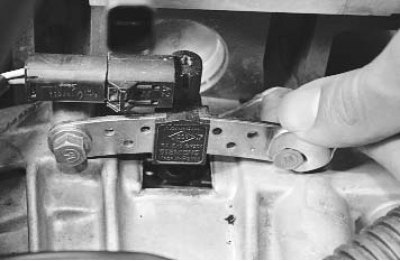
20. Remove the two bolts securing the top dead center sensor to the clutch housing...
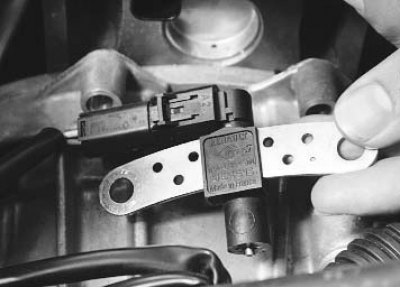
21. ...and move the sensor together with the wiring harness to the side.
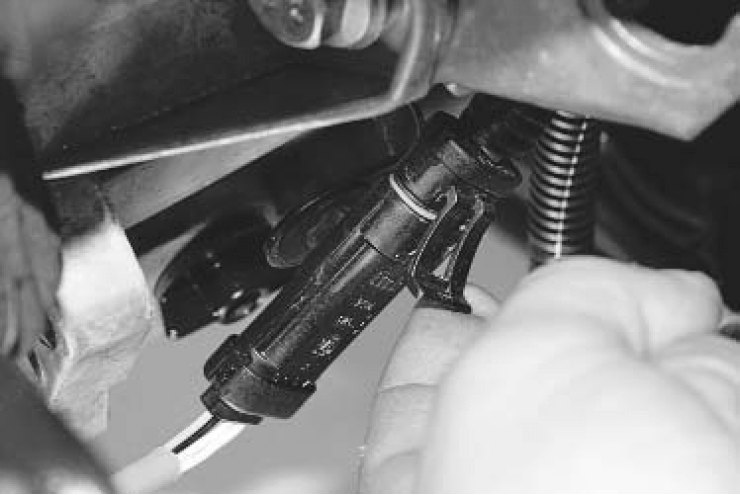
22. By pressing the lock of the oxygen concentration sensor wiring harness block...
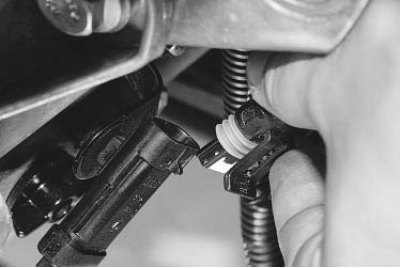
23. ...disconnect the connector...
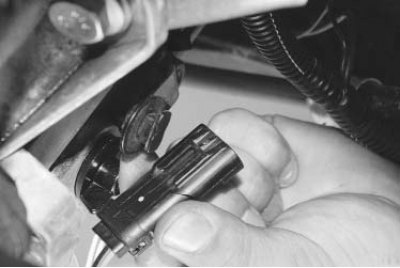
24. ...and remove the harness connector from the holder on the gearbox.
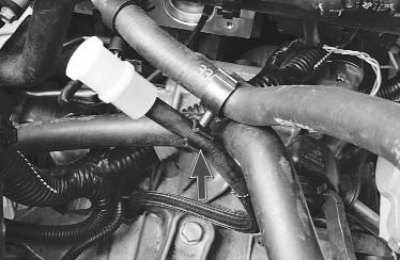
25. Remove the gearbox breather hose from the holder.
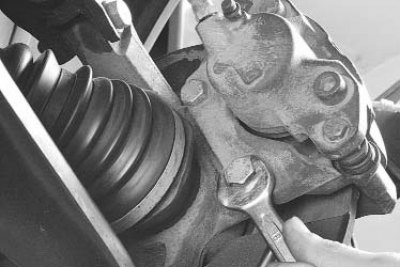
26. On both sides of the car, unscrew two bolts securing the front brake calipers to the steering knuckles...
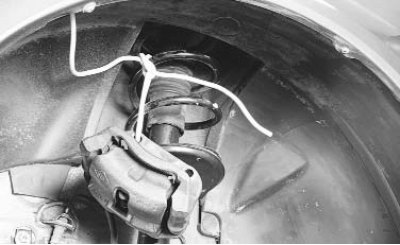
27. ... move the calipers to the side without disconnecting the brake hoses from them, and secure them in any way possible (for example, by tying it with wire to the front suspension springs)...
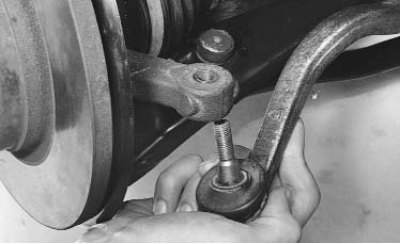
28. ...disconnect the steering rods from the steering knuckle arms (see "Replacing the outer tie rod end")...
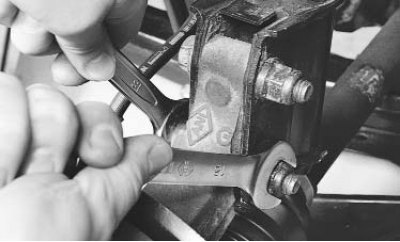
29. ...unscrew the two nuts securing the shock absorber struts to the steering knuckles and remove the bolts from the holes in the knuckles and struts.
Note: Disconnecting the front brake calipers, steering rods and shock absorber struts is necessary in order to be able to disconnect the inner joints of the front wheel drives from the gearbox without removing the drives themselves.
30. By moving the steering knuckles to the sides, disconnect the inner joints of the front wheel drives from the gearbox (see "Removal and installation of front wheel drives").
Caution! When disconnecting the inner joint of the left front wheel drive from the gearbox, be careful not to drop the joint rollers into the gearbox housing if they are loosely seated on the journals of the three-pin joint hub.
31. Remove the starter (see "Removing and installing the starter").
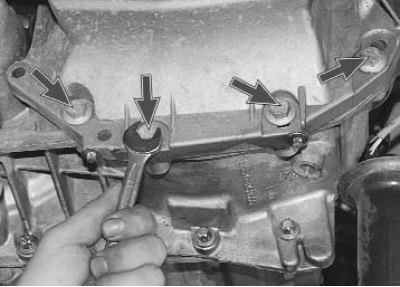
32. Remove the four bolts securing the oil pan to the clutch housing.
33. Remove the subframe (see "Removing and installing the subframe").
Note: When removing the subframe from the gearbox, the rear support of the powertrain suspension is disconnected.
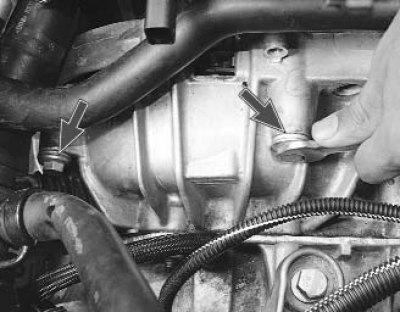
34. Remove the two upper bolts securing the gearbox to the engine.
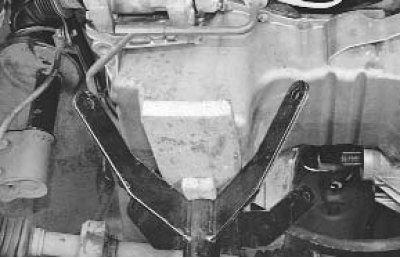
35. Place under the engine...
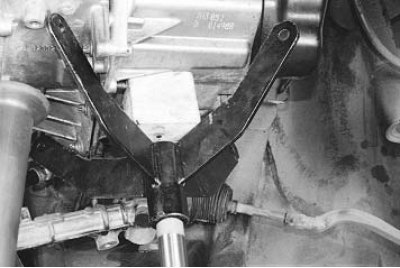
36. ...and the gearbox has reliable supports.
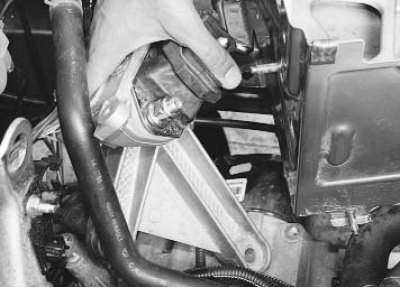
37. Remove the left support of the power unit suspension (see "Replacing the left support of the powertrain suspension").
(Text provided by an online resource: renaultbook)
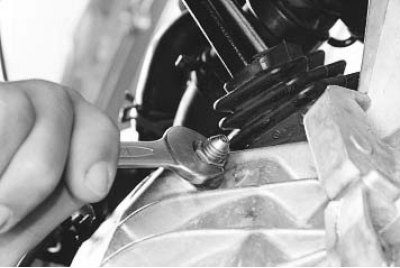
38. Unscrew the two nuts securing the lower gearbox to the engine on the left...
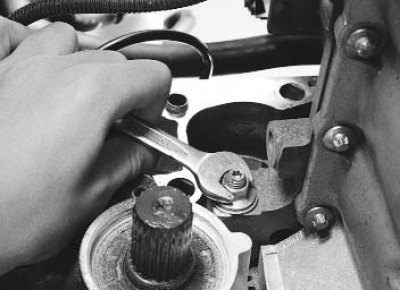
39. ...and on the right.
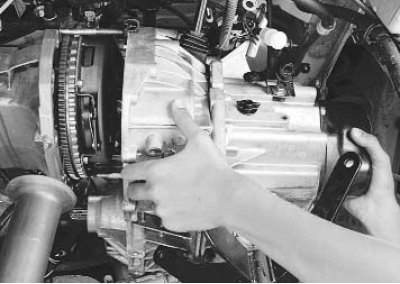
40. Move the gearbox back until the clutch housing studs come out of the cylinder block holes. At the same time, the gearbox input shaft should come out of the clutch driven disk hub.
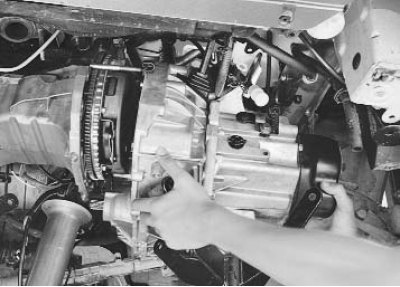
41. Move the box as far back as possible, remove the support from under it and, tilting the rear part of the box down, remove it from the car.
Caution! When removing the gearbox, do not rest the end of the input shaft against the diaphragm spring petals to avoid deforming them.
42. Install the gearbox and all removed parts and assemblies in the reverse order of removal.
Note: Before installing the gearbox, we recommend lubricating the splines of the input shaft and the outer surface of the clutch release bearing guide sleeve with a thin layer of high-melting grease. Check how the driven clutch disc is centered using a special mandrel (see Fig. "Removing and installing the clutch")
43. Fill the gearbox with oil (see "Checking the level and adding oil to the gearbox").