English Русский
Български
Беларускі
Український
Српски
Hrvatski
Română
Polski
Slovenský
Magyar
Bookmark Contacts Articles Sitemap
Company vehicles Peugeot Company vehicles Opel Company vehicles Skoda Company vehicles Land Rover Company vehicles Mitsubishi Company vehicles Volkswagen Company vehicles Honda
RenaultBook.ru


Duster   Fluence   Kangoo   Laguna   Logan   Megane   Sandero   Scenic   Symbol   Clio   Other
Megane 1 (1995-2002) Megan 2 (2002-2009, petrol)

Removal and installation the engine oil pan (K4J, K4M) (Renault Megane 2)

  • Main
  • Megane
  • Megan 2 (2002-2009, petrol)
  • Power unit
  • Engine repair
  • Removal and installation the engine oil pan (K4J, K4M)
0
Contents: Removal 🠛 Installation 🠛

Removal


Place the vehicle on a two-post lift.

Disconnect the battery.

Remove the engine oil pan guard.

Drain the oil from the engine.

Remove:
  • engine Top Covers;
  • oil dipstick;
  • front wheels;
  • mudguards.

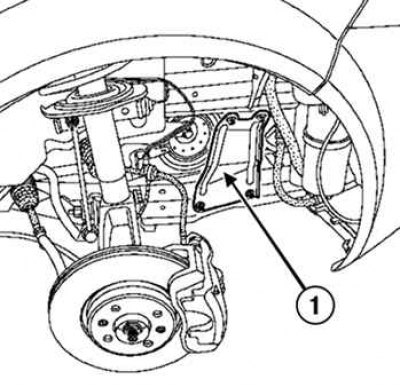
Fig. 2.30. Removing the side subframe reinforcements: 1 – side subframe reinforcements

Fig. 2.30. Removing the side subframe reinforcements: 1 – side subframe reinforcements


Remove the side subframe reinforcements (Fig. 2.30).

Secure the engine cooling system radiator with a safety belt to the upper cross member.

Note: When installing, make sure that the safety belt does not pinch the cooling system hoses.


Unscrew the nuts and bolts securing the subframe.
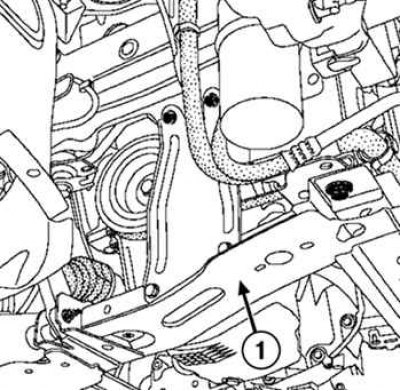
Fig. 2.31. Removing the subframe: 1 – subframe

Fig. 2.31. Removing the subframe: 1 – subframe


Original of this article on the website: RENAULTBOOK


Remove the subframe (Fig. 2.31).

Loosen the bolts securing the wheel drive shaft flange to the intermediate support.

Unscrew the bolts securing the intermediate support to the engine oil pan.

Loosen the bolt securing the engine oil pan to the multi-functional bracket.

Remove the engine oil pan mounting bolts.

Remove the engine oil pan.

Installation


Clean the mating surfaces with DECAPJOINT to dissolve any adhering gasket residue.

Apply the composition to the surface to be cleaned, wait about ten minutes, then remove the excess with a wooden spatula.

Attention! The mating surfaces must be clean, dry and free of oil (do not leave fingerprints).


Caution! If you apply too much sealant, the excess will be squeezed out when tightening the mounting bolts. Sealant getting into working fluids can cause damage to some components and assemblies (engine, radiator, etc.).
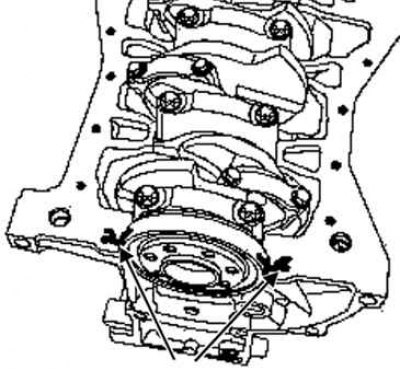

Fig. 2.32. Places of application of silicone sealant

Fig. 2.32. Places of application of silicone sealant


Apply four dots of silicone sealant, 5 mm in diameter, in the places indicated by the arrows in Figure 2.32.
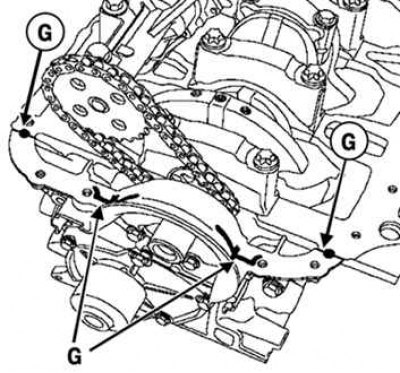
Fig. 2.33. Places where silicone sealant is applied to the front cover joint

Fig. 2.33. Places where silicone sealant is applied to the front cover joint


Apply two drops of 7 mm diameter silicone sealant to the joint between the front cover and the cylinder block (Fig. 2.33).

Install the oil separator on the cylinder block.
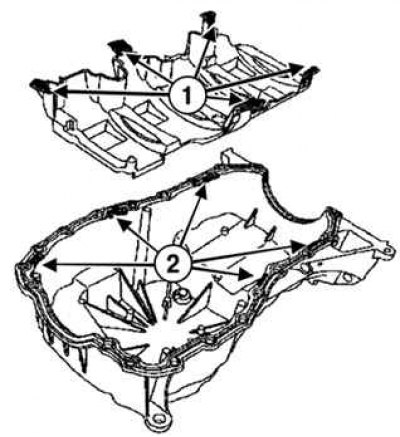
Fig. 2.34. Checking the installation of the engine oil pan: 1 – oil deflector tongues; 2 – tray…

Fig. 2.34. Checking the installation of the engine oil pan: 1 – oil deflector tongues; 2 – tray grooves


When installing the engine oil pan, check that the oil separator tongues fit into the pan grooves (Fig. 2.34).

The planes of the cylinder block and oil pan on the flywheel side are aligned to prevent deformation of the clutch housing.

Install the engine oil pan with a new gasket.

Install the engine oil pan mounting bolts without tightening them.

Install the engine oil pan mounting bolts from the gearbox without tightening them.
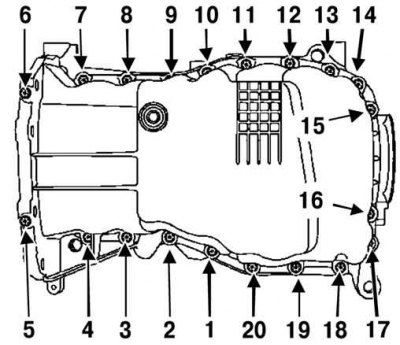
Fig. 2.35. Sequence of tightening the engine oil pan mounting bolts

Fig. 2.35. Sequence of tightening the engine oil pan mounting bolts


Tighten the bolts in the order shown in Figure 2.35 to the required torque.

Table 2.4. Tightening torques for engine oil pan mounting bolts


ElementTightening torques, Nm
Engine sump mounting bolts14
Engine oil pan mounting bolts in gearbox44
engine oil pan to multi-function bracket mounting bolts21
subframe mounting bolts105
subframe mounting nuts21
wheel bolts110
battery cover fastenings4
This article is available on: russian, bulgarian, belarusian, ukrainian, serbian, croatian, romanian, polish, slovak, hungarian
Article has been reviewed by editor: Kupriyanov Sergey
Share with friends:
Previous
Megan 2: Engine repair
Next

Removal and installation the filler neck
Draining fuel from the tank
Removal and installation the air filter housing (K4M engine)
Removal and installation the air filter housing (engine K4J)
Replacing the air filter (F4R engine)
Removal and installation the multifunctional bracket (F4R)
Removal and installation the accessory drive belt (K4J, K4M)
Removal and installation the accessory drive belt (F4R)
Removal and installation the timing belt (K4J)
Removal and installation the timing belt (F4R)
Other articles on other Renault models

➽ Electronic engine start immobilizer system Renault Duster 1 (2009-2017)
➽ Starting the engine with an additional battery Renault Fluence 1 (2009-2020, petrol)
➽ Electronic anti-theft engine immobilizer system Renault Kangoo 1 (1997-2007)
➽ Engine specifications Renault Laguna 2 (2001-2007)
➽ General techniques for starting an engine Renault Logan 1 (2004-2012, petrol)
Link to this article in different formats
Reviews and comments of visitors
No comments yet


Add two numbers 48 + 44


Megan 2 (2002-2009, petrol) 
  • User manual
  • Introduction to manual
  • Controls and instruments
  • Salon equipment
  • Operation and driving
  • Maintenance and care
  • Power unit
  • Engine repair
  • Fuel system
  • Injection system
  • Intake and exhaust system
  • Starting and charging system
  • Cooling system
  • Decreased toxicity
  • Transmission
  • Clutch
  • Mechanical gearbox
  • Automatic gearbox
  • Wheel drive mechanism
  • Chassis, running gear
  • Suspension and wheels
  • Steering
  • Brake system
  • Body and interior
  • Exterior (external elements)
  • Interior (internal elements)
  • Doors, locks and windows
  • Heating and air conditioning
  • Electrical equipment
  • Equipment and devices
  • Headlights and lighting
  • Electrical circuits
Megane 1 (1995-2002) 
  • General information
  • User manual
  • Maintenance
  • Power unit
  • Petrol engines 1.4/1.6 l
  • Petrol engines 2.0 l
  • Diesel engines 1.9 l
  • Overhaul of engines
  • Cooling system
  • Fuel system (petrol)
  • Fuel system (diesel)
  • Decreased toxicity
  • Charge and launch systems
  • Ignition system (petrol)
  • Preheat system (diesel)
  • Transmission
  • Clutch
  • Mechanical gearbox
  • Automatic gearbox
  • Drive shafts
  • Chassis, running gear
  • Brake system
  • Car suspension
  • Steering
  • Body and interior
  • Exterior (external elements)
  • Interior (internal elements)
  • Doors, locks and windows
  • Electrical equipment
  • Equipment and devices
  • Electrical circuits
RenaultBook.ru © 2018–2026 | Mobile version | News and articles | Sitemap: EN BG BY UA RS HR RO PL SK HU | Administration | Site search | Bookmark
Duster 1 (2009-2017) | Fluence 1 (2009-2020, petrol) | Kangoo 1 (1997-2007) | Laguna 2 (2001-2007) | Logan 1 (2004-2012, petrol) | Logan 2 (2012-2020) | Megane 1 (1995-2002) | Megan 2 (2002-2009, petrol) | Sandero 1 (2007-2012, petrol) | Scenic 1 (1996-2003) | Symbol 1 (1999-2008, petrol) | Symbol 2 (2008-2013, petrol) | Renault 19 (1988-1996) | Espace I and II (1984-1996) | Espace III (1996-2002) | Clio 1 (1990-1998) |
We want your visit to be comfortable 😌 and use cookies 🍪 to do so.