



Removal
Place the vehicle on a two-post lift.
Disconnect the battery.
Remove the battery.
Remove the top engine covers.
Remove the engine oil pan guard.
Remove the accessory drive belt.
Remove the timing belt.
Remove the front bumper.
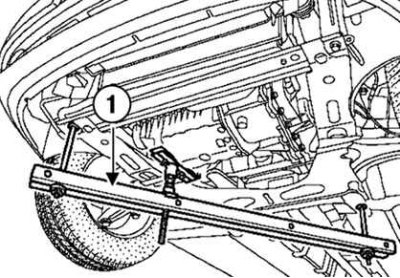
Fig. 2.100. Installing the engine support crossbar: 1 - crossbar
Install the engine support crossbar (Mot. 1672) (fig. 2.100).
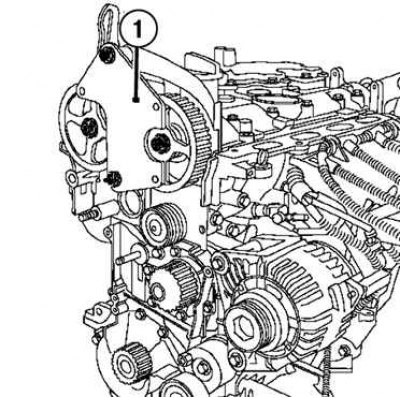
Fig. 2.101. Removing the camshaft toothed pulleys: 1 – device
Remove the camshaft sprockets by blocking the shafts with a tool (Mot. 1490-01) (fig. 2.101).
Remove the fuel rail guard and the fuel rail supply line.
Move the fuel supply line to the side.
Disconnect the brake booster vacuum hose from the intake manifold.
Disconnect the wiring harness from the coolant temperature sensor.
Disconnect the hoses from the thermostat housing.
Disconnect:
- ignition coil wiring harnesses;
- the wiring harness from the air temperature sensor;
- absolute pressure sensor wiring blocks;
- hose from the electromagnetic valve of the adsorber purge.
- wiring harness from the upper oxygen sensor (fig. 2.102).
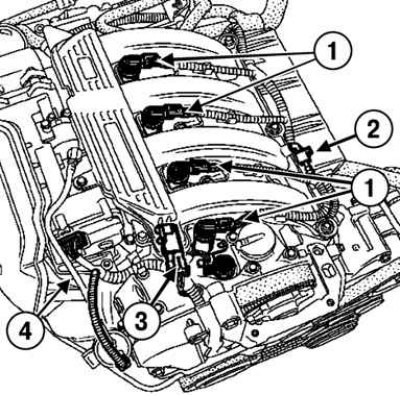
Fig. 2.102. Disconnecting the ignition coil wire connectors, air temperature sensors, absolute pressure and upper oxygen sensor, and the hose of the purge solenoid valve of the adsorber: 1 – ignition coil wire blocks; 2 – air temperature sensor; 3 – absolute pressure sensor; 4 – hose of the electromagnetic valve for purging the adsorber
Disconnect the wire connectors from the injectors.
Connect the holders.
Move the wire harness aside.
Remove the coils and spark plugs.
Remove the air filter housing.
Remove the throttle body.
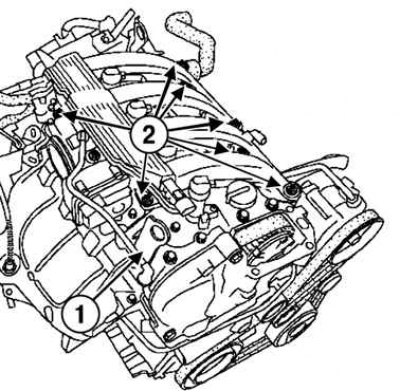
Fig. 2.103. Removing the intake manifold: 1 – lifting eye; 2 – intake manifold mounting bolts
After removing the lifting eye and unscrewing the mounting bolts, remove the intake manifold (fig. 2.103).
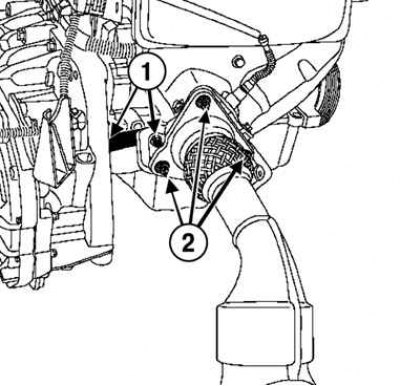
Fig. 2.104. Removing the exhaust pipe flange fastening: 1 – bolts; 2 – nuts
Remove the bolts securing the catalytic converter brace to the gearbox housing and the nuts securing the exhaust manifold flange (fig. 2.104).
Move the exhaust pipe to the side.
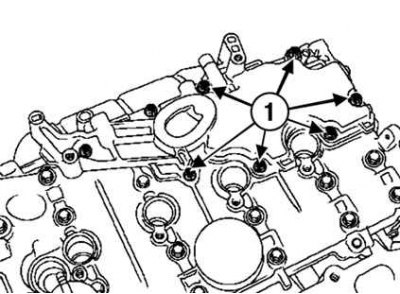
Fig. 2.105. Removing the oil separator: 1 – bolts
Loosen the mounting bolts and remove the oil separator (fig. 2.105).
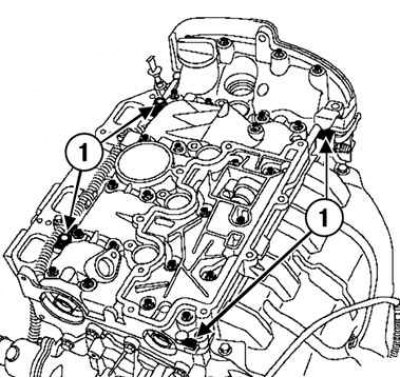
Fig. 2.106. Removing the cylinder head cover: 1 - tides
Loosen the mounting bolts and separate the cylinder head cover by tapping the lugs with a bronze drift (fig. 2.106).
Caution: Be careful not to damage the mating surfaces of the aluminum alloy parts.
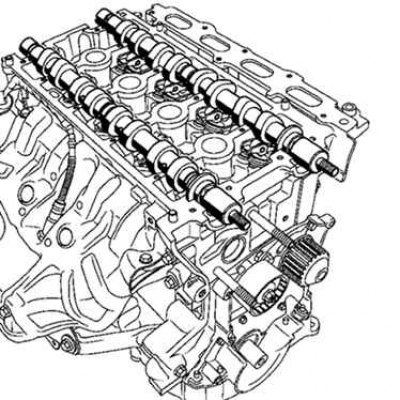
Fig. 2.107. Removing the intake and exhaust camshafts
[Original of this article on the website www.RENAULTBOOK.ru]
Remove the intake and exhaust camshafts (fig. 2.107).
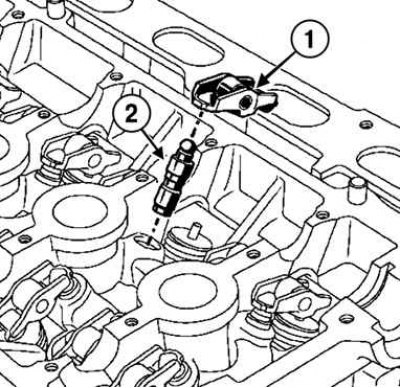
Fig. 2.108. Removing the rocker arms and hydraulic tappets: 1 – rocker arms; 2 – hydraulic tappets
Remove the rocker arms and hydraulic lifters (fig. 2.108).
Note: Place the hydraulic lifters in a vertical position to prevent oil leakage from them.
Loosen the mounting bolts and remove the cylinder head.
Install the cylinder head on the stand (Mot. 1573).
Remove the gasket from the cylinder block.
Cleaning the cylinder head
Clean the mating surfaces by applying DECAPJOINT to them (or similar) to remove gasket residues from the mating surfaces of the oil pan and cylinder block.
After applying the composition to the surface to be cleaned, wait about ten minutes, then remove it with a wooden spatula.
Caution: Do not allow the cleaning agent to come into contact with the paintwork.
Caution! Clean the cylinder head thoroughly so that no particles get into the oil outlet and supply channels.
Warning! Oil supply channels may become clogged, which will lead to rapid engine failure.
Checking the mating surface of the cylinder head
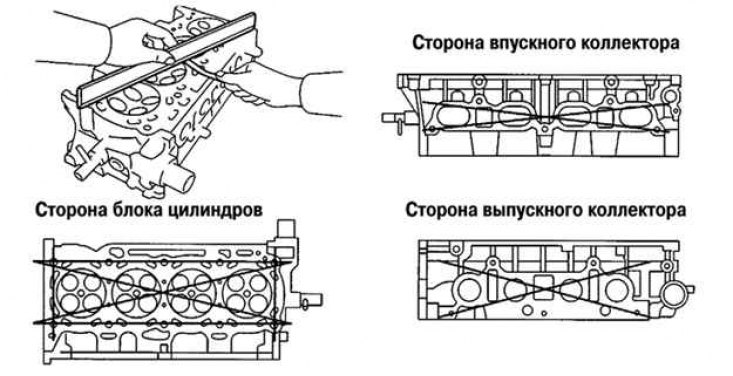
Fig. 2.109. Checking the mating surface of the cylinder head
Using a feeler gauge, check the flatness of the cylinder head mating surface (fig. 2.109).
Maximum permissible non-flatness: no more than 0.05 mm.
Caution! Grinding of the cylinder head is not permitted.