
English Русский
Български
Беларускі
Український
Српски
Hrvatski
Română
Polski
Slovenský
Magyar
Bookmark Contacts Articles Sitemap
Company vehicles Peugeot Company vehicles Opel Company vehicles Skoda Company vehicles Land Rover Company vehicles Mitsubishi Company vehicles Volkswagen Company vehicles Honda
RenaultBook.ru


Duster   Fluence   Kangoo   Laguna   Logan   Megane   Sandero   Scenic   Symbol   Clio   Other
Megane 1 (1995-2002) Megan 2 (2002-2009, petrol)

Cylinder head assembly (Renault Megane 2)

  • Main
  • Megane
  • Megan 2 (2002-2009, petrol)
  • Power unit
  • Engine repair
  • Cylinder head assembly
0
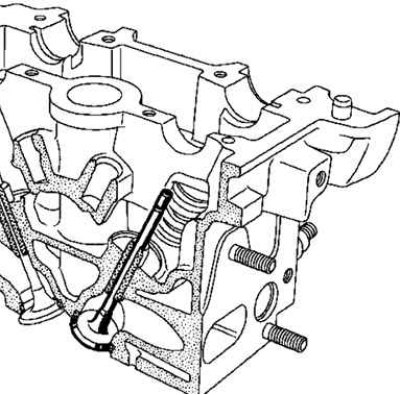
Fig. 2.124. Installing the valve in the cylinder head

Fig. 2.124. Installing the valve in the cylinder head


Insert the valve into the cylinder head (fig. 2.124).

Place the tip of the tool (Mot. 1511) on the valve stem (the inner diameter of the tip must be equal to the diameter of the rod).
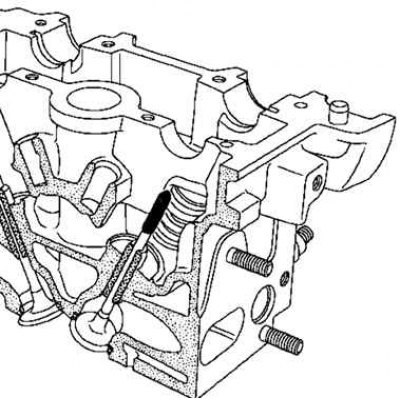
Fig. 2.125. Holding the valve in the seat

Fig. 2.125. Holding the valve in the seat


Keep the valve pressed against the seat (fig. 2.125).

Install the oil seal (not oiled) on the tip.
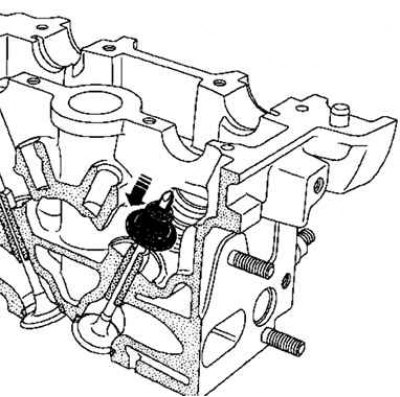
Fig. 2.126. Installing the oil deflector cap

Fig. 2.126. Installing the oil deflector cap


Slide the oil seal until it passes over the tip (fig. 2.126).
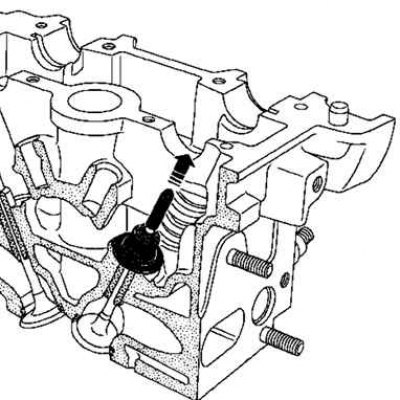
Fig. 2.127. Removing the tip of the device

Fig. 2.127. Removing the tip of the device


Remove the tip (fig. 2.127).
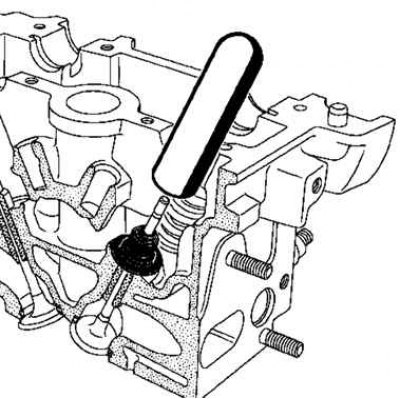
Fig. 2.128. Installing the mandrel on the oil deflector cap

Fig. 2.128. Installing the mandrel on the oil deflector cap


Install the mandrel onto the oil seal (fig. 2.128).

Note: The inside diameter of the mandrel should match the diameter of the valve stem. In addition, the bottom of the mandrel should partially rest against the valve stem seal, which serves as a support washer for the valve spring.
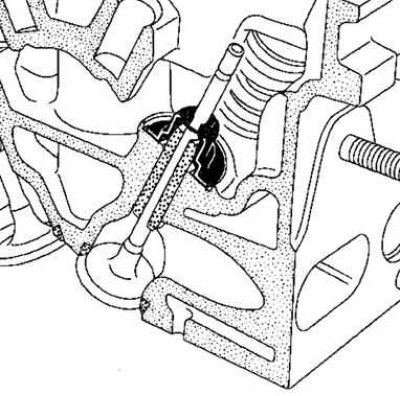

Fig. 2.129. Pressing on the oil deflector cap

Fig. 2.129. Pressing on the oil deflector cap


Press the valve stem seal into place by tapping the top of the mandrel with your palm until the valve stem seal contacts the cylinder head (fig. 2.129).

Repeat the above operations for all valves.
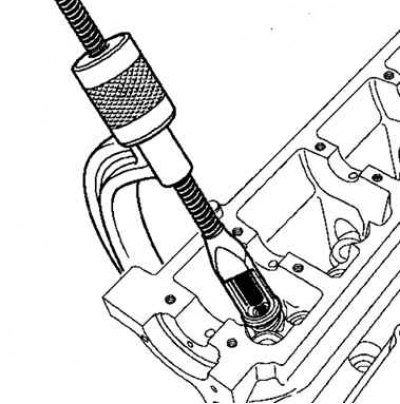
Fig. 2.130. Installing the valve spring

Fig. 2.130. Installing the valve spring


Install the springs and spring plates (fig. 2.130).
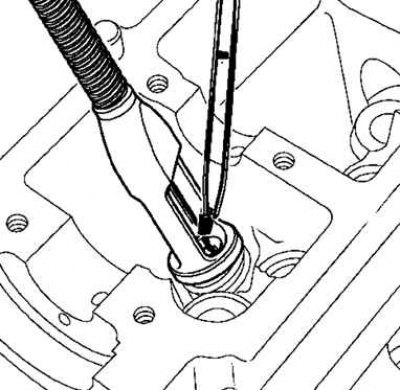
Fig. 2.131. Installing crackers

Fig. 2.131. Installing crackers


Insert the crackers using curved tongs (fig. 2.131).

Install the thermostat assembly with a new gasket onto the cylinder head.
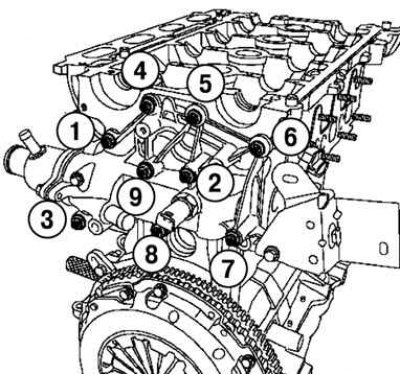
Fig. 2.132. The order of tightening the thermostat housing mounting bolts

Fig. 2.132. The order of tightening the thermostat housing mounting bolts


Tighten the thermostat unit mounting bolts on the cylinder head in the order shown in Figure 2.132 to the required torque (10 Nm).

Install the exhaust manifold with a new gasket.
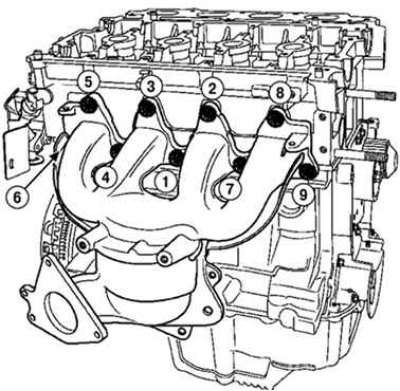
Fig. 2.133. Tightening order of exhaust manifold mounting stud nuts

Fig. 2.133. Tightening order of exhaust manifold mounting stud nuts


Tighten the exhaust manifold mounting stud nuts in the order shown in Figure 2.133 to the required torque (23 Nm).

Install the exhaust manifold heat shield.

tighten the exhaust manifold heat shield mounting bolts to the specified torque (1 Nm).

Caution: Make sure the exhaust manifold heat shield is securely fastened between the oxygen sensor and the manifold (to avoid overheating, which could result in damage to the upstream oxygen sensor wiring).


Tighten the oxygen sensor to the specified torque (4.5 Nm) using tool (Mot. 1495).

Install the inner timing case spacer.

Install the injector housing linings with a new gasket.

Install the oxygen sensor.
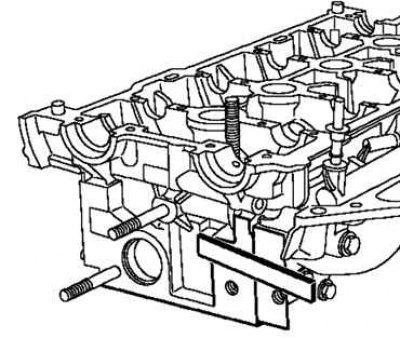
Fig. 2.134. Aligning the injector housing gasket

Fig. 2.134. Aligning the injector housing gasket


Align the injector housing lining with the cylinder head (from the timing drive side) (fig. 2.134).

Align the mating planes of the injector housing linings with the cylinder head.
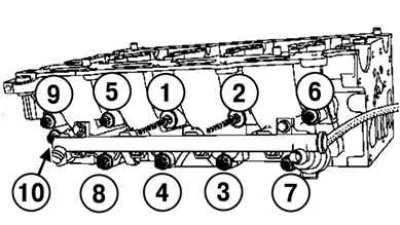
Fig. 2.135. The order of tightening the bolts for fastening the injector housing lining

Fig. 2.135. The order of tightening the bolts for fastening the injector housing lining


Tighten the injector housing lining mounting bolts in the specified order to the specified torque (21 N·m) (fig. 2.135).
This article is available on: russian, bulgarian, belarusian, ukrainian, serbian, croatian, romanian, polish, slovak, hungarian
Article has been reviewed by editor: Kupriyanov Sergey
Share with friends:
Previous
Megan 2: Engine repair
Next

Checking valve springs
Checking the clearance between the valve stems and guide bushings
Checking the valves
Checking the axial movement of the camshafts
Checking the diameters of the bearing journals and bearing holes of…
Disassembling the cylinder block
Removal the piston bottom cooling nozzles
Checking the mating surface of the cylinder block
Checking the diameter of the crankshaft main bearing supports
Checking the diameter of the main journals
Other articles on other Renault models

➽ Cylinder head cover Renault Duster 1 (2009-2017)
➽ Cylinder head gasket for K4M engine Renault Fluence 1 (2009-2020, petrol)
➽ Tightening the cylinder head bolts Renault Kangoo 1 (1997-2007)
➽ Removal the cylinder head gasket (K4M engines) Renault Laguna 2 (2001-2007)
➽ Replacing the cylinder head cover gasket Renault Logan 1 (2004-2012, petrol)
Link to this article in different formats
Reviews and comments of visitors
No comments yet


Add two numbers 23 + 11


Megan 2 (2002-2009, petrol) 
  • User manual
  • Introduction to manual
  • Controls and instruments
  • Salon equipment
  • Operation and driving
  • Maintenance and care
  • Power unit
  • Engine repair
  • Fuel system
  • Injection system
  • Intake and exhaust system
  • Starting and charging system
  • Cooling system
  • Decreased toxicity
  • Transmission
  • Clutch
  • Mechanical gearbox
  • Automatic gearbox
  • Wheel drive mechanism
  • Chassis, running gear
  • Suspension and wheels
  • Steering
  • Brake system
  • Body and interior
  • Exterior (external elements)
  • Interior (internal elements)
  • Doors, locks and windows
  • Heating and air conditioning
  • Electrical equipment
  • Equipment and devices
  • Headlights and lighting
  • Electrical circuits
Megane 1 (1995-2002) 
  • General information
  • User manual
  • Maintenance
  • Power unit
  • Petrol engines 1.4/1.6 l
  • Petrol engines 2.0 l
  • Diesel engines 1.9 l
  • Overhaul of engines
  • Cooling system
  • Fuel system (petrol)
  • Fuel system (diesel)
  • Decreased toxicity
  • Charge and launch systems
  • Ignition system (petrol)
  • Preheat system (diesel)
  • Transmission
  • Clutch
  • Mechanical gearbox
  • Automatic gearbox
  • Drive shafts
  • Chassis, running gear
  • Brake system
  • Car suspension
  • Steering
  • Body and interior
  • Exterior (external elements)
  • Interior (internal elements)
  • Doors, locks and windows
  • Electrical equipment
  • Equipment and devices
  • Electrical circuits
RenaultBook.ru © 2018–2026 | Mobile version | News and articles | Sitemap: EN BG BY UA RS HR RO PL SK HU | Administration | Site search | Bookmark
Duster 1 (2009-2017) | Fluence 1 (2009-2020, petrol) | Kangoo 1 (1997-2007) | Laguna 2 (2001-2007) | Logan 1 (2004-2012, petrol) | Logan 2 (2012-2020) | Megane 1 (1995-2002) | Megan 2 (2002-2009, petrol) | Sandero 1 (2007-2012, petrol) | Scenic 1 (1996-2003) | Symbol 1 (1999-2008, petrol) | Symbol 2 (2008-2013, petrol) | Renault 19 (1988-1996) | Espace I and II (1984-1996) | Espace III (1996-2002) | Clio 1 (1990-1998) |
We want your visit to be comfortable 😌 and use cookies 🍪 to do so.