



Contents: Removal 🠛 Installation 🠛
Note: To remove the air supply line from the air-to-air cooler (f4R engine) disconnect the hose using the tool (Cag. 1363).
Do not use brake cleaners or other cleaning agents.
Wipe the air-to-air cooler support surface and hose with a lint-free cloth.
If the hose is not being replaced, reinstall the clamp in its original location.
If the pipe and/or air-to-air cooler are damaged, be sure to replace them.
Failure to follow this procedure may result in air leakage or hose disconnection.
Removal
Place the vehicle on a two-post lift.
Remove the top engine covers.
Remove the front wheels.
Remove the left and right fender liners.
Remove the engine oil pan guard.
Drain the oil from the gearbox.
Drain the oil from the engine.
Disconnect the battery.
Drain the refrigerant from the refrigeration circuit using a filling station.
Remove the side subframe reinforcements and the front bumper.
Disconnect the hood lock drive cable.
Disconnect the windshield washer pipes.
Drain the fluid from the engine cooling system.
Unscrew the mounting bolts and remove the front body panel.
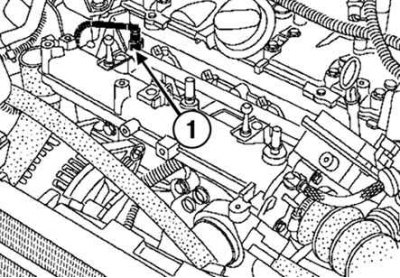
Fig. 2.92. Disconnecting the fuel supply line: 1 – fuel line
Disconnect the fuel supply line from the fuel rail (Fig. 2.92).
Disconnect the supply hose from the engine cooling system radiator using a tool (Mot. 1202-01 or Mot. 1202-02 or Mot. 1448).
Disconnect the wiring connectors from the electric fan of the engine cooling system.
Disconnect the engine cooling fan wiring harness.
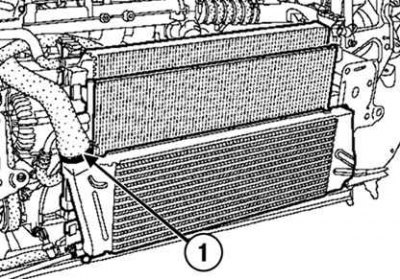
Fig. 2.93. Disconnecting the air duct from the air-to-air cooler: 1 – air duct
Disconnect the air duct from the air-to-air cooler (Fig. 2.93).
Disconnect:
- wiring harness from the boost pressure sensor;
- the wiring harness from the air temperature sensor;
- the wiring harness from the engine cooling system electric fan resistor.
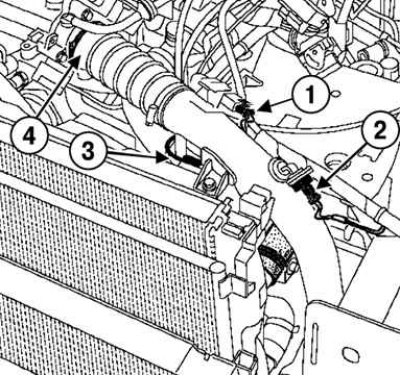
Fig. 2.94. Disconnecting the wiring blocks of the boost pressure and air temperature sensors, the resistor of the electric fan of the engine cooling system: 1 – boost pressure sensor; 2 – air temperature sensor; 3 – resistor of the electric fan of the engine cooling system; 4 – air duct
Move the air duct to the side (Fig. 2.94).
Remove the air filter outlet duct.
Disconnect the expansion tank hoses from the engine cooling system radiator.
Disconnect the pressure sensor connector on the lower condenser air conditioning line.
Remove the refrigeration circuit lines from the condenser and the refrigeration circuit lines between the compressor and the receiver-dryer.
Note: Be sure to seal the openings of the pipes and the reducer to prevent moisture from entering the system.
Remove the engine cooling system radiator assembly with the condenser.
The original can be found on the website renaultbook.ru
Disconnect the ECU connectors.
Loosen the mounting bolts and remove the battery shelf.
Move the purge solenoid valve of the adsorber to the side.
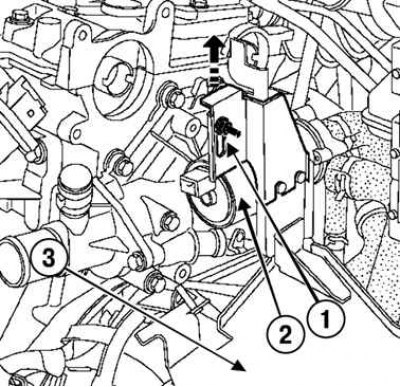
Fig. 2.95. Removing the water electric pump: 1 – bolt; 2 – bracket; 3 – water electric pump
Loosen the bolt, pull the water electric pump mounting post and, moving the water electric pump to the side, remove the water electric pump bracket (Fig. 2.95).
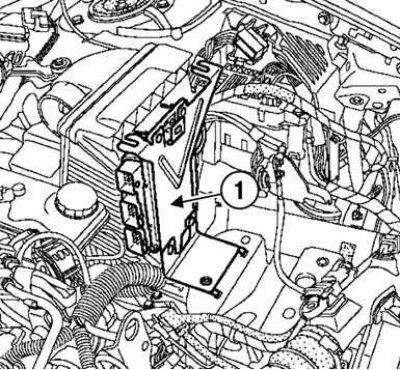
Fig. 2.96. Removing the ECU: 1 – ECU
Remove the ECU assembly with the bracket (Fig. 2.96).
Remove the air filter housing.
Disconnect the relay block wiring harness connectors.
Disconnect the ground bus.
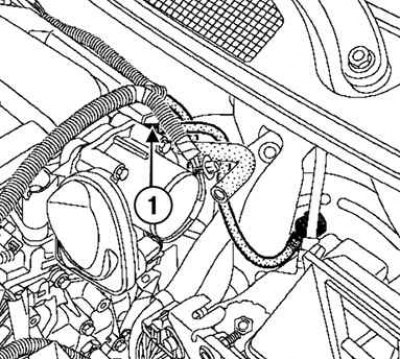
Fig. 2.97. Removing the brake booster vacuum take-off hose: 1 – hose
Remove the brake booster vacuum hose (Fig. 2.97).
Disconnect the downstream oxygen sensor connector.
Disconnect the gear selector and shift cables from the transmission.
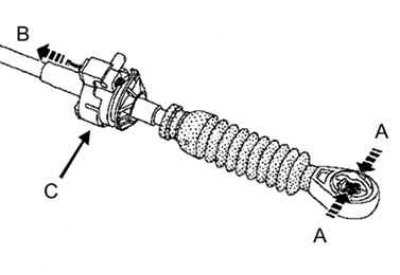
Fig. 2.98. Disconnecting the gearbox lever cable
Disconnect the cables from the levers on the gearbox by squeezing the cable end at points A, pull the lock in direction B and lift the cables at point C, as shown in Figure 2.98.
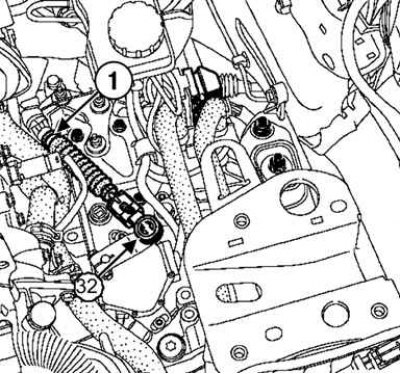
Fig. 2.99. Removing the ball end of the multifunction switch cable: 1 – ball tip
Remove the ball end of the multifunction switch cable (Fig. 2.99).
Remove the multifunction switch drive cable by releasing the cable housing stopper.
Place a rag under the master cylinder.
Remove the retainer from the nipple on the intermediate pipe of the master cylinder.
Disconnect the tube from the working cylinder. Insert plugs into the holes.
Remove the slave cylinder feed line.
Remove the right front wheel drive shaft.
Remove the left front wheel drive shaft.
Remove the exhaust system inlet pipe mounting parts,
Remove the upper and lower reaction rods.
Remove the subframe.
Install a hydraulic crane with a hoist or chain.
Mark the position of the engine pendulum mount support relative to the body.
Remove the engine mount.
Remove the transmission pendulum support.
Turn the engine assembly with the gearbox and remove it.
Installation
Install the engine assembly with the gearbox on the vehicle.
Install:
- engine pendulum mount support;
- gearbox pendulum support;
- lower jet thrust;
- upper thrust;
- left front wheel drive shaft;
- right front wheel drive shaft.
The installation of the remaining components is carried out in the reverse order of removal.
Tighten to the specified torque:
- front body panel upper mounting bolts (21 Nm);
- front body panel lower mounting bolts (44 Nm);
- front subframe mounting bolt (105 Nm);
- rear subframe mounting bolt (21 Nm);
- wheel mounting bolts (110 Nm).
Add brake fluid to the reservoir.
Bleed the clutch hydraulic system.
Fill the gearbox with oil.
Fill the engine with oil.
Fill the cooling system with fluid.
Fill the refrigeration circuit with refrigerant using a filling station.
Note: Secure the brake hose and ABS speed sensor wires properly.
Note: Do not kink the brake hose.
Connect the battery.
Bleed the cooling system.
Tighten the battery cover mounting bolts to the specified torque (4 Nm).