



The system includes:
- low pressure fuel pump (1. Fig. 4.43). located between the intake tract and the fuel filter.
- fuel filter (2);
- high pressure fuel pump (3);
- high pressure regulator (4) installed on the high pressure fuel pump;
- fuel distribution line (5) with fuel pressure sensor.
- fuel supply system refill valve (6) open during normal engine operation;
- fuel cooler (7);
- four electromagnetic injectors;
- sensors;
- injection system control unit.
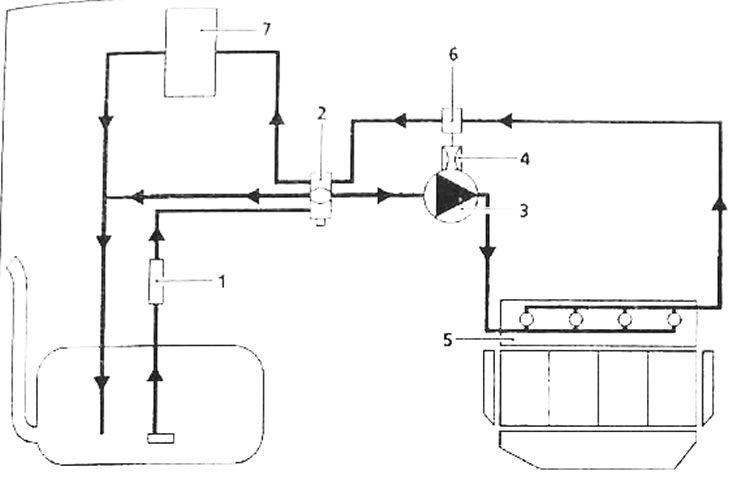
Fig. 4.43. Fuel system diagram: 1 - low pressure fuel pump;2 - fuel filter; 3-high pressure fuel pump;4 - high pressure regulator; 5-fuel distribution line; 6 - fuel supply system refill valve; 7 - fuel cooler
Disassembly of the high-pressure fuel pump and injectors is not provided. High-pressure direct fuel injection system "Common Rail" is a sequential injection system that operates on the principle of distributed injection systems of gasoline engines.
This new injection system, thanks to the pre-injection method it uses, reduces engine noise, the content of solid particles and toxic gases in the exhaust gases and significantly increases engine torque, starting from low crankshaft speeds.
The low-pressure fuel pump or booster pump supplies fuel to the high-pressure fuel pump through the fuel filter at a pressure of 2 to 4 bar.
The high-pressure fuel pump supplies fuel under high pressure to the fuel distribution line. The pressure regulator installed on the high-pressure fuel pump changes the fuel pressure value according to the commands of the injection system control unit. From the fuel distribution line, the fuel is supplied to the injectors through steel fuel lines.
The injection system control unit performs the following functions:
- determines the injection pressure required for normal engine operation and sends the appropriate signals to the pressure regulator. It controls the pressure based on an analysis of the values provided by the fuel pressure sensor installed on the fuel distribution line;
- determines the injection time required to deliver sufficient fuel and the start of injection;
- after determining the two specified values, it individually controls the operation of each injector by sending electrical signals.
The amount of fuel supplied to the engine is determined depending on:
- duration of the control signal to the injector;
- nozzle opening and closing speeds;
- injector valve needle stroke values;
- hydraulic performance of the nozzle;
- pressure in the fuel distribution line, regulated by the injection system control unit.
The system provides fuel injection under pressure up to 1350 bar. Before performing any work related to the fuel system, make sure that there is no pressure in the fuel distribution line.
The specified tightening torques for threaded connections of the following fuel system components must be strictly observed:
- high pressure fuel lines;
- when screwing injectors into the cylinder head;
- pressure regulator;
- fuel pressure sensor.
When repairing or removing the high-pressure fuel pump, injectors, supply and return fuel lines, to protect against contamination, it is necessary to close the holes with new plugs of the required diameter.
Attention: All removed fuel lines must be replaced.
Replacement of high-pressure fuel lines should be carried out in the following order:
- remove the high pressure fuel line, holding the filter stud on the injector with another wrench;
- close the holes with safety plugs;
- loosen the fuel rail mounting bolts;
- install a new high pressure fuel line;
- connect the connections manually;
- tighten the high pressure line fasteners to the required torque;
- tighten the fuel line connection nipple to the injector to the required torque;
- tighten the fuel line connection nipple to the high-pressure line to the required torque.
When removing the high-pressure fuel pump, it is necessary to replace the fuel return line connected to the injectors.
The fuel temperature sensor is non-removable. It is integral with the fuel return line.
It is prohibited to loosen the high-pressure fuel line fittings while the engine is running.
After performing any work related to the fuel system, make sure that there are no fuel leaks. Allow the engine to idle until the electric cooling fan is turned on, and then increase the engine's idle speed several times.
The system is very sensitive to contamination. Contamination can cause damage or complete failure of the high-pressure injection system or blockage or depressurization of system components. All fuel system maintenance work must be performed in conditions of complete cleanliness.
Warning: Do not wash the engine with a high-pressure jet, as this may damage the electrical wiring connectors. In addition, moisture may get inside the connectors, which may cause damage to the electrical circuits
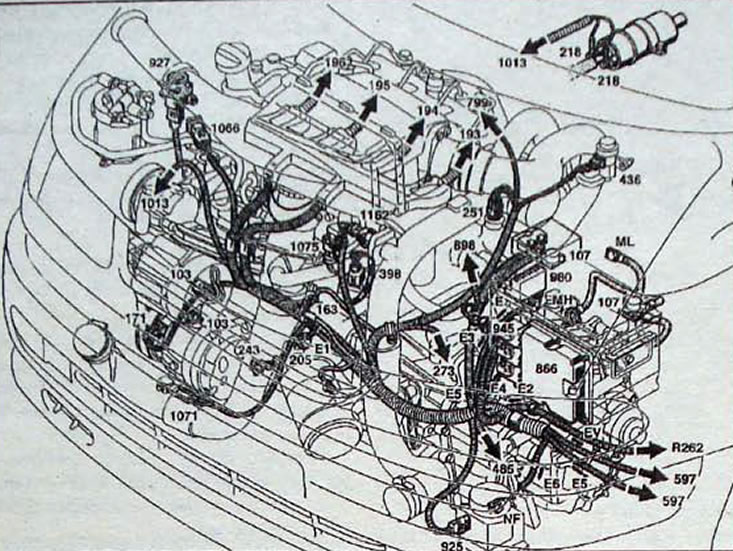
Fig. 4.44. Location of fuel system components in the engine compartment of the vehicle: 193 - injector;194 - injector; 195 - injector; 196 - injector; 218 - fuel pump; 243 - oil level sensor; 251 - dual-function coolant and engine temperature sensor; 398-exhaust gas recirculation solenoid valve; 436 - pressure regulator; 799 - Air flow sensor; 866 - Diesel engine fuel injection system control unit; 925 - heater connector; 927 - shock sensor; 980 - glow plug relay housing; 1013 - phase sensor; 1071 - Turbocharger Pressure Sensor; 1075 - Air supply cut-off solenoid valve; 1162 - intake manifold turbulator flap control drive
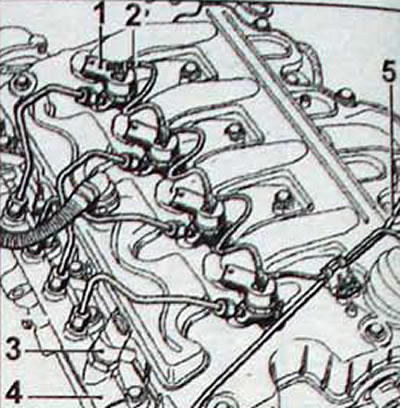
Fig. 4.45. Location of fuel system elements on the engine: 1 - nozzle; 2 - fuel return pipeline from injectors; 3 - fuel pressure sensor; 4 - fuel distribution line; 5 - fuel supply line to the high-pressure fuel pump/fuel distribution line
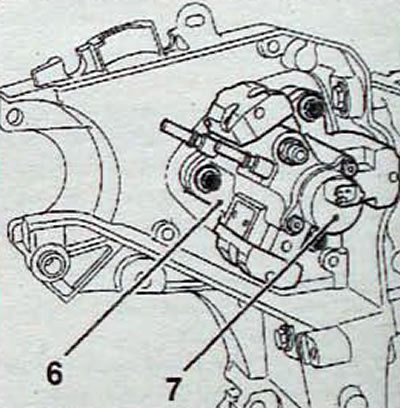
Fig. 4.46. Location of the high-pressure fuel pump (6) and fuel pressure regulator (7) on the engine