



Contents: Removal 🠛 Installation 🠛
Attention
- Before carrying out any work on the fuel rail, connect the diagnostic tool, establish communication with the injection system control unit and ensure that the fuel rail is not under pressure.
- Take precautions against possible burns from hot fuel.
Removal
- Disconnect the cable from the negative battery terminal.
- Remove the air filter and the noise insulation of the engine compartment partition. To remove the noise insulation, it is necessary, without disconnecting, to remove the electromagnetic valve of the turbocharger pressure regulation. installed on the engine compartment partition.
- Remove the fuel line at the turbocharger inlet by disconnecting the crankcase ventilation hose.
- Remove the side partitions of the rubber apron. Disconnect from the engine support, then from the cylinder head cover and move the rubber apron back as far as possible.
- While holding the studs, remove the two nuts, remove the cylinder head cover sealing partition and remove the porous absorbent pads.
- Blow out the top of the engine with compressed air.
- Remove the oil filler neck and air cleaner retaining tab on the left side of the engine. Cover the oil filler hole with a clean rag.
- Disconnect the connector from the pressure sensor (1. Fig. 4.58).
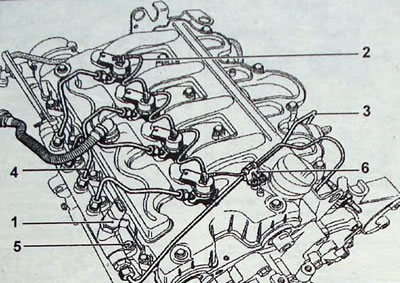
Fig. 4.58. Location of fuel system components: 1 - pressure sensor; 2 - diesel fuel return hose from injectors; 3 - fuel injection pipes;4 - injector tubes; 5 - fuel distribution line mounting bolts; 6 - retainer
- Disconnect the rubber hose (2) of the diesel fuel return from the injectors
- Remove the fuel injection pipes (3). connecting the high-pressure pump and the fuel distribution line. When removing the retainer (6) installed on the cylinder head, be careful, as it is very fragile.
- Remove the injector tubes (4).
- When unscrewing the union nut (1. Fig. 4.59) to secure the fuel injection tube to the injector body, use a second wrench to hold the filter mounting nut (2). Seal the holes with plugs.
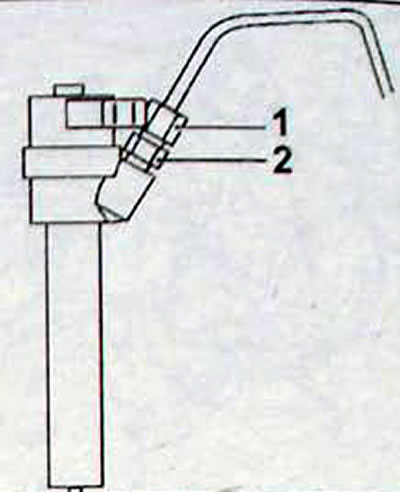
Fig. 4.59. Fastening the tube to the fuel injector: 1 - union nut; 2 - filter mounting nut
- Unscrew the bolts (5. Fig. 4.58) fastenings of the fuel distribution line, but do not remove it.
- Loosen the mounting bolts of each injector housing.
- To remove the injectors*, use the Mot. 1549 tool (Fig. 4.60). Never attempt to remove the injector body secured in its seat in the cylinder head without the Mot. 1549 tool. Apply a special compound around the injector. Fit the puller to the injector body. Rotate the knurled puller ring, bring both jaws of the puller to the flats of the injector body and squeeze the jaws together without applying significant force (Fig. 4.61).
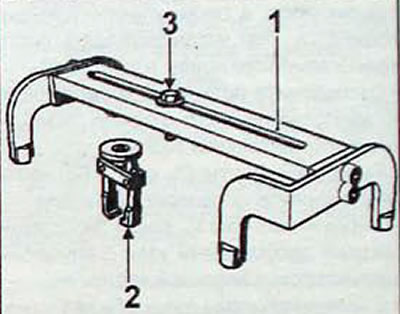
Fig. 4.60. Mot 1549 device: 1 - puller mounting frame, installed on cylinder head cover mounting bolts; 2 - injector puller; 3 - puller mounting bolt
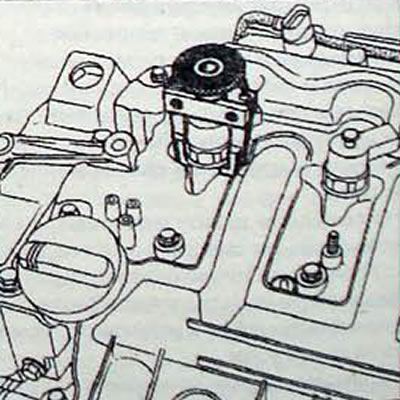
Fig. 4.61. Installing the Mot. 1549 tool puller on the injector
- Fit the frame of the Mot 1549 tool onto the cylinder head cover mounting bolts (Fig. 4.62). Tighten the puller bolt until it is possible to remove the injector from the cylinder head.
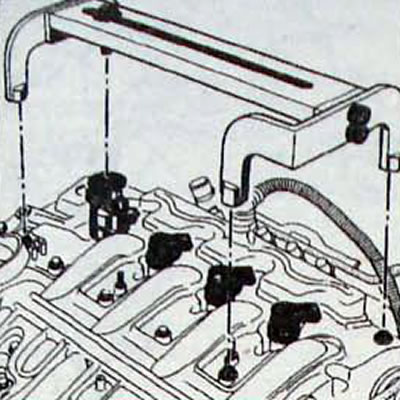
Fig. 4.62. Fitting the frame of the Mot. 1549 tool to the cylinder head cover mounting bolts
- Remove all washers from the injector seats.
Installation
- For any operation, remove the protective plugs immediately before installing the part in place.
- Wash the injector seats and the injectors themselves, as well as their flanges, using a lint-free cloth soaked in fresh solvent.
- Blot all elements dry with another fresh cloth.
- Clean the internal threads by washing one of the used injector mounting bolts and tightening it to the end of the thread.
- Screw in new studs and install the injector mounting spacers, having previously lubricated their threads with oil, and then screw them in by hand to the end of the thread. The studs and nuts should be replaced each time they are disassembled.
- Install a new washer onto the injector boss.
- Install the injector into place by placing the flange and snap ring on it.
- Lubricate the threads of the nuts.
- Tighten the nuts (oiled) torque of 6 Nm, first from the timing drive side and then from the engine flywheel side.
- Tighten only the nut on the flywheel side of the engine to an angle of 360±30g
- Release the fuel line. To do this, unscrew the three bolts securing the line.
- Remove the plugs from the main line, injector housings and injector fuel lines
- Connect the fuel lines of the injectors between the main line and the injectors, having first tightened the connections between them by hand until they touch
- Tighten to torque
- 23 Nm three bolts for fastening the main line,
- 25 Nm fuel injection line fittings at the injectors and at the high pressure pump;
- 25 Nm fuel injection line fittings at the main line.
- Install the fuel pump/line retainer and secure it with two bolts
- Install the sealing partition in place, securing it with two nuts on the cylinder head cover.
- Install the side bulkheads for protecting the main line in place.
- Move forward and install the rubber line protection apron in place.
- When performing any work on the main protection system, care must be taken to ensure that after installation of all the elements that make up this system, the latter are exactly in their places. Failure to comply with these instructions may lead to serious consequences.
- Further installation is carried out in the reverse order of removal.
- Use a diagnostic tool to check for stored fault codes in the memory and, if present, clear them.
- After performing any work, make sure that there are no leaks from the diesel fuel supply circuit. Allow the engine to idle until the electric cooling fan is turned on, and then increase the engine's crankshaft speed several times while idling.