
English Русский
Български
Беларускі
Український
Српски
Hrvatski
Română
Polski
Slovenský
Magyar
Bookmark Contacts Articles Sitemap
Company vehicles Peugeot Company vehicles Opel Company vehicles Skoda Company vehicles Land Rover Company vehicles Mitsubishi Company vehicles Volkswagen Company vehicles Honda
RenaultBook.ru


Duster   Fluence   Kangoo   Laguna   Logan   Megane   Sandero   Scenic   Symbol   Clio   Other
Renault 19 (1988-1996) Espace I and II (1984-1996) Espace III (1996-2002)

Engine stop block housing (Renault Espace III)

  • Main
  • Renault
  • Espace III (1996-2002)
  • Power unit
  • Diesel engines G9T
  • Engine stop block housing
0
Contents: Removal 🠛 Installation 🠛
  • The engine stop unit, controlled by the fuel injection system control unit, is equipped with a throttle valve at the intake air inlet, which closes when the ignition is switched off, thereby ensuring a rapid engine stop.
  • The engine stop block housing also contains an electromagnetic exhaust gas recirculation valve

Removal


  • Place the vehicle on a two-post lift.
  • Disconnect the cable from the negative terminal of the battery
  • Remove the engine oil pan guard and the air duct running from the heat exchanger to the engine stop unit, after disconnecting the wire connector from the engine stop unit.
  • Use a clamp to pinch the return line connecting the power steering fluid reservoir to the power steering pump and disconnect the line from the pump.
  • Remove the power steering reservoir from its mount without disconnecting it from the pump and position the reservoir on the side member.
  • Unscrew the bolts securing the air duct running from the turbocharger to the heat exchanger and cylinder head (Fig. 4.34).
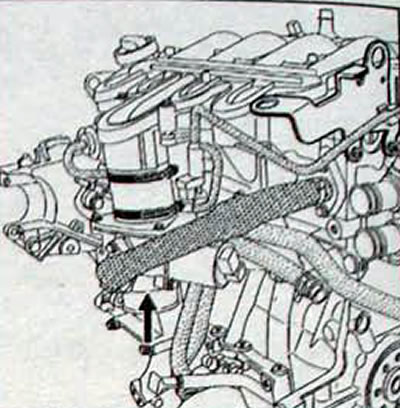
Fig. 4.33. Location of the engine stop block housing
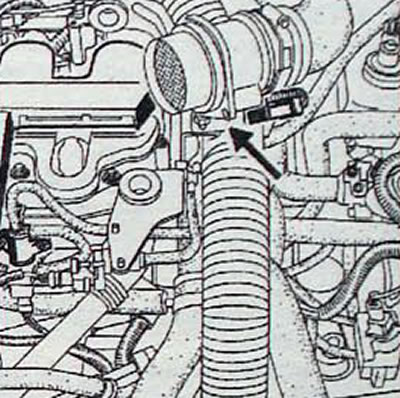
Fig. 4.33. Location of the engine stop block housing


Fig. 4.34. Location of the bolt securing the air duct running from the turbocharger to the heat…

Fig. 4.34. Location of the bolt securing the air duct running from the turbocharger to the heat exchanger and cylinder head

  • Remove the reinforcement paw (1, Fig. 4.35), connecting the turbocharger engine stop block housing to the power steering pump bracket.
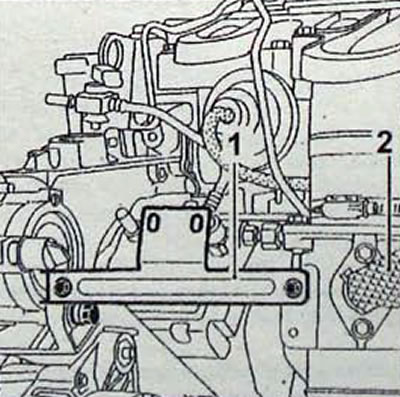
Fig. 4.35. Location of the booster paw (1) and exhaust gas recirculation hose (2) on the engine

Fig. 4.35. Location of the booster paw (1) and exhaust gas recirculation hose (2) on the engine

  • Remove the EGR hose and sealing gaskets. Replace the hose and gaskets when installing the air duct
  • Disconnect the connector from the EGR control solenoid valve.
  • Remove the foot mounting bolt (3, Fig. 4.36) low pressure air conditioner pipeline.
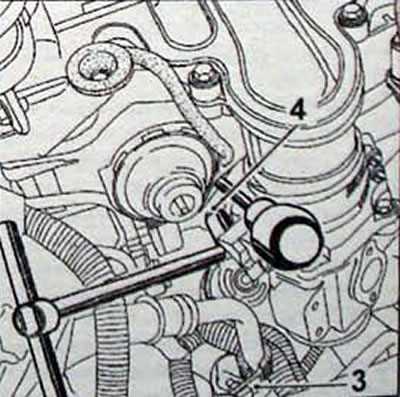
Fig. 4.36. Positioning the bolt for fastening the tab (3) and unscrewing the bolt (4) for fastening…

Fig. 4.36. Positioning the bolt for fastening the tab (3) and unscrewing the bolt (4) for fastening the throttle assembly


  • Remove the bolts securing the throttle assembly to the engine block. Use a 13 mm socket, cardan joint and a small extension to do this. If necessary, move the pipes to the side to access the bolts.

Caution: Do not remove self-tapping screws (A, Fig. 4.37) fastening the upper part to the throttle body.
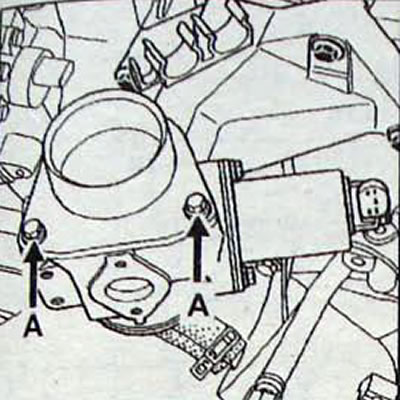

Fig. 4.37. Location of self-tapping screws (A) for fastening the upper part to the throttle body

Fig. 4.37. Location of self-tapping screws (A) for fastening the upper part to the throttle body

  • Remove the pipe (1. Fig. 4.38), connecting the throttle body to the intake manifold.
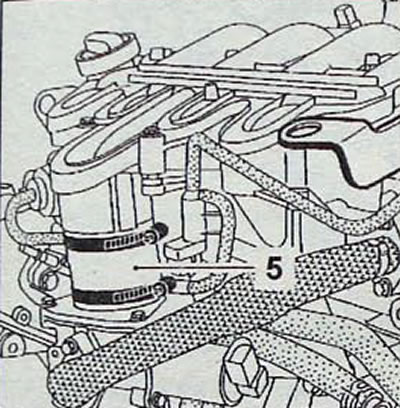
Fig. 4.38. Location of clamps for fastening the pipe (1) connecting the intake manifold to the…

Fig. 4.38. Location of clamps for fastening the pipe (1) connecting the intake manifold to the turbocharger engine stop block and lugs (2)

  • To facilitate removal of the Engine Stop Unit, disconnect the wiring harness located in front of the Engine Stop Unit housing from its fasteners


Installation


  • Installation is carried out in the reverse order of removal.
  • Tighten the nuts of the mounting clamps to a torque of 55 N·m.
  • Using the diagnostic tool, check whether any stored fault codes have been registered and clear the codes if any.
This article is available on: russian, bulgarian, belarusian, ukrainian, serbian, croatian, romanian, polish, slovak, hungarian
Article has been reviewed by editor: Trofimova Anastasia
Share with friends:
Previous
Espace III: Diesel engines G9T
Next

Turbocharger — removal and installation
Removal and installation of the G9T engine
Gas distribution mechanism drive belt
Auxiliary equipment drive belt
Technical specifications
Exhaust manifold
Intake manifold
Pendulum suspension supports
Fuel system
Strategy for coordinating the operation of the injection system and…
Other articles on other Renault models

➽ Thermostat housing (K9K engine) Renault Duster 1 (2009-2017)
➽ Checking the mating surface of the K4M engine cylinder block Renault Fluence 1 (2009-2020, petrol)
➽ Disassembly, inspection and assembly of the cylinder block… Renault Laguna 2 (2001-2007)
➽ Engine stop Renault Megan 2 (2002-2009, petrol)
➽ Engine Cylinder Block — Check Renault Symbol 2 (2008-2013, petrol)
Link to this article in different formats
Reviews and comments of visitors
No comments yet


Add two numbers 23 + 35


Renault 19 (1988-1996) 
  • General information
  • Maintenance
  • Power unit
  • Engine repair
  • Exhaust system
  • Cooling system
  • Supply system
  • Single-point injection
  • Multi-point injection
  • Diesel injection system
  • Transmission
  • Clutch
  • Car gearbox
  • Chassis, running gear
  • Car suspension
  • Steering
  • Brake system
  • Wheels and tires
  • Body and interior
  • Exterior (external elements)
  • Interior (internal elements)
  • Heating and ventilation
  • Electrical equipment
  • Equipment and devices
  • Headlights and lighting
  • Ignition system
  • Power devices
  • Electrical circuits
Espace I and II (1984-1996) 
  • General information
  • Introduction to the guide
  • Troubleshooting
  • Power unit
  • Engine repair
  • Cooling system
  • Carburetor fuel system
  • Injection fuel system
  • Diesel fuel system
  • Ignition system
  • Transmission
  • Clutch
  • Car gearbox
  • Drive shafts
  • Chassis, running gear
  • Brake system
  • Steering
  • Front suspension
  • Rear suspension
  • Body and interior
  • Exterior (external elements)
  • Interior (internal elements)
  • Doors, locks and windows
  • Electrical equipment
  • Equipment and devices
  • Electrical circuits
Espace III (1996-2002) 
  • General information
  • Introduction to the manual
  • User manual
  • Power unit
  • Petrol engines F3R
  • Petrol engines Z7X
  • Diesel engines G8T
  • Diesel engines G9T
  • Transmission
  • Clutch
  • Mechanical gearbox
  • Automatic gearbox
  • Drive shafts
  • Chassis, running gear
  • Steering
  • Front suspension
  • Rear suspension
  • Brake system
  • Body and interior
  • Exterior (external elements)
  • Interior (internal elements)
  • Doors, locks and windows
  • Heating and ventilation
  • Electrical equipment
  • Equipment and instruments
  • Power devices
  • Electrical circuits
RenaultBook.ru © 2018–2026 | Mobile version | News and articles | Sitemap: EN BG BY UA RS HR RO PL SK HU | Administration | Site search | Bookmark
Duster 1 (2009-2017) | Fluence 1 (2009-2020, petrol) | Kangoo 1 (1997-2007) | Laguna 2 (2001-2007) | Logan 1 (2004-2012, petrol) | Logan 2 (2012-2020) | Megane 1 (1995-2002) | Megan 2 (2002-2009, petrol) | Sandero 1 (2007-2012, petrol) | Scenic 1 (1996-2003) | Symbol 1 (1999-2008, petrol) | Symbol 2 (2008-2013, petrol) | Renault 19 (1988-1996) | Espace I and II (1984-1996) | Espace III (1996-2002) | Clio 1 (1990-1998) |
We want your visit to be comfortable 😌 and use cookies 🍪 to do so.