



Work order:
- remove the remains of old gaskets and sealant from the block;
- remove the technological plugs by drilling a small hole in the plug, screwing a self-tapping bolt into it and removing the plug by pulling the head of the bolt;
- rinse all internal passages with warm water until the water coming out is clear. Dry the block and lubricate it with a thin layer of oil;
- install new plugs for the technological holes using sealant.
Work order:
- check for cracks and corrosion. Check for stripped threads in threaded holes. If necessary, clean and restore threaded elements with taps of the required size;
- inspect the engine cylinder mirror surface for scuffs. Keep in mind: if the damage is at an early stage, the block can be restored by boring the cylinder;
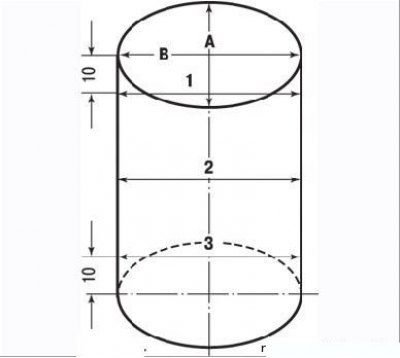
Figure 3.76. Cylinder diameter measurement diagram
- using a bore gauge, take three measurements in the same plane as the crankshaft axis: at the top of the cylinder bore approximately 10 mm below the wear ridge, in the middle of the cylinder, and another one at a point located approximately 10 mm above the lower edge of the cylinder bore (Figure 3.76). Then rotate the bore gauge 90° so that it is perpendicular to the plane passing through the crankshaft axis and repeat the measurements. Compare all six readings with those given in Table 3.4. If the difference in diameter between any two cylinders exceeds the wear limit, or if the diameter of any cylinder exceeds the maximum allowable, rebore the cylinder block;
- compare the measurements taken with the previously taken measurements of the pistons and draw a conclusion about the need to bore the block or replace the pistons. If the cylinders and pistons are in satisfactory condition and their dimensions do not exceed the established limits, you can limit yourself to replacing the piston rings;
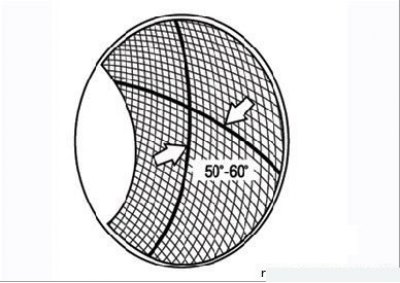
Figure 3.77. Pattern on the cylinder mirror after honing
- for better running-in of rings it is recommended to hone the cylinders. This treatment is performed with an abrasive tool, which, when moving, forms a "hatching" on the surface of the cylinder mirror (Figure 3.77). Although it is believed that this work can be done by a non-professional, we strongly recommend that it be carried out at a service station that has the necessary equipment;
- if for some reason the engine assembly is postponed, treat the block with engine oil to prevent rust. Store it in a dry place, protected from dust and dirt;
- as described for the cylinder head, check the block surface mating with the cylinder head in two directions. The manufacturer does not specify the maximum permissible value, but as a guideline, a flatness of no more than 0.05 mm can be taken.
(Material taken from an online portal renaultbook.ru)