



Share with friends:
Vehicle Maintenance Renault Symbol 1

Rules for carrying out work
The subsection is based on the maintenance requirements of the vehicle manufacturer and is aimed at helping the vehicle owner to properly maintain it and keep it in good condition. Fig. 2.24. Location of units and...
The subsection is based on the maintenance requirements of the vehicle manufacturer and is aimed at helping the vehicle owner to properly maintain it and keep it in good condition. Fig. 2.24. Location of units and...

Running in a car
After repair of the main units, the car is subject to running-in, during which the parts and assemblies are finally worked in. The running-in period is 1000 km. During this run, the engine speed should be limited to...
After repair of the main units, the car is subject to running-in, during which the parts and assemblies are finally worked in. The running-in period is 1000 km. During this run, the engine speed should be limited to...
Maintenance intervals
The list of car maintenance works is designed mainly for their implementation by the owner independently, without resorting to the services of car service enterprises. The frequency of maintenance is determined based on...
The list of car maintenance works is designed mainly for their implementation by the owner independently, without resorting to the services of car service enterprises. The frequency of maintenance is determined based on...

Checking the engine oil level (400 km)
Place the vehicle on a level horizontal surface. Start the check by determining the oil and working fluid levels in the units and systems. Fig. 2.24. Location of units and service points in the engine compartment: 1 –...
Place the vehicle on a level horizontal surface. Start the check by determining the oil and working fluid levels in the units and systems. Fig. 2.24. Location of units and service points in the engine compartment: 1 –...
Checking the brake fluid level (400 km)
Warning! Brake fluid is aggressive to the skin, especially to the eyes; highly toxic when ingested; in addition, it destroys the paintwork. Brake fluid is extremely hygroscopic, absorbing moisture from the environment,...
Warning! Brake fluid is aggressive to the skin, especially to the eyes; highly toxic when ingested; in addition, it destroys the paintwork. Brake fluid is extremely hygroscopic, absorbing moisture from the environment,...
Checking the coolant level (400 km)
When the engine is running, the coolant heats up to a temperature of about 100°C, so you should be very careful when working on the cooling system. To determine the coolant level, the transparent wall of the expansion...
When the engine is running, the coolant heats up to a temperature of about 100°C, so you should be very careful when working on the cooling system. To determine the coolant level, the transparent wall of the expansion...
Checking the fluid level in the windshield washer reservoir (400 km)
The windshield washer fluid reservoir is located in the engine compartment. In areas with moderate and cold climates, special fluids with antifreeze properties should be used, which are able to wash dirt off the glass...
The windshield washer fluid reservoir is located in the engine compartment. In areas with moderate and cold climates, special fluids with antifreeze properties should be used, which are able to wash dirt off the glass...

Checking the condition of tires and their pressure (400 km)
Check your tyres regularly for damage such as cuts or bulges, especially on the sidewalls. Remove the wheels periodically and remove any dirt from the outside and inside surfaces. Inspect the rims for any signs of...
Check your tyres regularly for damage such as cuts or bulges, especially on the sidewalls. Remove the wheels periodically and remove any dirt from the outside and inside surfaces. Inspect the rims for any signs of...
Checking windshield wipers (400 km)
Over time, a film forms on windshield wipers, which prevents the blade from adhering tightly to the glass and reduces its effectiveness. Wipers should be washed regularly in a mild cleaning solution. Check the...
Over time, a film forms on windshield wipers, which prevents the blade from adhering tightly to the glass and reduces its effectiveness. Wipers should be washed regularly in a mild cleaning solution. Check the...

Engine oil change (10,000 km)
The oil is changed on an inspection pit, overpass or lift. In all cases, the car must be installed horizontally. Pre-warm the oil to operating temperature (80–90°C) by making a short run or idling. For work, you need to...
The oil is changed on an inspection pit, overpass or lift. In all cases, the car must be installed horizontally. Pre-warm the oil to operating temperature (80–90°C) by making a short run or idling. For work, you need to...
Checking the fluid level in the power steering system (30,000 km)
The power steering reserve reservoir is located in engine compartment in the left rear corner. The tank is transparent, which allows you to control the liquid level (the walls are marked "MIN" and "MAX"). Before adding...
The power steering reserve reservoir is located in engine compartment in the left rear corner. The tank is transparent, which allows you to control the liquid level (the walls are marked "MIN" and "MAX"). Before adding...
Checking the condition of the front brake pads and discs (30,000 km)
Work order: raise the front of the car and place it on stands; remove the wheels; inspect the brake pads through the viewing window in the caliper, assessing the thickness of their linings. If any one lining is worn...
Work order: raise the front of the car and place it on stands; remove the wheels; inspect the brake pads through the viewing window in the caliper, assessing the thickness of their linings. If any one lining is worn...
Checking and adjusting the parking brake (30,000 km)
The parking brake must hold the vehicle when parked on a steep road slope, at moderate (3 or 4 clicks) lifting the parking brake lever. When lowering the lever, the brake mechanism should not hold the car stationary....
The parking brake must hold the vehicle when parked on a steep road slope, at moderate (3 or 4 clicks) lifting the parking brake lever. When lowering the lever, the brake mechanism should not hold the car stationary....
Checking the clutch operation (30,000 km)
When the engine is running, there should be no vibration or sticking on the clutch pedal when it is pressed. If these phenomena occur, check the correct installation of the clutch cable: the cable should not have any...
When the engine is running, there should be no vibration or sticking on the clutch pedal when it is pressed. If these phenomena occur, check the correct installation of the clutch cable: the cable should not have any...
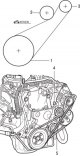
Checking the condition of auxiliary drive belts (30,000 km)
Auxiliary units include a generator, power steering pump, and air conditioning compressor pump. Depending on the vehicle configuration, there may be several options for installing and routing auxiliary drive belts. The...
Auxiliary units include a generator, power steering pump, and air conditioning compressor pump. Depending on the vehicle configuration, there may be several options for installing and routing auxiliary drive belts. The...
Replacing the cabin air filter (30,000 km)
Work order: open the hood, remove half of the decorative grille on the right side of the engine bulkhead; after unscrewing the screws, remove the cover from the filter housing; carefully remove the filter from the...
Work order: open the hood, remove half of the decorative grille on the right side of the engine bulkhead; after unscrewing the screws, remove the cover from the filter housing; carefully remove the filter from the...
Checking the condition of seat belts (30,000 km)
Seat belts must be replaced immediately if any faults occur. It is prohibited to disassemble the seat belt tensioner, as the spring may fly out and cause injury. Check the belts in the following order: check the noise...
Seat belts must be replaced immediately if any faults occur. It is prohibited to disassemble the seat belt tensioner, as the spring may fly out and cause injury. Check the belts in the following order: check the noise...
Electrical equipment check (30,000 km)
Check the functionality of the electrical equipment: lighting systems, alarms, heating of the body and rear window, seat heating, radio, etc. If faults are detected, take measures to eliminate them. Visually inspect...
Check the functionality of the electrical equipment: lighting systems, alarms, heating of the body and rear window, seat heating, radio, etc. If faults are detected, take measures to eliminate them. Visually inspect...
Checking the exhaust system (30,000 km)
Verification procedure: place the car on a ramp or lift; cool the engine to ambient temperature; check the components of the system: pipes, suspension elements, clamps, supports, mufflers, catalytic converter; check for...
Verification procedure: place the car on a ramp or lift; cool the engine to ambient temperature; check the components of the system: pipes, suspension elements, clamps, supports, mufflers, catalytic converter; check for...

Checking the condition of the suspension and steering (30,000 km)
The front suspension and steering components have a major impact on driving safety and therefore need to be checked regularly. Verification procedure: place the car on a level horizontal surface, apply the parking brake...
The front suspension and steering components have a major impact on driving safety and therefore need to be checked regularly. Verification procedure: place the car on a level horizontal surface, apply the parking brake...
Checking the condition of the paintwork and anti-corrosion coating of the body (30,000 km)
Wash the car and remove all bitumen stains. Carefully inspect the body for paint chips and scratches. Pay special attention to surfaces exposed to the abrasive action of road dirt - front fenders, wheel arches, hood....
Wash the car and remove all bitumen stains. Carefully inspect the body for paint chips and scratches. Pay special attention to surfaces exposed to the abrasive action of road dirt - front fenders, wheel arches, hood....
Checking bolts, hoses and pipelines (30,000 km)
Checking the tightness of wheel mounting bolts Remove the wheel trims and loosen the wheel mounting bolts. Then use a torque wrench to tighten the bolts to the specified torque. Checking the tightness of connections and...
Checking the tightness of wheel mounting bolts Remove the wheel trims and loosen the wheel mounting bolts. Then use a torque wrench to tighten the bolts to the specified torque. Checking the tightness of connections and...
Checking the protective covers of the front wheel drive shafts (30,000 km)
Protective shaft covers play an important role in ensuring the reliability of the drive, as they protect the constant velocity joints (CV joints) from dirt, water, dust and other objects that cause damage. Check the...
Protective shaft covers play an important role in ensuring the reliability of the drive, as they protect the constant velocity joints (CV joints) from dirt, water, dust and other objects that cause damage. Check the...

Checking and replacing spark plugs (60,000 km)
Prepare your work area and all necessary tools and materials: spark plug wrench; set of new spark plugs; spark plug gap feeler gauge set; clean rags. Fig. 2.33. Changing the gap between the spark plug electrodes Stop...
Prepare your work area and all necessary tools and materials: spark plug wrench; set of new spark plugs; spark plug gap feeler gauge set; clean rags. Fig. 2.33. Changing the gap between the spark plug electrodes Stop...

Replacement of the replaceable element of the engine air filter (60,000 km)
The air filter is located in the engine compartment, on the right side at the rear. Fig. 2.34. Disconnecting the air duct from the air filter housing Replacement procedure: disconnect the air duct from the air filter...
The air filter is located in the engine compartment, on the right side at the rear. Fig. 2.34. Disconnecting the air duct from the air filter housing Replacement procedure: disconnect the air duct from the air filter...

Fuel filter replacement (60,000 km)
Depending on operating conditions and fuel quality, it is recommended to change the fuel filter more often. The fuel filter is located under the vehicle in front of the fuel tank. Replacement procedure: place the car on...
Depending on operating conditions and fuel quality, it is recommended to change the fuel filter more often. The fuel filter is located under the vehicle in front of the fuel tank. Replacement procedure: place the car on...
Checking the condition of the rear brake pads and drums (60,000 km)
Remove the brake drums as described in the section " Brake system ". Inspect the drums for excessive wear, scratches, and cracks. The brake shoes should not be oiled or excessively worn. Replace all shoes if necessary....
Remove the brake drums as described in the section " Brake system ". Inspect the drums for excessive wear, scratches, and cracks. The brake shoes should not be oiled or excessively worn. Replace all shoes if necessary....
Checking the front wheel alignment angles (60,000 km)
Checking the front wheel alignment angles is carried out only on special stands in service stations. Independent attempts by the car owner to perform these operations, as a rule, lead to increased tire wear,...
Checking the front wheel alignment angles is carried out only on special stands in service stations. Independent attempts by the car owner to perform these operations, as a rule, lead to increased tire wear,...
Timing Belt Replacement (60,000 km)
Replacing the belt is very important, even if it looks perfectly functional. A belt break during engine operation usually leads to very expensive repairs associated with replacing valves, pistons, connecting rods and...
Replacing the belt is very important, even if it looks perfectly functional. A belt break during engine operation usually leads to very expensive repairs associated with replacing valves, pistons, connecting rods and...

Checking the oil level in a manual transmission (60,000 km)
Verification procedure: place the car on a horizontal platform. You can use a lift, overpass, ditch; remove the protective cover of the power unit; remove any dirt around the filler hole, then remove the plug; Fig....
Verification procedure: place the car on a horizontal platform. You can use a lift, overpass, ditch; remove the protective cover of the power unit; remove any dirt around the filler hole, then remove the plug; Fig....
Checking the operation of vehicle units under road conditions (60,000 km)
Take a drive in the car, during which check the reliability of the engine starter, the ability of the car to quickly accelerate when changing gears, the absence of extraneous noises when the engine, clutch and gearbox...
Take a drive in the car, during which check the reliability of the engine starter, the ability of the car to quickly accelerate when changing gears, the absence of extraneous noises when the engine, clutch and gearbox...
Replacement of working fluid in the brake system (120,000 km)
Attention! Brake fluid used in brake and clutch drives is hygroscopic. It absorbs moisture from the air through the ventilation hole in the tank cap and gradually loses its working qualities. Therefore, it is necessary...
Attention! Brake fluid used in brake and clutch drives is hygroscopic. It absorbs moisture from the air through the ventilation hole in the tank cap and gradually loses its working qualities. Therefore, it is necessary...
Replacement of fluid in the engine cooling system (120,000 km)
When replacing antifreeze, it is necessary to flush the radiator and engine with running water to remove rust and harmful deposits that impair engine cooling. These operations are described in detail in the subsection "...
When replacing antifreeze, it is necessary to flush the radiator and engine with running water to remove rust and harmful deposits that impair engine cooling. These operations are described in detail in the subsection "...
This section is available on: russian, bulgarian, belarusian, ukrainian, serbian, croatian, romanian, polish, slovak, hungarian
Other sections on other Renault models
➽ General information: Maintenance Renault Sandero 1 (2007-2012, petrol)
➽ General information: Maintenance Renault Kangoo 1 (1997-2007)
➽ General information: Maintenance Renault Laguna 2 (2001-2007)
➽ General information: Maintenance Renault Logan 2 (2012-2020)
➽ General information: Maintenance Renault Fluence 1 (2009-2020, petrol)
➽ General information: Maintenance Renault 19 (1988-1996)
Link to this section in different formats
TEXTHTMLBB Code
- General information
- User manual
- Maintenance
- Power unit
- Engine repair
- Cooling system
- Fuel system
- Exhaust system
- Ignition system
- Transmission
- Clutch
- Mechanical gearbox
- Automatic gearbox
- Drive shafts
- Chassis, running gear
- Front suspension
- Rear suspension
- Steering
- Brake system
- Body and interior
- Exterior (external elements)
- Interior (internal elements)
- Doors, locks and windows
- Heating and ventilation
- Electrical equipment
- Equipment and devices
- Headlights and lighting
- Power devices
- Electrical circuits
- General information
- User manual
- Car care
- Maintenance
- Power unit
- Engine repair
- Cooling and lubrication system
- Supply system
- Exhaust system
- Ignition system
- Transmission
- Clutch
- Mechanical gearbox
- Automatic gearbox
- Drive shafts
- Chassis, running gear
- Car suspension
- Steering
- Brake system
- Body and interior
- Exterior (external elements)
- Interior (internal elements)
- Doors, locks and windows
- Restoration and repair
- Electrical equipment
- Equipment and devices
- Headlights and lighting
- Power devices
- Heating and ventilation
- Electrical circuits