



When installing new tires, they need to be balanced, but due to tire wear or loss of balancing weights attached to the wheel rim, a new balancing may be required. If tires are not balanced, they wear out faster, the same applies to steering and suspension components. Wheel imbalance is usually accompanied by vibration, especially at a certain speed (usually around 80 km/h). If such vibration is felt only through the steering, then probably only the front wheels need balancing. If the whole car vibrates, then the rear wheels may be unbalanced. Wheel balancing should be done in a car repair shop.
Check the tire pressure regularly, when the tires are cold. Do not adjust the tire pressure immediately after driving, as this will give an incorrect result. Control values for tire pressure front/rear, bar: partial load - 2.3 / 2.0 full load - 2.4 / 2.1
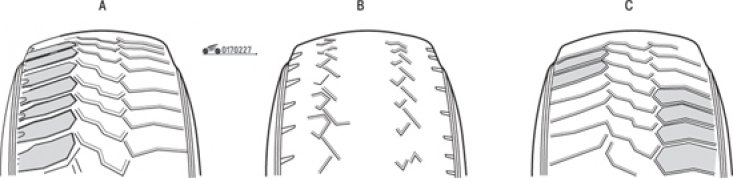
Fig. 2.27. Types of tire wear: A – wear of the outer part of the tread; B – wear of the middle part of the tread; C – uneven tread wear
Material is located on the source website: renaultbook.ru
Tire wear is significantly affected by pressure deviations from control values. Low tire pressure causes outer parts of the tread to wear out, while increased pressure causes wear in the middle part of the tread. Uneven tread wear is primarily determined by incorrect installation angles and wheel imbalance (Fig. 2.27). Driving style can affect tire wear: sharp braking and acceleration or high-speed turns cause rapid tire wear.