



- place the cylinder block on a clean horizontal surface with the crankcase facing up;
- wipe dry the backs of the inserts and their beds in the block and covers with a lint-free cloth;
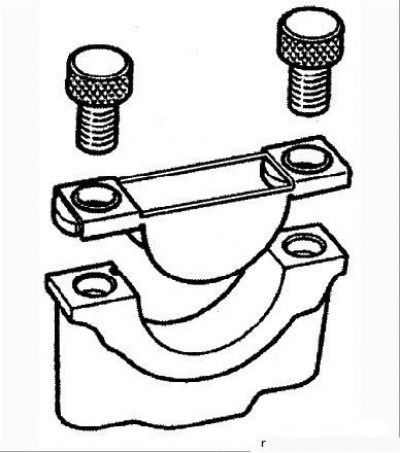
Figure 3.70. Renault tool Mot. 1493-01 for pressing in bearing shells into the bed
- place the bearing shells in their respective beds using the Renault tool Mot. 1493-01 (Figure 3.70);
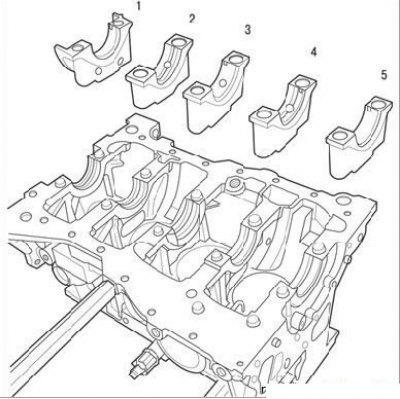
Figure 3.71. Installing the crankshaft main bearing shells
- install liners with grooves in the cylinder block bed. Into bearing caps 1, 3, 5 (Figure 3.71) install liners without grooves, and in covers 2 and 4 - with grooves;
- install thrust half rings on both sides of the 3rd cylinder block support. The lubrication grooves must face outward;
- check the clearances in the crankshaft bearings before final installation using a special Plastigage kit. The kit is a calibrated plastic rod of round cross-section. If a piece of the rod is clamped between two parts, then by its deformation, using the attached scale, you can determine the clearance between these parts;
- carefully place the crankshaft into the cylinder block. Do not use grease on either the shaft or the bearings;
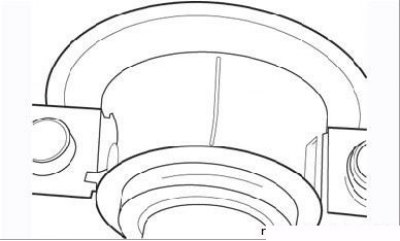
Figure 3.72. A piece of Plastigage plastic rod placed on the crankshaft main journal
- cut five pieces of plastic rod and place them on each main journal of the shaft as shown in Figure 3.72;
- carefully, without moving the rods, place the corresponding covers with the inserts installed in them on the supports;
- starting from the 3rd support, tighten the cover mounting bolts in the prescribed order to the specified torque; do not rotate the crankshaft while tightening the caps;
- unscrew the cover mounting bolts and carefully remove them without moving the flattened rod from the surface of the shaft journal;
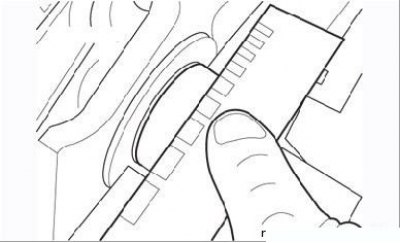
Figure 3.73. Determining the bearing clearance using the Plastigage scale
- use the scale included with the kit to determine the clearances in each bearing (Figure 3.73). Compare the results obtained with those given in table 3.3;
- if the gaps exceed the permissible limits, the bearings may be the wrong size (or too worn if the previous ones were installed during the measurement). Before deciding on the crankshaft, make sure that no oil or dirt has entered the gap where the measuring rod was installed. If the flattened rod is wider at one end than the other, the journal is probably tapered. Consult an engine rebuilder to determine whether to rebuild the worn parts or replace them with new ones;
- after completing the operation, scrape off any remaining rod from the bearing and shaft surfaces with a soft scraper, being careful not to damage the bearings;
- carefully remove the crankshaft from the cylinder block;
- wipe the bearing shells and crankshaft journals again with a rag. Make sure that there is no dirt, dust, or Plastigage residue in the lubrication holes or on the crankshaft surfaces, as this dirt will end up in the bearings after the first engine start;
- lightly lubricate the thrust half rings on the 3rd support side with grease and install them outward with the lubrication grooves;
- lubricate the bearing shells with clean engine oil, then carefully install the crankshaft on the bearing journals;
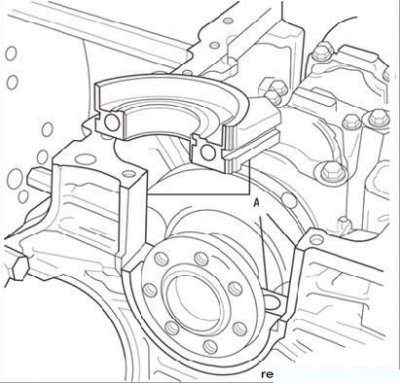
Figure 3.74. Before applying the sealant, clean the contact surfaces (A) of the 1st support cover
- make sure that the bearing caps are correctly installed, lubricate them with clean engine oil and install them on the block in the required order with the correct orientation, while applying a thin layer of PHODORSEAL 5661 sealant to the entire contact surface of the 1st bearing cap (Figure 3.74 and 3.75);
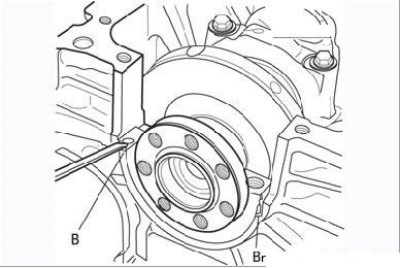
Figure 3.75. Applying sealant to the lower surface (B) of the cylinder block
- install the bolts on the support caps and tighten them diagonally from the middle outwards in a specific order to the specified torque;
- check the crankshaft rotation - it should be easy, without jamming. If force is required to rotate, find out the reason for it before continuing further assembly;
- check the crankshaft end clearance as described above;
- install the crankshaft oil seal from the flywheel side;
- install the lower rear timing belt cover.