



Please do the following:
- place the cylinder block on the workbench with the crankcase facing up;
- install the piston of the first cylinder (from the flywheel side) to the BDC position;
- apply paint to mark the connecting rod and its cap (in the absence of numbering) for correct installation during assembly;
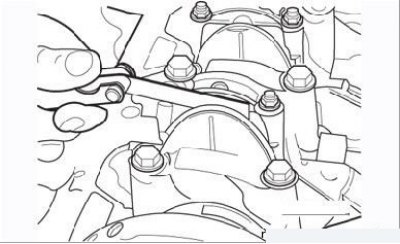
Figure 3.53. Measuring the side clearance of the lower connecting rod cap
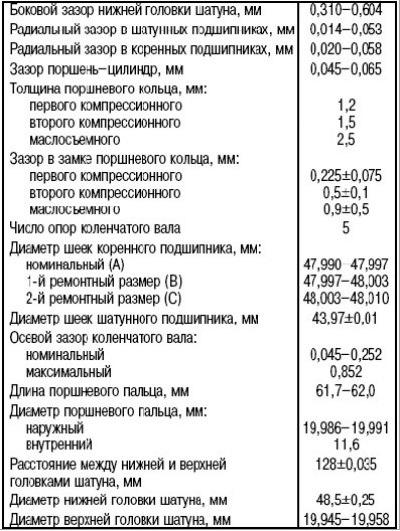
- using a flat feeler gauge, check the side clearance of the lower connecting rod head (Figure 3.53) and compare the result with the dimensions given in Table 3.3;
Table 3.3. Technical data of the crankshaft and connecting rod and piston group components
Article reprinted from the website (www.RenaultBook.ru)
- loosen the connecting rod lower cap nuts and remove the cap together with the bearing. Tape the bearing to the cap for storage. Reusing bearings is not recommended, but if they are to be used again, they should be installed in their original position;
- place plastic tubes or tape over the connecting rod cap mounting bolts to prevent damage to the cylinder surface when removing the piston from the block;
- inspect the top of the cylinder bore. If there is a significant ledge, it must be removed, as the piston and its rings may be damaged when removed;
- paint numbers on the bottoms of all pistons;
- carefully remove the piston through the top of the cylinder block by pushing down on the piston head with a suitable wooden dowel. Once the piston and connecting rod are out, remove the upper bearing shell and tape it to the connecting rod for storage;
- turning the crankshaft half a turn, remove the pistons and connecting rods of the remaining cylinders in the same way. Before removing the parts, mark them (or make sure it is available);
Attention! Piston pins are tightly pressed into the upper heads of the connecting rods and have a floating fit in the piston bosses. Circlips are not used.
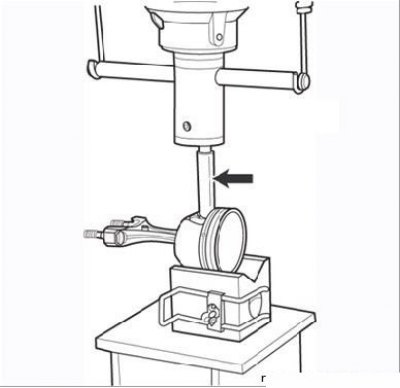
Figure 3.54. Removing the piston pin from the piston using a mandrel (arrow)
- place the piston in the V-shaped support so that the piston pin is aligned with the hole for its extraction (Figure 3.54);
- using a piston pin extractor, remove the piston pin from the piston using a press.