



Work order:
- clean the surface of the connecting rod bearings with a lint-free cloth. If new bearings are being installed, wash them with kerosene and wipe dry;
- place the liners in the connecting rod caps according to the marks made earlier;
- place the liners in the lower heads of the connecting rods according to the marks made earlier;
- lubricate the engine cylinder bore, pistons and piston rings with clean engine oil. Lay each piston-connecting rod assembly in order on a work surface. Place short lengths of plastic hose over the bolt threads or wrap them with electrical tape to protect the engine cylinder bore during assembly;
- install the rings so that the locks are offset by 120° relative to each other, then compress the piston of the first cylinder in the mandrel for installation in the cylinder block;
- the "V" mark on the piston bottom should be directed towards the flywheel;
- install the crankshaft so that the connecting rod journal of the first cylinder is at BDC;
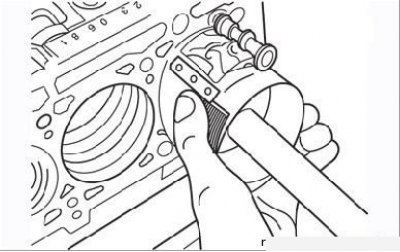
Figure 3.78. Moving the piston into the cylinder with a wooden rod
- carefully insert the piston into the cylinder, using a wooden rod to help and directing the lower head of the connecting rod onto the crankshaft journal (Figure 3.78);
- to measure the connecting rod bearing clearances, use the Plastigage kit as described above for the main bearings. Once the clearances have been checked, decide whether to use the old bearings or install new ones. The latter will entail appropriate regrinding of the crank journals;
- check the crankshaft bearing clearances and, after making any necessary adjustments, remove any remaining Plastigage from the journals and bearings;
- lubricate the journals and installed bearings generously with clean engine oil. Install the covers in order.
Tighten the cover bolts to the specified torque, turning the crankshaft each time to ensure it rotates freely before moving on to the next cover.
Finally, install the oil pump, oil pan and cylinder head as described above.