



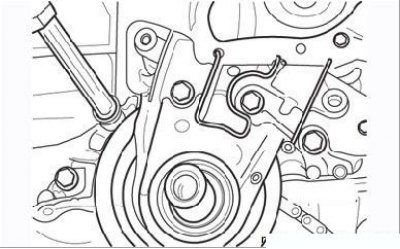
Figure 3.65. Removing the front crankshaft oil seal housing
Loosen the bolts securing the front crankshaft oil seal housing and remove it (Figure 3.65). Remove both crankshaft oil seals.
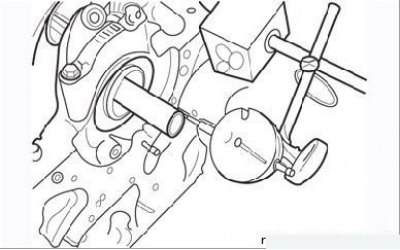
Figure 3.66. Measuring the crankshaft axial clearance
Before removing the crankshaft, its axial clearance should be checked. To perform the measurement, a dial indicator is used, the leg of which rests against the nose of the crankshaft (Figure 3.66). Move the shaft as far as it will go along its axis, set the indicator arrow to zero and move the shaft as far as it will go in the opposite direction. Record the indicator reading and compare it with the one given in table 3.3.
If you don't have a dial indicator, use a set of flat feeler gauges. To do this, move the crankshaft toward the flywheel, and then use feeler gauges to measure the gap between the side surface of the second crank pin and the half ring in the central support of the crankshaft.
Removal
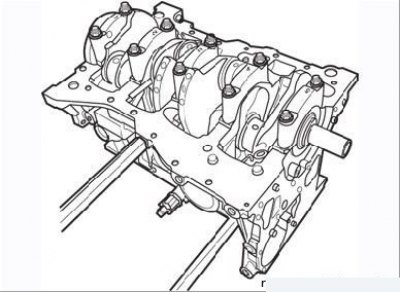
Figure 3.67. Marking of crankshaft main bearing caps
(Original publication on the website: «RENAULTBOOK.ru»)
- make sure the main bearing caps are clearly marked. The number indicates the bearing position in the crankcase, counted from the flywheel side (Figure 3.67);
- carefully loosen the main bearing cap bolts a half turn at a time until they can be removed by hand. Remove the bolts, then separate the caps from the crankcase. Remove the lower main bearing shells and save for later inspection;
- remove the crankshaft from the engine block, being careful not to drop any upper main bearing shells that may be on the crankshaft. Then remove the remaining upper main bearing shells from the journals on the cylinder block and save them for later inspection;
- remove the thrust half rings on both sides of the third main journal.