



Contents: Disassembly 🠛 Assembly 🠛 Checking the cylinder block 🠛 Checking the radial clearance of the…🠛 Checking the axial play of the…🠛 Checking and assembling pistons and…🠛 Engine assembly 🠛
Disassembly
- Remove the power unit from the vehicle.
- Remove the cylinder head.
- Disconnect the electrical connectors from the starter, unscrew the bolts and remove the starter.
- Remove the bolts securing the gearbox to the engine.
- Separate the gearbox from the engine.
- Remove the clutch housing with the pressure plate and the driven clutch disc.
- Use the Renault Mot 1316 tool to lock the flywheel from turning.
- Remove the power steering pump.
- Remove the high pressure fuel pump.
- Disconnect the electrical connectors and remove the generator.
- Remove the attachment bracket.
- If the vehicle is equipped with air conditioning, remove the compressor.
- Remove the water pump mounting bolts.
- Remove the pulley, key and spacer sleeve from the crankshaft.
- Remove the oil pan.
- Remove the engine oil dipstick guide tube.
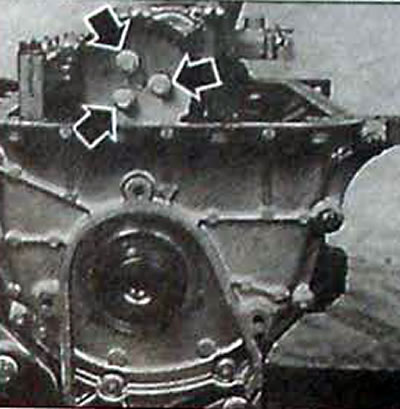
Fig. 3.57. Location of oil pump sprocket mounting bolts
- Remove the engine oil return pipe.
- Remove the front cylinder block cover and take out the crankshaft oil seal.
- Remove the three bolts and the sprocket from the oil pump.
- Remove the oil pump, paying attention to the location of the gasket.
- Remove the oil filter bracket and coolant/engine oil heat exchanger
- Unscrew the bolts and remove the crankcase support and main bearing shells.
- Remove the bolts and the connecting rod caps and connecting rod bearing shells.
- Remove the crankshaft, main bearing shells and thrust half rings that limit the axial play of the crankshaft.
- Remove the pistons with connecting rods from the cylinder block. Cylinder No.1 is located on the flywheel drive side.
- Remove the engine oil sprayers from the pistons.
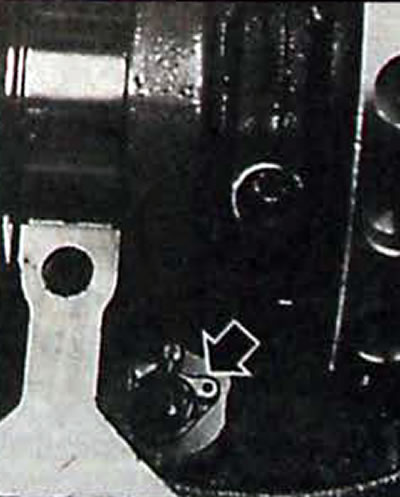
Fig. 3.58. Location of engine oil sprayer on pistons
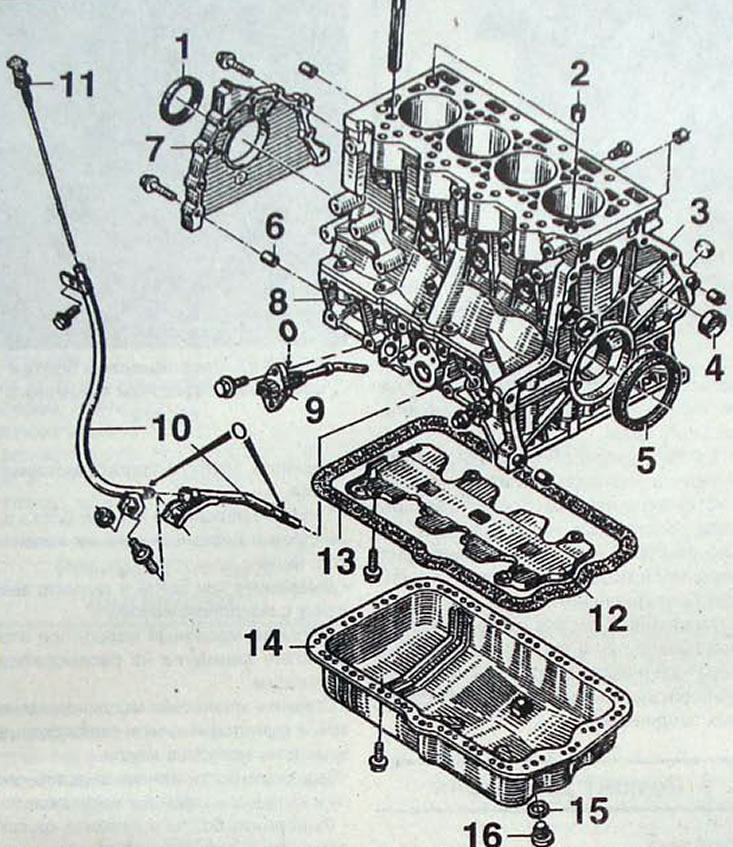
Fig. 3.59. Cylinder block: 1 - oil seal; 2 - centering sleeve; 3 - cylinder block; 4 - plug; 5 - oil seal; 6 - centering sleeve; 7 - front cover; 8 - crankshaft support housing; 9 - oil level sensor; 10 - Guide tube of the dipstick for measuring the engine oil level; 11 - dipstick for measuring engine oil level; 12 - oil deflector; 13 - Oil pan gasket; 14 - oil pan; 15 - sealing ring; 16 - oil drain plug
Assembly
- Thoroughly clean the gasket mating surfaces. This operation must be carried out carefully to avoid introducing foreign particles into the pressurized oil feed system.
- Clean the oil passages with wire.
- Install engine oil sprayers onto pistons.
Checking the cylinder block
- Using a dial indicator, measure the cylinder diameters in two diametrically opposite directions and at different heights.
- Check the condition and flatness of the cylinder block surface mating with the cylinder head gasket.
Note: Regrinding of the cylinder block is not provided, therefore, if necessary, replace the cylinder block.
Checking the radial clearance of the crankshaft main bearings
- Wipe the outer parts of the main bearing shells and their installation places in the cylinder block. Insert the upper main bearing shells into the cylinder block without lubrication
- Clean the crankshaft journals and install it into the cylinder block.
- Cut a piece of plastic calibrated plastigage rod the length of which is equal to the width of the bearing, and place it along the axis of the crankshaft on the journal of the main bearing.
- Install the crankshaft support housing with the main bearing shells and secure with bolts, tightening them to the required torque. Do not twist the crankshaft
- Loosen the bolts and remove the crankshaft support housing
- Compare the width of the deformed plastic rod with the measuring scale printed on the plastic rod packaging. Use the scale to determine the radial clearance. If the radial clearance does not correspond to the required one, replace the crankshaft main bearing shells
Checking the axial play of the crankshaft
- Clean the working surfaces of the main bearing shells and lubricate them with a thin layer of motor oil. Also lubricate the working surface of the crankshaft thrust half ring
- Install the crankshaft support housing with the main bearing shells and secure with bolts, tightening them to the required torque.
- Make sure the crankshaft rotates easily and freely.
- Mount a dial indicator on a magnetic stand and check the crankshaft end play.
- The axial clearance of the crankshaft is determined by the thickness of the thrust rings installed on the crankshaft support on the flywheel side.
Checking and assembling pistons and connecting rods
- Remove the piston rings from the pistons
- Check the gaps in the piston ring locks. To check the gap in the ring lock, remove the ring from the piston, insert it into the cylinder liner and push it with the piston into the middle part of the working area of the cylinder. Measure the gap in the ring lock with a feeler gauge
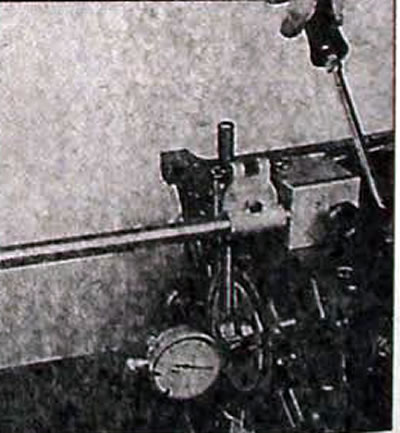
Fig. 3.60. Using a dial indicator to measure crankshaft axial play
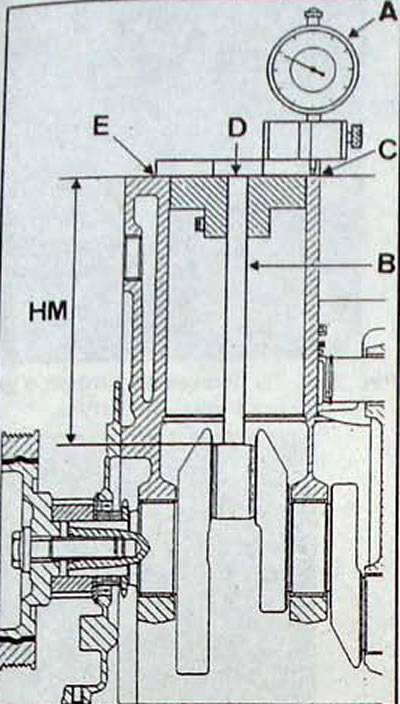
Fig. 3.61. Using the Renault Mot.1319 device to determine the connecting rod height: A - hour indicator; HM - connecting rod length; B - rod; E, D, C - places of change
- Remove the pistons from the connecting rods by removing one retaining ring at a time and pressing out the piston pin.
- Measure the piston pin diameter in two mutually perpendicular directions.
- Check the condition of the bushings in the upper connecting rod heads.
- Check the condition and shape of the connecting rod and, if necessary, repair or replace it.
- Measure the length of the connecting rod.
Note
- When replacing pistons, connecting rods, cylinder block or crankshaft, it is necessary to determine the length of the connecting rod NM, which will allow you to select a piston in accordance with the connecting rod.
- The connecting rod length measurement must be carried out using the Renault Mot. 1319 device.
- Pistons of cylinders No.1 and 4 are set to TDC using the usual method, and pistons of cylinders No.2 and 3 are set to TDC using a dial indicator
- Install the Renault Mot.1319 tool in place of the piston, connecting rod and connecting rod bearing.
- Install the dial indicator (A. Fig. 3 61) on the cylinder block and after measuring dimensions (C) and (E), calculate the average value.
- For cylinders No.1 and 4, measure the protrusion (D) of the rod (B).
- For cylinders No.2 and 3, turn the crankshaft and determine the top dead center of the crankpin and measure the protrusion (D) of the rod (B).
Note
- The length of the rod (B) is marked on the Renault Mot.1319 tool box and is 170.114 mm. Connecting rod length HM = rod length (B) - protrusion (D).
- Example of calculating the connecting rod length (NM).
| Cylinder | №1 | №2 | №3 | №4 |
| Protrusion D, mm | 0,115 | 0,125 | 0,130 | 0,095 |
NM = 170.114 - 0.115 = 169.999 for cylinder #1
NM = 169.989 for cylinder #2
NM = 169.984 for cylinder #3
NM = 170.019 for cylinder #4
- Select a piston that matches the connecting rod length.
- Lubricate the piston pin
- Check that the piston pin rotates easily and smoothly in the piston and connecting rod
- The piston and connecting rod assembly must be performed while maintaining their relative positions:
- the groove on the piston skirt and the engine oil sprayer must be located on the flywheel side of the engine;
- protrusions (A, Fig. 3.63) on the connecting rod and the lower head of the connecting rod should be located on the side of the clover-shaped notches on the bottom of the piston.
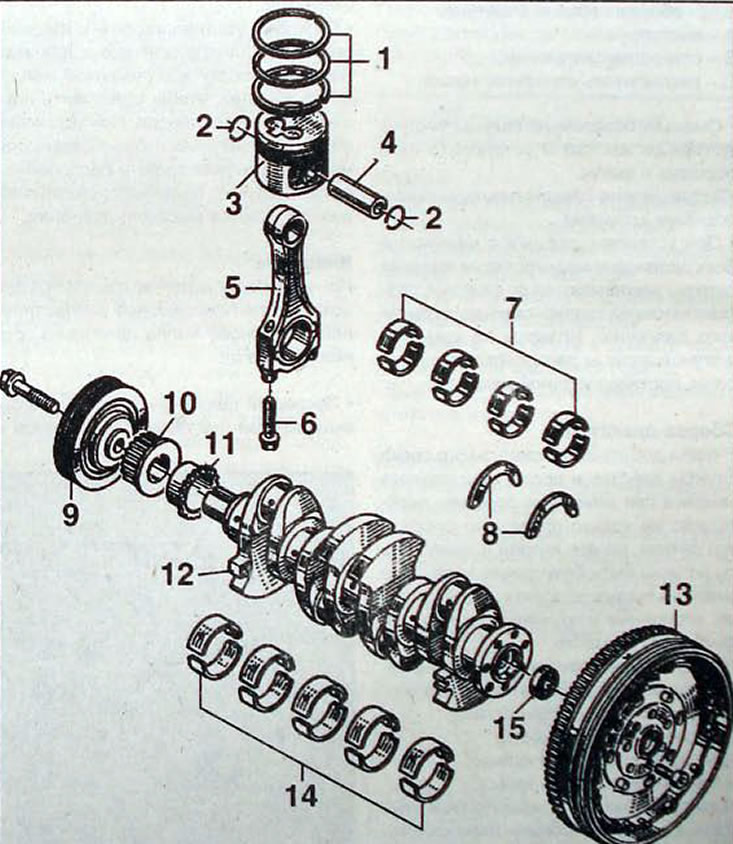
Fig. 3.62. Crankshaft and pistons: 1 - piston rings; 2 - retaining ring; 3 - piston; 4 - piston pin; 5 - connecting rod; 6 - connecting rod cover mounting bolt; 7 - connecting rod bearing shells; 8 - thrust half rings for adjusting the axial play of the crankshaft; 9 - crankshaft pulley for drive of attachment units; 10 - crankshaft pulley of the timing mechanism drive; 11 - oil pump drive sprocket; 12 - crankshaft; 13 - dual mass flywheel; 14 - main bearing shells; 15 - bearing;
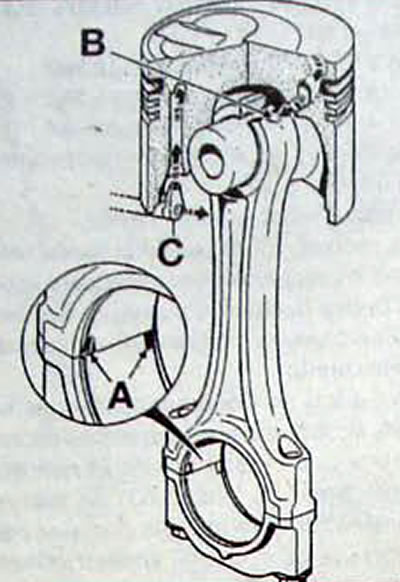
Fig. 3.63. Mutual position of the piston and connecting rod assembly: A - protrusions;; B - lubrication hole;; C - engine oil sprayer
- Lubricate the piston pins with clean engine oil and install them into the piston and connecting rod.
- Secure the piston pins with retaining rings.
- When installing the piston with the connecting rod into the cylinder block, the markings on the connecting rods must be located on the side opposite the high-pressure fuel pump. The pins on the connecting rod caps must be located on the side opposite the flywheel.
Engine assembly
- To achieve maximum engine life after a major overhaul with a minimum of problems, it is necessary not only to assemble all parts correctly, but all parts and components must be spotlessly clean, all oil passages must be clean, and lock washers and spring washers must be in place.
- Using special pliers, install the piston rings on the piston in the following sequence:
- oil scraper ring;
- 2nd compression ring;
- 1st compression ring.
- When installed correctly, the piston rings should move freely in their grooves.
- If rings that were previously installed are installed on the piston, they must be installed in their original places.
- Check the direction of installation of the piston rings, the "TOP" marks should be directed towards the piston bottom.
- Spread the piston ring locks at an angle of 120°, and none of the locks should coincide with the axis of the piston pin.
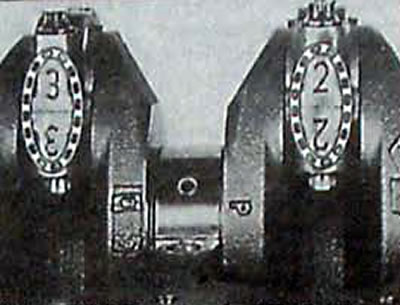
Fig. 3.64. Location of marks on the connecting rod and connecting rod cap
- Lubricate the piston and piston rings with engine oil. Install the universal piston ring compressor Facom 750 TB and prepare to install the piston into the cylinder liner.
- Install the piston from the top of the cylinder by carefully but firmly tapping the piston with the hammer handle to install the piston into the cylinder liner. When installing the piston with the connecting rod into the cylinder block, the marks on the connecting rods should be located on the side opposite the high-pressure fuel pump.
Caution: When installing pistons and connecting rods, orient them correctly to avoid damaging the engine oil sprayers.
- Check the radial clearances between the connecting rod bearing shells and the crankshaft journals in the same manner as the radial clearance of the crankshaft main bearings was checked. Replace the connecting rod bearing shells if necessary.
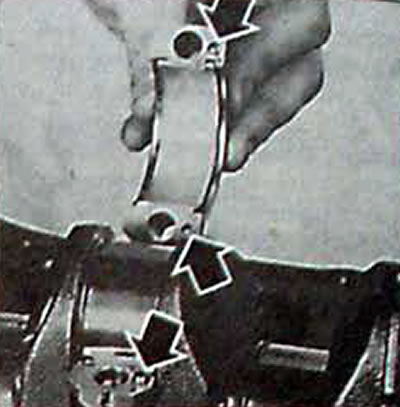
Fig. 3.65. Location of pins on the connecting rod and connecting rod cap
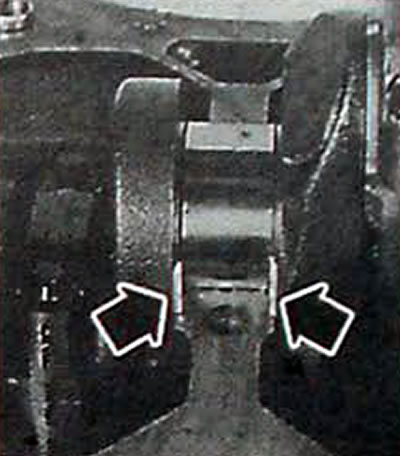
Fig. 3.66. Location of thrust half rings for adjusting the axial play of the crankshaft
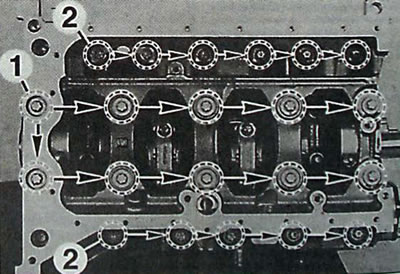
Fig. 3.67. Sequence of tightening the crankcase-crankshaft support bolts: 1 - internal fonts; 2 - external bolts
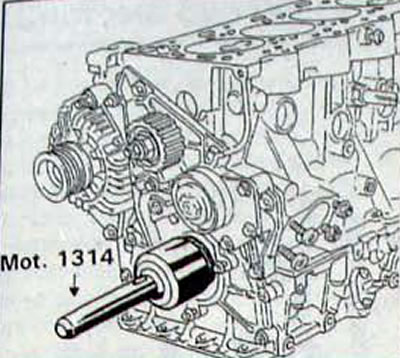
Fig. 3.68. Using the Renault Mot. 1313 tool to install the front crankshaft oil seal
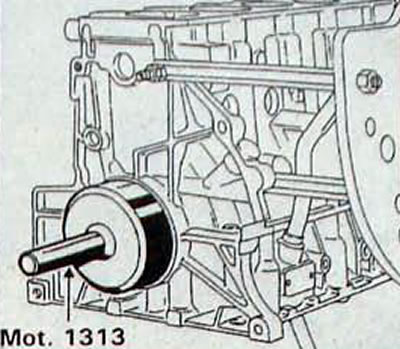
Fig. 3.69. Using the Renault Mot. 1314 tool to install the rear crankshaft oil seal
- Wipe the outer parts of the main bearing shells and their installation places in the cylinder block. Insert the upper main bearing shells into the cylinder block without lubrication. Clean the working surfaces of the main bearing shells and lubricate them with a thin layer of engine oil.
- Install the crankshaft with the upper thrust half rings on the bearing support from the flywheel side.
- Install the connecting rod bearing shells into the connecting rod and connecting rod cap.
- Install the connecting rod onto the crankshaft, then install the connecting rod cap and secure with bolts, tightening them to the required torque.
- Apply Rhodorseal 5661 paste to the lower mating surface of the cylinder block.
- Install the crankshaft support housing with the main bearing shells and secure with bolts, tightening them in a certain sequence to the required torque
- Using a dial indicator with a suitable bracket, measure the protrusion of the pistons from the cylinder block.
- Apply Rhodorseal 5661 paste to the surface of the cylinder block mating with the front cover, install the front cover and secure with bolts, tightening them to the specified torque.
- Lubricate the working edges of the front crankshaft oil seal with engine oil and install it into the front cover using the Renault Mot. 1313 tool.
- Lubricate the working edges of the rear crankshaft oil seal with engine oil and install it into the cylinder block using the Renault Mot. 1314 tool.
- Make sure the crankshaft rotates freely.
- Install the flywheel and secure with bolts, tightening them to the required torque.
- Fill the internal cavities of the oil pump with engine oil.
- Install the oil pump.
- Install the oil return pipe.
- Install the oil pan with a new gasket and secure with bolts, tightening them to the specified torque.
- Degrease the mating surface of the water pump.
- Apply Rhodorseal 5661 paste to the mating surface of the water pump, install the pump and secure with bolts, tightening them to the specified torque.
- Further assembly is carried out in the reverse order of disassembly.