



Warning! Disc brake pads should be changed on both front wheels at the same time - changing the pads on only one wheel will result in uneven braking. Dust formed when the pads wear may contain asbestos, which is harmful to health. Never blow it off with compressed air and try not to inhale it. DO NOT use mineral solvents to clean brake components. Use only a special cleaner or methylated spirits.
Note: Use a new caliper guide pin bolt when installing.
1. Set the handbrake, then jack up the front of the car and support it securely on axle stands. Remove the front wheels.
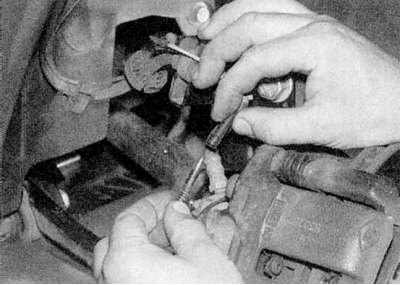
2. Trace the brake pad wear sensor wiring to the connector and disconnect it (refer to the accompanying illustration). Remember the correct location of the electrical wiring and release it from the mounting brackets.
3. Pull the caliper out. This will push the piston into the cylinder and make it easier to remove and install the pads.
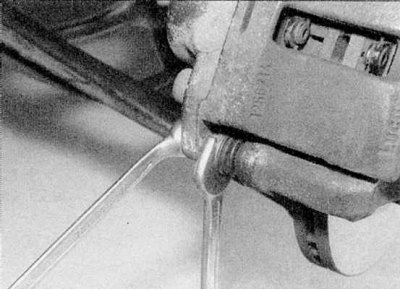
4. Remove the lower caliper guide pin bolt using a suitable spanner and lock the pin with a second spanner. Discard the bolt - it must be replaced (refer to the illustrations).
(Original publication on the portal renaultbook)
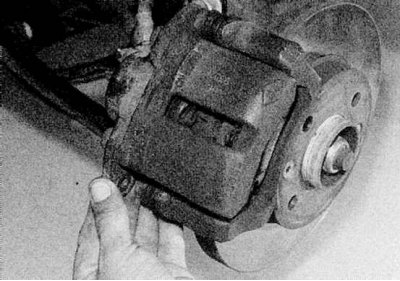
5. Rotate the caliper to move it away from the pads and tie it to the suspension strut with wire (refer to the accompanying illustration). Do not allow the caliper to hang by the hose.
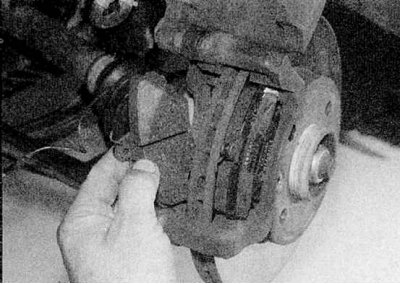
6. Remove the brake pads from the bracket (refer to the illustrations).
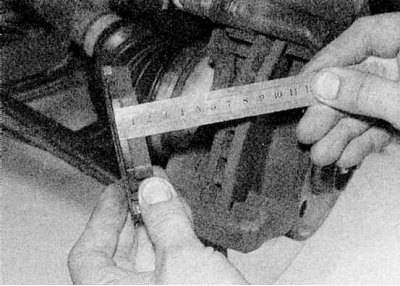
7. Measure the thickness of each brake pad (metal base plus overlay) (refer to the accompanying illustration). If any of the pads are worn to the specified Specifications minimum thickness, all four pads must be replaced. The pads must also be replaced if any of them are contaminated with oil or grease, as it is impossible to clean them. If uneven wear or contamination is detected, find and correct the cause before installing new pads.
8. If the brake pads are serviceable, carefully clean them with a soft wire brush, paying particular attention to the sides and the back of the metal base. Also clean the inside of the caliper mounting bracket.
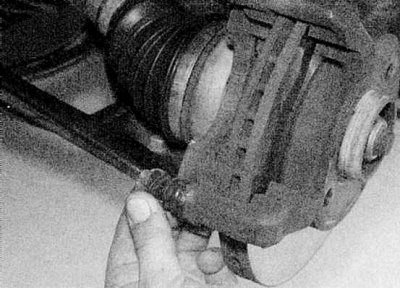
9. Before installing the pads, make sure that the guide pins slide freely in the bracket and that the rubber boots of the guide pins are not damaged (refer to the accompanying illustration). Clean the dust from the caliper and piston with a brush. Inspect the piston dust boot and the piston itself for damage, leaks, and corrosion. Maintenance of these components is described in Section Removal, overhaul and installation of front brake calipers.
10. If new pads are being installed, the caliper piston must be pushed into the cylinder to make room for them. Use a clamp or flat-head screwdriver to do this. Note that this will increase the fluid level in the reservoir (it is recommended to first pump out some of the liquid from it).
11. Install the pads in the working position, remembering that the inner pad is equipped with a wear sensor.
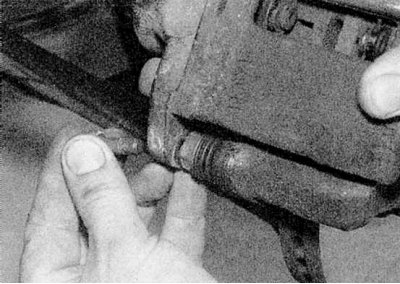
12. Rotate the caliper to its operating position. Make sure the pad springs are installed correctly, then press the caliper down and install the new guide pin bolt (refer to the accompanying illustration). Tighten the bolt to the specified value Specifications effort.
13. Connect the brake pad wear sensor wiring connector and secure the wires with staples.
14. Press the brake pedal several times to move the pads close to the disc.
15. Repeat the above procedure on the second front brake caliper.
16. Install the wheels, then lower the vehicle to the ground and tighten the wheel bolts to the specified Specifications effort.
17. Check the brake fluid level as described in Section Schedule of current maintenance.