



Contents: All models except Scenic 🠛 Scenic Models 🠛
Warning! The brake pads should be changed on both rear wheels at the same time - changing the pad on only one wheel will result in uneven braking. The dust formed when the pads wear may contain asbestos, which is harmful to health. Never blow it off with compressed air and try not to inhale it. DO NOT use mineral solvents to clean brake components, use a special cleaner or methyl alcohol.
1. Remove the brake drum as described in Section Removal, inspection and installation of rear brake drums.
2. Taking the necessary precautions, carefully remove dust from the drum, backing plate and shoes resulting from shoe wear.
3. If any of the pads are worn to the specified Specifications minimum thickness, all four pads must be replaced. The pads must also be replaced if at least one of them is contaminated with oil or grease, as it is impossible to clean it.
4. If uneven wear or contamination is detected, find and correct the cause before installing new pads.
5. If all components are in satisfactory condition, install the brake drum as described in Section Removal, inspection and installation of rear brake drums. To replace the brake pads, proceed as follows.
All models except Scenic
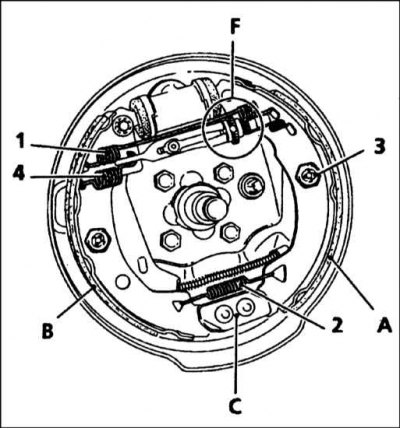
1. Draw the position of the pads and each of the springs, as well as the clearance adjuster, to facilitate subsequent installation (refer to the accompanying illustration).
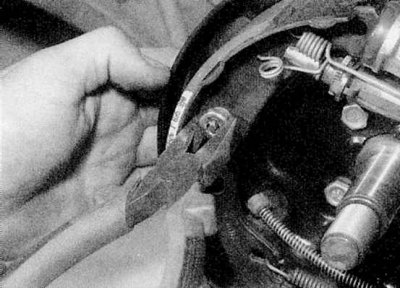
2a. Using pliers, remove the brake shoe spring support cups by pressing them down and turning them 90°.
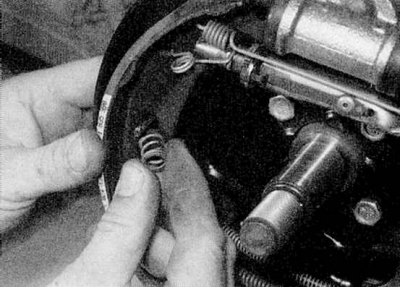
2b. Remove the springs and take out the pad support posts (refer to the illustrations).
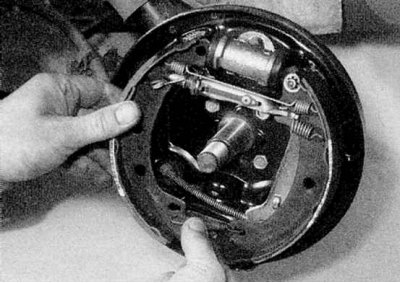
3. Carefully release the shoes from the lower pivot assembly to relieve tension on the lower return spring, then disconnect the spring from both shoes (refer to the accompanying illustration).
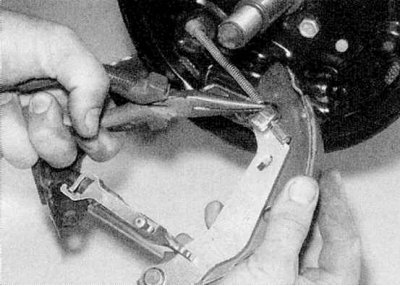
4a. Release the upper ends of the shoes from the wheel cylinder, being careful not to damage its seals, and disconnect the handbrake cable from the slave shoe. Remove the spreader bar and shoe assembly from the drum brake backing plate. Do not press the brake pedal until the brakes are assembled.
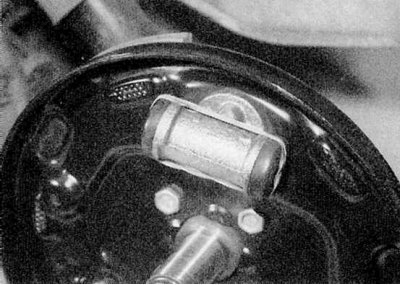
4b. Install a tight rubber band on the brake cylinder to prevent the pistons from coming out (refer to the illustrations).
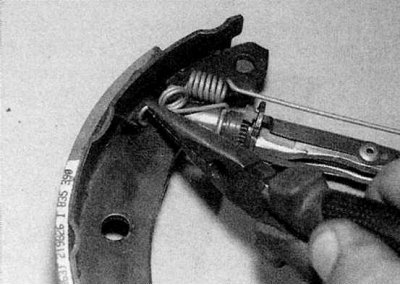
5a. With the spreader bar and shoe assembly on the workbench, release the handbrake lever limiter (if not done yet) separate the retaining spring of the expansion bar bolt from the drive shoe.
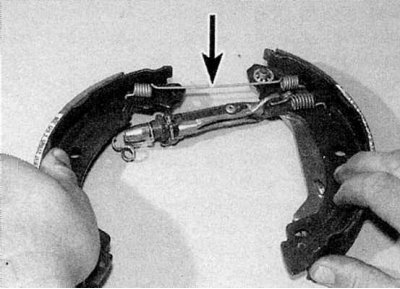
5b. Disconnect the upper tension spring.
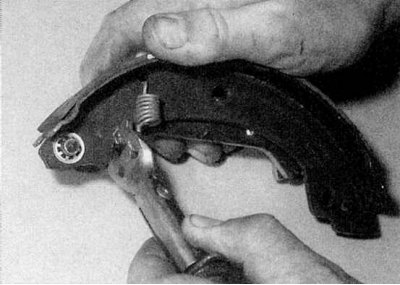
5c. Then separate the leading shoe and tension spring from the driven shoe.
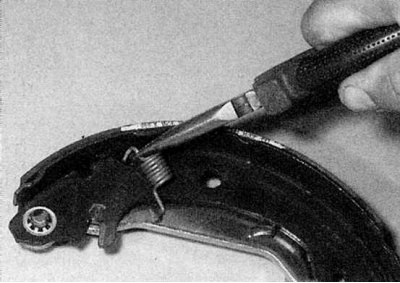
5d. Remove the spring, remembering its location (refer to the illustrations).
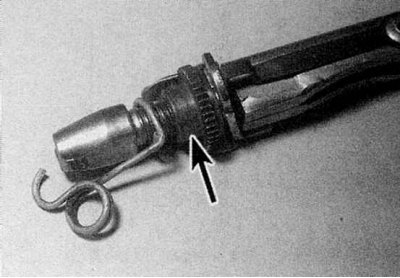
6. Remove the adjuster bolt from the adjuster bar and carefully inspect the assembly for damage or wear, paying particular attention to the bolt threads and adjuster wheel. Replace them if necessary. Note that the adjuster bars of the left and right brake assemblies are not interchangeable. The bar bolts can be identified by the number of grooves on the flange of the adjuster wheel: the left bar bolt has two grooves, and the right bolt has only one (refer to the accompanying illustration).
7. If the new pads do not have a handbrake lever, transfer it from the old pads. Attach the lever with a new bracket. All tension springs should be replaced, regardless of their condition.
8. Make sure the components on the end of the expansion bar are installed correctly, then apply a small amount of high temperature grease to the threads of the adjuster bolt. Thread the adjuster wheel onto the bolt so that there is only a small gap between it and the bolt head, then install the bolt into the bar.
9. Hook the short hook of the expansion bar retaining spring to the slave brake shoe. Attach the bar to the end of the spring, then place it in the slot of the slave brake shoe.
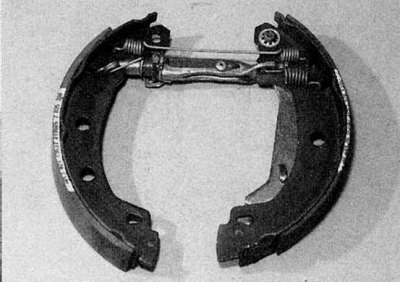
10. Attach the upper tension spring to the slave shoe. Attach the leading shoe to the other end of the spring and slide the leading shoe down until the head of the adjuster bolt fits into the appropriate slot. Attach the locking spring to the leading shoe (refer to the accompanying illustration).
11. Remove the rubber band installed on the brake cylinder. Bend back the rubber protective wings and check the working brake cylinder for damage and tightness. Make sure that both pistons move easily in the cylinder. Refer to Section Removal and installation the rear brake cylinder, if necessary, replace the brake cylinder.
12. Before installation, clean the drum brake backing plate and apply to the contact surfaces with the shoes (especially on the cylinder pistons and the lower pivot assembly) a little high-temperature grease or anti-seize compound. Do not use too much grease, otherwise it may get on the brake pad.
13. Make sure that the handbrake lever stop rests against the edge of the driven brake shoe.
14. Place the spreader bar and shoe assembly on the backing plate and attach the handbrake cable to the slave shoe lever. Install the upper ends of the shoes onto the brake cylinder pistons, then attach the lower tension spring to the shoes and insert them into the lower pivot assembly.
15. Center the pads on the support shield. Install the pad support posts and their springs and secure them with support cups.
16. Using a screwdriver, turn the adjuster wheel of the expansion bar so that the diameter of the circle formed by the pads is 202.5 - 202.7 mm.
17. Place the drum in the working position, but do not install the hub nut yet.
18. Repeat the above procedure on the second rear brake mechanism.
19. After replacing the pads of both rear brakes, adjust the clearance between the brake pads and drums by alternately applying the foot brake and hand brake. Ask an assistant to make sure that the spreader bars are functioning correctly (when you press the pedal, the expansion bar regulator should click).
20. Remove the drums and adjust the handbrake as described in Section Adjusting the handbrake.
21. Install the brake drums (refer to Section Removal, inspection and installation of rear brake drums).
22. Finally, check the brake fluid level as described in Section Schedule of current maintenance.
Scenic Models
1. Draw the relative positions of the pads and springs, as well as the location of the slack adjuster components, to facilitate subsequent installation.
2. Using a screwdriver or pliers, detach the tension spring from both pads.
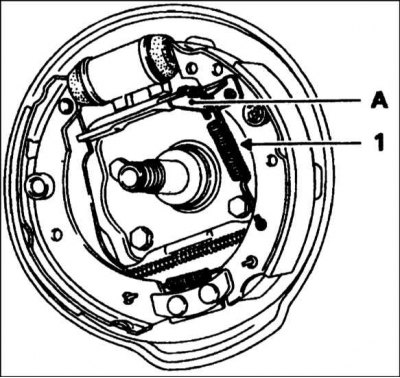
3. Unhook the spring from the adjuster lever and brake shoe and remove it (refer to the accompanying illustration).
4. Remove the adjuster lever from the reference mark on the brake shoe.
5. Using pliers, remove the support cups of the brake shoe strut springs by pressing them and turning them 90°. Remove the springs and take out the support struts.
6. Carefully remove the shoes from the brake cylinder and lower pivot assembly. Remove the spreader bar.
7. Disconnect the lower tension spring from both shoes and unhook the handbrake cable from the driven shoe.
8. Do not press the brake pedal until you have assembled the brakes. Install a tight rubber band on the brake cylinder to prevent the pistons from coming out.
9. Remove the adjuster bolt from the expansion bar and carefully inspect the assembly for damage or wear, paying particular attention to the bolt and adjuster wheel threads. Replace if necessary. Note that the left and right bars are not interchangeable and are color-coded.
10. If the new pads do not have a handbrake lever, transfer it from the old pads. Attach the lever with a new bracket. All tension springs should be replaced, regardless of their condition.
11. Make sure the components on the end of the expansion bar are installed correctly, then apply a small amount of high temperature grease to the threads of the adjuster bolt. Thread the adjuster wheel onto the bolt so that there is only a small gap between it and the head of the bolt, then install the bolt into the bar.
12. Remove the rubber band installed on the brake cylinder. Bend back the rubber protective caps and check the working brake cylinder for damage and tightness. Make sure that both pistons move easily in the cylinder. Refer to Section Removal and installation the rear brake cylinder, if necessary, replace the brake cylinder.
13. Before installation, clean the drum brake backing plate and apply to the contact surfaces with the shoes (especially on the cylinder pistons and the lower pivot assembly) a little high-temperature grease or anti-seize compound. Do not use too much grease, otherwise it may get on the brake pad.
14. Attach the handbrake cable to the slave shoe lever, then install the lower return spring. Place the shoes in the lower pivot assembly.
15. Place the spreader bar on the shoes, then install the upper ends of the shoes onto the brake cylinder pistons.
16. Center the pads on the support shield. Install the pad support posts together with the springs and secure them with support cups.
17. Attach the upper tension spring to the driven shoe and then to the leading shoe.
18. Place the regulator lever on the reference mark on the shoe and attach the lever spring.
19. Using a screwdriver, turn the adjuster wheel of the expansion bar so that the diameter of the circle formed by the shoes is 227.4 and 227.9 mm.
20. Place the drum in the working position, but do not install the hub nut yet.
21. Repeat the above procedure on the second rear brake.
22. After replacing the pads of both rear brakes, adjust the clearance between the brake pads and drums by pressing the brake pedal several times. Ask an assistant to make sure that the spreader bars are functioning correctly (when you press the pedal, the expansion bar regulator should click).
23. Remove the drums and adjust the handbrake as described in Section Adjusting the handbrake.
24. Install the brake drums (refer to Section Removal, inspection and installation of rear brake drums).
25. Finally, check the brake fluid level as described in Section Schedule of current maintenance.