
Attention! On models equipped with ABS, before unscrewing the brake pipe connectors, disconnect the ground cable from the battery and do not connect it until you have bled the system. If this is not done, air may enter the hydraulic unit, which is very difficult to (in some cases not possible) pump.
Removing
1. Remove the brake drum as described in Section Removal, inspection and installation of rear brake drums.
2. Remove the master cylinder reservoir cap and retighten it with a piece of polyethylene underneath to create an airtight seal and prevent fluid loss. Alternatively, pinch the hose with a hose clamp or clamp.
3. Carefully unhook the upper return spring from both shoes and remove it. Take the upper ends of the shoes away from the brake cylinder.
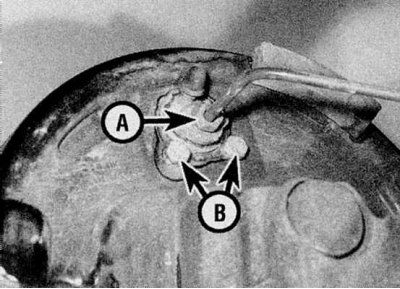
4. Wipe the area around the brake pipe connector behind the slave cylinder and remove the union nut (refer to accompanying illustration). Carefully separate the cylinder tube and seal the end to prevent dirt from entering. Wipe up spilled liquid.
5. On the reverse side of the support shield, unscrew the two brake cylinder mounting bolts and remove the cylinder together with the O-ring (where available), being careful not to spill brake fluid on the brake pads.
6. It is not possible to rebuild the cylinder as its components are not sold separately. If at least one of the components is damaged, the complete cylinder assembly must be replaced.
Installation
1. Make sure the contact surfaces of the support plate and the brake cylinder are clean and dry. On models where an O-ring is installed on the cylinder, use a new seal. On other models, apply a small amount of sealant to the contact surface of the cylinder.
2. Separate the brake pads and place the brake cylinder in working position. Insert the brake pipe and tighten the union nut two or three turns.
3. Insert the two cylinder mounting bolts, tighten them securely, then tighten the brake tube union nut to Specifications effort.
4. Remove the clamp from the brake hose or the polyethylene from under the master cylinder reservoir cap.
5. Make sure the brake shoes are installed on the cylinder pistons, then carefully install the return spring.
6. Install the brake drum as described in Section Removal, inspection and installation of rear brake drums.
7. Bleed the brake system (refer to section Bleeding the hydraulic system of the brakes). If precautions have been taken to minimize fluid loss, only this rear brake will need to be bled.