



You will need: key "for 10" (a socket head is more convenient), special key "11" for pipeline nuts, key for wheel bolts.
1. Engage 1st gear and place chocks under the front wheels.
2. Remove the appropriate wheel (see "Wheel replacement").
[This note was copied from the resource: www.renaultbook.ru]
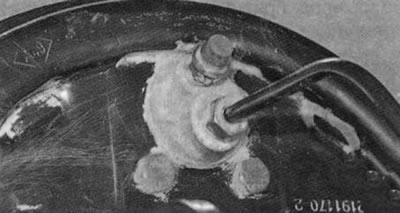
3. Clean the brake pipe mounting location and the working cylinder mounting bolts from dirt on the back side of the brake shield.
4. Remove the brake drum (see "Removal and installation the brake drum").
5. Raise the parking brake lever - the upper ends of the pads will move away from the piston stops of the working cylinder.
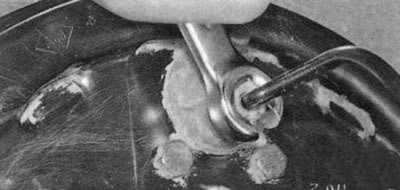
6. Unscrew the nut securing the brake pipe to the working cylinder...
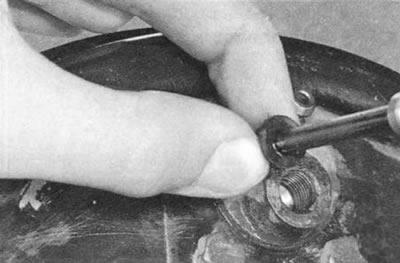
7. ...and plug the opening of the tube, for example with an air release valve cap.
Helpful advice. After long-term use, the brake pipe nut "grows together" with the pipe into one whole, and when you try to unscrew the nut, the pipe twists and breaks. In this case, just slightly move the pipe nut, then unscrew the cylinder mounting bolts and disconnect it from the pipe, unscrewing the cylinder from its nut. After disconnecting the cylinder from the pipe, the mobility of the released nut can be restored by wetting it with brake fluid and turning the nut with a wrench alternately in both directions.
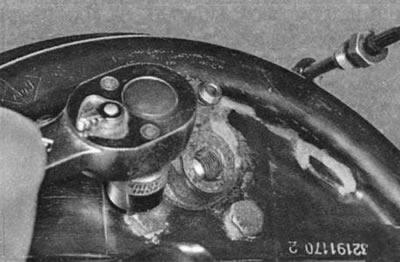
8. Remove the two bolts securing the working cylinder, holding the cylinder on the other side...
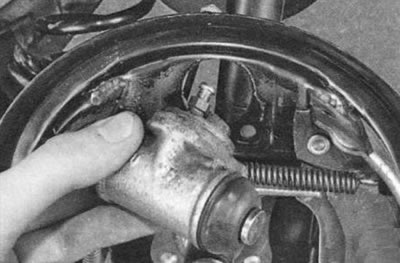
9. ...and remove the slave cylinder.
Note: If the new cylinder's bleeder valve does not have a protective cap, remove the cap from the old valve.
10. Install the slave cylinder in the reverse order of removal.
11. Remove air from the brake system (see "Bleeding the hydraulic brake system").
12. Press the brake pedal sharply several times to bring the brake shoes to the drum.