English Русский
Български
Беларускі
Український
Српски
Hrvatski
Română
Polski
Slovenský
Magyar
Bookmark Contacts Articles Sitemap
Company vehicles Peugeot Company vehicles Opel Company vehicles Skoda Company vehicles Land Rover Company vehicles Mitsubishi Company vehicles Volkswagen Company vehicles Honda
RenaultBook.ru


Duster   Fluence   Kangoo   Laguna   Logan   Megane   Sandero   Scenic   Symbol   Clio   Other
Renault 19 (1988-1996) Espace I and II (1984-1996) Espace III (1996-2002)

Replacing the front brake pads (Renault Espace III)

  • Main
  • Renault
  • Espace III (1996-2002)
  • Chassis, running gear
  • Brake system
  • Replacing the front brake pads
0
Contents: Removal 🠛 Examination 🠛 Installation 🠛
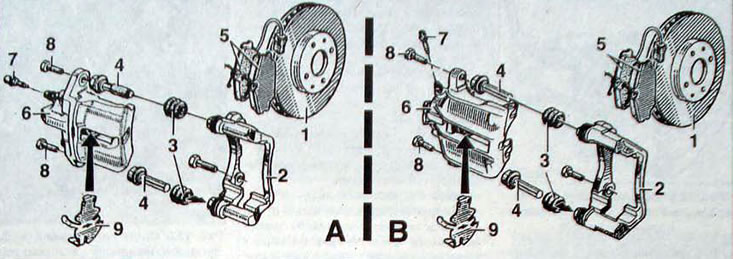
Fig. 12.1. Front brake caliper:A - cars with gasoline engines; B - cars with diesel engines; 1 -…

Fig. 12.1. Front brake caliper:A - cars with gasoline engines; B - cars with diesel engines; 1 - brake disc; 2 - caliper holder; 3 - protective cover; 4 - guide pin; 8 - 5 - brake pads; 6 - support;7 - bleed nipple;8 - guide pin mounting bolt; 9 - anti-bounce plate.


Attention
  • Always replace all pads on one axle of the vehicle, even if only one pad is worn. If brake pads are to be reinstalled, they must be marked before removal.
  • To clean brakes, use only a special brake cleaner.


Removal


  • Apply the parking brake and block the rear wheels with chocks.
  • Loosen the front wheel mounting nuts. Raise the front of the car and place it on supports. Remove the front wheel.
  • Use a syringe to suck out the brake fluid from the reservoir.
  • Disconnect the connector from the brake pad wear sensor.
  • Move the piston inside the working cylinder by manually moving the floating bracket of the caliper outward
  • Remove the lower caliper mounting bolt, using the second wrench to hold the guide pin from turning. Do not remove the upper caliper mounting bolt or the hollow brake hose mounting bolt.
  • Using two wrenches, loosen the guide pin mounting bolts (Fig. 12.2). Do not reuse these bolts.
  • Remove the brake caliper floating bracket and secure it to the suspension spring to protect the brake hose from damage.
  • Remove the anti-bounce plate
  • Remove the brake pads.
  • Do not press the brake pedal when the brake pads are removed.

The original can be found on the website: renaultbook.ru
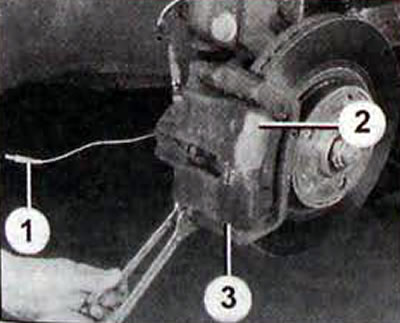


Fig. 12.2. Unscrewing the guide pin mounting bolt: 1 - wear sensor connector; 2 - support; 3 -…

Fig. 12.2. Unscrewing the guide pin mounting bolt: 1 - wear sensor connector; 2 - support; 3 - caliper holder
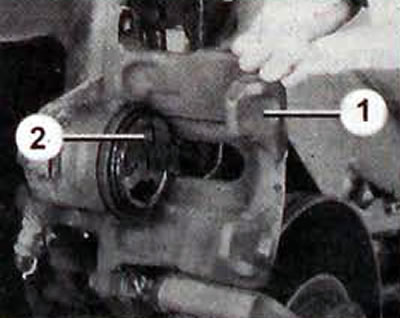

Fig. 12.3. Upward deflection of the brake caliper: 1 - support; 2 - anti-bounce plate
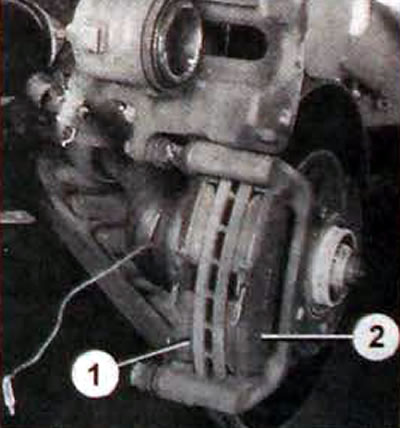
Fig. 12.3. Upward deflection of the brake caliper: 1 - support; 2 - anti-bounce plate


Fig. 12.4. Removing the anti-bounce plate and brake pads: 1 - inner brake shoe; 2 - outer brake shoe

Fig. 12.4. Removing the anti-bounce plate and brake pads: 1 - inner brake shoe; 2 - outer brake shoe


Examination


Before installing brake pads, check:


  • condition of piston dust cover;
  • condition of the guide pins and their protective covers (lubricate guide pins if necessary);
  • no play;
  • brake disc wear.

Installation


  • Replace damaged parts.
  • Using the Fre. 823 tool or a G-clamp, press the piston into the caliper (Fig. 12.5). When the piston is pushed in, the brake fluid is forced out of the brake cylinder into the expansion tank, so constantly monitor the fluid level in the tank and, if necessary, pump it out a little. You can also press the piston into the caliper with a wooden rod or a hammer handle. In doing so, make sure that the piston does not become warped and that the surfaces of the piston and dust cover are not damaged.
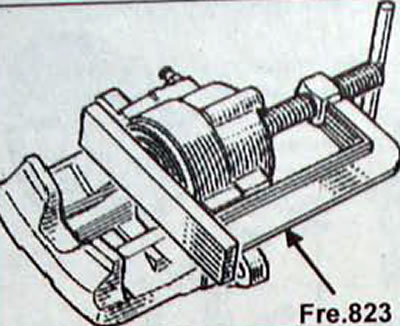
Fig. 12.5. Using the Fre. 823 tool to press the piston into the caliper

Fig. 12.5. Using the Fre. 823 tool to press the piston into the caliper

  • Install new brake pads with springs, ensuring that they are positioned correctly when installed. The pad with the brake pad wear indicator wire is installed on the inside.
  • Install the anti-rattle plate so that the arrow points towards the front of the vehicle.
  • Install the brake caliper floating bracket and new lower guide pin mounting bolt.
  • Press the brake caliper and install the upper guide pin mounting bolt.
  • Starting with the bottom bolt, tighten the guide pin mounting bolts to the specified torque.
  • Connect the brake pad wear indicator lamp wire, ensuring it is positioned correctly.
  • Replace the brake pads on the second front wheel in the same way.
  • Install the wheels and lower the car to the ground.
  • Press the brake pedal several times to press the brake pads against the brake disc.
  • Check the brake fluid level in the reservoir and top up if necessary.
This article is available on: russian, bulgarian, belarusian, ukrainian, serbian, croatian, romanian, polish, slovak, hungarian
Article has been reviewed by editor: Trofimova Anastasia
Share with friends:
Previous
Espace III: Brake system
Next

Brake fluid
Parts subject to mandatory replacement
Brake system — technical data
Brake system — general information
Floating calipers for front brake mechanisms
Repair of the front brake caliper
Front brake discs
Brake drums
Rear drum brake slave cylinder
Other articles on other Renault models

➽ Replacing the front brake pads Renault Fluence 1 (2009-2020, petrol)
➽ Replacing the brake pads of the front wheel brake mechanism Renault Logan 1 (2004-2012, petrol)
➽ Replacing the front brake pads Renault Megane 1 (1995-2002)
➽ Replacing the brake pads of the front wheel brake mechanism Renault Sandero 1 (2007-2012, petrol)
➽ Replacing the front brake pads Renault Symbol 1 (1999-2008, petrol)
Link to this article in different formats
Reviews and comments of visitors
No comments yet


Add two numbers 17 + 32


Renault 19 (1988-1996) 
  • General information
  • Maintenance
  • Power unit
  • Engine repair
  • Exhaust system
  • Cooling system
  • Supply system
  • Single-point injection
  • Multi-point injection
  • Diesel injection system
  • Transmission
  • Clutch
  • Car gearbox
  • Chassis, running gear
  • Car suspension
  • Steering
  • Brake system
  • Wheels and tires
  • Body and interior
  • Exterior (external elements)
  • Interior (internal elements)
  • Heating and ventilation
  • Electrical equipment
  • Equipment and devices
  • Headlights and lighting
  • Ignition system
  • Power devices
  • Electrical circuits
Espace I and II (1984-1996) 
  • General information
  • Introduction to the guide
  • Troubleshooting
  • Power unit
  • Engine repair
  • Cooling system
  • Carburetor fuel system
  • Injection fuel system
  • Diesel fuel system
  • Ignition system
  • Transmission
  • Clutch
  • Car gearbox
  • Drive shafts
  • Chassis, running gear
  • Brake system
  • Steering
  • Front suspension
  • Rear suspension
  • Body and interior
  • Exterior (external elements)
  • Interior (internal elements)
  • Doors, locks and windows
  • Electrical equipment
  • Equipment and devices
  • Electrical circuits
Espace III (1996-2002) 
  • General information
  • Introduction to the manual
  • User manual
  • Power unit
  • Petrol engines F3R
  • Petrol engines Z7X
  • Diesel engines G8T
  • Diesel engines G9T
  • Transmission
  • Clutch
  • Mechanical gearbox
  • Automatic gearbox
  • Drive shafts
  • Chassis, running gear
  • Steering
  • Front suspension
  • Rear suspension
  • Brake system
  • Body and interior
  • Exterior (external elements)
  • Interior (internal elements)
  • Doors, locks and windows
  • Heating and ventilation
  • Electrical equipment
  • Equipment and instruments
  • Power devices
  • Electrical circuits
RenaultBook.ru © 2018–2026 | Mobile version | News and articles | Sitemap: EN BG BY UA RS HR RO PL SK HU | Administration | Site search | Bookmark
Duster 1 (2009-2017) | Fluence 1 (2009-2020, petrol) | Kangoo 1 (1997-2007) | Laguna 2 (2001-2007) | Logan 1 (2004-2012, petrol) | Logan 2 (2012-2020) | Megane 1 (1995-2002) | Megan 2 (2002-2009, petrol) | Sandero 1 (2007-2012, petrol) | Scenic 1 (1996-2003) | Symbol 1 (1999-2008, petrol) | Symbol 2 (2008-2013, petrol) | Renault 19 (1988-1996) | Espace I and II (1984-1996) | Espace III (1996-2002) | Clio 1 (1990-1998) |
We want your visit to be comfortable 😌 and use cookies 🍪 to do so.