



Contents: Disassembly 🠛 Engine assembly 🠛
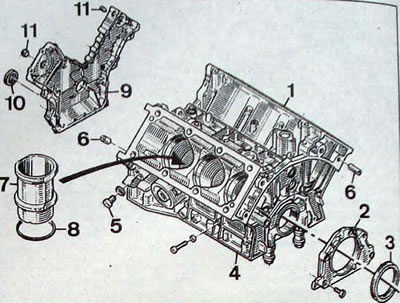
Fig. 2.50. Cylinder block:1 - cylinder block; 2 - rear cover of the cylinder block; 3 - rear crankshaft oil seal;4 - main bearing cap; 5 - threaded plug for draining the coolant;6 - centering sleeve; 7 - cylinder liner; 8 - cylinder liner gasket 9 - timing cover; 10 - oil seal; 11 - plug
High mileage is not a sufficient indicator of the need for major repairs, on the other hand, low mileage does not exclude the need for major repairs. The most important indicator, in all likelihood, is the timeliness of routine engine maintenance. With timely oil and filter changes, as well as with all other necessary maintenance work, the engine serves reliably for many thousands of kilometers. On the contrary, insufficient or untimely maintenance can cause a sharp reduction in engine life. Increased oil consumption indicates wear of piston rings, valve guides and oil deflector caps. You should make sure that leaks are not the cause of increased oil consumption, and only then draw a conclusion about the unsuitability of piston rings and valve guides. To determine the probable cause of the malfunction, measure the compression in the engine cylinders. Also conduct tests using a vacuum gauge and determine the nature of the readings of this device.
Check the oil pressure with a pressure gauge screwed in place of the oil pressure sensor and compare the test result with the standard value. If the oil pressure is low, the cause may be wear of the main and connecting rod bearings or oil pump parts.
Loss of power, engine failures, detonation or metallic knocks, increased noise from the valve timing mechanism, increased fuel consumption indicate the need for a major overhaul, especially if all these signs of abnormal operation appear simultaneously. If performing all adjustments does not lead to improvement, then the only way to eliminate abnormal engine operation is a major overhaul. A major overhaul consists of restoring engine parts to the condition specified in the technical data for a new engine.
During a major engine overhaul, repairs are also performed on units such as the starter, generator, and ignition distributor. As a result, the repaired engine should have the qualities of a new unit and withstand significant mileage without failures.
Before starting a major engine overhaul, read the description of the relevant procedures to get an idea of the upcoming scope of work and the requirements for it. If all the rules and regulations are followed, and all the necessary tools and devices are available, a major overhaul is not difficult to perform, but it will require a significant investment of time.
Disassembly
- Before disassembling, remove all engine attachments such as the generator, manifolds, hoses, clutch and make sure the engine oil is drained from the engine.
- When disassembling, it is very important to maintain cleanliness to prevent contamination of the disassembled components.
- Before disassembling, clean the outside of the engine with kerosene or, if the engine is very dirty, with solvent.
- Once the parts are removed from the engine, wash them in kerosene.
- Never immerse parts with internal lubrication channels in kerosene. Such parts should be thoroughly wiped with a cloth soaked in kerosene. Lubrication channels should be cleaned with a wire rope.
- If possible, mount the engine on a stand, otherwise, mount the engine so that it will not be damaged when loosening tight nuts and bolts.
- Disconnect the gearbox from the engine.
- Remove the timing drive.
- Use a steel rod to push down the cylinder head centering sleeve.
- Remove the cylinder head. To avoid disturbing the cylinder liners, the head must be removed by turning it around the remaining guide bushing. Since the gasket sticks to the cylinder head, to the cylinder block and to the liners, it is very important not to lift the head: this can lead to the liners being torn off their base and dirt getting inside
- Separate the head by tapping its edges with a plastic hammer in the direction of rotation in the horizontal plane.
- Remove the cylinder head gasket.
- Remove the second cylinder head in the same manner.
- Using a steel hook (renault Mot.587 device), remove the cylinder head guide bushings from the cylinder block.
- To prevent the cylinder liners from moving when the cylinder head is removed, install a clamping bar (Renault Mot.588) on the upper edges of the cylinder liners
Note: If reusing liners and pistons, mark the piston installation direction in relation to the liners and the front of the engine. Turn the engine over.
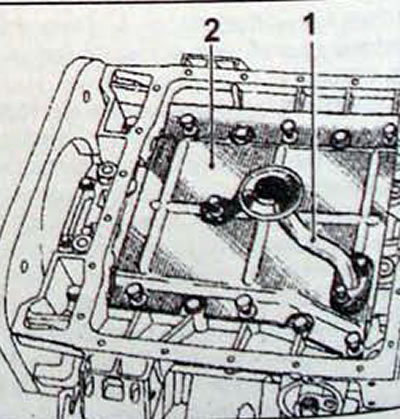
Fig. 2.51. Location of the oil intake tube (1) with a mesh filter and an oil deflector plate (2)
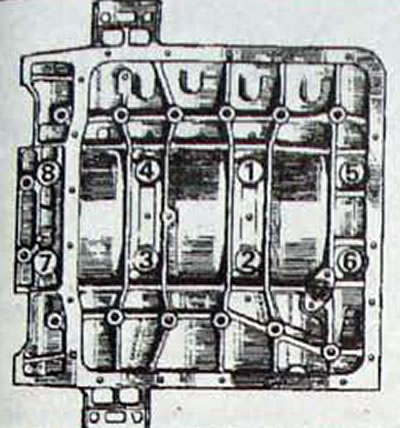
Fig. 2.52. Sequence of unscrewing the main bearing support bolts
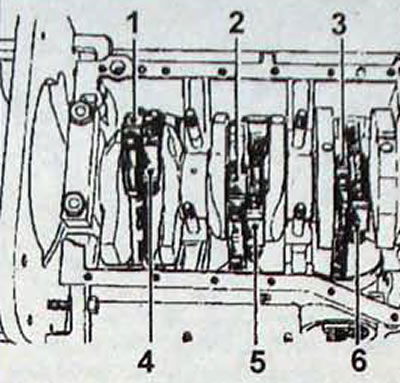
Fig. 2.53. Location and numbering of connecting rod caps
- Remove the oil pan, the mesh filter from the oil pickup tube and the oil deflector plate.
- In a certain sequence, reverse to tightening, unscrew the bolts and remove the main bearing support.
- To hold the crankshaft in place, fit two Renault Mot. 590 devices to the outer main bearing journals.
- Mark the connecting rods with numbers, starting from the flywheel side of the engine, so that their numbering is identical to the numbering of the cylinders (1-4-2-5-3-6).
- Unscrew the bolts securing the lower connecting rod caps and remove the caps together with the liners.
- Remove the clamping bar (renault Mot 588 device), fastening the cylinder liners.
- Remove the sleeves with pistons and take the pistons out of the sleeves.
- Remove 4 bolts securing the central main bearing caps.
- Check the main bearing caps for markings and remove them.
- Remove the crankshaft, thrust washers and bearing shells and arrange them in the order of removal.
Checking and repairing parts
- After disassembling the engine and cleaning all its parts from dirt and oil, they should be checked for signs of wear. For cleaning, use Decaploc 88 Framet and do not use tools with sharp edges or abrasive materials
- In cases where a part does not have a specified wear limit, a decision must be made as to whether the part should be replaced with a new one or is suitable for further use. Factors such as the expected service life of the engine, the required degree of reliability of the part, and the amount of disassembly and assembly work that will be required in the future when replacing it are taken into account.
- Make sure that the mating surfaces of the cylinder head and block are completely clean. Use a hard plastic or wooden scraper to clean them. Be careful when cleaning, as the aluminum alloy is very easy to damage. Make sure that carbon deposits do not get into the channels of the lubrication and cooling system. This is especially important for the lubrication system, as carbon deposits can block the supply of oil to engine parts. Clean the channels if necessary.
- Measure all control dimensions of pistons, crankshaft, cylinder liners, etc. (see "Technical Specifications").
- Check the condition of the connecting rod bearing shells. A sign of damage to the connecting rod bearings is a regular, rhythmic, loud knock from the crankshaft, the frequency of which depends on the engine crankshaft speed. This knock is especially noticeable when the engine is running under load. This sign is accompanied by a drop in oil pressure, although this is usually unnoticeable unless an oil pressure sensor is installed.
- Check the condition of the main bearing shells. Bearing shells in good condition have a smooth surface and a uniform matte silver color over the entire surface. Worn shells have areas of different colors where the metal has worn away and the backing has been exposed. Damaged shells have scratches or scoring. If the crankshaft itself is in good condition, then the problem can be easily solved by purchasing another set of shells of the same size. If the crankshaft is being re-ground or replaced, then the bearing shells must be replaced during this operation. Bearing failure can occur due to lack of lubrication, the presence of dirt or other foreign particles, engine overload, or corrosion. Regardless of the cause of bearing failure, the cause that caused the bearing failure must be eliminated before the engine is reassembled.
- When inspecting the bearings, remove them and arrange them in the same order as they were installed on the engine. This will help identify the corresponding crankshaft journal and make troubleshooting easier.
- Foreign particles can enter the engine in a variety of ways. Metal particles can be found in the engine oil as a result of normal engine wear. Small particles can enter the bearings along with the engine oil and easily become embedded in the soft bearing material. Large particles entering the bearing will scratch the bearing or crankshaft journal. The best way to prevent bearing failure due to this is to thoroughly clean all internal engine surfaces and keep them clean when assembling the engine. Frequent and regular oil changes with filter are also recommended
- Insufficient lubrication of the crankshaft journals can be caused by many different reasons, such as high oil temperatures, engine overload, and oil leaks.
- The driving style of the car also affects the durability of the bearing. A fully open throttle valve at low engine speeds creates a high load on the bearings and squeezes out the oil film from the contact zone. These loads lead to the appearance of cracks in the working part of the bearing, which weakens the bearing and can lead to the separation of the antifriction layer from the steel base
- Short-distance driving causes bearing corrosion because the engine does not reach a stabilized operating temperature, which removes water vapor and corrosive gases. These vapors and gases condense in the engine oil, forming acid and sediment. The acid gets to the bearings along with the engine oil, and bearing corrosion begins.
- Incorrect selection of bearings during engine assembly also leads to bearing failure. Bearings installed with preload leave insufficient bearing operating clearance, resulting in a reduced or absent oil layer for lubrication.
- Remove the piston rings from the pistons by carefully sliding them toward the top of the piston so as not to scratch the aluminum alloy. Never slide the rings toward the piston skirt. Piston rings are easily damaged if removed carelessly. Therefore, this operation must be performed with extreme caution. You can use old feeler gauges. Lift one edge of the piston ring that needs to be removed from the groove and insert the feeler gauge under it. Slowly move the feeler gauge around the piston and when the ring comes out of its groove, remove it upwards. The feeler gauge will keep the ring from slipping into an empty groove, if there is one.
- Check the condition of the pistons and connecting rods.
- Remove the connecting rod from the piston by removing one retaining ring and pressing out the piston pin.
- Check for marking marks on the connecting rods and lower connecting rod caps.
- If necessary, replace the connecting rod cap bolts and bushings in the upper connecting rod heads.
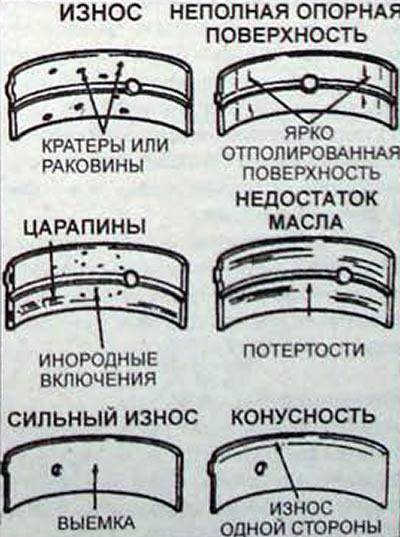
Fig. 2.54. Typical bearing defects
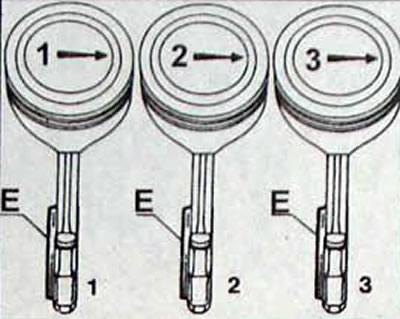
Fig. 2.55. Pistons 1, 2 and 3 of cylinders with a projection (E) shifted to the rear of the engine
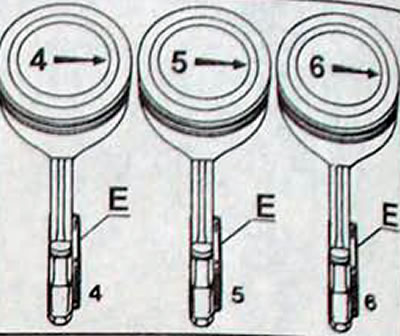
Fig. 2.56. Pistons 4, 5 and 6 with a protrusion (E) shifted towards the front of the engine
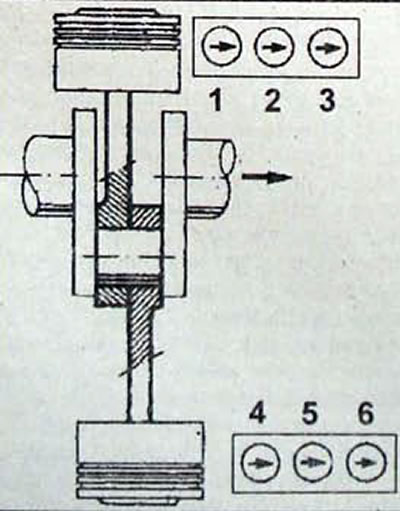
Fig. 2.57. Piston installation position
Assembly recommendations
- To achieve maximum engine life after a major overhaul with a minimum of problems, not only must all parts be assembled correctly, but all parts and components must be spotlessly clean, all lubrication passages must be clean, lock washers and spring washers must be installed in place. Bearings and other parts with sliding surfaces must be thoroughly lubricated during assembly.
- Before proceeding with assembly, replace with new bolts, studs and nuts, the threads of which are damaged. Also, replace with new spring washers.
- During installation, make sure that the parts are installed in their original places. Also check the direction of installation of the parts.
- The edges of the oil seals should be lubricated before installation.
- When installing gaskets, use sealant where required to prevent leakage
Assembling the piston and connecting rod
- When assembling the piston with the connecting rod, it is necessary that the protrusion on the lower head of the connecting rod is located only on a certain side of the piston. To comply with this, the arrow on the bottom of pistons 1, 2 and 3 cylinders should be directed in the direction opposite to the location of the protrusion on the lower head of the connecting rod and vice versa for pistons 4, 5 and 6 cylinders.
- Lubricate the piston pins with clean engine oil and install them into the piston and connecting rod.
- Secure the piston pins with retaining rings.
Selecting the thickness of the cylinder liner gasket
- Before installing the piston with the connecting rod into the cylinder liner, check the protrusion of the cylinder liners from the cylinder block.
- Install the liners without gaskets into the cylinder block. Using the support bar Mot. 252-01 and the stand with the pointer-type indicator Mot. 251-01, check the protrusion of each liners at points A and B (Fig. 2.58).
- To obtain the theoretical value of the shim thickness that must be installed under the liner, subtract the measured value from the recommended liner protrusion value
- Select a shim of the appropriate thickness or thinner (see shim thicknesses in the "Technical Specifications"). To ensure that the sleeve protrusion corresponds to the required values, shims of 4 different thicknesses are used, which are identified by color
- Remove the liners from the cylinder block and install a gasket of the appropriate thickness on each of them, making sure that the gasket recesses fit neatly into the groove.
- Install the sleeves so that the colored tabs of the lower seals are visible.
- The difference in the amount of protrusion of the cylinder liners from the cylinder block should not exceed 0.04 mm. In addition, the increase in protrusion should be directed in one direction.
- Once the correct projection is achieved, assemble new sets of parts A, B, C, D, E and F, then number the liners, pistons and piston pins 1 through 6 (starting from the flywheel side of the engine) so that the connecting rods are in their original place.
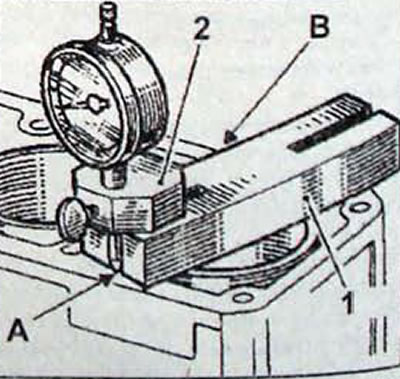
Fig. 2.58. Measuring the protrusion of the cylinder liners from the cylinder block: 1 - support bar Mot. 252-01; 2 - dial indicator Mo 251-01; A and B - points of measurement of the protrusions of the sleeve
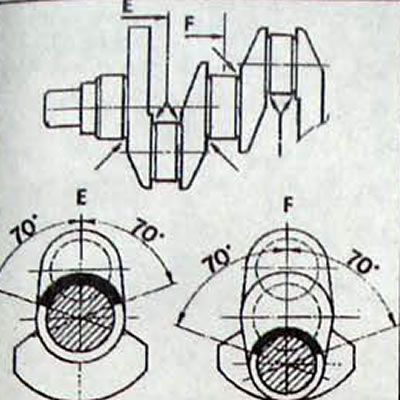
Fig. 2.59. Location of the 140° crankshaft area that cannot be reground (sections E and F are chosen as an example)
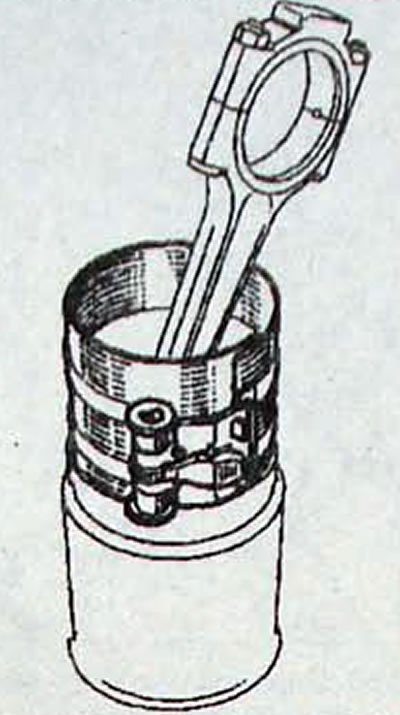
Fig. 2.60. Using a device to compress piston rings when installing a piston with a connecting rod into a cylinder liner
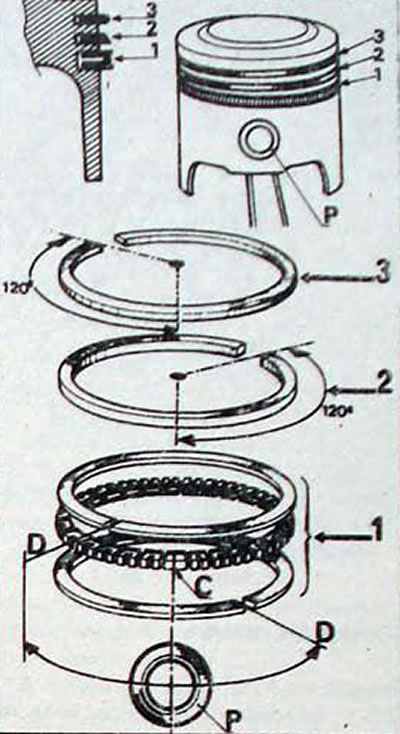
Fig. 2.61. Location of piston rings on the piston: 1 - oil scraper ring; 2 - second compression ring; 3 - first compression ring; C - ring lock; D - ring lock; P - piston pin
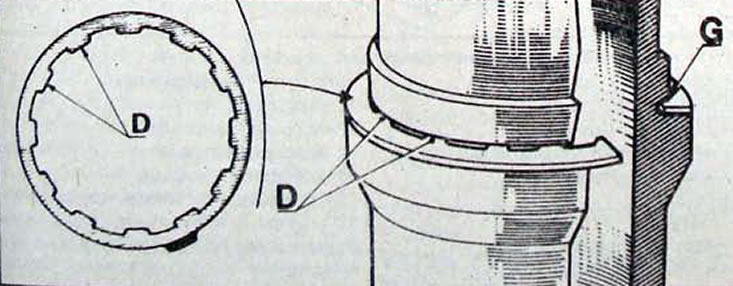
Fig. 2.62. Installing the gasket on the cylinder block liner, while the internal projections of the gasket (D) must enter the groove (G) of the cylinder liner
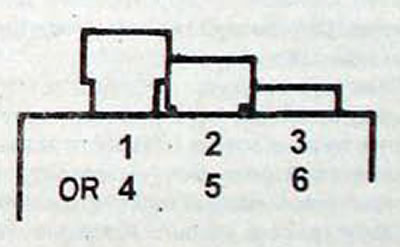
Fig. 2.63. Recommended location of cylinder liner protrusion
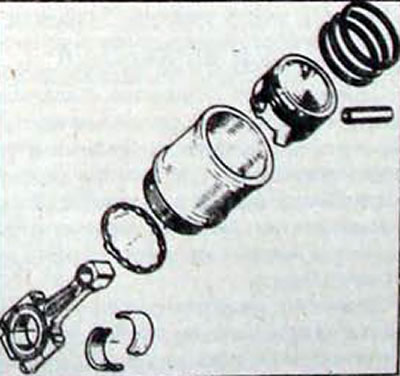
Fig. 2.64. Piston and cylinder liner parts
Crankshaft
The Z7X engines have two types of crankshafts, which differ in the piston stroke. The crankshaft for a piston stroke of 72.7 mm has two marks:
- hole (1, Fig. 2.65) on the counterweight on the flywheel side of the engine.
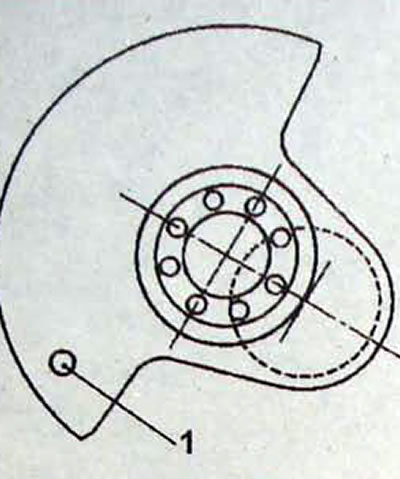
Fig. 2.65. Location of hole (1) on counterweight on flywheel side of Z7X engine for piston stroke 72.7 mm
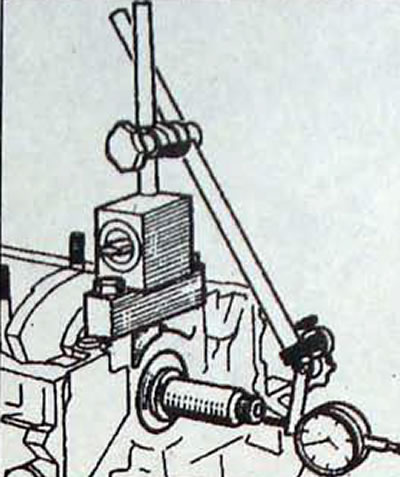
Fig. 2.66. Checking the axial play of the crankshaft
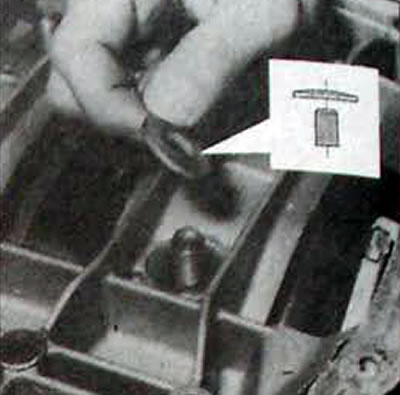
Fig. 2.67. Installing a special washer for the main bearing cap fastening nut with the convex surface facing the nut
- a dot applied in blue paint on the side of the gas distribution mechanism.
- Clean the crankshaft thoroughly.
- Inspect the main and connecting rod journals for signs of wear, scratches and nicks. Check the journals for ovality.
- Before reinstalling, the crankshaft must be thoroughly cleaned, including the internal oil passages. This can be done with a wire or compressed air. Then insert an oil can into the appropriate oil passages and squeeze oil into them. It should emerge from the next hole. Any blockage in the oil passage must be eliminated.
- Check the condition of the connecting rod bearings.
- Check the condition of the crankshaft journals that operate in contact with the sealing rings.
Engine assembly
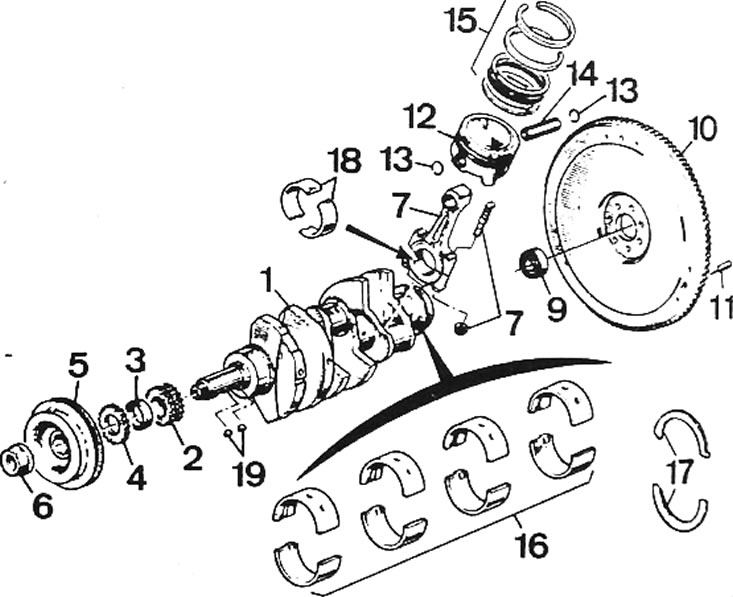
Fig. 2.68. Crankshaft, piston and connecting rod: 1 - crankshaft; 2 - leading sprocket; 3 - spacer sleeve; 4 - oil pump drive sprocket; 5 - crankshaft pulley; 6 - nut; 7 - connecting rod;8 - connecting rod mounting bolt; 9 - needle bearing; 10 - flywheel; 11 - Clutch pressure plate housing centering pin; 12 - piston; 13 - retaining ring; 14 - piston pin; 15 - piston rings; 16 - main bearing shells; 17 - thrust half rings limiting the axial movement of the crankshaft; 18 - connecting rod bearing shells; 19 - segment key
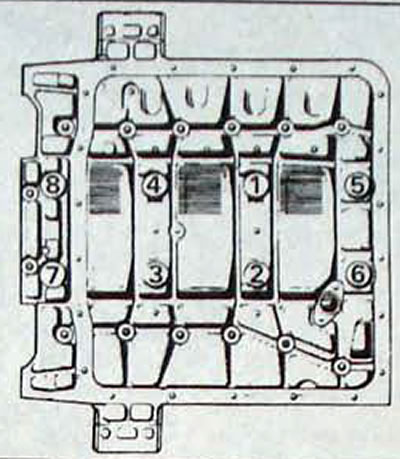
Fig. 2.69. Sequence of tightening the nuts securing the main bearing support
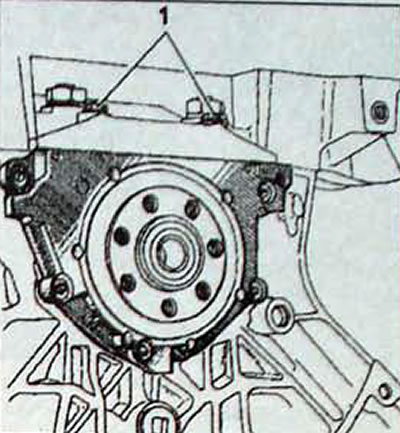
Fig. 2.70. Location of the two lower bolts (1) securing the rear cylinder block cover, which must be tightened first
Note: When installing moving engine parts, pre-lubricate them with clean engine oil.
- Turn the engine over.
- Wipe the outside of the main bearing shells and their mounting locations in the cylinder block. Insert the upper main bearing shells into the cylinder block without lubrication. Note that the upper shells have grooves. Check that the protrusion on each shell fits into the groove in the cylinder block.
- Clean the working surfaces of the main bearing shells and lubricate them with a thin layer of motor oil. Also lubricate the working surface of the crankshaft thrust half ring.
- When installing the thrust half rings, note that there are marks on the upper half rings. Install the upper thrust half rings with a thickness of 2.30 mm.
- Lubricate the crankshaft main bearing journals with oil and install the crankshaft into the cylinder block.
- Orient the front and rear main bearing caps with the protrusions toward the timing mechanism drive. Insert the main bearing shells into the caps without lubrication. Clean the working surfaces of the main bearing shells and lubricate them with a thin layer of engine oil.
- Fit the main bearing caps to tool Mot. 590 and tighten the cap mounting nuts to 30 Nm. Turn the crankshaft and check that it runs smoothly.
- Move the crankshaft along the axis and check its axial play. Crankshaft axial play: 0.07 - 0.27 mm.
- If the axial clearance of the crankshaft differs from the permissible value, install thrust half rings of a different thickness.
- Install the cylinder liner-piston-connecting rod unit of the 1st cylinder into the cylinder block, with the arrow on the piston pointing towards the timing drive.
- Install the connecting rod with the bearing shell onto the crankshaft journal.
- Install the connecting rod cap with the bearing shell and tighten the cap mounting nuts by hand
- Install the temporary sleeve retainer
- Install the cylinder liners-pistons-connecting rods of the remaining cylinders into the cylinder block in a similar manner.
- Using the previously applied marks, check the correct installation of the piston with the connecting rod, while the arrow on the piston should be directed towards the timing drive.
- Tighten the connecting rod cap nuts to the specified torque.
- Make sure the crankshaft rotates smoothly and without binding.
- Remove the front and rear crankshaft main bearing caps.
- Install the intermediate main bearing caps, with the protrusions on the caps facing the timing drive side.
- Install the rear cover with the rear crankshaft oil seal installed on the cylinder block and align the gasket at the level of the mating surface of the oil pan. Secure the cover with bolts, tightening them by hand.
- Install the oil pickup tube with a new gasket.
- Apply CAF 4/60 Thixo or Rhodorseal 5661 sealant to the oil pan mating surface.
- Install the oil pan.
Note: When installing the oil pan, make sure that its front plane is level with the front plane of the cylinder block (maximum deviation 0±0.25 mm), which will ensure good sealing of the timing cover.
- Lubricate and install special washers for the main bearing cap nuts with the convex surface facing the nut.
- Apply Loctite Frenetanche to the threads of the flywheel side support nuts and thread the nuts onto the bolts without fully tightening them.
- Using a pointer-type indicator mounted on the bracket, align the surfaces of the main bearing support and the cylinder block.
- Tighten the main bearing support nuts in a specific sequence.
- Tighten the rear cylinder block cover mounting bolts, starting with the lower bolts.
- Install the oil deflector plate, oil pickup tube strainer and new O-ring onto the oil pan.
- Install the oil pan.
- Turn the engine over and secure the crankshaft from turning.
- Secure the cylinder head guide bushings from moving by inserting steel rods into the side of the cylinder block.
- Install the cylinder head gasket.
- Check the position of the camshaft and make sure it is locked from turning.
- Install the front cylinder head with rocker arms onto the cylinder block and insert the head mounting bolts without tightening them.
- Tighten the cylinder head bolts in the specified sequence to a torque of 60 Nm.
- In the same sequence, loosen all bolts and tighten them to a torque of 40 Nm.
- In the same sequence, tighten the bolts by 180°.
- Install the rear cylinder head with rocker arms onto the cylinder block in a similar manner.
- Install the timing drive.
- Install the previously removed attachments onto the engine, using new gaskets when installing the manifolds.
- Install the engine in the vehicle and fill it with operating fluids.
- Start the engine and let it run for 15 minutes at a crankshaft speed of 2000 min⁻¹, then check for leaks.
- Cool the engine for 6 hours
- Tighten the cylinder head mounting bolts in a certain sequence by an angle of 50°. Due to this, additional tightening of the cylinder head mounting bolts is not required during operation.
Original of this article on the website www.renaultbook.ru