



Contents: Removal 🠛 Installation 🠛
Removal
- Removal and installation are carried out on a two- or four-post lift without removing the subframe
- When removing the power unit, it is necessary to use the following special tools:
- centering fork of the pendulum suspension travel limiter Mot. 1289-02;
- Pliers for elastic clamps Mot. 1202;
- keys for disconnecting the nipples of the power steering system pipes located on the steering gear Dir. 1282-01+02;
- punches for knocking out elastic pins Bvi. 31-01;
- ball joint puller Tav. 476;
- Also, when removing the power unit, it is necessary to use the following equipment:
- impact ball joint puller:
- wheel chocks;
- device for disconnecting refrigerant pipes NAUDER 7240 and 7242;
- universal adjustable supports.
- Removal of the power unit is carried out by lowering it down and requires preliminary removal of the front bumper and a set of cooling system elements.
- Place the vehicle on a two-post lift equipped with FOG wheel chocks.
- Use the charging station to discharge the refrigerant from the air conditioning system circuit.
- Remove:
- the battery and its tray;
- switch unit cover:
- air filter;
- front wheels;
- front bumper.
- Disconnect the connector from the automatic transmission control unit.
- To gain easier access to the engine control unit, remove the battery cover (together with the automatic transmission control unit).
- Remove:
- radiator lining (D. Fig. 2.38), extensions and grille of the radiator grille (C);
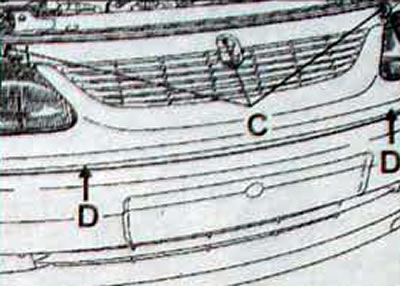
Fig. 2.38. Location of the screws for fastening the radiator grille (D) and radiator grille (C)
- wheel arch protective shields;
- protective shields under the engine.
- Remove the cooling system components kit by disconnecting the wiring harness connectors from the electric motors of the engine cooling system fan group, the three-function pressure switch of the air conditioning system and the thermal switch on the radiator
- Remove the wiring harness
- Unscrew the 4 screws securing the deflectors to the side member (Fig. 2.39).
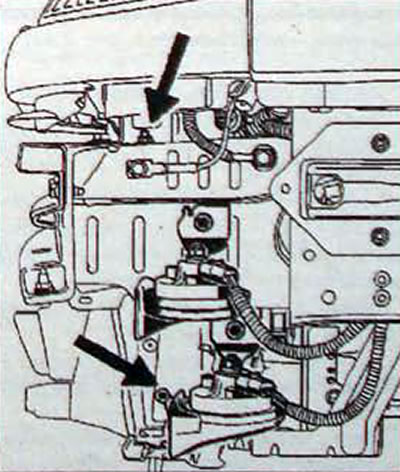
Fig. 2.39. Location of deflector mounting screws
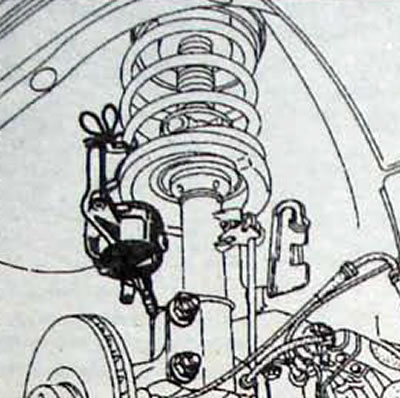
Fig. 2.40. Fastening the brake caliper to the front suspension spring
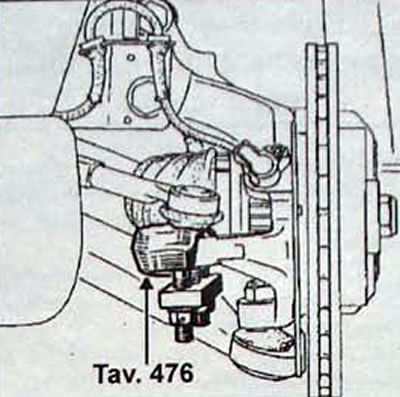
Fig. 2.41. Using the Tav. 476 puller to disconnect the tie rod end from the steering knuckle
- Attach the deflectors to the cooling system assembly.
- Drain the fluid from the engine cooling system.
- disconnect the upper radiator hose,
- move the lower radiator hose down towards the engine and plug the holes.
- Disconnect the air conditioning system lines from the receiver-drier (be sure to plug the holes).
Raise the car.
- Remove the cooling system components with two people (2 bolts under the ends of the side members).
- Partially drain the oil from the final drive housing.
- Remove the drive shafts with brake discs and steering knuckles as follows:
- remove the brake calipers and secure them to the suspension springs;
- disconnect the ABS sensors;
- unscrew the nuts of the bolts securing the lower shock absorber strut supports to the steering knuckle;
- disconnect the steering rod ends and lower step joints from the steering knuckles using the fav. 476 puller.
On the left side of the car.
- Unscrew the 3 bolts securing the corrugated protective cover of the drive shaft to the differential flange (Fig. 2.42). Remove the bolts securing the lower shock absorber strut to the steering knuckle and remove the drive shaft - steering knuckle - brake disc assembly (Fig. 2.43).
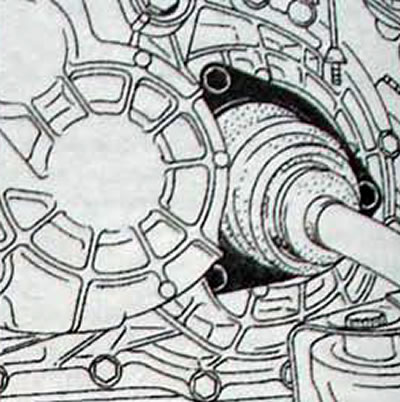
Fig. 2.42. Location of the bolts for fastening the corrugated cover of the drive shaft to the differential flange
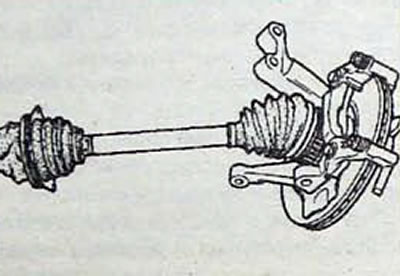
Fig. 2.43. Removing the drive shaft - steering knuckle - brake disc unit from the vehicle
On the right side of the car.
- Unscrew the 2 bolts securing the locking plate to the intermediate support (Fig. 2.44).
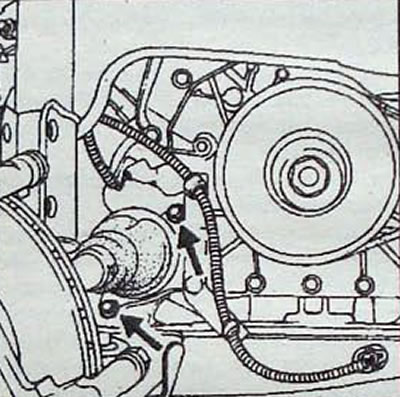
Fig. 2.44. Location of bolts for fastening the locking plate to the intermediate support
- Remove the drive shaft - steering knuckle - brake disc assembly. Protect the drive shaft protective bellows from damage.
- Remove the intake pipe of the exhaust system.
- Loosen the torque rod bolt and disconnect the ground bus from the gearbox.
- Drain the fluid from the power steering system and the heat exchanger located under the vehicle.
- Using the DIR 1282-01 tool, disconnect the power steering lines from the steering gear housing (liquid leakage is possible).
- Disconnect the speedometer connector from the transmission.
- Disconnect the air conditioning lines from the right engine mount.
- Remove the power steering fluid reservoir and place it on the engine.
- Disconnect the low pressure air conditioning hose from the front panel.
- Without cutting, remove the 3 plastic clamps securing the injection system control unit wiring harness to the front panel.
- Remove the automatic transmission control unit wiring harness holders and secure the harness to the engine
- Remove the air intake pipe together with the aluminum bracket.
- Remove the intake manifold cover.
On the left side of the car
- Disconnect the accelerator cable from the throttle valve by using a screwdriver to disconnect the accelerator cable holder fastener.
- Disconnect the power steering high pressure hose bracket above the automatic transmission control cable ball end.
- Remove the automatic transmission control cable by first disconnecting the ball joint and removing the cable sheath bushing from the mounting tab by moving it up and back towards the front shield (Fig. 2.45)
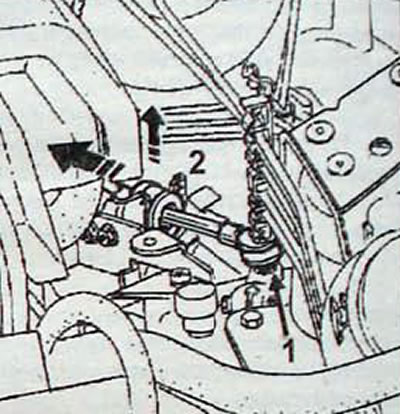
Fig. 2.45. Disconnecting the automatic transmission control cable: 1 - ball tip; 2 - directions for removing the cable sheath
- Disconnect the radiator hoses of the passenger compartment heating system from the engine (liquid leakage is possible)
Caution: If the quick release connectors are difficult to remove, first push the connector in while pressing the locking tabs before pulling. Avoid forming hard tubes on the front shield.
- Disconnect the absolute pressure sensor (1 tube + 1 connector) on the front panel (in the upper left part).
- Remove the expansion tank of the engine cooling system without disconnecting the hose and place the tank on
- Disconnect the vacuum hose from the brake booster (Fig. 2.46).
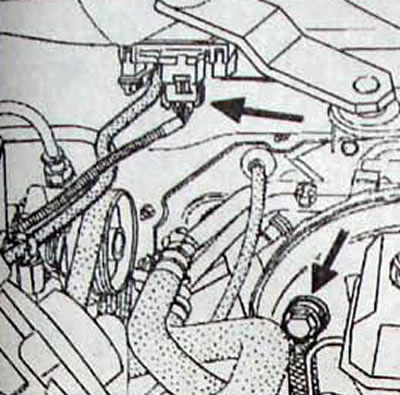
Fig. 2.46. Location of the absolute pressure sensor and the attachment points of the vacuum hose to the brake booster
- Disconnect the power steering low pressure hose from the hard tube on the dash panel.
- Disconnect the engine compartment wiring harness from the engine compartment switch.
On the right side of the car
- Disconnect the solenoid valve of the absorber and disconnect the absorber hose from the mount on the right engine pendulum support.
- Remove the fuel line retainer from the cylinder head.
- Disconnect the fuel lines.
From below the car
- Disconnect the connector from the oxygen concentration sensor.
- Prepare the pipes and wiring for easy removal of the power unit.
- Install the removal tool and carefully lift the vehicle until the powertrain is suspended (do it together).
- Remove the right engine swingarm mount bracket.
- Loosen the bolts securing the left engine pendulum mount.
- Free the engine from the mounts.
- Lower the power unit down while simultaneously moving it forward a few centimeters.
- Pay attention to the automatic transmission control cable when removing the power unit. Do not allow the cable to be pinched or damaged between the rear cylinder head and the right subframe beam in area A, Fig. 2.47.
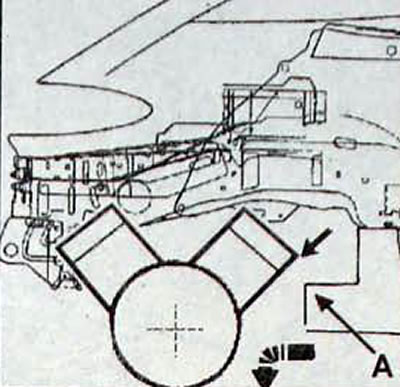
Fig. 2.47. Directions of movement when removing the power unit: A - right subframe beam
Installation
- Installation is carried out in the reverse order of removal.
- Using tool Mot. 1289-C2, adjust the position of the travel limiter of the right engine pendulum mount (Fig. 2.48).
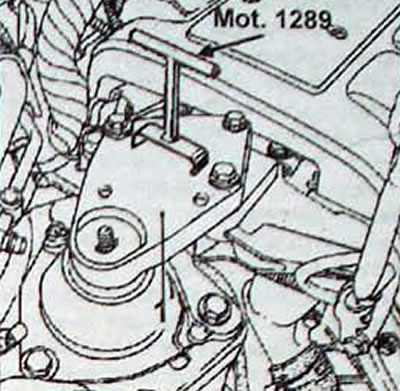
Fig. 2.48. Using tool Mot 1289—02 to adjust the position of the right engine pendulum mount travel limiter (1)
- Perform:
- filling the main gear housing with oil;
- filling the engine with oil;
- filling the power steering system;
- filling and removing air from the engine cooling system;
- filling the air conditioning system.
- Adjust the accelerator cable.
- Tighten the spring-loaded bolts of the exhaust system inlet pipe flange clamps (Fig. 2.49).
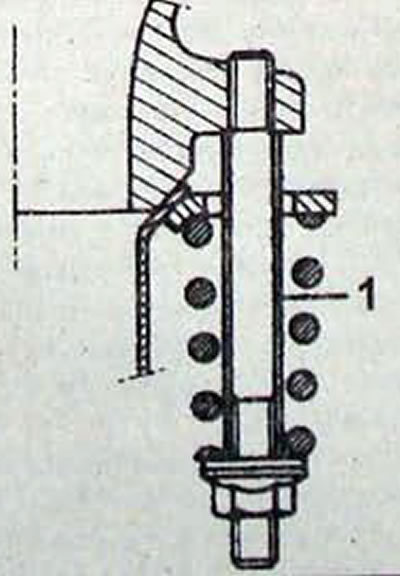
Fig. 2.49. Bolt (1) of the clamp for fastening the flange of the exhaust system inlet pipe
Attention: Tighten the bolts until they stop.
- Press the brake pedal several times until the pistons of the wheel brake cylinders come into contact with the brake pads.
Caution: Do not forget to set the parameters "Pedal pressed" and "Pedal released" to reprogram the load potentiometer operating parameters in the automatic transmission control unit.