English Русский
Български
Беларускі
Український
Српски
Hrvatski
Română
Polski
Slovenský
Magyar
Bookmark Contacts Articles Sitemap
Company vehicles Peugeot Company vehicles Opel Company vehicles Skoda Company vehicles Land Rover Company vehicles Mitsubishi Company vehicles Volkswagen Company vehicles Honda
RenaultBook.ru


Duster   Fluence   Kangoo   Laguna   Logan   Megane   Sandero   Scenic   Symbol   Clio   Other
Logan 1 (2004-2012, petrol) Logan 2 (2012-2020)

Checking the engine fuel system (Renault Logan 1)

  • Main
  • Logan
  • Logan 1 (2004-2012, petrol)
  • General information
  • Faults en route
  • Checking the engine fuel system
0
The main indicator of the engine fuel system health is the fuel pressure in the fuel rail. But first, we recommend checking the condition of the air filter (see "Replacing the air filter element"), as this procedure is simple and does not take much time. After you make sure that the air filter is clean, check the reliability of the electrical contacts in the wiring harness pads of the injection system units responsible for fuel supply (electric fuel pump, injectors).

The main indicator of the engine fuel system health is the fuel pressure in the fuel rail. But…


Checking the fuel pressure in the engine fuel rail is only possible if you have a pressure gauge with a set of adapters for connection to the fuel line.

1. Turn on the ignition and listen: within a few seconds you should hear the sound of the electric fuel pump. If you do not hear it, check the electric fuel pump power circuit.

Attention! Keep in mind that the electric fuel pump does not turn on if there is pressure in the fuel supply system. In other words, if you previously turned on the ignition and tried to start the engine, then a working electric fuel pump should have created pressure in the system and its failure to turn on in this case is not a malfunction.


2. The fuel pressure check procedure is described in Section 5 "Engine" (cm. "Checking the pressure in the engine fuel system"). When the engine is idling, the pressure in the fuel line should be about 3 kgf/cm² (approximately 2.65 kgf/cm²).

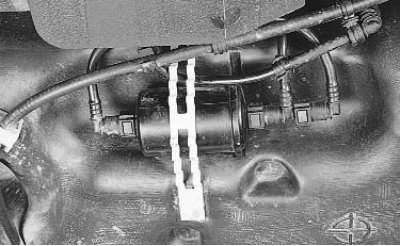
The following are possible reasons for the decrease in pressure:
The following are possible reasons for the decrease in pressure:

  • clogged fuel filter;

clogged fuel filter;

  • faulty fuel pump. The fuel pump module has a built-in fuel pressure regulator, so the cause of the drop in fuel pressure, in addition to the malfunction of the pump itself, may also be a malfunction of the regulator. In both cases, the fuel pump must be removed from the car for repair.

You will find methods for troubleshooting these problems in the section. "Engine" (cm. "Power supply system").
This article is available on: russian, bulgarian, belarusian, ukrainian, serbian, croatian, romanian, polish, slovak, hungarian
Article has been reviewed by editor: Podkrepilov Maxim
Share with friends:
Previous
Logan 1: Faults en route
Next

Checking the ignition system
Malfunctions in the starting system
General techniques for starting an engine
Fuel injection system faults
Idle speed is gone
Engine misfires
Engine diagnostics by the appearance of spark plugs
The car moves in jerks
Other articles on other Renault models

➽ Checking the pressure in the engine fuel system Renault Sandero 1 (2007-2012, petrol)
➽ Checking fuel pressure (K4M engine) Renault Duster 1 (2009-2017)
➽ Technical characteristics of engines for diagnostic procedures… Renault Fluence 1 (2009-2020, petrol)
➽ Checking the fuel pressure regulator (F4R engine) Renault Laguna 2 (2001-2007)
➽ Checking and replacing components of the gasoline engine… Renault Megane 1 (1995-2002)
Link to this article in different formats
Reviews and comments of visitors
No comments yet


Add two numbers 11 + 39


Logan 2 (2012-2020) 
  • General information
  • Faults en route
  • Daily checks
  • Governing bodies
  • Maintenance
  • Power unit
  • Petrol engines 1.2 l
  • Petrol engines 1.6 l
  • Diesel engines 1.5 l
  • Cooling system
  • Lubrication system
  • Power and control system
  • Intake and exhaust system
  • Engine electrical equipment
  • Transmission
  • Clutch
  • Car gearbox
  • Drive shafts
  • Chassis, running gear
  • Suspension and wheels
  • Brake system
  • Steering
  • Body and interior
  • Exterior (external elements)
  • Interior (internal elements)
  • Safety system
  • Heating and air conditioning
  • Electrical equipment
  • Equipment and devices
  • Wiring diagrams (sedan)
  • Wiring diagrams (wagon)
Logan 1 (2004-2012, petrol) 
  • General information
  • Vehicle device
  • User manual
  • Faults en route
  • Daily maintenance
  • First maintenance
  • Second maintenance
  • Driver tips
  • Power unit
  • Engine repair
  • Lubrication system
  • Cooling system
  • Power and exhaust system
  • Transmission
  • Clutch
  • Car gearbox
  • Drive shafts
  • Chassis, running gear
  • Front suspension
  • Rear suspension
  • Steering
  • Brake system
  • Wheels and tires
  • Body and interior
  • Exterior (external elements)
  • Interior (internal elements)
  • Doors, locks and windows
  • Body Care
  • Electrical equipment
  • Equipment and devices
  • Headlights and lighting
  • Power devices
  • Electrical circuits
RenaultBook.ru © 2018–2026 | Mobile version | News and articles | Sitemap: EN BG BY UA RS HR RO PL SK HU | Administration | Site search | Bookmark
Duster 1 (2009-2017) | Fluence 1 (2009-2020, petrol) | Kangoo 1 (1997-2007) | Laguna 2 (2001-2007) | Logan 1 (2004-2012, petrol) | Logan 2 (2012-2020) | Megane 1 (1995-2002) | Megan 2 (2002-2009, petrol) | Sandero 1 (2007-2012, petrol) | Scenic 1 (1996-2003) | Symbol 1 (1999-2008, petrol) | Symbol 2 (2008-2013, petrol) | Renault 19 (1988-1996) | Espace I and II (1984-1996) | Espace III (1996-2002) | Clio 1 (1990-1998) |
We want your visit to be comfortable 😌 and use cookies 🍪 to do so.