



2. Loosen the lower ball joint nut in the steering knuckle until it touches the drive shaft housing (see illustration). Now carefully continue tightening the nut until the ball bolt comes out of the mount.
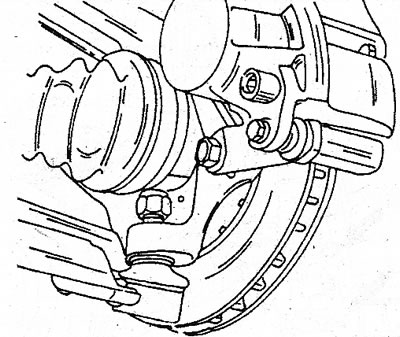
12.2 Removing the lower ball joint from the steering knuckle. Loosen the nut from the axle shaft housing until the joint is free. This will damage the nut
3. On first generation vehicles, before unscrewing the wishbone joint bolts, remove the nut (1) (see illustration). Carefully remove the bolts (do not damage the threads). Remove the independent wheel suspension arm in the manner shown by pressing it down.
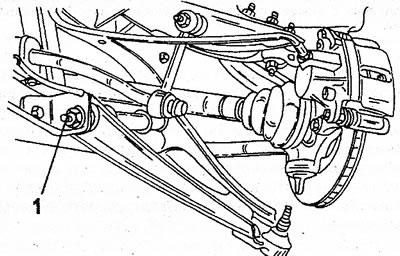
12.3 Fastening the lower wishbone when a nut (1) is used to secure the hinge bolt
4. For second generation vehicles, unscrew the hinge bolt at the front and then unscrew the nuts and mounting bolts from the rear of the body. Remove the wishbone as shown in Illustration 12.3.
Note: The camber adjusting washer is mounted on the rear end of the hinge bolt. It must be retained and reinstalled.
5. Install in the reverse order. Lubricate the hinge bolt with graphite grease. With the mounting method shown in Illustration 12.3, the bolt is driven in from the front. On second-generation vehicles, the front hinge bolt with nut and both bolts (see illustration) are installed from the back side. For now, tighten all nuts and bolts with your fingers so that they can be tightened later according to the instructions.
(Material is located on the source website RenaultBook.ru)
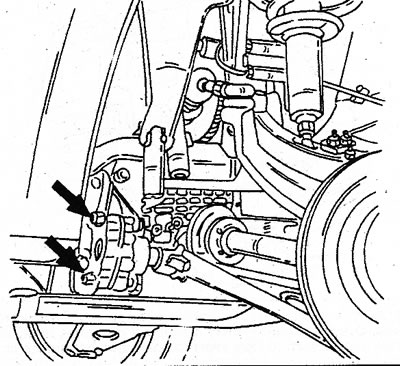
12.5 The arrows indicate the mounting of the transverse suspension arm on the bottom side of the second generation vehicle
Note: Differences for first generation vehicles. The tightening torque of the hinge bolt nut was 90 Nm until January 1988. Since January 1988, the tightening torque has increased to 130 Nm.