



Note: This procedure requires a winch. On models with an aluminum pan (usually the K7M engine), the engine and transmission assembly must be completely removed from the engine compartment.
Engine E7J
Removal
1 Disconnect the ground cable from the battery.
Warning: If the car radio in your car is coded, make sure you know the code before disconnecting the battery.
2. Drain the engine oil as described in Chapter Maintenance, then install and tighten using a new washer.
3. Jack up the front of the car and place it on axle stands. Remove the right front wheel.
4. Remove the exhaust pipe and catalytic converter as described in Chapter Suspension and steering.
5. Disconnect the tie rod end from the control arm on the steering knuckle as described in Chapter Suspension and steering.
6. Unscrew the upper bolt securing the right suspension strut to the steering knuckle. Note that there are grooves on the edge of the bolt head, and the bolt must be knocked out after unscrewing the nut.
7. Loosen only the lower bolt securing the strut to the steering knuckle.
8. Using a suitable drift, tap out the roll pin securing the right drive shaft to the transmission output shaft. Tilt the steering knuckle while you work the drive shaft out of the slots in the output shaft. Tie the drive shaft to the steering gear.
9. Remove the engine mounting bolts from the transmission bracket/flywheel cover.
10. Remove the two nuts securing the front engine mounts to the subframe and remove the spacer from the right mount.
11. At the rear of the engine, loosen and remove the nuts on the bolts securing the rear engine mount bracket to the transmission and the nuts on the rear mount pinch bolts. Do not remove the bolts at this stage.
12. Remove the air filter as described in Chapter Power supply and exhaust systems.
13. Attach the winch to the engine using the mounting eyes. Alternatively, use a support beam located across the engine compartment.
14. Disconnect the carbon canister hose from the solenoid valve on the intake manifold.
15. Disconnect the fuel supply and return hoses from the intake manifold and frame side.
16. Unscrew the power steering reservoir and move it to the side. Do not disconnect the hoses.
17. Disconnect the speedometer sensor from the transmission by sliding the mounting bracket.
18. Carefully lift the engine and transmission assembly so that the rear mount and bracket bolts can be removed.
19. Continue raising the assembly until the power steering lines can be disconnected from the holders on the subframe.
20. Raise the assembly until the gap between the lower edge of the cylinder block and the subframe is 25 cm.
Caution: Make sure the engine/transmission assembly is securely supported before removing the oil pan.
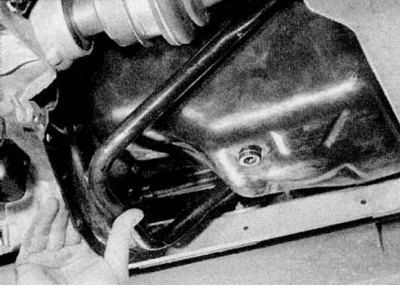
21. Remove the engine mount bolts to the transmission bracket/flywheel cover under the oil pan, then remove the oil pan to engine block bolts, but leave the two diagonally opposite bolts in place until you have separated the oil pan from the engine block (refer to the accompanying illustration).
22. Using a spatula, separate the pan from the base of the cylinder block. Do not use a screwdriver, as it may damage the contact surfaces.
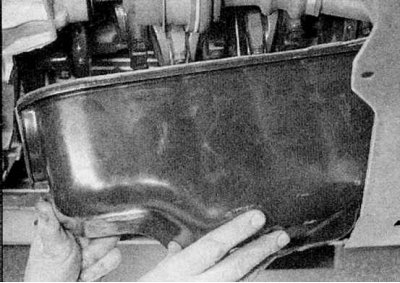
23. Remove the two remaining bolts and lower the pan. First you need to lower it, then move it towards the transmission and remove it (refer to the accompanying illustration).
24. Remove the rubber seals from the grooves in the right and left crankshaft main bearing caps, or from the curved parts at the ends of the oil pan. Clean the cylinder block and oil pan from sealant and wipe them dry.
Installation
1. Apply a 3mm wide bead of sealant to the mating surfaces of the sump, making sure to go around all the bolt holes. Renault recommends Rhodorseal 5661.
2. Place new rubber seals in the grooves in the right and left crankshaft main bearing caps. Note that the strips are different.
3. Place the pan on the cylinder block and insert the bolts. Gradually tighten the bolts in a diagonal sequence to the torque shown in Specifications effort.
4. Lower the engine/transmission assembly enough to allow the power steering lines to be attached to the holders on the subframe.
5. Lower the assembly and install the rear mount bolts and bracket. Position the front mount posts in the subframe and lower the assembly completely. Disconnect the winch from the engine.
6. Install the nuts on the front and rear support bolts and tighten them to the specified torque Specifications effort.
7. Install the speedometer sensor on the transmission and secure it with the bracket.
8. Install the power steering reservoir and tighten the bolts.
9. Connect the fuel supply and return hoses to the intake manifold and the side of the frame.
10. Connect the carbon canister hose to the intake manifold.
11. Install the air filter as described in Chapter Power supply and exhaust systems.
12. Install and tighten the engine to transmission bracket/flywheel cover bolts.
13. Position the right drive shaft against the transmission output shaft so that the roll pin holes are properly aligned. Move the drive shaft while pushing the steering knuckle. Drive the outer portion of the roll pin into place using a suitable drift, then drive in the inner portion. Seal both ends of the roll pin with a suitable sealant to prevent water and dirt from entering.
14. Insert the upper bolt securing the right suspension strut to the steering knuckle, then tighten the upper and lower nuts to the specifications shown Specifications force. The bolt heads should face the front of the vehicle.
15. Install the tie rod end onto the steering knuckle arm, following the description in Chapter Suspension and steering.
16. Install the exhaust pipe and catalytic converter as described in Chapter Power supply and exhaust systems.
17. Install the right front wheel and lower the vehicle to the ground.
18. Fill the engine with oil as described in Chapter Maintenance.
19. Connect the ground cable to the battery.
K7M engine with stamped steel sump
Removal
1 Disconnect the ground cable from the battery.
Warning: If the car radio in your car is coded, make sure you know the code before disconnecting the battery.
2. Drain the engine oil as described in Chapter Maintenance, then install and tighten the drain plug using a new washer.
3. Jack up the front of the car and place it on axle stands. Remove both front wheels.
4. Drain the cooling system as described in Chapter Maintenance.
5. Loosen the clamp and disconnect the upper radiator hose from the thermostat housing.
6. Remove the brackets and screws and remove the right front wheel arch liners
7. Disconnect the oxygen sensor wiring, then remove the catalytic converter and the front downpipe/converter as described in Chapter Power supply and exhaust systems.
8. Mark the position of the main selector shaft on the front fork in the transmission, then loosen the pinch bolt and separate the two parts of the shaft.
9. Disconnect the tie rod end from the left steering knuckle arm as described in Chapter Suspension and steering.
10. Remove the three bolts securing the left drive shaft inner boot to the transmission.
11. Unscrew both bolts securing the left suspension strut to the steering knuckle. Note that there are grooves on the edge of the bolt head, and the bolt must be knocked out after unscrewing the nut.
12. Carefully separate the left drive shaft inner joint from the transmission. Tie the drive shaft aside.
13. Remove the upper bolt securing the right suspension strut to the steering knuckle. Note that the bolt head has grooves, and after removing the nut, the bolt must be knocked out.
14. Loosen up (don't take it off) the lower bolt that secures the strut to the steering knuckle.
15. Using a suitable drift, tap out the roll pin securing the right drive shaft to the transmission output shaft. Tilt the steering knuckle while you work the drive shaft out of the slots in the output shaft. Tie the drive shaft to the steering gear.
16. Remove the engine mounting bolts from the transmission bracket/flywheel cover.
17. At the front of the subframe, remove the nuts from the front engine mounts and remove the plate from the right mount.
18. At the rear of the engine, loosen and remove the nuts from the bolts securing the rear engine mount bracket to the transmission and the rear mount pinch bolt nuts. Do not remove the bolts at this stage.
19. Loosen the bolts and remove the reinforcing rod between the front suspension strut domes.
20. Unscrew the ground cable from the right side of the bulkhead.
21. Remove the spring clip and remove the speedometer sensor from the rear of the transmission.
22. Remove the bolts or separate the power steering reservoir from the engine and place it on the engine. Disconnect the brake booster hose from the intake manifold.
23. Disconnect the carbon canister hose from the intake manifold.
24. Where necessary, disconnect the crankcase ventilation hose.
25. Disconnect the wiring from the throttle potentiometer.
26. Disconnect the fuel supply and return hoses from the fuel pressure regulator and the fuel rail. Refer to Chapter Power supply and exhaust systems, if necessary.
27. Attach a winch to the engine and transmission assembly and lift the engine slightly.
28. Where applicable, release the clutch cable in the engine compartment.
29. Carefully lift the engine and transmission assembly enough to allow the rear mount and bracket bolts to be removed.
30. Continue raising the assembly until the power steering lines can be released from the holders on the subframe.
31. Raise the assembly until there is a 26 cm gap between the bottom edge of the engine block and the subframe. Make sure that the engine wiring is not pinched between the transmission and the frame side.
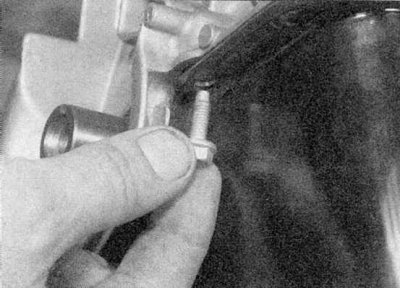
32. Remove the bolts securing the oil pan to the cylinder block, but leave the two diagonally opposite bolts in place until the oil pan is separated (refer to the accompanying illustration).
33. Using a spatula, separate the pan from the base of the cylinder block. Do not use a screwdriver, as it may damage the contact surfaces.
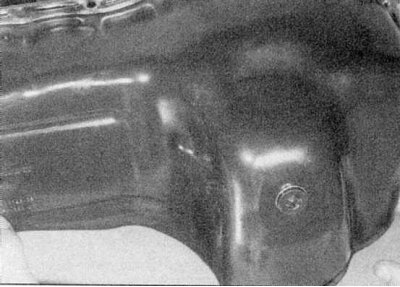
34. Remove the two remaining bolts and lower the pan. First, lower it, then move it toward the transmission and remove it (refer to the accompanying illustration).
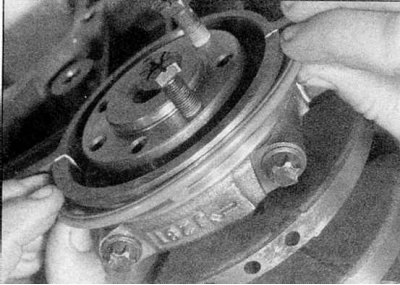
35. Remove the rubber seals from the grooves in the left main bearing caps.
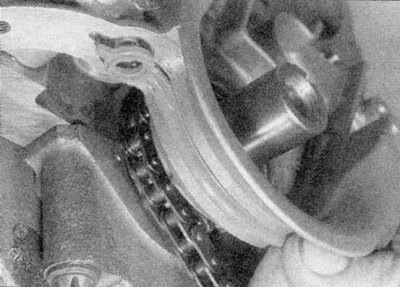
36. Remove the rubber seals from the grooves in the right main bearing caps of the crankshaft or from the curved parts at the ends of the pan. Clean the cylinder block and pan from sealant and wipe them dry (refer to the illustrations).
Installation
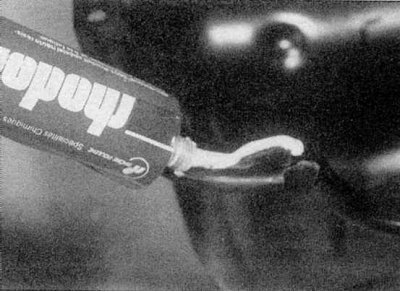
1. Apply a 3mm wide coat of sealant to the mating surfaces of the sump, making sure to go around all the bolt holes. Renault recommends Rhodorseal 5661 (see illustration).
2. Place new rubber seals in the grooves in the right and left crankshaft main bearing caps. Note that the strips are different.
3. Place the pan on the cylinder block and insert the bolts. Gradually tighten the bolts in a diagonal sequence to the torque shown in Specifications effort.
4. Lower the engine/transmission assembly enough to allow the power steering lines to be attached to the holders on the subframe.
5. Lower the assembly and install the rear mount bolts and bracket. Position the front mount posts in the subframe and lower the assembly completely. Disconnect the winch from the engine.
6. Install the nuts on the front and rear support bolts and tighten them to the specified torque Specifications effort.
7. Where necessary, secure the clutch cable in the engine compartment.
8. Connect the fuel supply and return hoses to the fuel pressure regulator and fuel rail and tighten the clamps.
9. Connect the wiring to the throttle potentiometer.
10. Connect the crankcase ventilation hose.
11. Connect the carbon canister hose and brake booster hose to the intake manifold and tighten the clamps.
12. Install the power steering hydraulic system bull and tighten the bolts.
13. Install the speedometer sensor on the transmission and secure it with the bracket.
14. Secure the ground cable to the right side of the bulkhead.
15. Install the reinforcement rod onto the strut domes and tighten the bolts.
16. Install the nuts on the front and rear support bolts and tighten them to the specified tightening torque Specifications.
17. Install and tighten the engine to transmission bracket/flywheel cover bolts.
18. Position the right drive shaft against the transmission output shaft so that the roll pin holes are properly aligned. Move the drive shaft and push the steering knuckle at the same time. Drive the outer portion of the roll pin into place with a suitable drift, then drive in the inner portion. Seal both ends of the roll pin with a suitable sealant to prevent water and dirt from entering.
19. Insert the upper bolt securing the right suspension strut to the steering knuckle, then tighten the upper and lower nuts to the specifications shown Specifications force. The bolt heads should face the front of the vehicle.
20. Position the left drive shaft inner joint against the transmission, then install the bolts securing the left suspension strut to the steering knuckle. The bolt heads should face the front of the vehicle. Tighten the nuts to the specified torque Specifications effort.
21. Install the three bolts securing the left drive shaft inner boot to the transmission and tighten to the specified torque Specifications effort.
22. Install the tie rod end onto the steering knuckle arm, following the description in Chapter Suspension and steering.
23. Install the main gear selector shaft on the front fork in the transmission, then tighten the pinch bolt to the specified Specifications effort.
24. Install the catalytic converter and exhaust pipe as described in Chapter Power supply and exhaust systems and connect the oxygen sensor wiring.
25. Install the right front wheel arch liners.
26. Connect the upper hose to the thermostat housing.
27. Install the front wheels and lower the vehicle to the ground.
28. Connect the ground cable to the battery.
29. Fill the engine with oil (refer to Chapter Maintenance).
Material taken from an online portal www.RENAULTBOOK.ru
30.Fill the cooling system (refer to Chapter Maintenance).
K7M engine with aluminum sump
Removal
1. Remove the engine and transmission assembly from the vehicle.
2. Loosen the bolts securing the oil pan to the side of the cylinders and separate the oil pan from the base of the cylinder block. Do not use a screwdriver as this may damage the contact surfaces.
3. Remove the oil pan, then remove the rubber seals from the grooves in the right and left crankshaft main bearing caps, or from the curved portions at each end of the oil pan. Clean the cylinder block and oil pan of sealant and wipe them dry.
Installation
1. Apply a 3mm wide bead of sealant to the mating surfaces of the sump, making sure to go around all the bolt holes. Renault recommends Rhodorseal 5661.
2. Place new rubber seals in the grooves in the right and left crankshaft main bearing caps. Note that the strips are different.
3. Place the pan on the cylinder block and insert the bolts. Gradually tighten the bolts in a diagonal sequence to the torque shown in Specifications effort.
4. Install the engine/transmission assembly into the vehicle.