



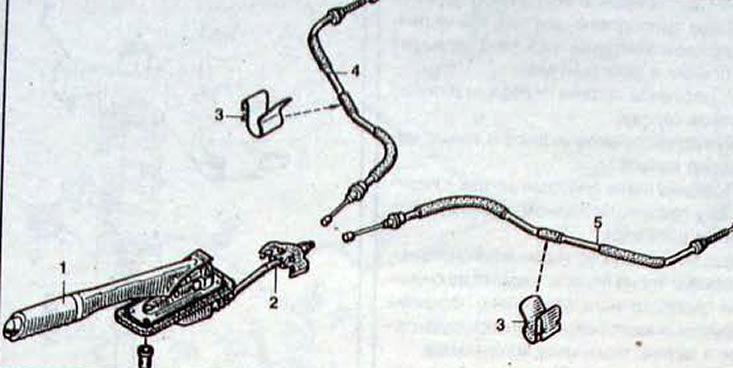
Fig. 12.23. Parking brake: 1 - lever; 2 - main cable;3 - clamp; 4 - right rear cable; 5 - left rear cable
- Incorrect adjustment of the parking brake, where the cable is too tight, prevents the automatic brake pad wear compensation device from working properly and results in increased brake pedal travel.
- To eliminate this malfunction, do not tighten the cables under any circumstances, as the malfunction will soon reappear. The parking brake is not designed to compensate for the gap between the brake shoes and the drum (disk). It is adjusted only when replacing the brake shoes, cables or drive lever.
- Place the vehicle on a lift supported by the body, loosen the nut until the central adjuster is completely released.
Cars with rear drum brakes
- Remove the rear wheels and brake drums.
- Rotate the ratchet wheel to ensure that the wheel rotates freely in both directions and check the operation of the automatic compensation device, then turn it back 5-6 teeth.
- Make sure the cables move freely and the levers are in the correct position (C, Fig. 12.24) parking brake drive on brake shoes.
- Gradually tighten the cables in the area of the compensator so that the levers (C) begin to move when the parking brake drive lever is set to the position between the first and second teeth of the sector and remain free when the drive lever is set to the second tooth of the sector
- Install the brake drums and wheels.
- Bring the brake pads into working position by pressing the brake pedal several times with force. You should hear clicks from the ratchet wheel of the automatic wear compensation device.
- Check the full travel of the parking brake drive lever, which should be no more than 8-10 teeth per sector.
Cars with rear disc brakes
- Remove the rear wheels
- Make sure that the cables and the manual brake shoe levers move freely and move them to the lowest position. Gradually tighten the cables in the compensator area until the end of the parking brake cable contacts the manual brake shoe lever without causing the latter to move.
- Fine-tune the adjustment so that the levers (Fig. 25) began to move when the parking brake drive lever was installed between the first and second teeth of the sector and remained free when the lever was installed on the second tooth of the sector.
- Install the wheels.
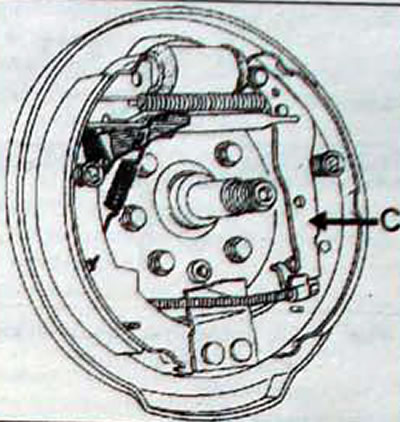
Fig. 12.24. Correct positioning of the parking brake actuator lever (C) on the brake shoe
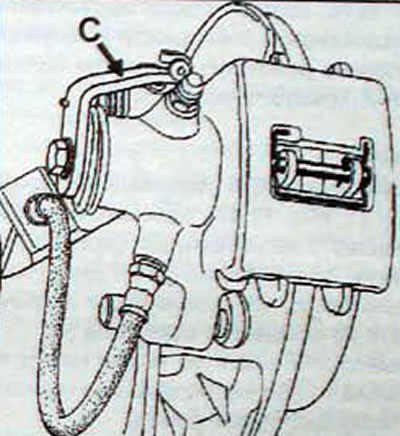
Fig. 12.25. Location of the parking brake lever (C) on vehicles with rear disc brakes
The text is available on this website: renaultbook.ru