



Visual inspection of pad thickness
Check the thickness of the pads. To do this, lift the car, remove the wheel and look through the inspection hole in the cylinder body.
Minimum thickness of brake pads: 1 mm.
Wear limit: 2.0 mm.
Removal
Place the vehicle on a two-post lift.
Remove the rear wheels.
Disconnect the parking brake cables from the holders.
Unscrew the bolts securing the lower guide pins of the brackets.
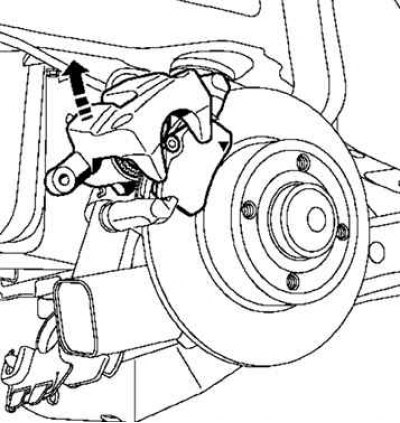
Fig. 6.70. Turning the brake calipers
Turn the brake calipers upward (Fig. 6.70).
Remove the brake pads.
Check the condition of the brake system components (replace damaged parts).
Clean the shoe guides and brackets.
Installation
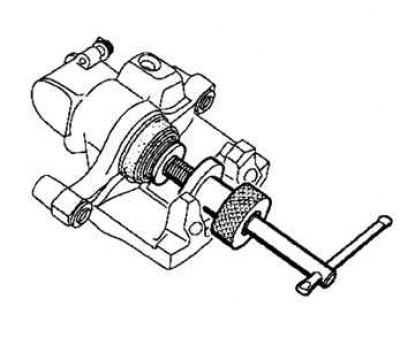
Fig. 6.71. Installing the piston inside the cylinder using a special device
Move the piston into the cylinder until it stops using a special tool (Fre. 1190-01) (Fig. 6.71).
Install new brake pads.
Tighten the guide pin mounting bolts.
Note: Apply FRENBLOC to the threads of the guide pins (or its equivalent) before installing them.
Tighten the lower bracket guide pin mounting bolts to the specified torque of 36 N·m.
Install the parking brake cables.
Note: Press the brake pedal several times to set the pistons to the working position.
Note: Pull the parking brake actuator handle several times to activate the parking brake system and the automatic brake pad wear compensation device.
Install the wheels.
Tighten the wheel bolts to the specified torque of 105 Nm.