



2. Insert the bearing shells into their places in the connecting rods and caps. Make sure the mounting tabs enter the slots in the connecting rods.
Petrol engine E7J
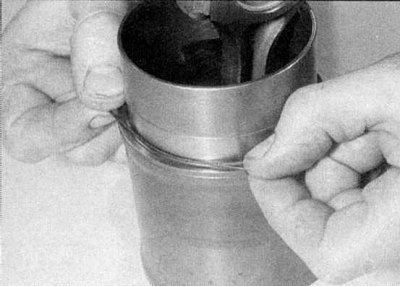
1. Lay out the four sleeves in the order they are to be installed, with the working surface facing down. Install the O-rings into the base of each sleeve (refer to the accompanying illustration).
2. Lubricate the pistons and piston rings, then install each piston/connecting rod assembly with its corresponding sleeve
3. Begin assembly with piston #1, having first checked that the piston ring cuts are evenly spaced from each other (120°). Compress the piston rings with a special tool.
4. Insert the piston/connecting rod assembly into the base of the sleeve. Ensure that the arrow on the piston crown faces the flywheel/drive plate. Using a block or hammer handle, tap the piston into the sleeve until the piston crown is approximately 25 mm from the top of the sleeve.
5. Repeat the procedure with the remaining three piston and liner assemblies.
6. Turn the crankshaft so that connecting rod journal No.1 is at bottom dead center.
7. With the liner O-ring in place, place the liner with piston/connecting rod assembly into the cylinder block. The arrow on the piston crown should face the flywheel/drive plate.
8. To measure the connecting rod bearing operating clearance, see Section Inspection of the crankshaft.
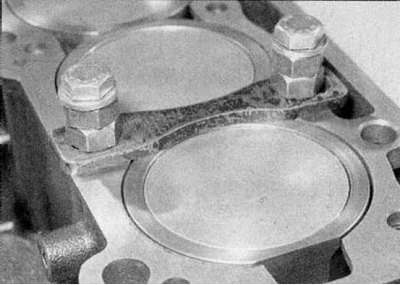
9. Once the sleeve/piston assembly is in place, secure the sleeve with a bolt and washer or clamp (refer to the accompanying illustration).
10. Repeat the above procedures with the remaining assemblies.
All other engines
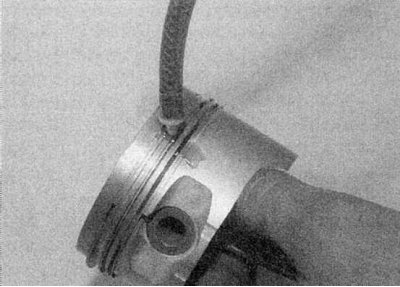
1. Lubricate piston #1 and piston rings and ensure that the piston ring cuts are 120° apart (refer to the accompanying illustration).
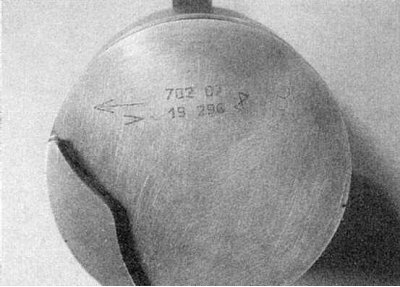
2. Mount the compressor onto piston #1, then insert the piston and connecting rod into cylinder #1. On gasoline engines, the "V" arrow should point toward the flywheel. On F8Q engines, the notch in the piston crown should be on the oil filter side of the engine.
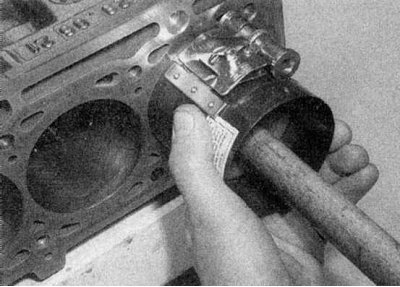
3. With the crankshaft journal at bottom dead center, carefully insert the piston into the cylinder while simultaneously guiding the connecting rod onto the crankshaft journal (refer to the illustrations).
4. To measure the connecting rod bearing operating clearance, see Section Inspection of the crankshaft.
5. Repeat the above procedures with the remaining piston/connecting rod assemblies.
Final installation
1. After checking the running clearance of all crankpins, wash off all traces of Plastigauge from the bearings and crankpins.
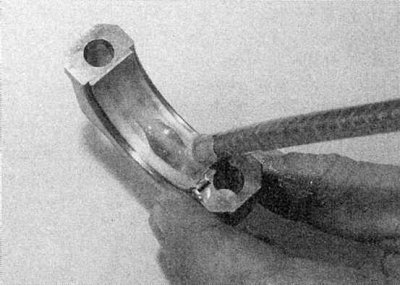
2a. Generously lubricate the connecting rod bearings.
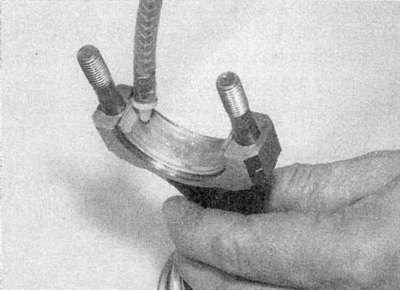
2b. Generously lubricate the crankshaft connecting rod journals.
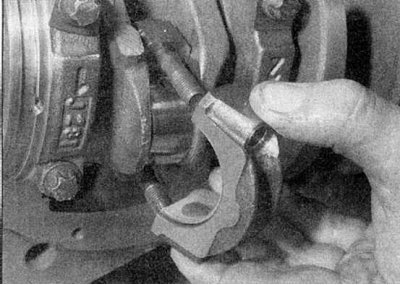
2c. Install the bearing caps.
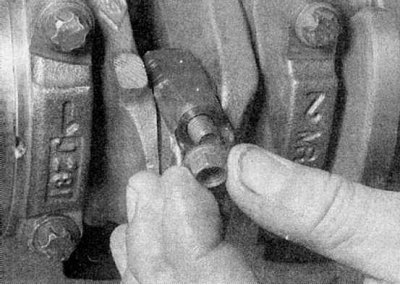
2d. Screw on the nuts.
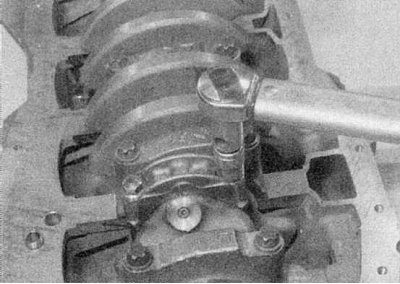
2e. Tighten the cover nuts/bolts to the torque specified in the Specifications, checking each time that the crankshaft turns freely.
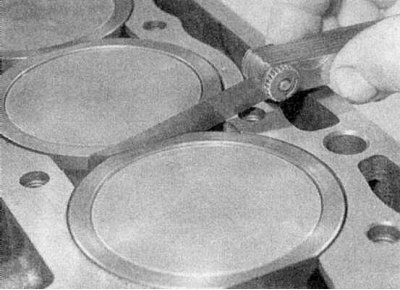
2f. On the E7J engine, check that all liners are correctly positioned relative to each other (a 0.1 mm thick feeler gauge should be able to pass freely through the gaps between them). If this is not the case, you may have to swap one or more piston/liner assemblies to achieve this clearance (refer to the illustrations).
3. Finally, install the oil pump, oil pan and cylinder head.