English Русский
Български
Беларускі
Український
Српски
Hrvatski
Română
Polski
Slovenský
Magyar
Bookmark Contacts Articles Sitemap
Company vehicles Peugeot Company vehicles Opel Company vehicles Skoda Company vehicles Land Rover Company vehicles Mitsubishi Company vehicles Volkswagen Company vehicles Honda
RenaultBook.ru


Duster   Fluence   Kangoo   Laguna   Logan   Megane   Sandero   Scenic   Symbol   Clio   Other
Megane 1 (1995-2002) Megan 2 (2002-2009, petrol)

Removal, checking and installation ignition coils (Renault Megane 1)

  • Main
  • Megane
  • Megane 1 (1995-2002)
  • Power unit
  • Ignition system (petrol)
  • Removal, checking and installation ignition coils
0
Contents: Removal 🠛 Examination 🠛 Installation 🠛

Removal


1. Disconnect the ground cable from the battery.

Warning: If the car radio in your car is coded, make sure you know the code before disconnecting the battery.


Models with E7J engine


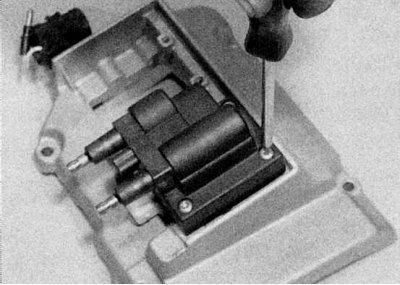
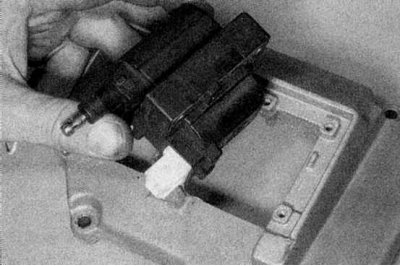
1. The high voltage ignition coil is bolted to the front of the booster module, which is mounted on the right hand side of the engine bay bulkhead. Please note that Renault does not supply the ignition coil separately from the booster module, but it may be possible to obtain one from other sources.

2. Disconnect the high-tension wire from the ignition coil, then disconnect the wiring from the booster module. Loosen the ignition coil mounting bolts and carefully remove the ignition coil from the booster module.

Models with K7M engine
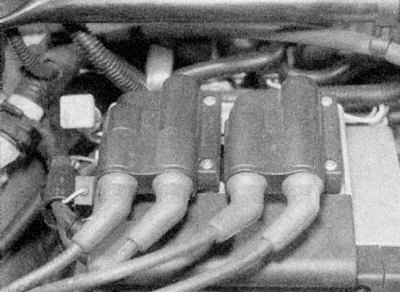


Models with K7M engine


4a. The ignition coils are mounted on the right end of the valve cover (refer to the accompanying illustration).

4a. The ignition coils are mounted on the right end of the valve cover (refer to the accompanying…


4b. Remove the ignition coil.


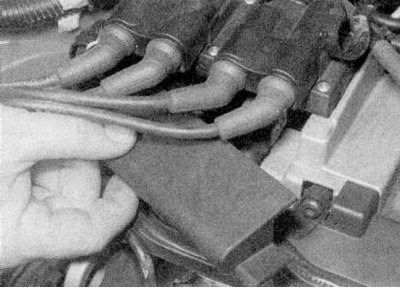
5. Release and remove the plastic cover from the front of the ignition coil assembly. Disconnect the spark plug high-tension wires from the retainer, then remove the screws securing the retainer to the ignition coil assembly and move the retainer to the side.

5. Release and remove the plastic cover from the front of the ignition coil assembly. Disconnect…


6a. Loosen the screws.

6a. Loosen the screws.


6b. Disconnect the high-voltage wiring from the spark plugs.

6b. Disconnect the high-voltage wiring from the spark plugs.


7. Disconnect the multi-pin plug from the ignition coils (refer to the accompanying illustration).


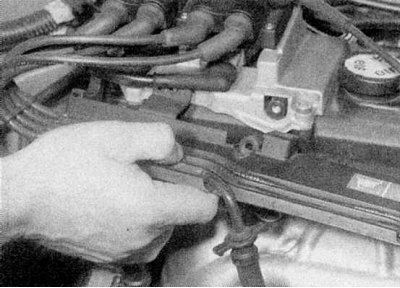
8. Release the wiring from the retainer at the right end of the assembly.

8. Release the wiring from the retainer at the right end of the assembly.


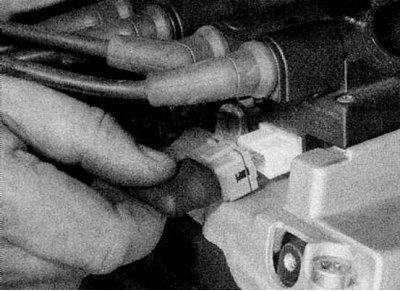
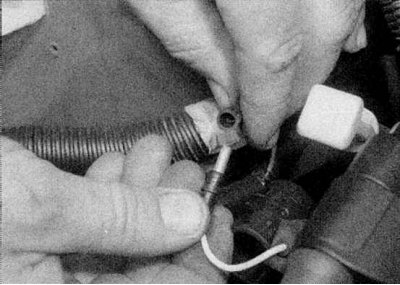
9. Disconnect the separate capacitor wire (refer to the accompanying illustration).

9. Disconnect the separate capacitor wire (refer to the accompanying illustration).


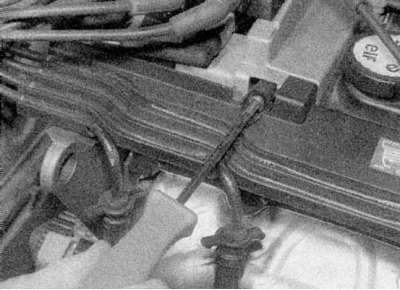
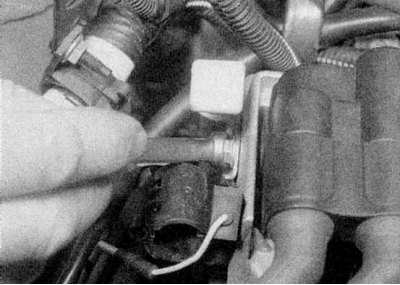
10. Loosen the engine oil dipstick mounting bolt (refer to the accompanying illustration).

10. Loosen the engine oil dipstick mounting bolt (refer to the accompanying illustration).


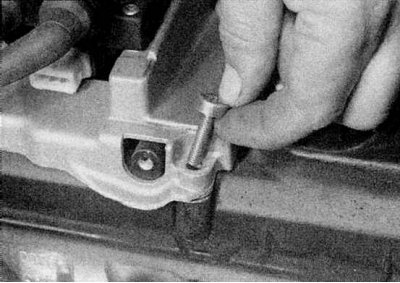
11a. Remove the four mounting screws.

11a. Remove the four mounting screws.


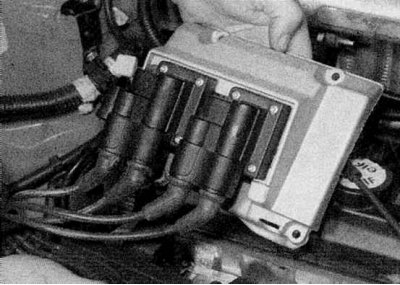
11b. Remove the ignition coil assembly with the high voltage wires from the valve cover. Note that the screws are installed on top of the valve cover screws (refer to the illustrations).


11b. Remove the ignition coil assembly with the high voltage wires from the valve cover. Note that…


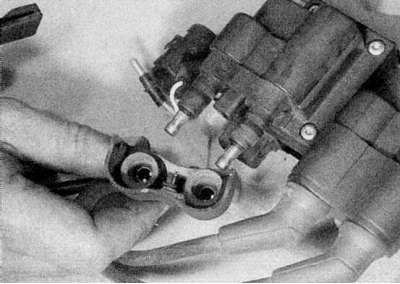
12. Carefully disconnect the spark plug high-voltage wires from the ignition coils (refer to the illustrations).

Note: The ignition coil bases are different to ensure that they can only be installed in one position.


Models with F3R engine


1. The ignition coils are mounted on the front side of the engine.

2. Disconnect the high-voltage wiring from the spark plugs.

3. Disconnect the multi-pin plug from the ignition coils and the separate wire from the capacitor.

4. Remove the four screws securing each ignition coil to the mounting bracket and remove the ignition coils along with the spark plug high voltage wires.


Note: The ignition coil bases are different to ensure that they can only be installed in one position.


5. Carefully disconnect the high-voltage wiring from the ignition coils.

Models with F7R engine
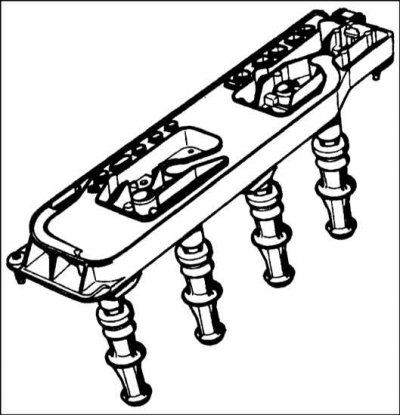


Models with F7R engine


1. The ignition coils are combined into an assembly mounted in the center of the valve cover. The ignition coils are mounted directly on the spark plugs and high-tension wires are not required. The ignition coils cannot be separated from the assembly and if any coil fails, the entire unit must be replaced (refer to the accompanying illustration).

2. Where present, remove the front suspension tie rod above the engine.

3. Remove the two screws and plastic cover from the top of the ignition coil assembly.

4. Disconnect the multi-pin wiring plug at the end of the assembly.

5. Remove the seven mounting screws and remove the ignition coils from the spark plugs.

Examination


Models with E7J engine


1. Checking the serviceability of the ignition coil comes down to ringing its windings (between the "+" and "-" terminals of the primary, and between the LT+ and HT terminals of the secondary). Compare the results obtained with those specified in Specifications at the beginning of this Chapter. Note that the resistance of the ignition coil windings may vary slightly depending on the coil temperature, the results in Specifications - approximate, since no exact data is provided by Renault.


2. Check that there is no electrical continuity between the high tension wire terminal and the ignition coil housing.

3. If the ignition coil is defective, replace it.

Models with K7M and F3R engines


Models with K7M and F3R engines


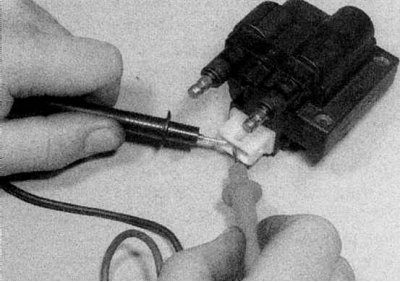
1a. Each ignition coil can be tested with a multimeter in resistance measurement mode. Connect the multimeter to the terminals and compare the obtained measurement results with the information provided in Specifications. The three low voltage terminals are marked with numbers on the socket.
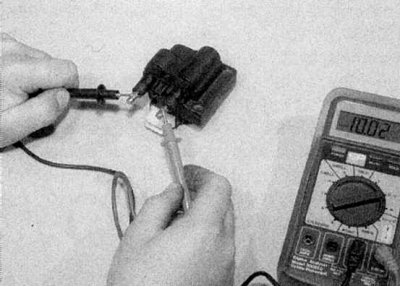
1a. Each ignition coil can be tested with a multimeter in resistance measurement mode. Connect the…


1b. At the end of the test, connect the multimeter between the two HV terminals (refer to the illustrations).

2. Replace the ignition coil if it is defective, but remember that they are different.

Models with F7R engine


1. Each ignition coil can be tested with a multimeter in resistance measurement mode. Connect the multimeter to the terminals and compare the obtained measurement results with the information provided in Specifications. The four low voltage terminals are numbered 1 through 4, with terminal #1 being the one closest to the engine compartment bulkhead. Connect a multimeter between the high voltage terminals for cylinders #1 and #4, then between cylinders #2 and #3.


2. Replace the ignition coil assembly if any of the windings are defective.

Installation


1. Perform installation in reverse order, ensuring that the electrical wiring connectors are properly and securely fastened.
This article is available on: russian, bulgarian, belarusian, ukrainian, serbian, croatian, romanian, polish, slovak, hungarian
Article has been reviewed by editor: Fedoseev Denis
Share with friends:
Previous
Megane 1: Ignition system (petrol)
Next

Checking the ignition system
Ignition System — Description and Precautions
Ignition System Specifications
Removal, inspection and installation of the distributor (E7J engines)
Removal and installation the amplifier module (E7J engines)
Removal and installation the knock sensor — removal and installation
Checking and adjusting the ignition timing
Other articles on other Renault models

➽ Checking, removing and installing ignition coils of the K4M… Renault Sandero 1 (2007-2012, petrol)
➽ Ignition coils Renault Duster 1 (2009-2017)
➽ Removal and installation of ignition coils (all engines) Renault Fluence 1 (2009-2020, petrol)
➽ Checking the ignition system Renault Logan 1 (2004-2012, petrol)
➽ Ignition coils — removal and installation Renault Scenic 1 (1996-2003)
Link to this article in different formats
Reviews and comments of visitors
No comments yet


Add two numbers 19 + 37


Megan 2 (2002-2009, petrol) 
  • User manual
  • Introduction to manual
  • Controls and instruments
  • Salon equipment
  • Operation and driving
  • Maintenance and care
  • Power unit
  • Engine repair
  • Fuel system
  • Injection system
  • Intake and exhaust system
  • Starting and charging system
  • Cooling system
  • Decreased toxicity
  • Transmission
  • Clutch
  • Mechanical gearbox
  • Automatic gearbox
  • Wheel drive mechanism
  • Chassis, running gear
  • Suspension and wheels
  • Steering
  • Brake system
  • Body and interior
  • Exterior (external elements)
  • Interior (internal elements)
  • Doors, locks and windows
  • Heating and air conditioning
  • Electrical equipment
  • Equipment and devices
  • Headlights and lighting
  • Electrical circuits
Megane 1 (1995-2002) 
  • General information
  • User manual
  • Maintenance
  • Power unit
  • Petrol engines 1.4/1.6 l
  • Petrol engines 2.0 l
  • Diesel engines 1.9 l
  • Overhaul of engines
  • Cooling system
  • Fuel system (petrol)
  • Fuel system (diesel)
  • Decreased toxicity
  • Charge and launch systems
  • Ignition system (petrol)
  • Preheat system (diesel)
  • Transmission
  • Clutch
  • Mechanical gearbox
  • Automatic gearbox
  • Drive shafts
  • Chassis, running gear
  • Brake system
  • Car suspension
  • Steering
  • Body and interior
  • Exterior (external elements)
  • Interior (internal elements)
  • Doors, locks and windows
  • Electrical equipment
  • Equipment and devices
  • Electrical circuits
RenaultBook.ru © 2018–2026 | Mobile version | News and articles | Sitemap: EN BG BY UA RS HR RO PL SK HU | Administration | Site search | Bookmark
Duster 1 (2009-2017) | Fluence 1 (2009-2020, petrol) | Kangoo 1 (1997-2007) | Laguna 2 (2001-2007) | Logan 1 (2004-2012, petrol) | Logan 2 (2012-2020) | Megane 1 (1995-2002) | Megan 2 (2002-2009, petrol) | Sandero 1 (2007-2012, petrol) | Scenic 1 (1996-2003) | Symbol 1 (1999-2008, petrol) | Symbol 2 (2008-2013, petrol) | Renault 19 (1988-1996) | Espace I and II (1984-1996) | Espace III (1996-2002) | Clio 1 (1990-1998) |
We want your visit to be comfortable 😌 and use cookies 🍪 to do so.